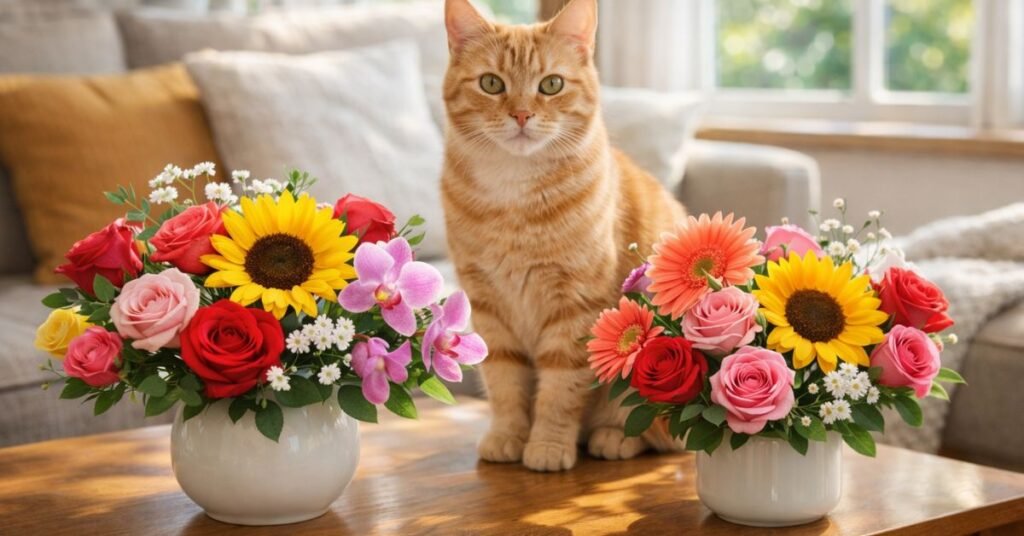
Cat-safe flowers are the smartest choice for any home where a curious feline roams freely. Inviting blooms indoors should feel joyful, not stressful — and with the right non-toxic picks, you can enjoy natural beauty and pleasant scents while keeping your pet completely safe. Many common flowers are surprisingly dangerous for cats, making cat safe flowers an essential part of responsible pet ownership.
Knowing exactly which safe flowers belong inside your home can save your cat’s life and your peace of mind. The right choices create a stunning, pet-friendly arrangement that keeps your home beautiful and your feline happy, healthy, and secure every single day.
Why Choosing Cat-Safe Flowers Is Important for Cat Owners
Your cat is curious, not careful. Leaves, petals, pollen, and even vase water may be harmful. Planting cat-safe plants in the house helps prevent unnecessary harm from hidden dangers and helps prevent stomach problems caused by small bites. Safety-first decisions make daily life more relaxed and worry-free for cat owners.
Cat safe flowers are every plant-loving cat owner’s dream — beautiful blooms that won’t send your curious feline to the vet. Whether you’re decorating your living room or balcony, choosing the right flowers means your cat can sniff, brush past, or even nibble without any danger.
Veterinarians often treat cats affected by toxic flowers, which are preventable. Cats are better served by having non-toxic flowers since they would help in reducing the number of visits to the emergency unit, and they would help their health in the long term. It is a tiny move to make flowers safe for pet owners.
How Flowers Can Be Dangerous for Cats
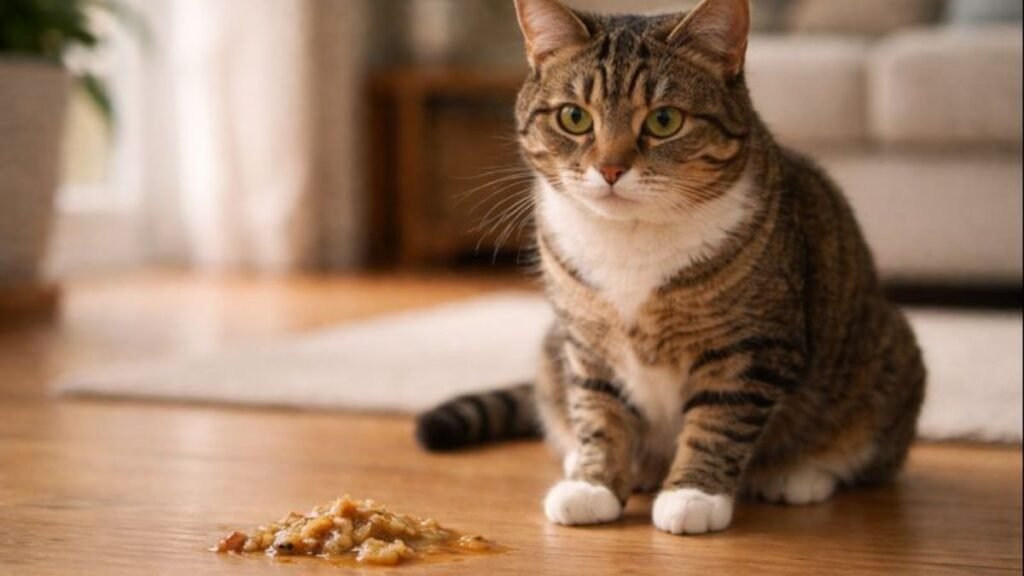
Cats chew plants to explore texture and taste. There are those species that will cause vomiting and drooling within minutes, and some species will lead to delayed organ damage. When the plant may appear to be harmless, the pollen that is deposited on fur can also cause an allergic reaction.
The most severe cases involve lilies, which can lead to kidney failure after tiny exposures. Understanding plants cats should avoid and replacing them with flowers that are safe for cats is essential to lowering poisoning risk in American homes.I learned this lesson when one of my own cats became fascinated with a bouquet I had placed on the dining table. Before bringing any new flowers into my home, I started checking whether they were safe for cats. Since switching to cat-safe flowers, I can enjoy fresh blooms without worrying every time my curious cat wanders over to investigate.
7 Cat-Safe Flowers You Can Keep at Home
Healthy décor starts with choices proven gentle on cats. The following options are widely recognized as pet-safe flowers and vet-approved flowers for cats, making them ideal indoor flowers safe for cats when placed thoughtfully.
These blooms also work well in safe floral arrangements for cats, offering color and texture without fear. Used properly, they become reliable cat-safe house plants that fit modern living.
Roses
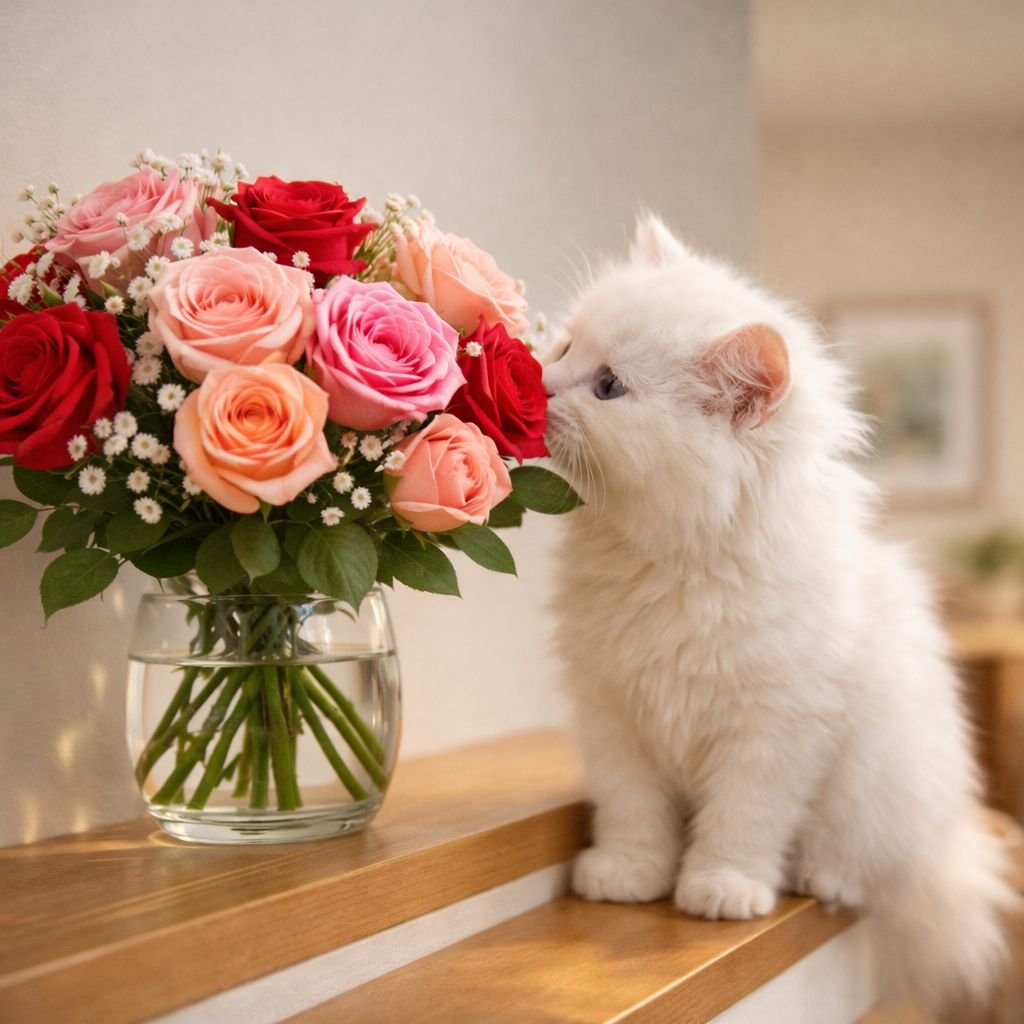
Roses are traditional and easily obtainable in the U.S. They are cat-friendly, but their thorns need extra care. Do not use treated stems to avoid the gastrointestinal upsets caused by chemicals, and put the vases.
When sourced cleanly, roses support pet-friendly home decor and remain among the most trusted non-toxic plants for cats. They’re also flowers safe for kittens when positioned out of reach.
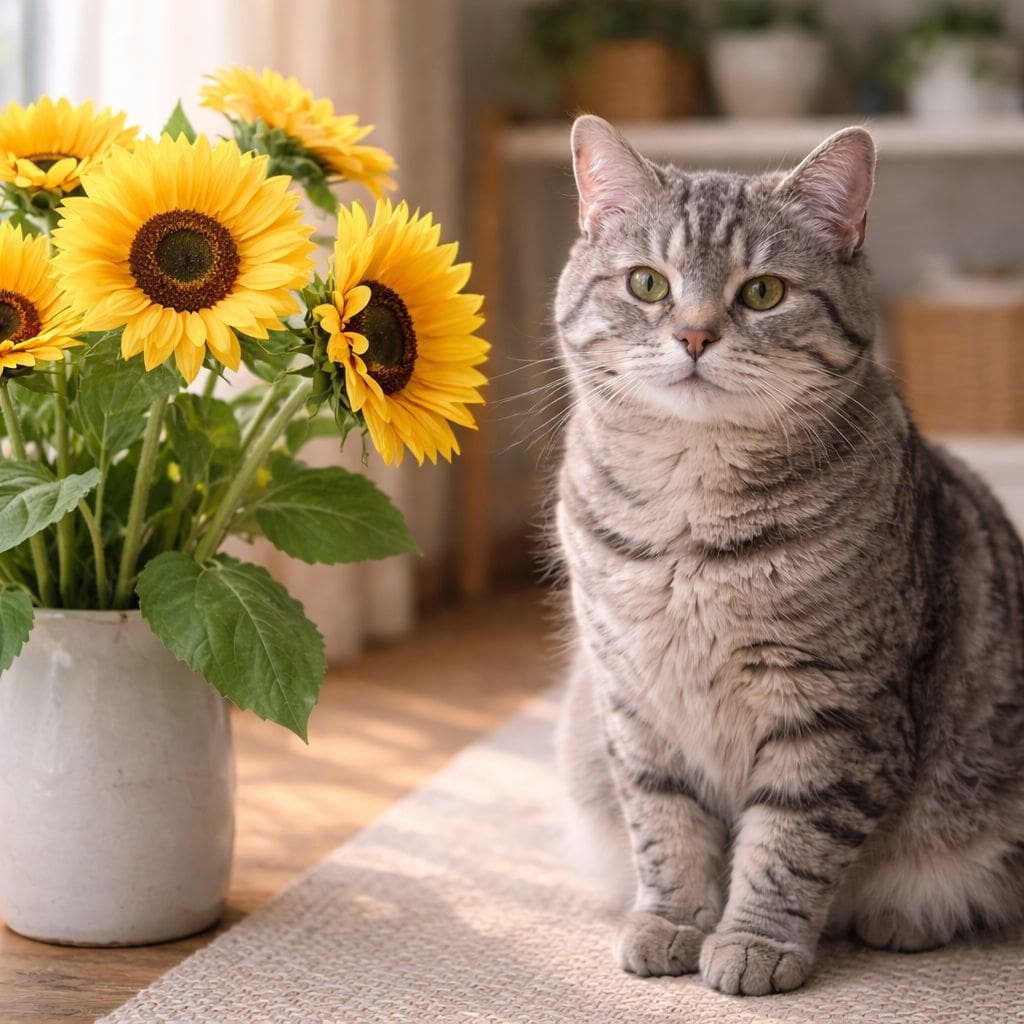
Sunflowers
Sunflowers brighten rooms and rank among cat-friendly flowers. The petals and stems are safe for cats, but the seeds should always be kept out of reach to prevent choking.
These cheerful blooms suit open spaces and reduce plant toxicity concerns. Many vets consider them reliable vet-approved flowers for cats for family homes.
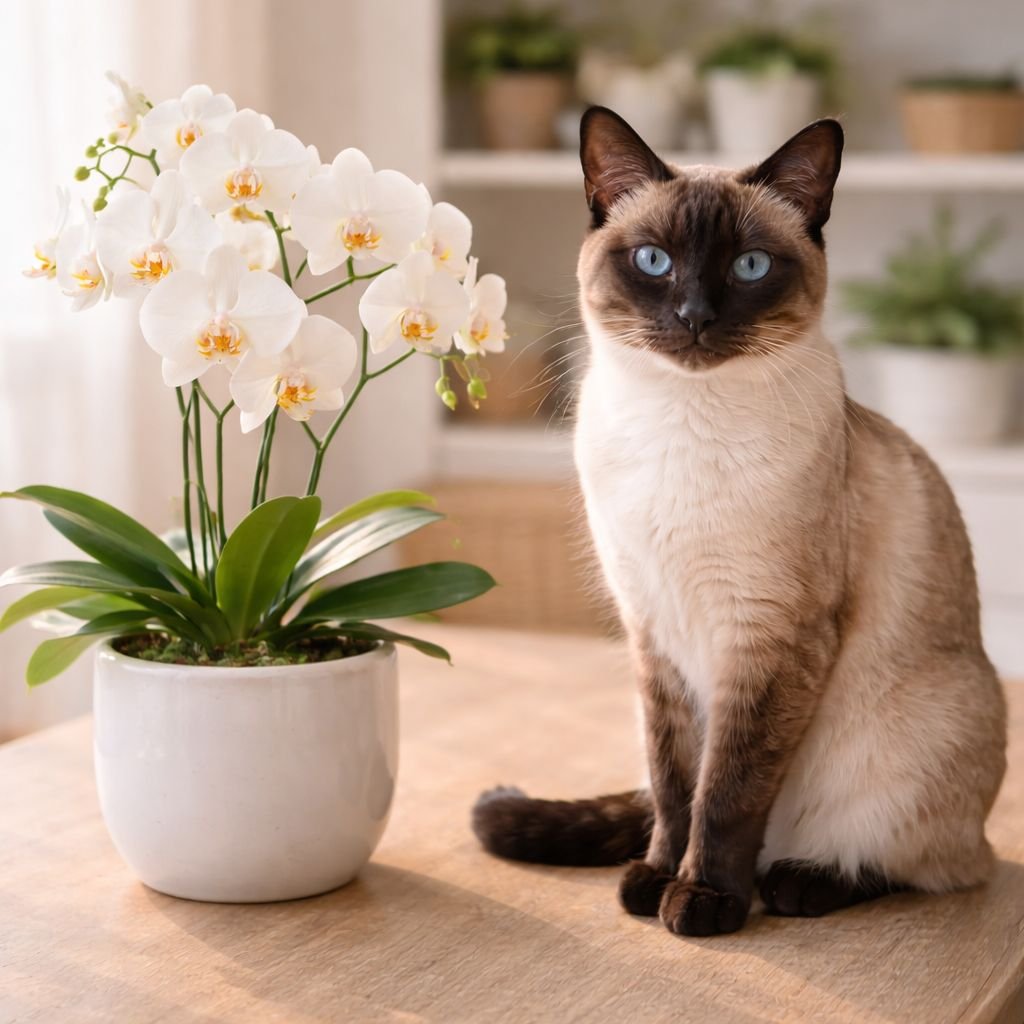
Orchids
Orchids offer elegance without danger. They are cat-safe flowers that work well in minimalistic interiors. Light chewing can lead to gastrointestinal disturbance, but it will hardly result in severe damage.
Since orchids are usually kept indoors, they are a safe and elegant choice for cat owners. Select solid planters to prevent spills and save the health of cats.
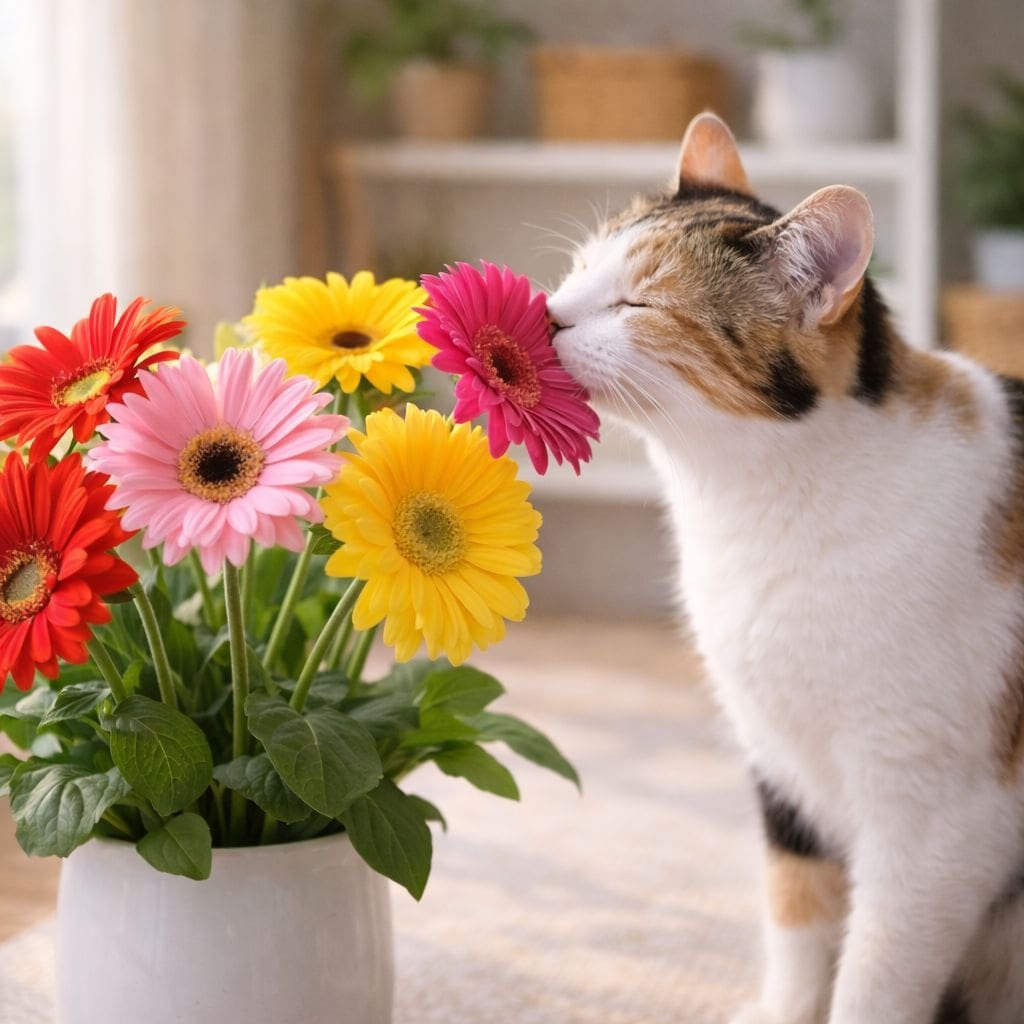
Gerbera Daisies
Gerberas add bold color and are non-toxic flowers for cats. They’re popular in U.S. bouquets and rarely cause symptoms in cats when brushed or sniffed.
Placed on shelves, they become dependable, safe floral arrangements for cats. Their low risk supports relaxed, pet-friendly home decor.
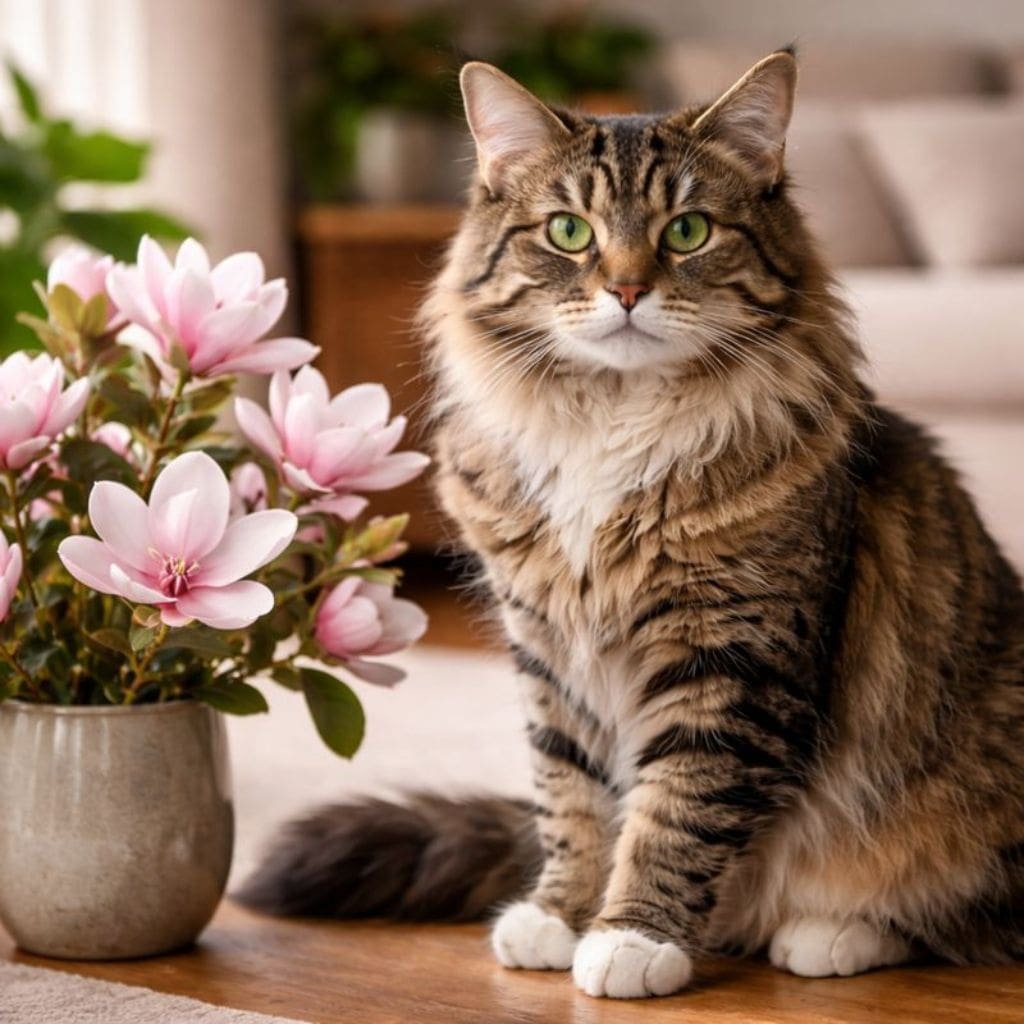
Magnolia
Magnolia varieties used indoors are generally flowers that are safe for cats. Size matters, so choose compact forms to avoid mess and stress.
Used sparingly, magnolias enhance rooms without raising poisoning risk. They’re suitable cat-safe house plants with proper placement.
Snapdragon
Snapdragons are flower toys and pet-friendly.Cats usually ignore their texture, which reduces chewing and lowers the risk of plant-related issues.
They are good indoor cat-safe flowers, particularly in tall vases to keep off petals and paws.
Zinnia
Zinnias are flowers that are harmless to both kittens and adults, as they also grow well in sunlight. Their tough petals deter biting, and symptoms in cats are reduced.
These flowers are used both indoors and outdoors in gardens, where they are used in summer, and they are non-toxic to cats, which makes them a versatile plant.
Are Roses Really Safe for Cats?
Yes, untreated roses are generally safe for cats, as the petals are non-toxic. It is the thorns and the sprays that pose a danger, but not the petals. Keep rose arrangements placed high to prevent scratches and reduce stress.
Be cautious with plants named “rose” that are unrelated. Some impostors appear on the ASPCA toxic plant list and can cause organ damage. Verify species before bringing them home.
Flowers That Are Toxic to Cats (Must Avoid List)
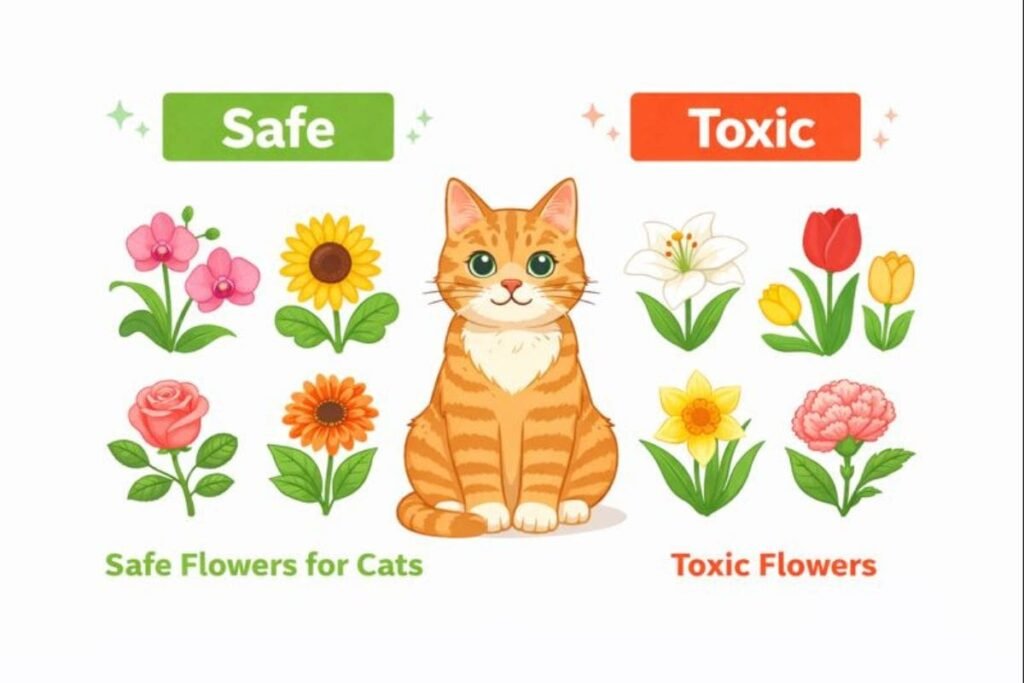
Certain species pose extreme danger. The flowers that cats are sensitive to are lilies, tulips, and daffodils, which are common reasons to visit the emergency veterinary services. Minimal exposure may cause a rapid deterioration.
Check the ASPCA toxic plant list to determine the plants to avoid for cats. Substitution of them with cat-safe flowers will significantly reduce the risk of poisoning in the households of the U.S.
What to Do If Your Cat Eats a Flower or Plant
Take quick action if your cat eats a plant. Take out the plant, record the species, and monitor cats for being lethargic, vomiting, and drooling. Time is important in case of suspicion of toxicity to plants.
Call your veterinarian or a pet poison control helpline immediately. Activated charcoal and monitoring can be suggested by professionals as a means of preventing organ damage and stabilizing the feline’s health.
How to Decorate Your Home with Cat-Safe Flowers
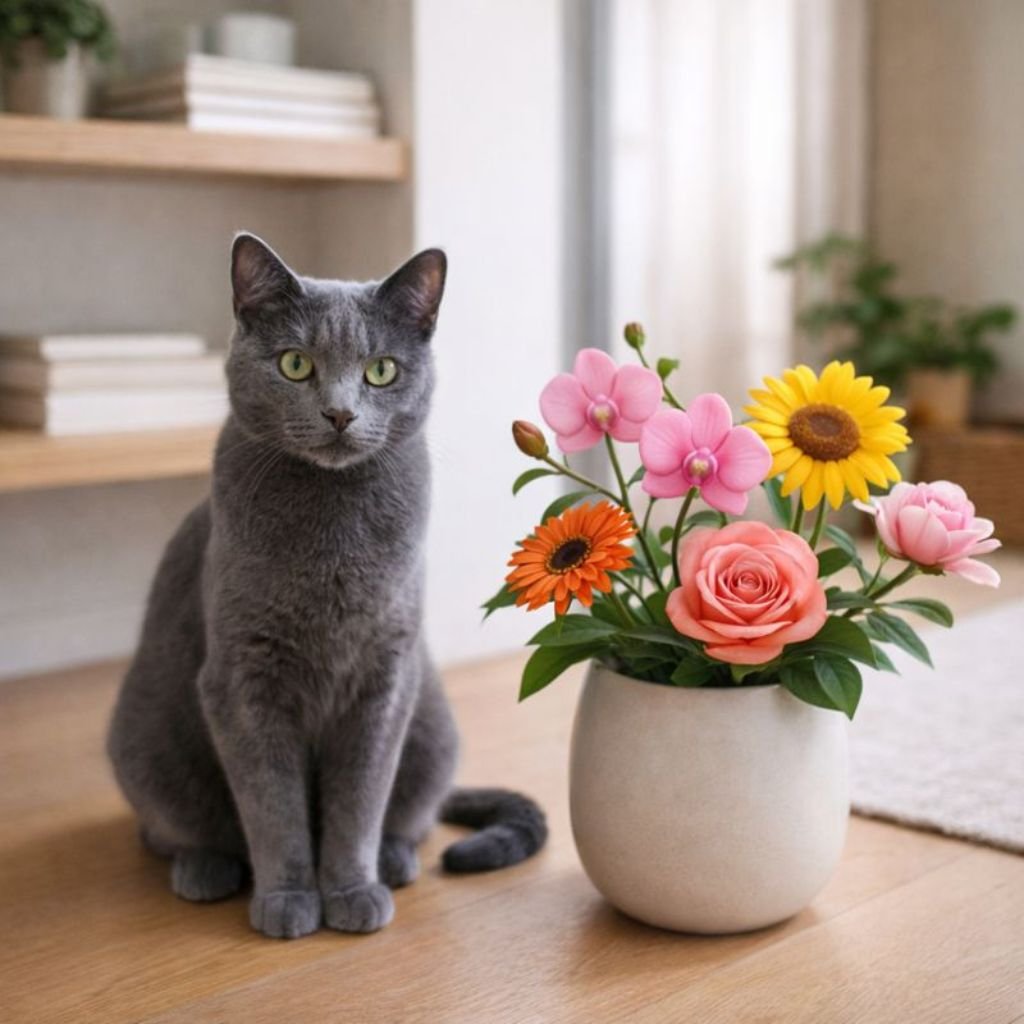
Design with height and stability. Elevated shelves and heavy vases reduce spills and chewing while showcasing cat-safe flowers for the home in shared spaces.
Balanced layouts using safe floral arrangements for cats support calm living. This approach blends beauty and safety into seamless, pet-friendly home decor.
Tips to Keep Cats from Chewing on Flowers
Chewing often signals boredom or curiosity. Provide enrichment and approved greens to redirect attention away from décor and lower poisoning risk.
Strategic placement paired with cat-safe flowers reduces temptation. Over time, cats learn boundaries, protecting feline health and household harmony.
Benefits of Choosing Cat-Safe Flowers
The benefits go beyond appearance. Fewer emergencies and less stress make daily life easier. Homes with non-toxic flowers that are safe for cats also support better long-term pet health.
Proprietors are assured and relaxed. The selection of safe flowers by pet owners enhances healthy living of cats in the long-term and their daily happiness.
Frequently Asked Questions About Cat-Safe Flowers
Many ask if common bouquets are safe. Flowers that are safe for cats, such as sunflowers and gerberas, and other toxic flowers to cats, like lilies, must not get into the house at all.
The other issue is that of allergies. Although it is not common, there may be an allergic reaction. Keep an eye on the cats and use only flowers that are approved by the vets with cats to maintain a high level of safety.
Safety Snapshot Table
| Category | Risk Level | Outcome |
| Cat-safe flowers | Low | Supports feline health |
| Toxic flowers for cats | High | Kidney failure, organ damage |
| Untreated roses | Low | Mild stomach upset is possible |
| Lilies | Extreme | Immediate emergency vet care |
Through making the right decisions, you make your place a place of beauty and safety. At the centre of your home is a flower that is cat-safe, and as such, your house will be bright, calm, and really welcoming to all members of the family.
What flowers can I have if I have a cat?
You can keep cat-safe flowers like roses, sunflowers, orchids, and gerbera daisies, as these are non-toxic and safe for cats when placed properly.
What flowers are not toxic to cats?
Flowers such as roses, snapdragons, zinnias, and sunflowers are not toxic to cats and are commonly recommended by veterinarians.
Can I have flowers in my house if I have a cat?
Yes, you can have flowers at home if you choose cat-safe varieties and keep them out of your cat’s reach to prevent chewing.
Which flowers are unsafe for cats?
Flowers like lilies, tulips, daffodils, and carnations are unsafe for cats and can cause serious health problems if ingested.

Wahsay Ahmed is the founder of FelineNest and a cat care writer. His interest in feline health began in 2023 after adopting two cats, Whisker and Mochi. Since then, he has spent two years studying trusted veterinary resources, feline behavior, nutrition, and preventive care while applying that knowledge through daily care of his own cats.