As cats age, their bodies slow down, their tastes change, and their health needs grow more complex. Choosing the best food for older cats is no longer about brand names or trends. It’s about understanding senior cat nutrition, daily habits, and real medical risks. This guide explains what to feed a senior cat using vet-informed logic, USA-focused standards, and simple language you can trust.
Your aging feline companion still wants comfort, energy, and joy. The right food for older cats can protect mobility, digestion, and long-term health. Let’s walk through this senior cat feeding guide step by step.
When Is a Cat Considered “Senior”? Age Stages That Change Nutrition Needs
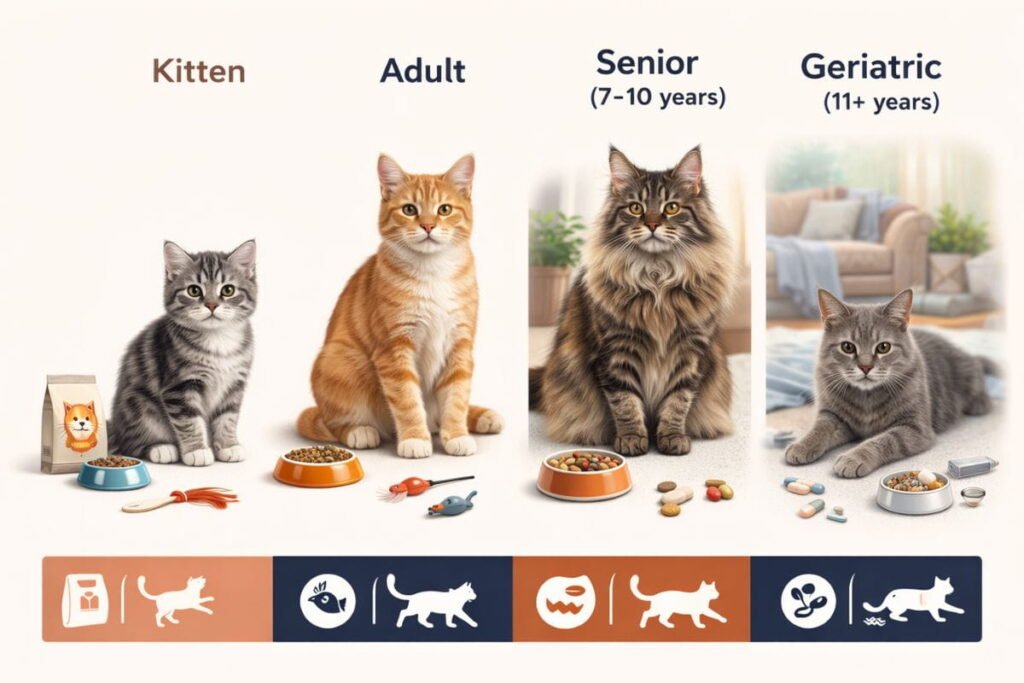
Most vets in the United States classify cats as seniors between seven and ten years old. At this stage, aging cats nutrition needs begin to shift quietly. Your cat may still look playful, yet inside, metabolism slows, and nutrient absorption weakens. That’s why senior cat nutrition must change before visible problems appear.
Cats over 11 years old enter the geriatric phase. Here, senior cat health and diet choices directly affect comfort and longevity. Early diet changes support the immune system support, reduce inflammation, and stabilize energy. Feeding age-appropriate cat food for older cats helps prevent avoidable illness later.
How Aging Affects a Cat’s Body and Diet Requirements
Aging reduces muscle strength, organ efficiency, and thirst response. Without proper senior cat diet planning, cats lose lean tissue quickly. That’s why muscle mass maintenance becomes a top priority. Appetite may also drop due to dental health issues or fading senses.
Internal systems age unevenly. Kidneys work harder. Joints stiffen. Digestion slows. Smart food for aging cats addresses all three at once. The best food for older cats supports joints, digestion, and hydration for senior cats without overloading calories.
Essential Nutrients Senior Cats Need (And Why They Matter)
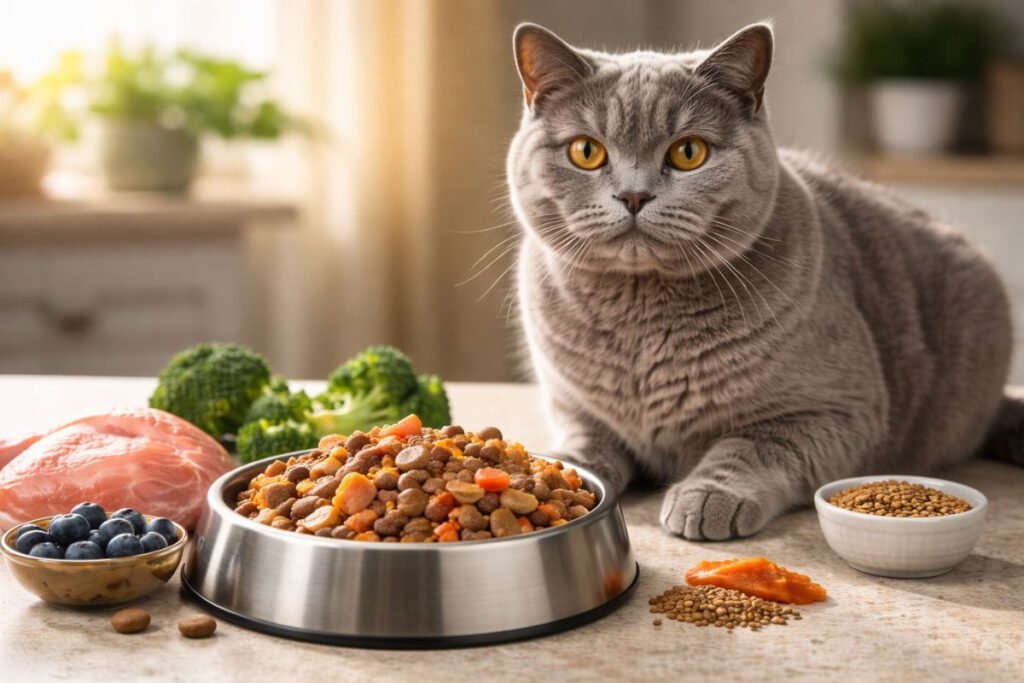
Senior cats thrive on high-quality animal protein because it fuels repair and preserves strength. Unlike younger cats, they also need controlled fat content to prevent obesity and aid weight management in senior cats. Balance matters more than quantity now.
Dietary fiber improves digestive health, while omega-3 fatty acids and omega-6 fatty acids provide joint health support and skin and coat health. Add antioxidants for cats, plus essential vitamins and minerals, and you protect long-term vitality.
| Nutrient Focus | Why It Matters for Seniors |
| Protein | muscle mass maintenance |
| Fiber | digestive health |
| Omega fats | arthritis in senior cats |
| Antioxidants | immune system support |
Wet vs. Dry Food for Senior Cats: Which Is Better and When
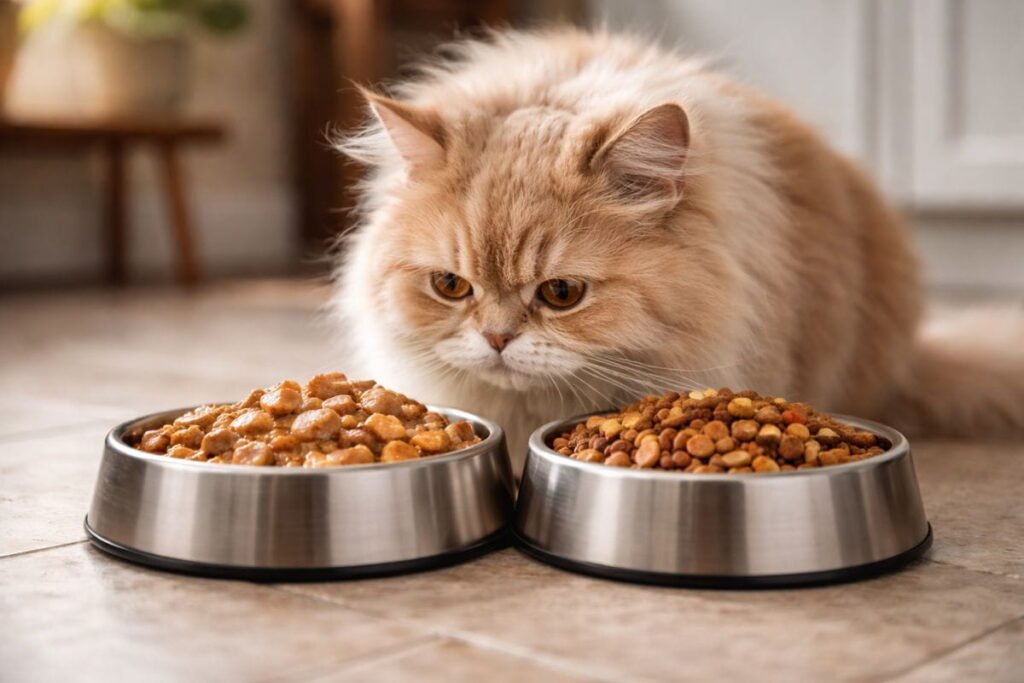
The debate around wet food vs dry food matters more with age. Wet meals deliver hydration naturally, which supports hydration for senior cats and lowers stress on the kidneys. Many vets prefer moisture-rich cat food for seniors at risk of illness.
Dry food still has a role. It offers convenience and can help manage plaque. The best food for older cats often combines both styles. The right choice depends on chewing comfort, water intake, and existing health conditions.
Best Food for Older Cats: Wet vs. Dry Decision Factors
Cats with low thirst, kidney stress, or poor teeth benefit most from wet food. More active seniors may tolerate mixed feeding well. Always align choices with your cat’s medical history and vet advice.
How to Choose the Best Senior Cat Food Based on Health Conditions
Health conditions demand precision. Cats with kidney disease in older cats need low-phosphorus diets. Those with diabetes require carb control. Joint pain calls for nutrients that ease arthritis in senior cats without excess calories.
Sometimes, prescription cat food becomes necessary. These formulas target disease, not taste trends. The best food for older cats is always the one that supports healing first, comfort second, and flavor third.
Ingredients to Look For—and Ingredients Senior Cats Should Avoid
Read labels carefully. Named meats support strength, while fillers strain digestion. Avoid artificial colors and vague by-products. Excess sodium harms urinary tract health, and too much phosphorus worsens kidney strain.
Smart senior cat care means choosing clarity over marketing. Look for clean formulas that respect aging biology. Simple ingredient lists usually signal safer food for older cats.
Best Types of Senior Cat Food (By Category, Not Brand Hype)
Forget hype. Categories matter more than logos. High-protein wet diets support frailty. Weight-control formulas help inactive cats. Limited-ingredient recipes suit sensitive stomachs.
Each category serves a purpose. The best diet for senior cats adapts as health shifts. That flexibility defines truly effective senior cat meal plan strategies.
How Much and How Often to Feed a Senior Cat
Older cats burn fewer calories yet need richer nutrition. Smaller meals spread through the day reduce digestive stress. This approach improves nutrient absorption and stabilizes blood sugar.
Portion control prevents silent weight gain. A thoughtful senior cat feeding guide adjusts servings based on activity, not age alone. Regular weigh-ins keep the plan honest.
Common Feeding Mistakes Cat Owners Make With Senior Cats
Many owners cut protein too early. That accelerates weakness. Others ignore hydration, increasing kidney risk. Treat overload quietly sabotages senior cat health and diet goals.
Another mistake is waiting too long to change diets. Nutrition works best as prevention. The best food for older cats protects against problems in the short term.
Transitioning Your Cat to Senior Food Safely (Step-by-Step)
Switch foods slowly over seven to ten days. Sudden changes upset digestion and appetite. Watch stools, energy, and water intake closely during the transition.
If problems appear, pause and consult your vet. Every cat adapts differently. Patience ensures long-term success with the best food for older cats.
“Nutrition is the most powerful, underestimated tool we have to improve a senior cat’s quality of life.”
— American Association of Feline Practitioners
Final Thought
The best food for older cats is never one-size-fits-all. It reflects age, health, habits, and love. Feed with intention. Adjust with care. Your cat’s golden years can still shine.
Frequently Asked Questions About Senior Cat Nutrition
What is the best food for a 14-year-old cat?
A 14-year-old cat thrives on high-quality senior cat food with protein for muscle mass maintenance and nutrients that support kidneys and joints.
Should senior cats eat wet or dry food?
Senior cats benefit from wet food for hydration and easy chewing, but a mix of wet and dry can support dental health and convenience.
What is the best thing to feed an older cat?
Feed older cats a balanced diet rich in protein, omega-3 fatty acids, fiber, and antioxidants for cats to maintain health and energy.
What is the number one meat you should never feed your cat?
Never feed cats raw pork, as it can carry parasites and bacteria harmful to your aging feline companion.