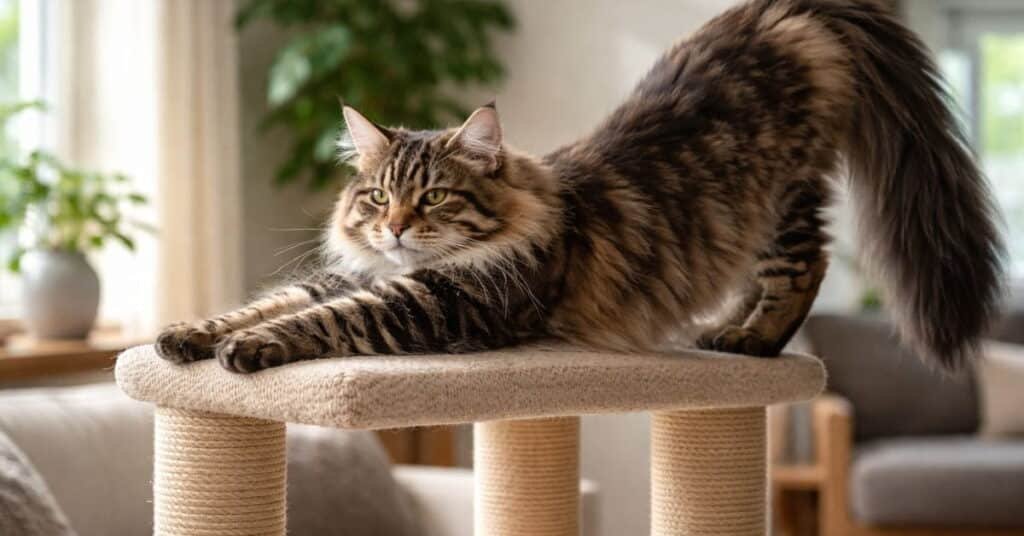
A big scratch post for cats is more than a cat accessory. It is a daily comfort. It supports movement, confidence, and calm behavior. Many US cat owners buy small posts, then wonder why cats ignore them. This guide explains sizing, materials, safety, and real-life use in simple English.
What Is a Big Scratch Post for Cats and Why Size Actually Matters
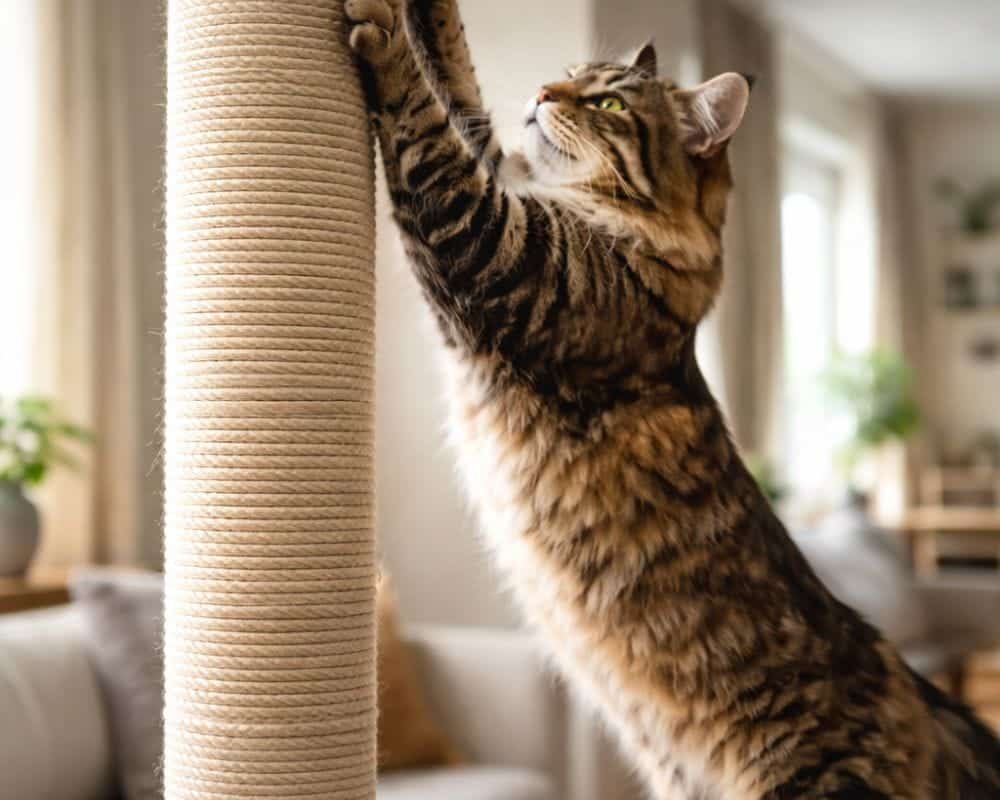
A big scratch post for cats is tall, thick, and built for strength. Unlike short posts, it supports full body stretch scratching, which cats need daily. Stretching keeps joints loose and claws sharp. Small posts cut movement short and feel unsatisfying.
Size also affects confidence. Cats prefer scratching surfaces that do not shake. A stable wide base gives security. When a post feels solid, cats trust it. That trust supports natural scratching behavior and reduces stress inside busy US homes.
Benefits of a Big Scratch Post for Cats of All Sizes
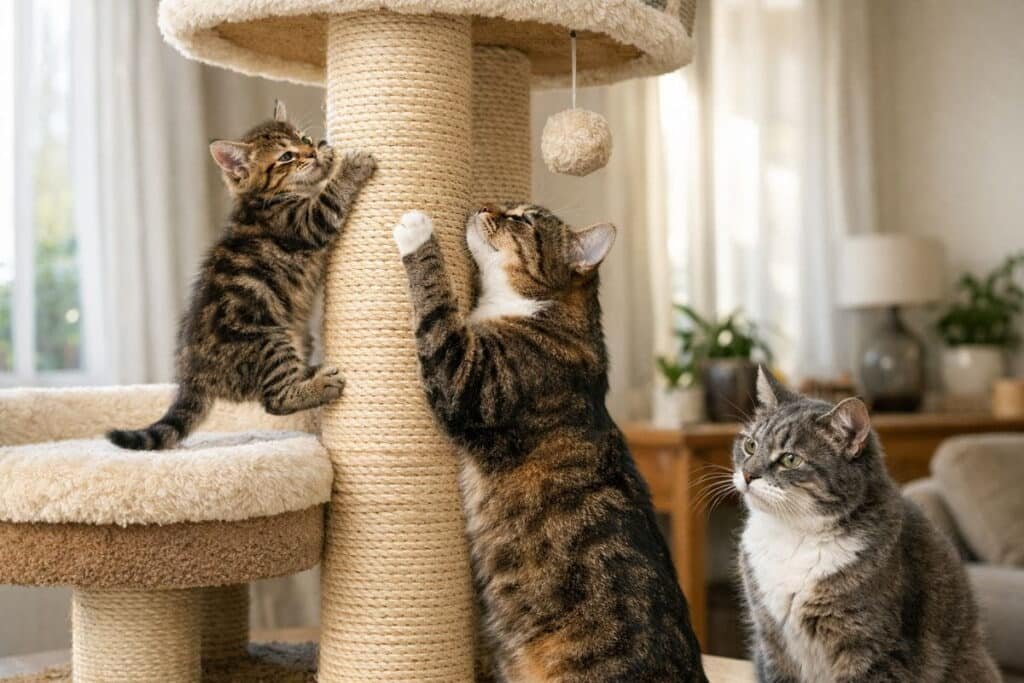
A big scratch post for cats helps kittens learn habits early. Adult cats gain muscle strength and balance. Seniors benefit from gentle movement and better grip. Daily scratching supports cat claw maintenance and keeps claws from overgrowing painfully.
Scratching also protects your home. A proper post improves furniture protection from scratching. It channels energy away from sofas. Scratching releases tension, too. Many vets link regular use with better stress relief for cats and calmer indoor behavior.
How Tall and Wide Should a Big Scratch Post Be? (Sizing Guide by Cat Type)
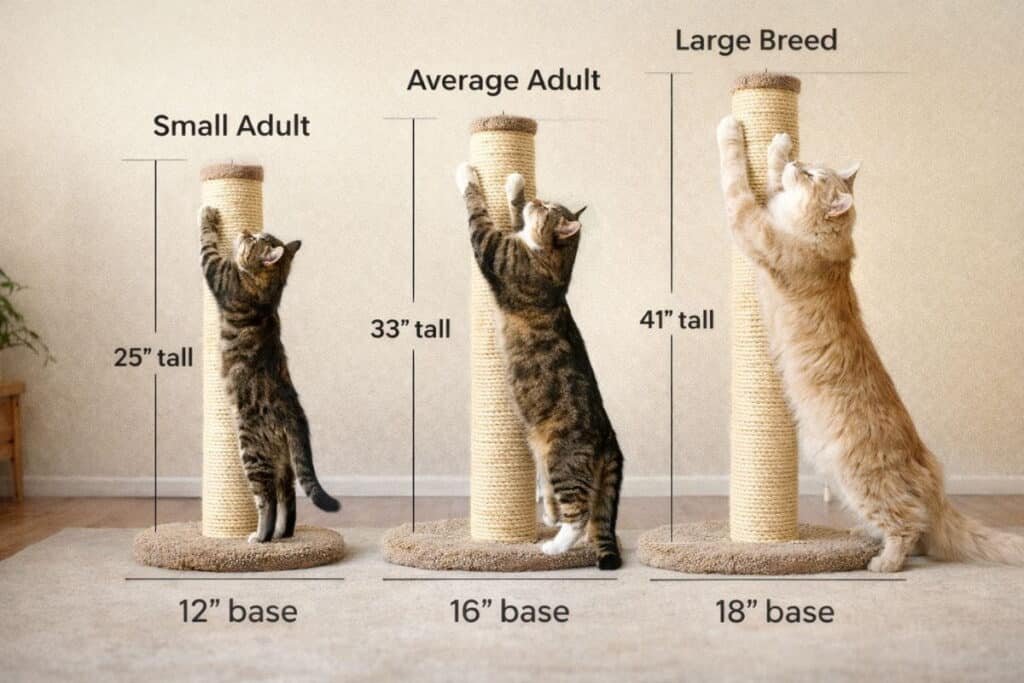
A big scratch post for cats should stand taller than your cat when stretched. Height matters more than looks. Most cats prefer vertical movement. That is why a tall scratch post for cats works better than wide, short designs.
Width matters for safety. Larger cats need thicker columns. A cat scratch post for large breeds should feel firm under weight. This table shows practical sizing for US households.
| Cat Type | Ideal Height | Base Width |
| Small adult | 28–32 inches | 16 inches |
| Average adult | 32–36 inches | 18 inches |
| Large breeds | 36–40 inches | 20+ inches |
Best Materials for Big Scratch Posts (Sisal, Carpet, Wood, Cardboard Compared)
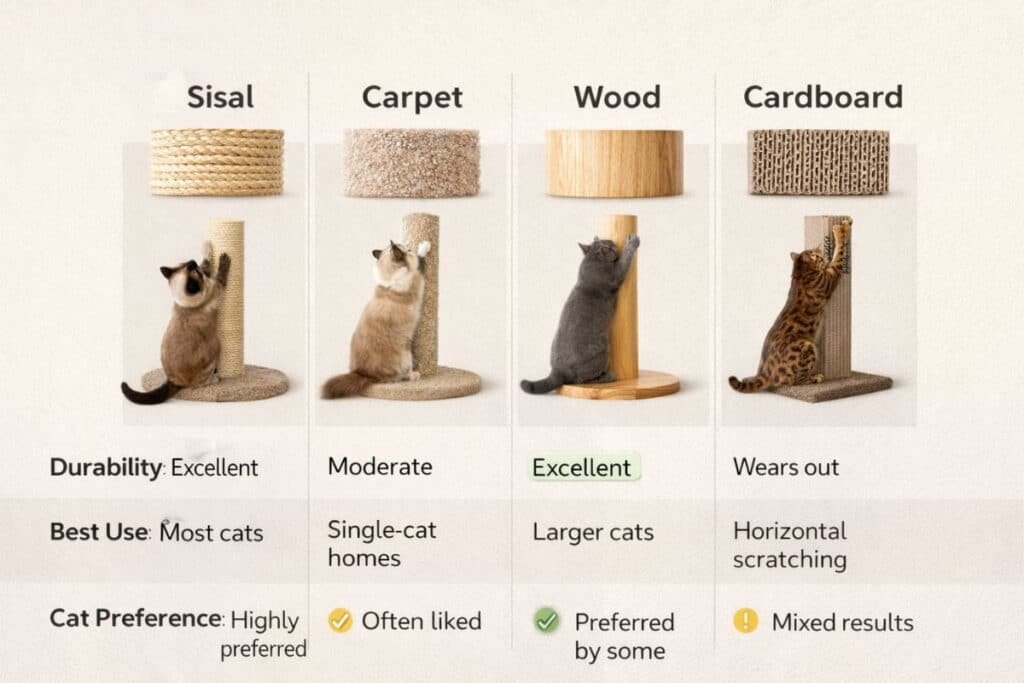
Material affects lifespan and satisfaction. Sisal lasts longest. A sisal rope material grips claws well and resists tearing. Carpet feels soft but may confuse cats and encourage carpet damage elsewhere.
Wood and bark mimic trees and support cat scratching instincts. Cardboard wears fast and suits light use only. For heavy use, a durable scratching post for cats with sisal performs best over time.
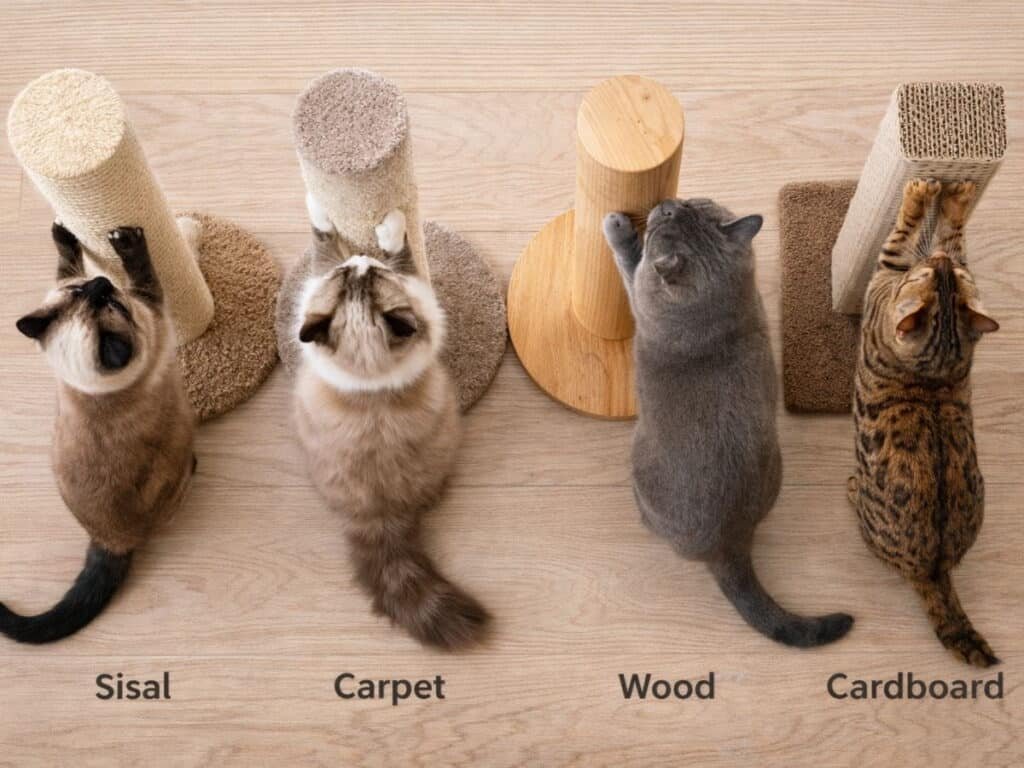
| Material | Durability | Best For |
| Sisal | Very high | Daily heavy use |
| Carpet | Medium | Gentle scratchers |
| Wood | High | Natural feel |
| Cardboard | Low | Temporary use |
Freestanding vs Wall-Mounted Big Scratch Posts: Which Is Better?
A freestanding scratching post for cats offers flexibility. You can move it near sleep spots or windows. These posts work well for renters. A solid base matters most for safety and comfort.
Wall-mounted posts save space. They suit apartments with limited floor area. However, many cats prefer floor contact. For most homes, a vertical scratching post for cats with floor support feels more natural and inviting.
Stability and Safety Features to Look for in a Big Scratch Post
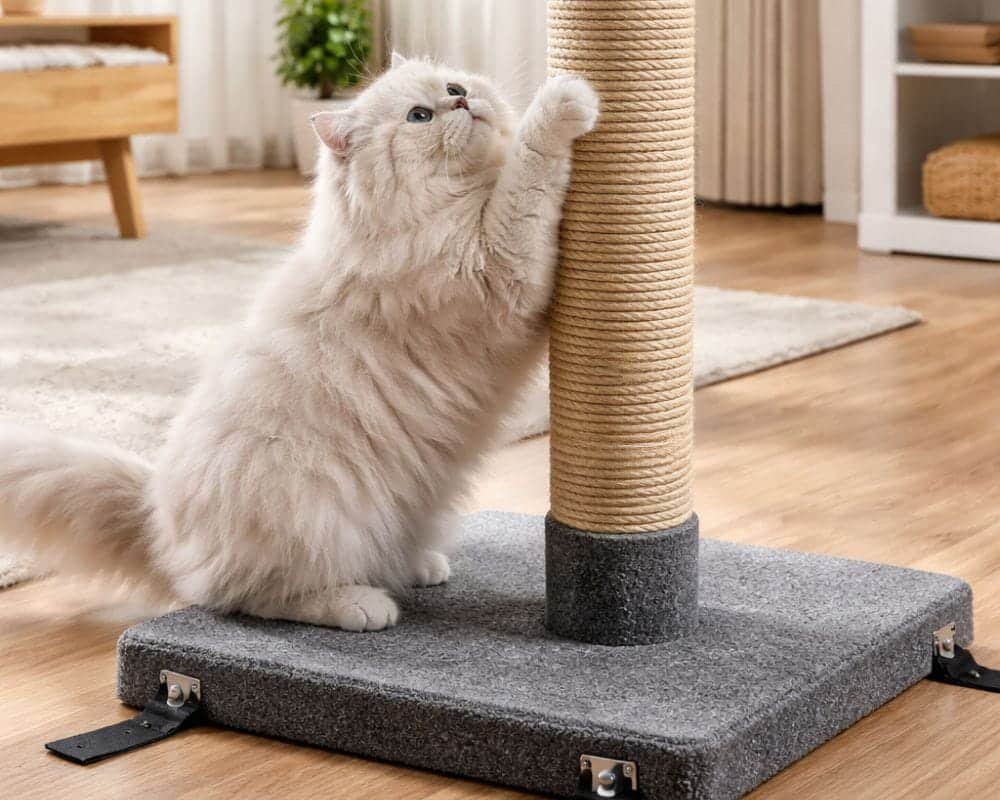
A big scratch post for cats must stay still. Movement scares cats. A wobble-free design encourages repeated use. Look for thick bases, wide footprints, and solid joints.
Weight matters too. A heavy base scratch post for cats resists tipping. Anchors help in multi-cat homes. An anti-tip scratching post protects cats and nearby furniture from sudden falls.
How to Train Your Cat to Use a Big Scratch Post (That Actually Works)
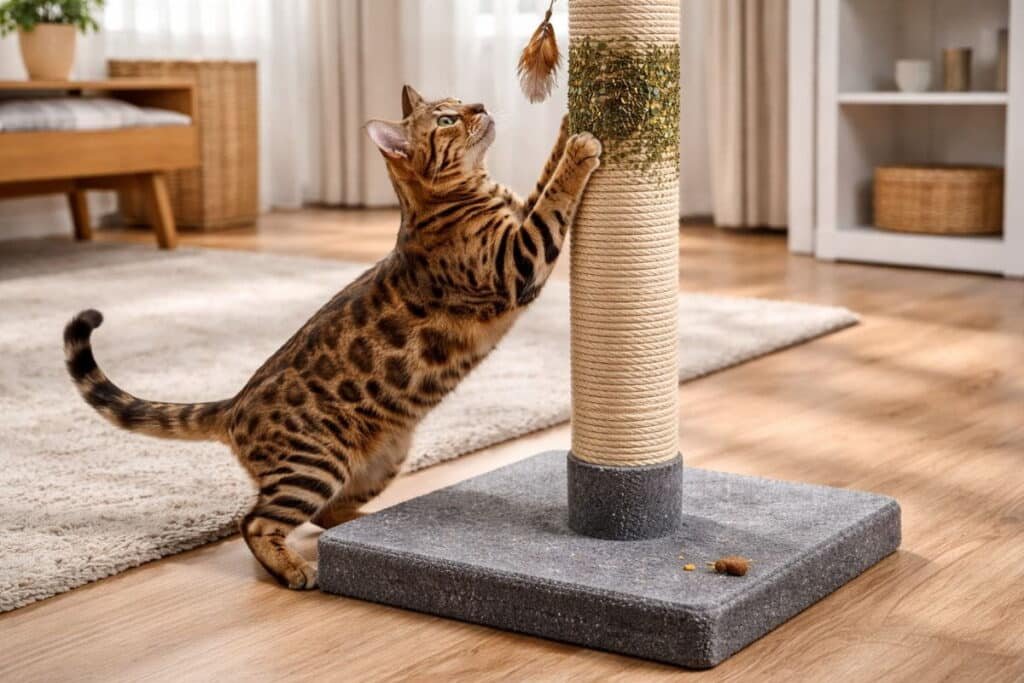
Place the big scratch post for cats where your cat already stretches. Near beds works best. Cats scratch after waking. That timing supports training cat to use scratch post naturally without force.
Use scent and praise. Light catnip helps some cats. Others prefer treats. Never carry cats to the post. Let curiosity lead. Over time, scratching becomes a habit and part of indoor cat enrichment.
Common Mistakes People Make When Buying a Big Scratch Post
Many owners buy posts that look nice but feel weak. A sturdy scratch post for cats matters more than color. Thin columns bend under pressure and discourage use.
Another mistake is ignoring breed size. A big scratch post for large cats needs extra height and weight. Undersized posts fail fast and frustrate both cats and owners.
Big Scratch Post vs Cat Tree: Do You Need Both?
A big scratch post for cats focuses on scratching only. A cat tree adds climbing and lounging. Both serve different needs. Scratching posts support posture and muscle engagement directly.
In small homes, a big cat scratcher post may be enough. Active cats enjoy both. Together, they form complete feline enrichment furniture without overstimulation.
How Long Does a Big Scratch Post Last and When Should You Replace It?
A quality big scratch post for cats lasts one to three years. Sisal frays slowly. Fraying is normal and still safe. Replace only when the core loosens or tilts.
Regular checks keep cats safe. A worn post may reduce healthy claws and paws. Replacing on time keeps scratching enjoyable and safe for daily use.
“Cats scratch to feel secure. Give them a solid place, and they relax.”
— American Association of Feline Practitioners
A well-chosen big scratch post for cats supports comfort, behavior, and home harmony. When size, material, and stability work together, cats choose the post every time.
FAQs: Big Scratch Post for Cats
What kind of scratching post do cats like most?
Most cats prefer a tall, sturdy scratching post wrapped in sisal that allows full stretching.
Do scratching posts really work for cats?
Yes, scratching posts work when they are stable, tall enough, and placed where cats naturally stretch.
How big should a cat scratch post be?
A cat scratch post should be taller than your cat when fully stretched and have a wide, heavy base.
What is the best thing for deep cat scratches?
Clean the scratch gently, apply an antiseptic, and see a doctor if redness or swelling appears.