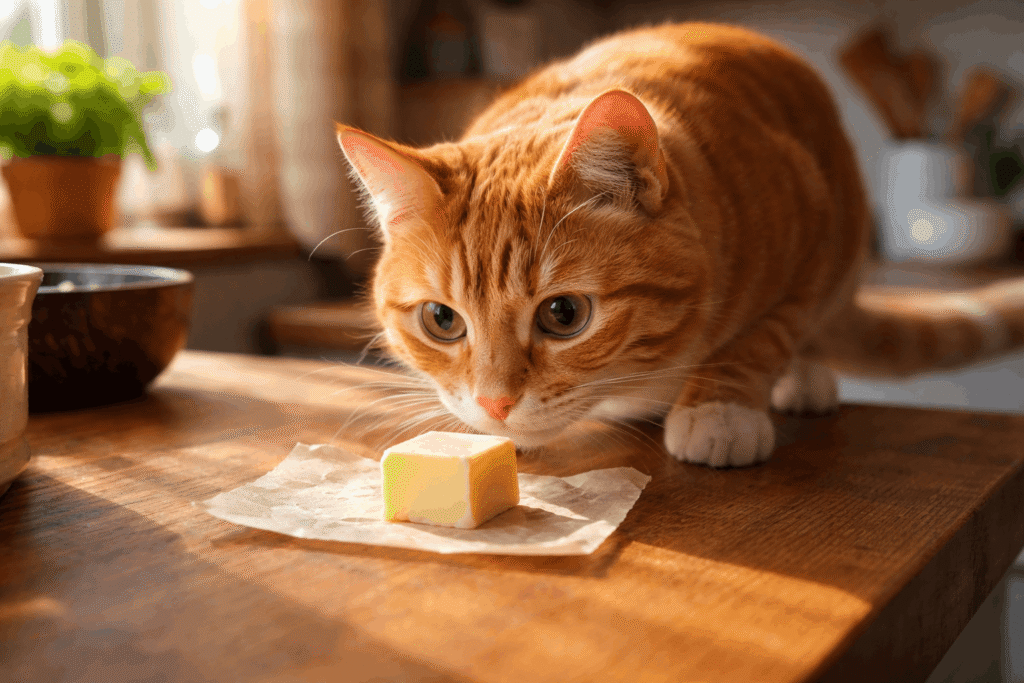
Butter melts quickly on warm toast, and somehow your cat always appears at the perfect moment. That curious sniff turns into a sneaky lick, and suddenly you’re wondering, can cats eat butter without getting sick. Many owners worry about is butter safe for cats, especially after hearing mixed advice about dairy. Many emergency vet visits start with something simple left on the counter.
The truth is more nuanced than a simple yes or no. Because of common lactose intolerance in cats, rich dairy can upset their stomach. Add the concern of high-fat foods for cats risks, and it’s clear butter isn’t harmless. So before you share a taste, let’s unpack what it really means for feline health.
Can Cats Eat Butter? The Short Answer for Cat Owners
Yes, a tiny lick is usually harmless. Still, can cats eat butter regularly? No. Butter offers fat without useful nutrition. It doesn’t support balanced cat nutrition or meet proper cat nutrition requirements for long-term health.
The bigger concern is excess fat and empty calories. Many owners ask, is butter toxic to cats. It is not toxic, but frequent feeding leads to problems. Think of butter like junk food for pets. It should remain an occasional accident, not a habit.
Can Kittens Eat Butter?
Kittens have delicate stomachs and growing bodies. While people ask can kittens eat butter, it’s best avoided. Young cats need a high-protein cat diet that supports development, not extra fat that disrupts their sensitive digestion.
Is Butter Safe or Harmful for Cats? Understanding the Health Risks
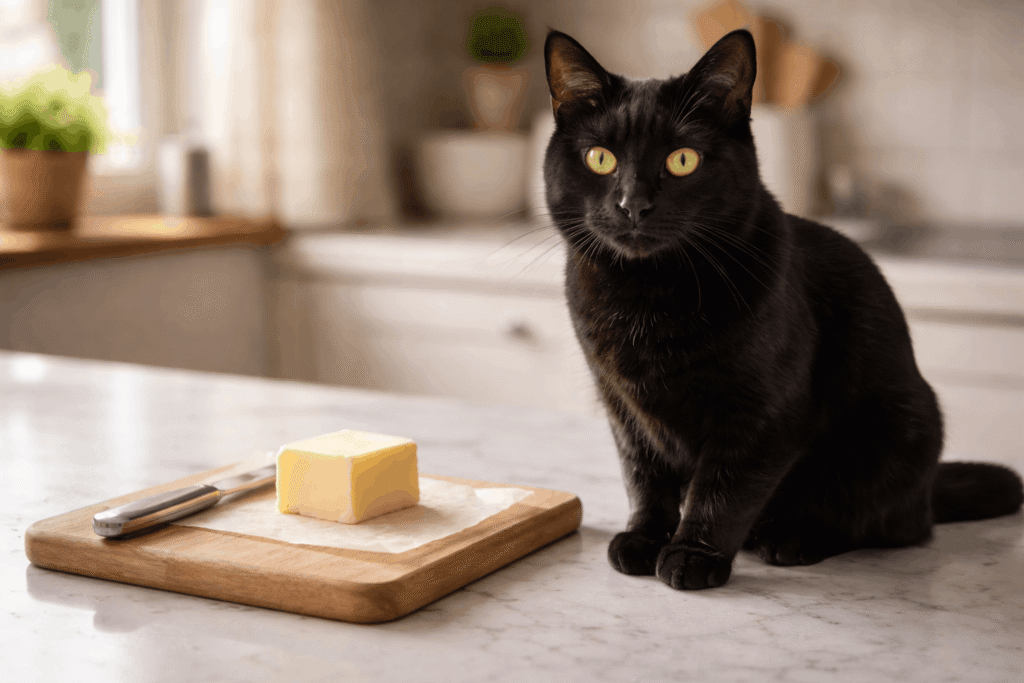
To answer is butter safe for cats, you must look at the fat content. Butter is one of the most calorie-dense foods in a kitchen. Regular intake increases the risk of obesity in cats and long-term, unhealthy weight gain.
High fat also stresses the pancreas. Over time, this increases pancreatitis risk in cats. Many owners overlook the danger because the amount seems small. However, repeated exposure to high-fat foods for cats risks damage to overall health.
Why High-Fat Human Foods Are a Problem
Cats follow an obligate carnivore diet. Their bodies expect animal protein, not processed fats. Too many treats also cause poor appetite due to treats and lead to a serious nutrient imbalance over time.
Are Cats Lactose Intolerant? How Dairy Affects Their Digestion
Many people believe dairy is harmless. The truth is that lactose intolerance in cats is common. After weaning, most cats lose the enzyme needed to digest lactose. This enzyme deficiency (lactase) causes dairy to pass poorly through the feline digestive system.
That is why owners ask, is dairy bad for cats and can cats eat dairy products safely. The answer depends on the individual cat. However, adult cats dairy intolerance often leads to digestive problems even with small amounts.
Signs of Dairy Sensitivity
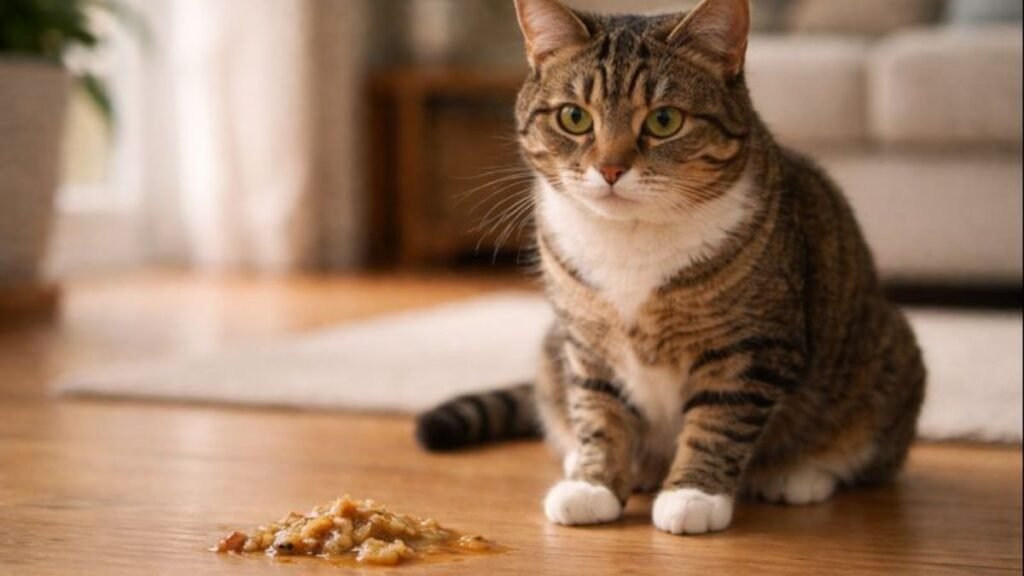
If your pet reacts badly, you may notice digestive upset in cats, including vomiting and diarrhea in cats or a bloated, sensitive stomach in cats after consuming butter, milk, or cheese.
What Happens If a Cat Eats Butter? Symptoms to Watch For
Many owners panic and search for what happens if a cat eats butter. In most cases, nothing serious occurs. A small amount may pass without symptoms, especially if your cat has eaten fatty foods before.
Problems appear when the portion is large. You might see loose stools, vomiting, or lethargy. If symptoms last more than 24 hours, follow the proper what to do if cat eats butter and monitor closely.
When to Call for Help
Contact a professional immediately if vomiting repeats or your cat becomes weak. Knowing when to call a veterinarian can prevent complications and protect long-term health.
Can Butter Ever Be Helpful for Cats? (Hairballs, Medication, Myths Explained)
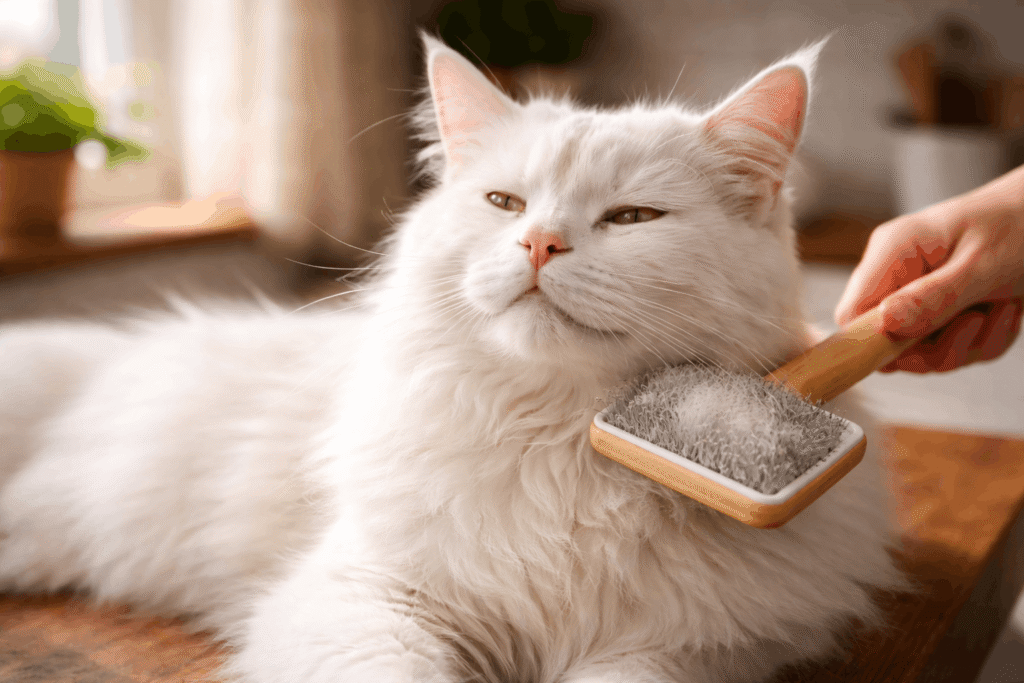
Some owners use butter for cats hairballs, believing it helps with lubrication. In reality, there is little scientific support. Modern hairball remedies for cats work better and support safe digestion.
Occasionally, a tiny smear may help hide medication. However, this should remain one of the rare occasional treats for cats and should be used only when necessary.
Better Hairball Solutions
Veterinarians recommend natural hairball control methods such as a high-fiber cat diet, regular brushing, and consistent grooming to reduce hairballs. These steps also reduce excessive grooming in cats caused by stress.
Flavored, Salted, or Cooked in Butter: Are These More Dangerous?
Plain butter is one thing. Seasoned butter is another. Owners often ask, is salted butter bad for cats. Excess sodium can strain the kidneys and upset fluid balance.
Flavored varieties may contain garlic, onion, or spices. These ingredients appear on the list of foods cats should avoid. Butter used in cooking also carries hidden oils, seasonings, and additives that increase digestive risk.
Hidden Ingredient Risks
Human recipes often include compounds that irritate a cat’s stomach. This makes flavored butter far more dangerous than plain varieties.
How Much Butter Is Too Much? Safe Limits and Emergency Guidelines
A common question is how much butter can cats eat. The safest answer is none. If exposure happens, keep it under a pea-sized amount and avoid repeating the behavior.
Large consumption can trigger severe digestive stress. Owners often search for how much butter is too much for a cat after accidents. The following table explains general risk levels.
| Amount Consumed | Risk Level | Action |
| Small lick | Low | Monitor at home |
| 1–2 teaspoons | Moderate | Watch for symptoms |
| Large portion | High | Contact a vet immediately |
How to Stop Your Cat From Eating Butter or Human Foods
Understanding why cats like butter helps in prevention. Cats are drawn to strong fat smells and rich textures. These scents trigger instinct, not nutritional need.
Store butter in sealed containers and clean surfaces quickly. Limiting exposure protects your cat from unhealthy habits and reduces interest in human foods safe for cats versus dangerous options.
Feeding Routine Matters
Stick to scheduled meals and maintain proper feline daily calorie needs. A consistent routine with quality food reduces food-seeking behavior.
Healthier Treat Alternatives to Butter for Cats
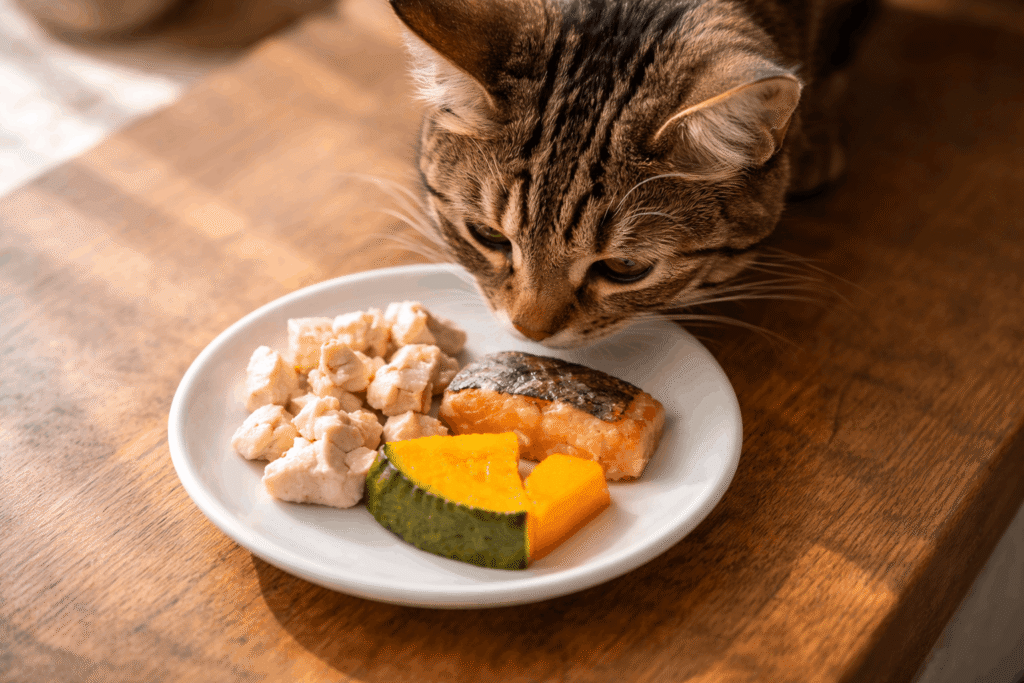
Instead of butter, choose safe treats for cats that support health. Options like plain cooked chicken, small fish pieces, or pumpkin provide nutrients without excess fat.
Owners often ask can cats eat cheese or milk. These should remain rare due to lactose concerns. Better choices come from vet-approved cat treats designed for digestion and portion control.
Better Nutrition Choices
High-quality diets, including balanced wet vs dry cat food, offer proven commercial cat food benefits and help maintain long-term health.
The Bottom Line: Should You Ever Give Butter to Cats?
So, can cats eat butter occasionally? Yes, but it should never become routine. Butter adds fat without value and increases long-term health risks if offered often.
If you want rewards, choose healthy alternatives to butter for cats and stick to safe human food portions only when appropriate. When in doubt, remember the simple rule: Treats should support health, not replace nutrition.
Quick Safety Reference Table
| Question | Answer |
| My cat ate butter. Should I worry | Usually, no, monitor symptoms |
| Can lactose-intolerant cats eat butter | Sometimes small amounts are tolerated |
| Can cats eat butter for hairballs | Not recommended |
| Is butter toxic to cats | No, but unhealthy long-term |
| Healthy alternatives to butter for cats | Lean protein or vet treats |
FAQs
Why are cats obsessed with butter?
Cats are attracted to butter because of its strong smell and high fat content, which appeals to their instinct for energy-rich foods.
Why does my cat like honey?
Cats may be curious about honey’s sticky texture or sweetness, but they don’t actually taste sugar and it offers no nutritional benefit.
Is butter a laxative for cats?
Butter is not a safe or reliable laxative; too much fat can cause digestive upset instead of helping.
Is a small amount of butter ok for cats?
A tiny lick is usually harmless, but butter should only be an occasional treat and not part of a regular diet.