Cats often show ear problems through subtle behavioral changes. If you notice a cat shaking head and scratching ears, you might wonder whether it’s simple wax or something more serious. Understanding cat ear mites vs wax helps you protect your pet from discomfort and possible infection. Normal wax, called cerumen, protects the ear by trapping dirt and debris inside the ear canal.
However, a sudden increase in wax or dark debris may point to symptoms of cat ear mites. These tiny parasites in cat ears can cause intense itching, redness, and irritation. Because the signs look similar at first, many owners struggle to identify the real cause. Learning the differences early helps you respond quickly and keep your cat comfortable and healthy.
Understanding Cat Ear Health and Why Ear Problems Happen
A cat’s ear works like a funnel. The outer flap collects sound and sends it through the narrow ear canal toward the inner ear. Inside this tunnel, glands produce cerumen, a protective wax that traps dust and bacteria. This process keeps the ear clean while supporting natural ear hygiene.
However, several cat ear health problems disturb that balance. Allergies, dirt, parasites, and infections may trigger excessive ear wax in cats or severe itching and irritation. When this happens, many owners struggle to tell whether the cat has ear mites or just a buildup of wax. For example, a cat owner may first notice their pet shaking its head after playing outside.
How a Cat’s Ear Canal Works
The feline ear contains delicate skin and oil glands. These glands create cerumen, which slowly moves outward, carrying debris. When the system works well, wax leaves the ear naturally. Problems appear when irritation blocks the process and causes cat ear wax buildup or infection.
What Are Ear Mites in Cats?
Ear mites are tiny pests that live deep inside the ear canal. Their scientific name is Otodectes cynotis, and they are one of the most common parasites in cat ears. These microscopic parasites feed on oils and skin flakes, causing intense itching and irritation.
When mites multiply quickly, they trigger a painful parasitic infestation. This leads to severe cat ear mites symptoms such as scratching, redness, and cat ear discharge dark brown. If untreated, the irritation can progress to inflammation or even a secondary infection.
How Cats Get Ear Mites
Understanding how cats get ear mites helps prevent future outbreaks. Mites spread through close contact between animals. Because cat ear mites contagious behavior allows fast transmission, shelters and multi-pet homes see infections more often.
Indoor pets are not always safe either. Many owners ask can indoor cats get ear mites, and the answer is yes. A visiting animal, contaminated bedding, or grooming tools can introduce mites and cause itchy ears in cats.
What Is Normal Earwax in Cats?
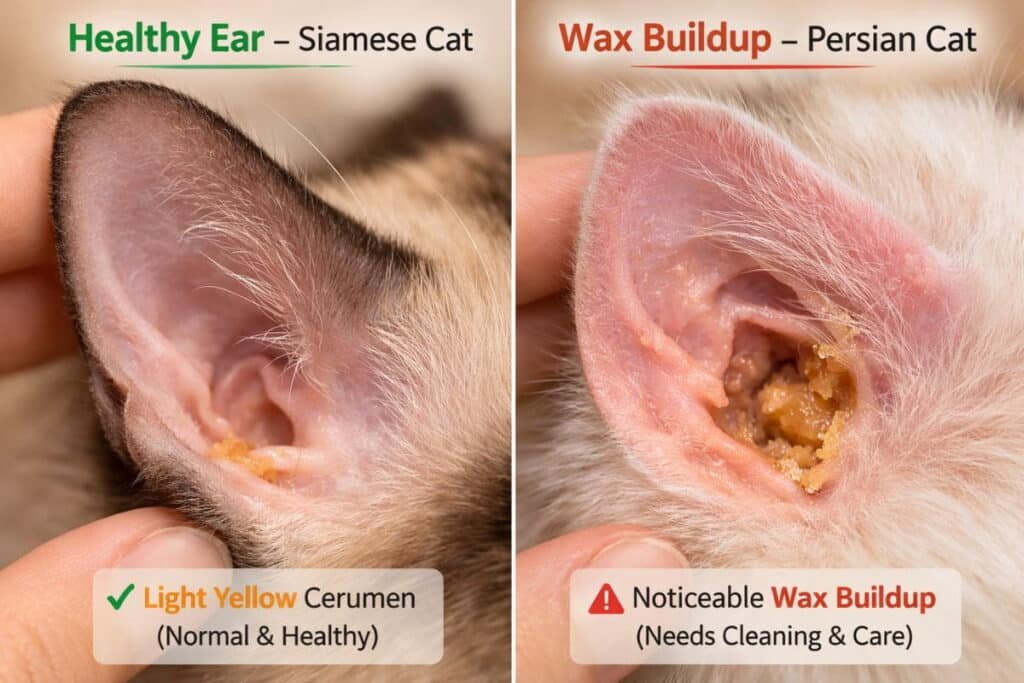
Earwax in cats plays an important protective role. This substance, called cerumen, traps dust, pollen, and microbes before they reach the inner ear. Healthy wax appears light brown or yellow and produces very little odor.
Trouble begins when excessive ear wax in cats appears suddenly. Owners often ask why does my cat have so much ear wax when they notice buildup. Allergies, irritants, or hidden infections may cause cat ear wax buildup that mimics the early signs of cat ear mites vs wax confusion.
What Healthy Cat Earwax Looks Like
Normal wax appears smooth and slightly sticky. It usually stays light in color and forms only small amounts. When wax turns dark or thick, or when you notice dark ear discharge in cats causes, it may signal infection or mite activity.
Cat Ear Mites vs Earwax: Key Differences Every Owner Should Know
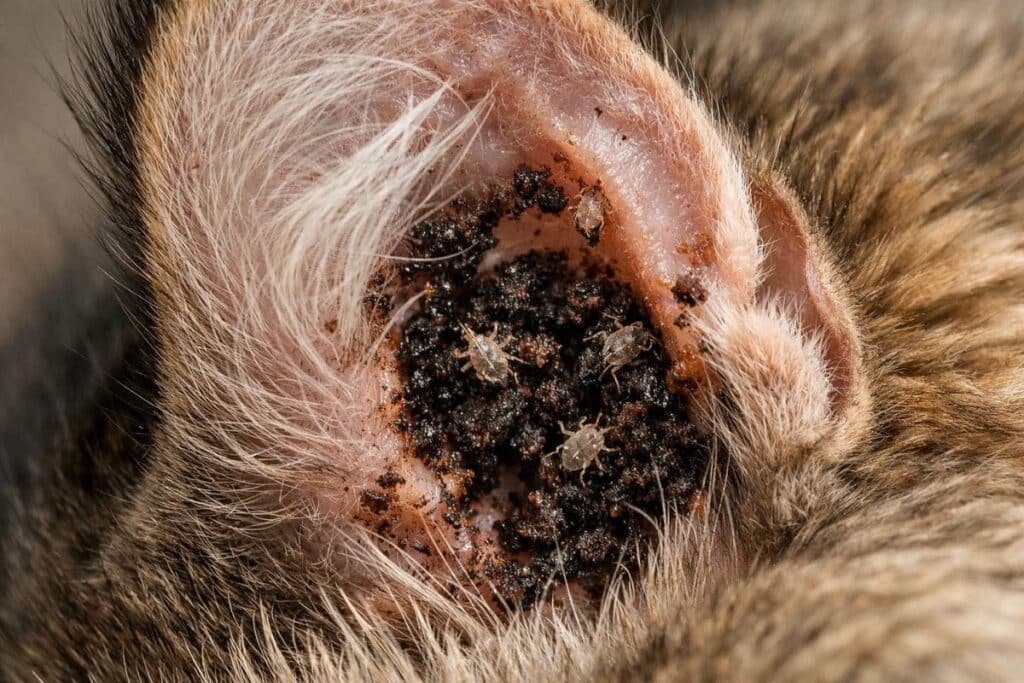
Spotting the difference between cat ear mites and ear wax requires close observation. Mites produce irritation and debris, while wax appears softer and lighter. Many people researching what does ear mites look like in cats notice a dark, crumbly material resembling coffee grounds.
The comparison below explains the main clues owners use when identifying cat ear mites vs wax.
| Feature | Ear Mites | Ear Wax |
| Cause | Parasitic infestation from Otodectes cynotis | Natural cerumen production |
| Appearance | Coffee ground debris and dark ear discharge | Yellow or light brown wax |
| Behavior | Severe cat shaking head and scratching ears | Mild irritation |
| Smell | Strong odor from inflammation | Usually mild |
| Risk | Can cause secondary infection | Usually harmless |
This table helps answer the common question how to tell if my cat has ear mites or wax.
Visible Signs Owners Notice First
Most owners notice behavior changes before they see ear debris. A cat may scratch constantly, rub its ears, or tilt its head. These early clues help detect cat ear mites symptoms before complications develop.
Signs Your Cat Has Ear Mites (Symptoms to Watch For)
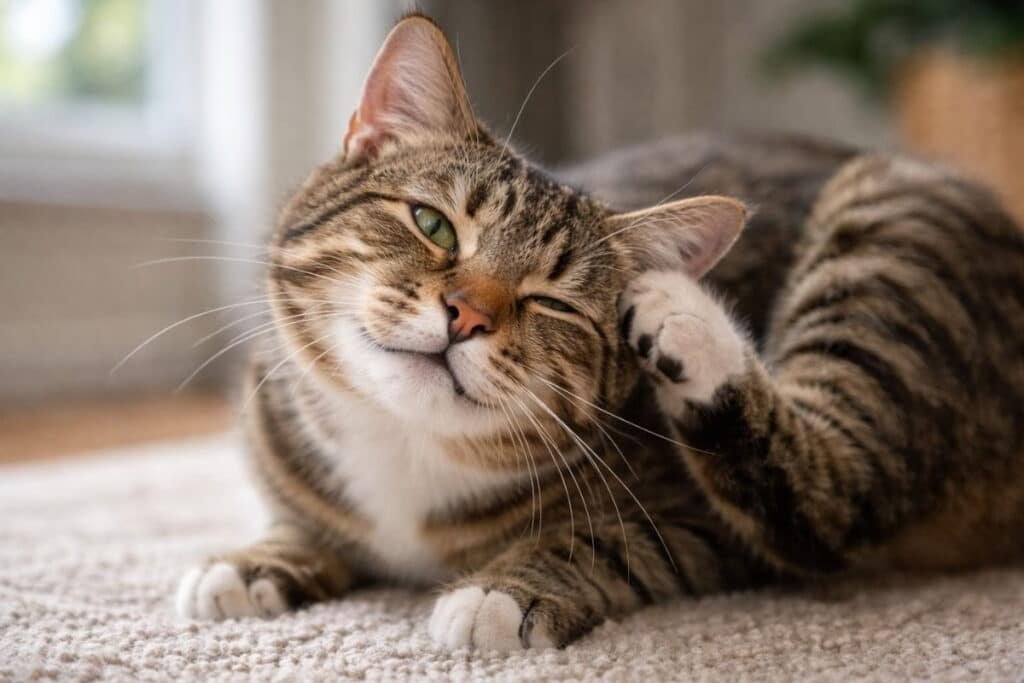
The most obvious clue is constant scratching. Cats with mites experience severe itchy ears in cats and frequent cat shaking head and scratching ears. You may also notice redness, swelling, or thick cat ear discharge dark brown.
Another common symptom is crumbly debris inside the ear. This dark material forms when mites mix oils and skin flakes into coffee ground debris. These classic cat ear mites symptoms help owners identify possible infestations early.
Behavioral Clues Cats Show
Cats often rub their ears against furniture or carpet. Some develop scabs around the ears due to scratching. These reactions signal intense itching and irritation, a hallmark of mites rather than simple wax.
When Earwax Might Signal an Ear Infection
Sometimes wax hides deeper trouble. A sudden increase in wax may signal bacterial infection or fungal infection within the ear canal. These infections often appear alongside swelling, odor, or pain.
Veterinarians also study ear mites vs ear infection in cats because the symptoms overlap. Both conditions produce ear discharge and irritation. However, infections usually cause thicker wax and a stronger smell.
Warning Signs of Infection
Owners should watch for redness, swelling, or discharge. These clues often answer questions about signs of ear infection in cats and help determine when to see a vet for cat ear problems.
How Veterinarians Diagnose Ear Mites in Cats
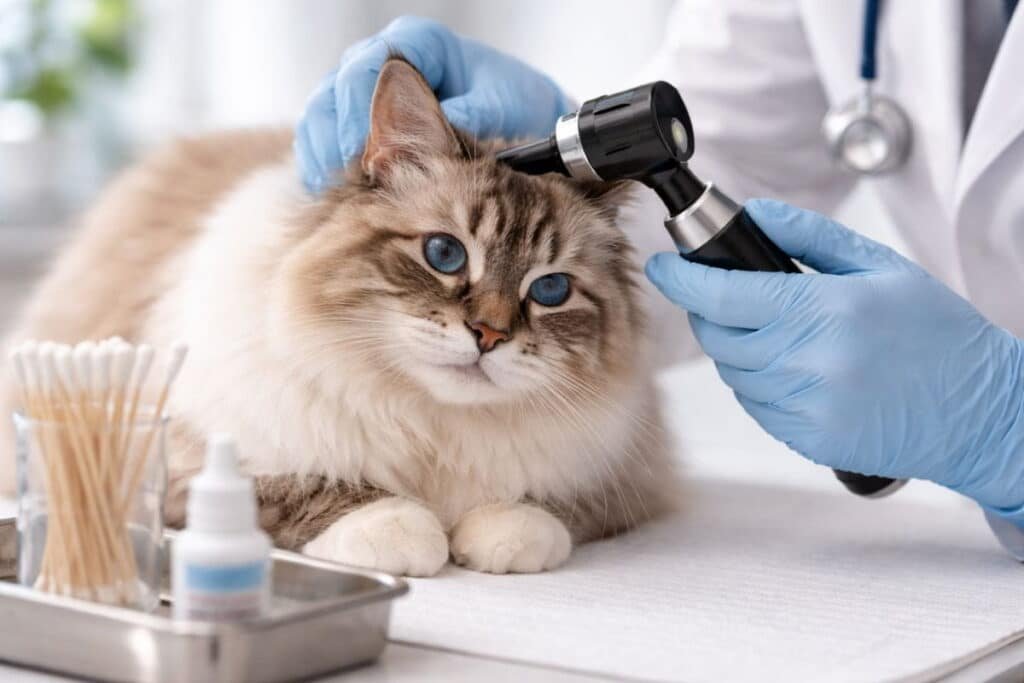
A professional veterinary diagnosis ensures the correct treatment. Veterinarians begin with an otoscope examination, which allows them to inspect the ear canal using magnified light.
They may also collect debris for an ear swab test. This sample reveals microscopic parasites, bacteria, or yeast. This careful process confirms whether the issue involves mites, wax, or infection.
Why Professional Diagnosis Matters
Self-diagnosis can lead to mistakes. Treating wax as mites or ignoring infection may worsen the condition. A proper veterinary diagnosis ensures the correct plan for ear mites in cats treatment.
Treatment Options for Cat Ear Mites
Once mites are confirmed, veterinarians begin anti-parasitic treatment immediately. The most common approach uses topical medication applied directly inside the ear canal.
Cleaning the ear first removes debris and allows medication to work better. Many vets recommend a gentle ear cleaning solution before applying drops. This process eliminates mites and prevents secondary infection.
Medication and Recovery
Modern ear mites in cats treatment works quickly. Within days, scratching decreases and ears begin to heal. Some owners also explore cat ear mites treatment at home, though veterinary care remains the safest option.
Safe Ways to Clean Cat Ears at Home
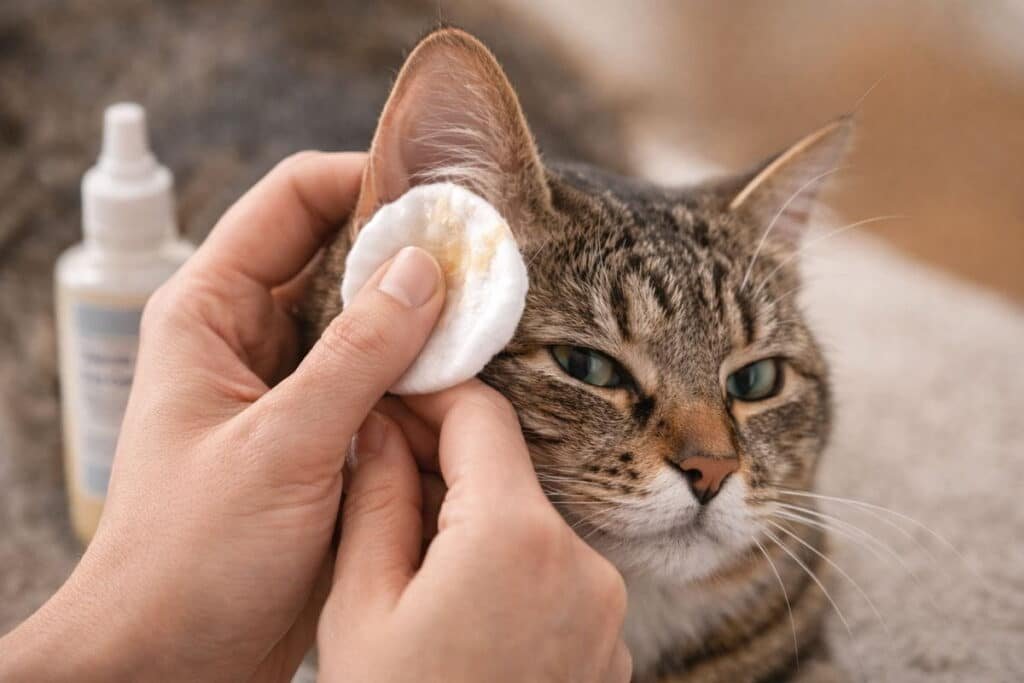
Routine cleaning helps prevent infection and wax buildup. Many owners search for how to clean cat ears at home safely before attempting this task. The safest method uses cotton pads and a vet-approved ear cleaning solution.
Proper cleaning cat ears safely requires patience and gentle handling. Never push cotton swabs deep into the ear canal, because they can damage sensitive skin and worsen irritation.
Choosing the Right Cleaner
Some owners prefer a natural cat ear cleaner with soothing ingredients. Regardless of the product, regular cleaning improves ear hygiene and reduces cat ear health problems.
Preventing Ear Mites and Ear Problems in Cats
Prevention begins with observation. Weekly ear checks help detect early cat ear mites symptoms or unusual ear discharge before they worsen. Early action protects hearing and comfort.
Regular grooming, parasite prevention, and proper diet also help. These habits reduce parasites in cat ears and limit excessive ear wax in cats. With simple care, most cats avoid recurring problems related to cat ear mites vs wax.
Long-Term Ear Care Tips
Healthy ears require consistent attention. Routine cleaning, parasite control, and vet visits prevent infections and irritation. When you understand how to tell if cat has ear mites, you can act quickly and keep your cat comfortable.
FAQs
How do I know if my cat has ear wax or ear mites?
Normal ear wax is light yellow or brown with little itching, while ear mites cause dark coffee-ground debris, strong odor, and intense scratching or head shaking.
Do indoor cats get ear mites?
Yes, indoor cats can get ear mites through contact with infected pets, bedding, grooming tools, or animals brought into the home.
Are cat ear mites visible to the human eye?
Ear mites are extremely tiny, so they usually look like moving white specks and are normally confirmed only with a vet’s microscope.
Can cat ear mites go away on their own?
No, ear mites rarely disappear without treatment and can cause infections or serious irritation if not treated by a veterinarian.