
Cat eye infections can range from a minor irritation to a serious cat eye infection that threatens vision. They often start subtly, with red watery eyes in cats, but can escalate quickly. Understanding signs of cat eye infection helps you act fast and give your cat the best chance of recovery. Knowing when to seek emergency veterinary care versus waiting for a regular veterinary appointment is crucial to prevent complications like corneal ulcers in cats or glaucoma in cats.
Every cat owner should be able to spot symptoms of cat eye infection early. Swollen cat eye, cat eye discharge, excessive blinking or squinting, and pawing at the eye are common warning signs. Observing subtle behavior changes, like rubbing the face on furniture or avoiding bright light, can also indicate discomfort. Early action often means a mild cat eye infection can be treated effectively, avoiding a severe cat eye infection later.
What Is a Cat Eye Infection? (Types and How They Develop)
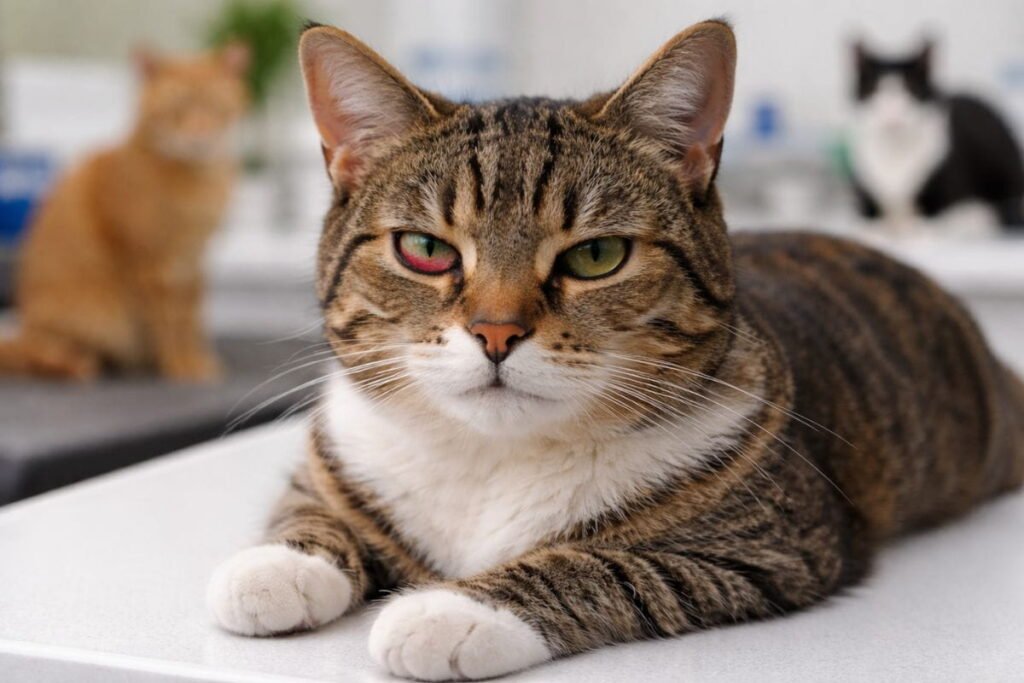
A feline eye infection occurs when bacteria, viruses, or other irritants invade the delicate tissues of a cat’s eye. Common types include conjunctivitis, keratitis, uveitis, and corneal ulcers. Bacterial eye infections and viral eye infections in cats are the most frequent causes, though injuries and environmental factors can trigger eye inflammation in cats. Each type develops differently. Conjunctivitis causes redness and swelling, while corneal ulcers are open sores on the surface of the eye that can threaten vision if untreated.
In multi-cat households, multi-cat household risks increase, and stress can trigger stress-related viral flare-ups. Cats with weakened immune systems are particularly vulnerable. Eye irritation vs infection can look similar at first, but infections often involve yellow or green eye discharge, cat eye pain, and cloudy eye in cats. Understanding these differences helps you decide whether immediate action is needed.
Common Symptoms of Cat Eye Infection (From Mild to Severe)
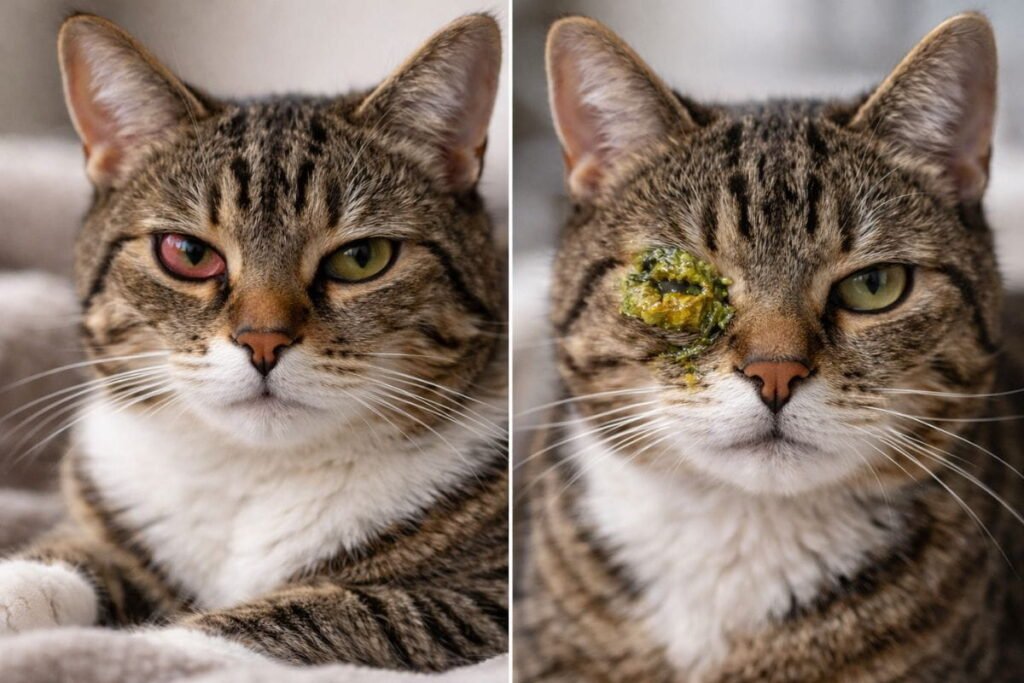
Mild cat eye infection symptoms include slight redness, watery cat eye discharge, and occasional excessive blinking or squinting. Your cat might rub its face lightly or show slight irritation, but continue normal activity. Early recognition allows prompt treatment, preventing escalation to severe cat eye infection.
Severe cat eye infection often presents with swollen cat eye, yellow or green eye discharge, visible third eyelid showing, unequal pupil size, and significant cat eye pain. Other indicators include sudden vision changes, light sensitivity, or refusal to eat. Acting quickly can prevent vision-threatening eye conditions.
What Causes Eye Infections in Cats? (Bacteria, Viruses, Injuries, Allergies)

Bacterial eye infections are caused by common pathogens like Chlamydophila felis or Mycoplasma, leading to redness, swelling, and cat eye discharge. Viral eye infections in cats, such as feline herpesvirus, cause red watery eyes in cats, corneal ulcers in cats, and recurrent flare-ups under stress.
Injuries, scratches, or foreign bodies can also cause eye inflammation in cats. Allergies or environmental irritants, like dust and chemicals, trigger eye irritation vs infection. Cats living with other felines face multi-cat household risks, increasing chances of contagious eye infections in cats spreading quickly.
Is a Cat Eye Infection an Emergency? (Clear Red Flags You Shouldn’t Ignore)

You should seek cat eye infection emergency care if your cat has swollen cat eye, thick yellow or green eye discharge, blood in the eye, or unequal pupil size. Severe cat eye pain, refusal to open the eye, or sudden vision changes also indicate a severe cat eye infection requiring emergency veterinary care.
Mild symptoms, such as slight redness or occasional excessive blinking or squinting, can often wait for a regular veterinary appointment. Observing changes in cat eye swelling or discharge during this period is important. Documenting these symptoms with photos can help your veterinarian evaluate the situation more accurately.
How Vets Diagnose Cat Eye Infections (Tests, Exams, and What to Expect)
Vets perform a complete examination of the eyes and surrounding tissues. Common tests include fluorescein staining to detect corneal ulcers in cats, tonometry for glaucoma detection, and cultures for bacterial eye infections. Eye pressure tests and evaluation of the third eyelid showing help determine severity.
You may be asked about your cat’s symptom timeline, history of viral eye infections in cats, or exposure to other felines. Preparing your cat for the vet visit with safe cat handling and transporting a sick cat carefully ensures minimal stress and better cooperation during the exam.
Treatment Options for Cat Eye Infections (Medication, Care, Recovery Time)
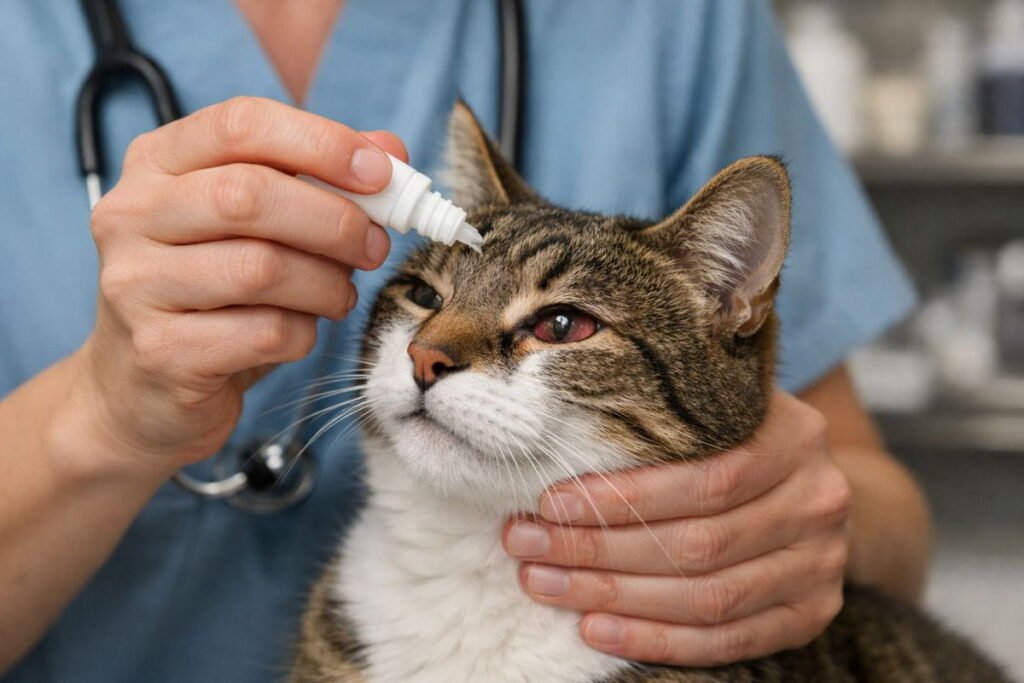
Cat eye infection treatment often includes topical antibiotics or antivirals, anti-inflammatory eye drops, and oral medications if needed. Mild infections typically resolve within a few days with proper care, while severe cat eye infection may require weeks of treatment. Recovery time also depends on the infection type and the cat’s overall health.
For advanced cases like corneal ulcers in cats or glaucoma in cats, specialized treatments or surgery may be necessary. Maintaining a dimly lit recovery space and preventing the cat from rubbing its eyes helps accelerate healing. Using a protective collar for cats prevents self-injury during recovery.
Can You Treat a Cat Eye Infection at Home? (What’s Safe vs Dangerous)

Home care is limited to mild infections and supportive measures. You can gently wipe eye discharge safely with a clean, damp cloth. Ensuring the cat rests in a quiet, low-stress environment can improve recovery. Safe cat handling during cleaning and medication administration is critical to avoid injury.
Never use human eye drops, force the eyelid open, or apply unapproved remedies. Dangerous attempts can worsen eye inflammation in cats or trigger vision-threatening eye conditions. Always consult your vet before attempting home treatment.
How Long Do Cat Eye Infections Last? (Healing Stages and Prognosis)
Mild infections may improve in 2–5 days with proper cat eye infection treatment, while moderate infections often require 1–2 weeks. Severe cases, especially those involving corneal ulcers in cats or glaucoma in cats, can take longer and need continuous monitoring.
Recovery depends on age, underlying conditions, and early intervention. Watch for lingering cat eye swelling, persistent discharge, or cat eye pain, as these may indicate complications or secondary infections. Regular follow-ups with your vet ensure full healing.
Can Cat Eye Infections Spread to Other Cats or Humans?
Contagious eye infections in cats can spread in multi-cat households or shelters. Isolation, hygiene, and cleaning bedding help prevent transmission. Viral eye infections in cats are particularly contagious, while bacterial eye infections spread less often but still require caution.
Human transmission is rare but possible in some cases. Always wash hands after handling a cat with eye inflammation in cats, and avoid contact with yellow or green eye discharge. Monitoring all pets in the household prevents wider outbreaks.
How to Prevent Cat Eye Infections (Long-Term Eye Health Tips)

Prevention focuses on vaccinations, routine checkups, and environmental care. Keep living spaces clean, reduce allergens, and manage stress-related viral flare-ups. Multi-cat homes should isolate affected cats promptly to reduce multi-cat household risks.
A healthy diet, proper hydration, and avoiding eye trauma also reduce the chances of eye irritation vs infection. Using protective collar for cats during flare-ups and maintaining a dimly lit recovery space after treatment supports long-term eye health.
Table: Symptoms and Severity of Cat Eye Infection
| Symptom | Mild Infection | Severe Infection |
| Redness | Slight | Intense |
| Discharge | Clear or slightly cloudy | Yellow or green eye discharge |
| Eye Swelling | Minimal | Swollen cat eye |
| Behavior Changes | Normal | Hiding, pawing at eyes, no eating |
| Pain | Mild | Cat eye pain |
| Vision | Normal | Sudden vision changes |
| Third eyelid | Normal | Third eyelid showing |

FAQs
Cat Eye Infection Medicine?
Veterinarians usually prescribe antibiotic or antiviral eye drops depending on the cause. Oral medications may be needed for severe cat eye infection treatment.
Cat Eye Infection Symptoms?
Look for red watery eyes in cats, cat eye discharge, swollen cat eye, or excessive blinking or squinting. Severe cases may show pawing at the eye or sudden vision changes.
Cat Eye Infection Home Remedy?
Mild infections may benefit from gently wiping eye discharge safely and keeping your cat in a dimly lit recovery space. Never use human eye drops or force the eye open.
Cat Eye Infection Drops?
Only use drops prescribed by a vet for bacterial or viral eye infections in cats. Proper application prevents cat eye swelling and speeds recovery.