A cat sneezing that won’t quit can feel like a mystery. One day, your cat is fine, and then suddenly, there are watery eyes and a stuffy nose. For many cat owners, this is cat herpes, also called feline herpesvirus type-1. It spreads easily and often returns when stress arises.
If you’re worried, you’re not alone. This guide explains what cat herpes (FHV-1) looks like, how vets treat it, and how you can help your cat feel better. You’ll also learn how to stop flare-ups from turning your living room into a sneeze zone again.
What Is Cat Herpes (FHV-1) and Why Is It So Common?
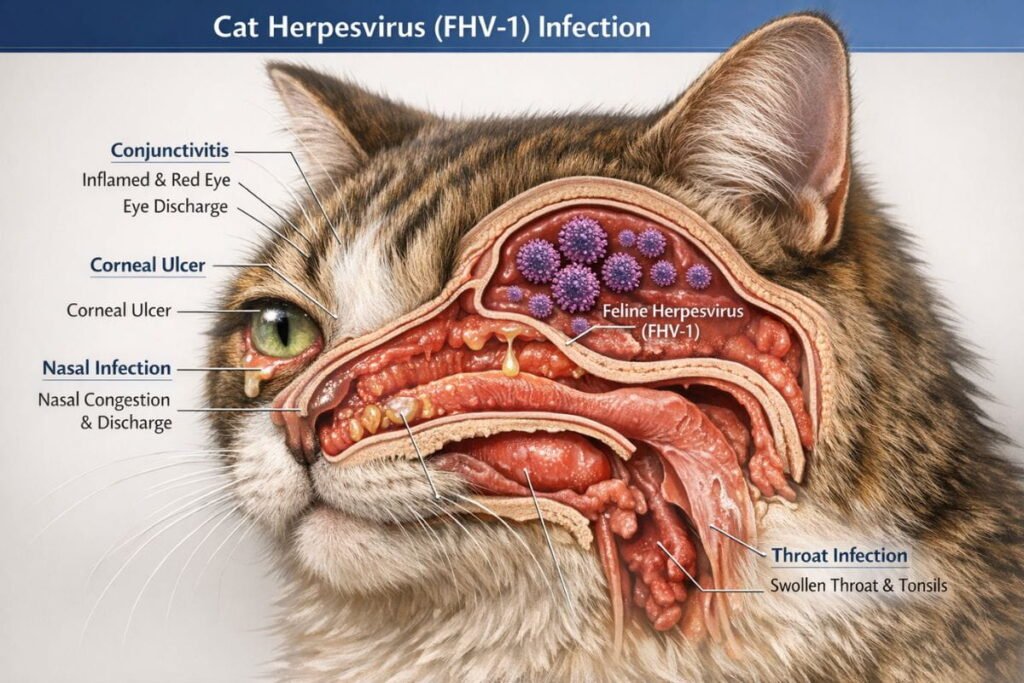
Cat herpes is caused by feline herpesvirus type-1, and vets often call it feline viral rhinotracheitis (FVR). It’s a very common cause of upper respiratory infections in cats. The virus mainly affects the nose, throat, and eyes. That’s why many cats get cold-like symptoms that look like a contagious cat cold.
This virus is common because it spreads fast in groups of cats. It also stays in the body for life. Many cats become infected cat carrier even after they improve. This happens because the virus can hide as a latent infection in cats. Later, it can “wake up” and cause herpes flare-ups in cats, especially during a stress-triggered relapse.
Cat Herpes vs. a Regular Cat Cold
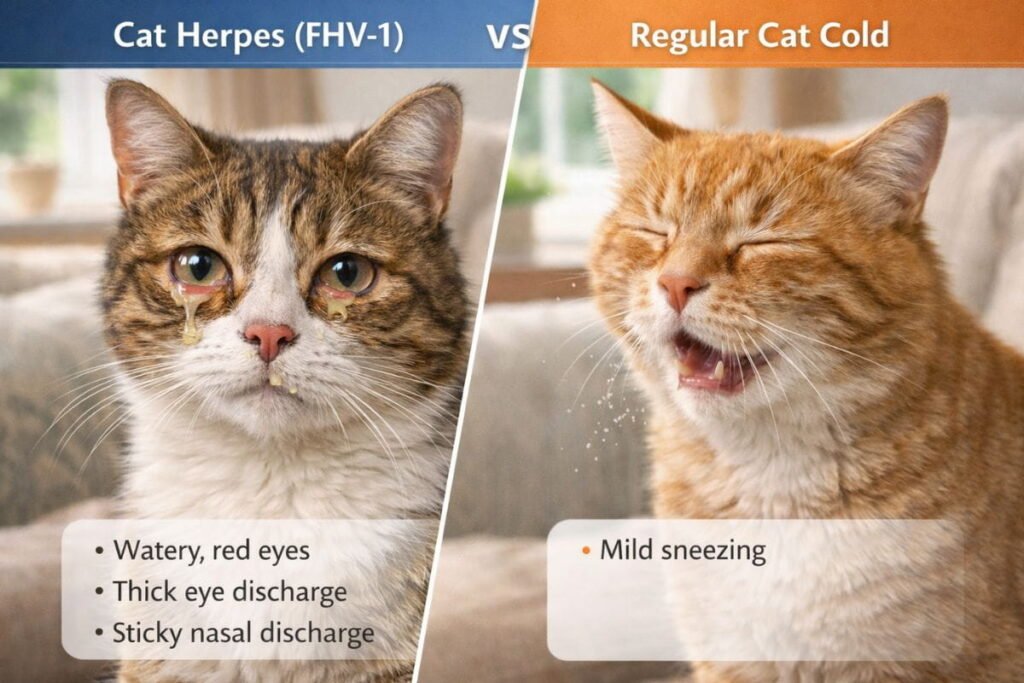
A regular cold can look similar, but cat herpes often brings stronger eye issues. You may notice watery eyes in cats, eye redness, or sticky discharge. Some cats also show cat squinting and blinking as the light hurts. When these signs show up together, vets often suspect FHV-1 infection in cats instead of a simple irritation.
Here’s a quick comparison table to make it clearer.
| Problem | Common Signs | Often Involves Eyes? | Can Come Back? |
| Cat herpes (FHV-1) | sneezing, congestion, eye discharge | Yes, very often | Yes, flare-ups |
| Allergy | sneezing, itchiness | Sometimes | Yes, seasonal |
| Bacterial infection | thick mucus, fever | Sometimes | Depends |
| Irritation/dust | mild sneezing | Rare | No |
How Do Cats Get Herpes? (Transmission & Spread)
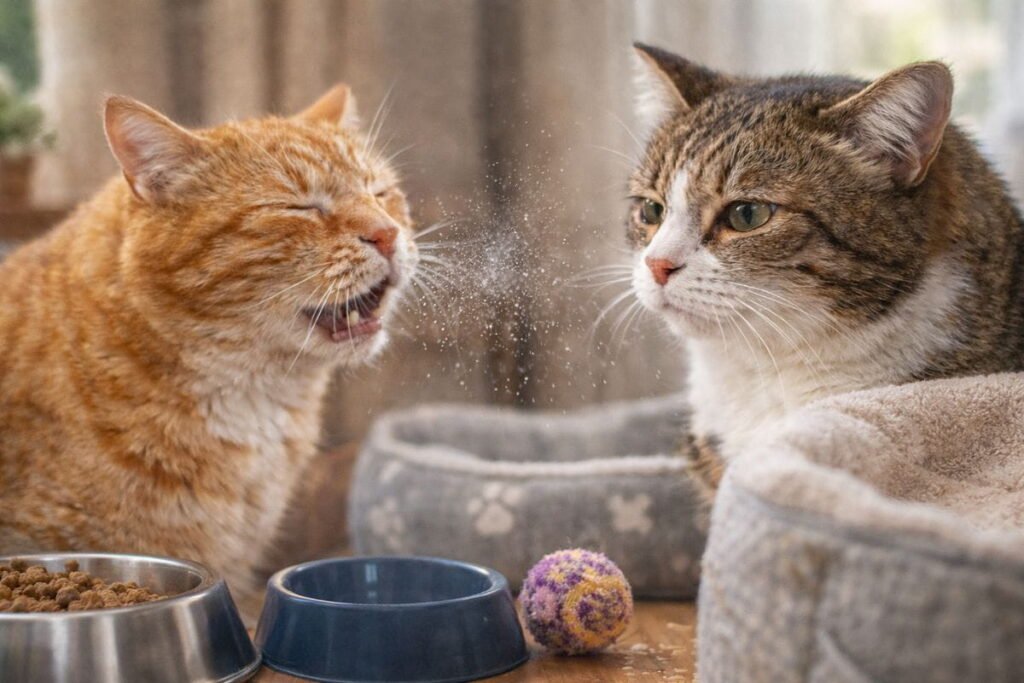
If you’ve ever wondered if cats can get herpes, the answer is yes, and they catch it easily. Cat herpes spreads through saliva and fluid from the nose and eyes. When an infected cat sneezes, tiny droplets travel through the air. Close contact, like grooming, face rubbing, and sharing naps, can quickly pass it along. This is why how do cats spread the herpes virus is such a common question.
Cats can also catch it from objects. This is called fomite spread, and it matters a lot in busy homes. A contaminated food bowl infection can happen if one sick cat uses a shared dish. The same risk applies to bedding, carriers, toys, and even your hands. That’s why virus survival in the environment is important to understand, especially in a multi-pet household.
Can Indoor Cats Catch Cat Herpes?
Indoor cats can still get cat herpes. New cats, foster kittens, and even a quick vet visit can expose them. The virus can move on hands and clothes, then land on items your cat uses. Many cats start showing signs after the incubation period for FHV, which is often a few days. That’s why symptoms can seem to appear ‘out of nowhere,’ especially a few days after exposure.
A simple safety habit helps a lot. Use handwashing and clean shared items often. If you bring home a new cat, quarantine is smart because multi-cat household infection risk is real, even in clean homes.
Cat Herpes Symptoms (Early Signs to Severe Cases)
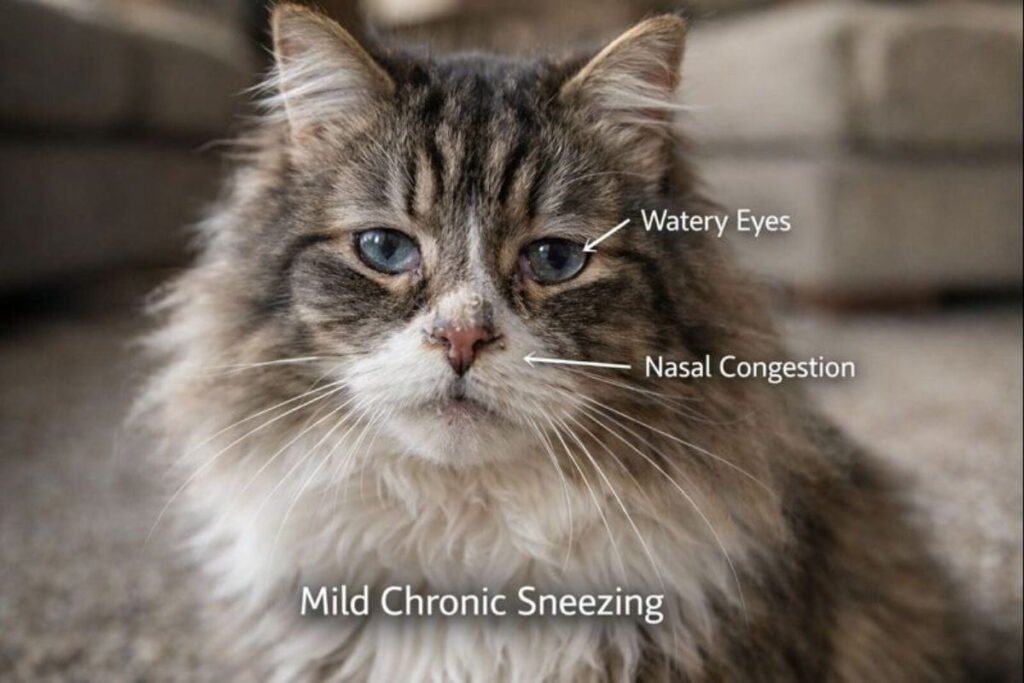
The first signs can be easy to miss. Many cats start with sniffles and mild chronic cat sneezing. Then you might notice cat nasal congestion, a runny nose, and soft coughing. Some cats develop cat eye discharge that looks clear at first. Others look tired, stop playing, and show cat fever and lethargy. A big red flag is loss of appetite in cats, because cats rely on smell to enjoy food.
As symptoms build, the mucus can turn thicker and change color. Some cats develop thick yellow-green discharge from the nose or eyes, which can signal a secondary problem. You might also feel small lumps under the jaw because of swollen lymph nodes in cats. In the worst cases, breathing sounds louder, and your cat may look uncomfortable while sleeping.
Emergency Warning Signs You Shouldn’t Ignore
Some signs need fast help. Labored breathing, open-mouth breathing, or extreme weakness should never wait. If your cat refuses food for a full day, dehydration becomes a serious risk. If you see cloudy eyes or intense squinting, think about corneal ulcer signs in cats. These problems can worsen quickly, especially in kittens or older cats.
If you’re unsure, this is the safest rule. Call your vet if symptoms feel severe or suddenly worsen overnight. Quick treatment can prevent long-term trouble.
Eye Problems in Cat Herpes (Conjunctivitis & Corneal Ulcers)
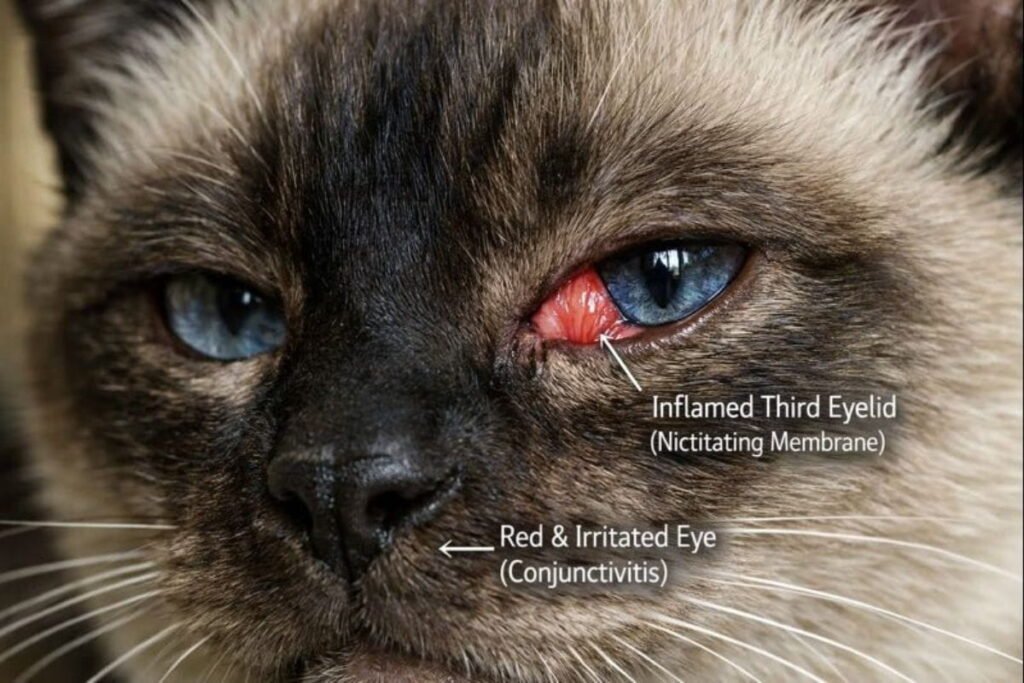
Eye issues are one of the biggest clues. Cat conjunctivitis is very common with cat herpes, and it can look dramatic. The eye area may swell, turn red, and look irritated. You may notice an inflamed third eyelid in cats, which looks like a pale flap rising from the corner. Many cats also show cat squinting and blinking like the eye is scratchy.
Sometimes the virus also causes feline keratitis, which means the cornea becomes inflamed. This can lead to corneal ulcers in cats, which are painful and dangerous. A cat may keep one eye closed, rub its face, or avoid bright rooms. If ulcers are not treated quickly, they can cause corneal scarring and even chronic dry eye in cats, which may need ongoing care.
What Cat Eye Discharge Colors Can Mean
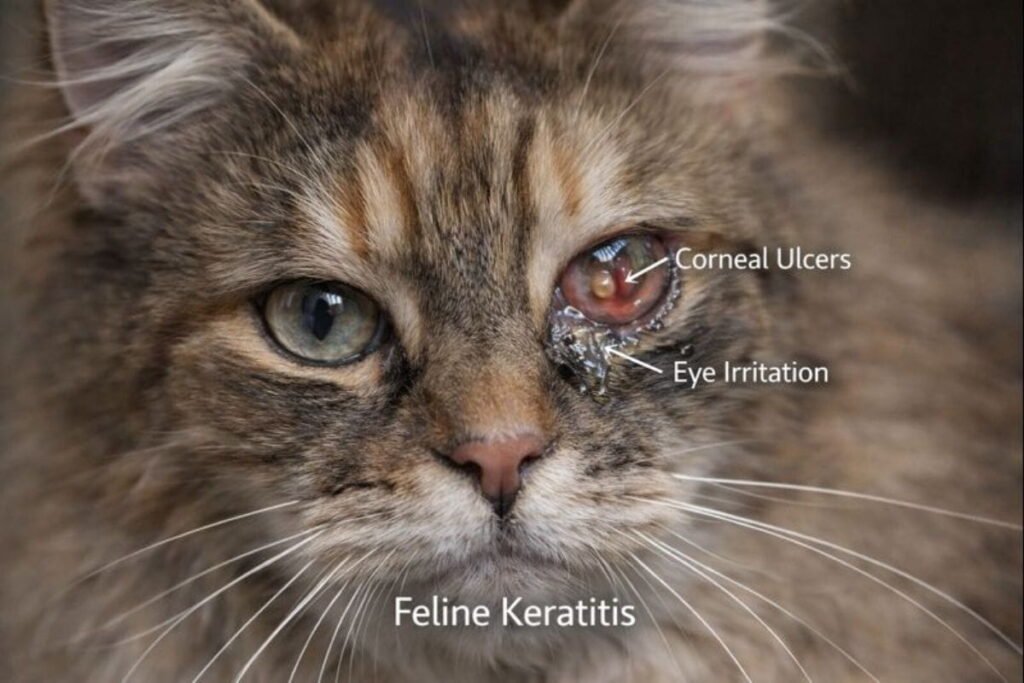
Clear discharge can happen early, especially when irritation starts. Thick yellow-green discharge may mean bacteria joined the party. That’s why cat herpes eye infection treatment often includes both antiviral and supportive steps. It’s also why vets warn owners not to use random human eye drops. Some can make the eye worse.
If the eye looks cloudy or your cat seems in pain, take it seriously. Eye damage can happen faster than many people realize.
Which Cats Are Most at Risk? (Kittens, Seniors & Weak Immunity)
All cats can catch it, but some struggle more. Kittens have small bodies and weaker immune systems, so a cat’s upper respiratory infection can hit them hard. Senior cats may also have less immune strength. If your cat has another illness, even mild symptoms may feel heavier. This is why shelters and rescues see so much illness from feline respiratory disease in young cats.
Crowded places increase the spread. Shelter boarding facilities’ exposure is a major reason so many rescues carry the virus. Stress plays a big role, too. If your cat gets nervous easily, it may face more flare-ups. Changes like moving, loud guests, or a new pet can lead to symptoms returning.
Why Stress Makes Cat Herpes Worse
Stress changes the body in sneaky ways. It can lower immune defenses, making the virus active again. Many owners ask why cat herpes keeps coming back, because it feels unfair. The truth is, the virus can hide, then restart during a tough moment. That’s the classic pattern of stress causing cat herpes relapse in sensitive cats.
Once you know this, prevention becomes easier. You focus less on “curing forever” and more on keeping life calm and steady.
Is Cat Herpes Contagious to Humans or Dogs?
Many cat owners worry, and it’s a fair question. Is cat herpes contagious to people? No, this virus is species-specific. So, whether humans catch herpes from cats is basically a no for feline herpesvirus. Your kids won’t catch feline herpes from cuddling the cat. That said, good hygiene is still smart because other germs can travel.
You may also wonder whether dogs can catch herpes from cats. Dogs do not catch feline herpesvirus either. However, dogs can carry mucus on their fur if they sniff or lick a sick cat. That can move germs between cats, even if the dog never becomes sick.
Can You Carry It From Cat to Cat?
Yes, you can move it on your hands, sleeves, and towels. If you pet a sick cat, then cuddle a healthy one, you may spread droplets. That’s why owners often ask should I isolate my cat with herpes during an outbreak. In a home with more than one cat, short-term separation can truly help.
Think of it like glitter. It spreads easily and sticks to everything. Clean hands and clean surfaces reduce the mess.
How Veterinarians Diagnose Cat Herpes
Vets usually start with the story and symptoms. They look at sneezing, nose discharge, fever, and breathing. They also check the eyes closely because cat herpes symptoms, such as red eyes, often show together. A vet may gently check hydration and listen to the lungs. They might ask about recent boarding, a new kitten, or home stress.
If the eyes look painful, vets may use a stain test to check for ulcers. Some clinics use PCR testing to detect the virus DNA. This can confirm FHV-1 infection in cats, but it doesn’t always work when the virus is hiding. Many owners ask about cat herpes carriers, because carriers can seem normal most of the time.
What to Expect at a Vet Visit
Most visits include an exam plus a simple plan for home care. If eye ulcers exist, treatment starts fast. If congestion is heavy, your vet might add medications and supportive steps. They may also advise follow-ups if appetite stays low or breathing worsens.
In many cases, early treatment prevents complications. That’s the goal every time.
Cat Herpes Treatment Options (Medications + Home Care)
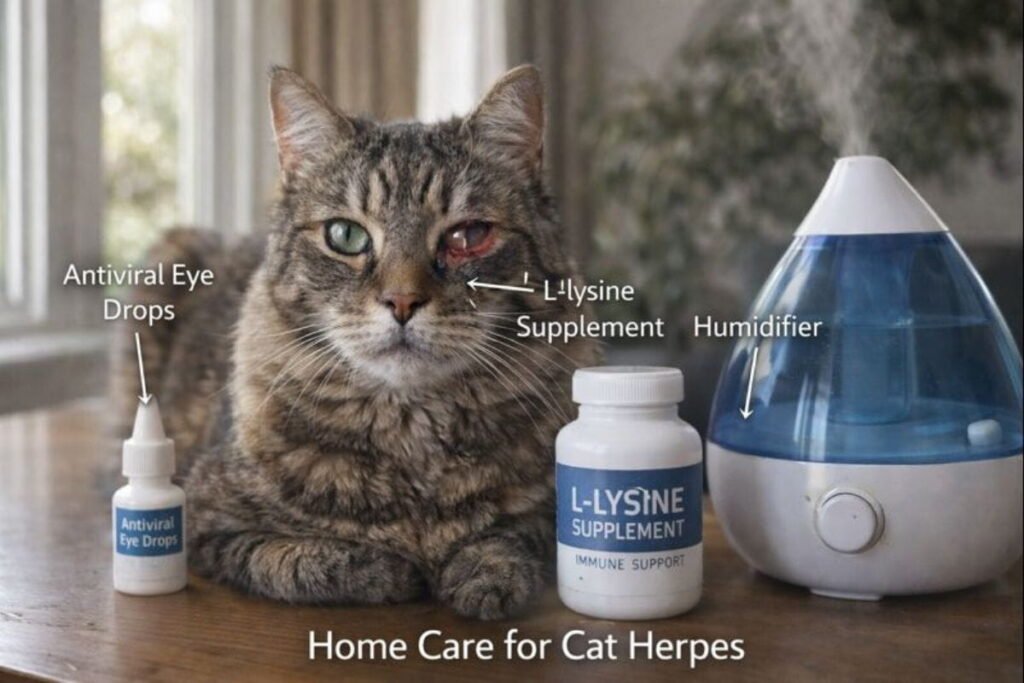
A lot of owners ask if cat herpes can be cured permanently, and the honest answer is no. The virus stays in the body. But don’t panic, because management works well. Vets may prescribe antiviral drops for cats for eye issues. In more stubborn cases, they may recommend famciclovir for cats, which is an oral antiviral used by many clinics. If mucus turns thick and infected-looking, vets may use antibiotics for secondary infection, because bacteria sometimes jump in.
Home care makes a huge difference, too. Gentle wiping of the eyes and nose helps comfort. Warmth and humidity loosen congestion, which helps your cat rest. This is classic supportive care for cats, and it often speeds recovery. Many owners also search for antibiotic vs antiviral for cats because both can be used together, but they treat different problems.
Easy Home Care Routine for Faster Relief
Congestion is miserable for cats, so comfort matters. A humidifier for cat congestion can keep airways moist and ease breathing. Many vets also recommend steam therapy for cats, and some owners use a steamy bathroom for short sessions. Some owners use a steamy bathroom session for a few minutes to loosen congestion.
Food is another key. Sick cats lose their smell, so they stop eating. Warmed canned food often helps, and strong-smelling wet food appetite tricks can restart interest. Some owners try L-lysine, but results are mixed—so it’s best to ask your vet first. Your vet may also mention probiotics, FortiFlora cats for gut support, or an immune support polyprenyl immunostimulant in certain situations.
Here’s a simple table showing how each care method helps.
| Care Method | What It Helps | When It’s Most Useful |
| Humidifier | loosens mucus, eases breathing | nasal congestion |
| Steam sessions | Opens airways temporarily | heavy congestion days |
| Warm wet food | boosts appetite | low eating due to poor smell |
| Eye meds | reduces swelling and pain | conjunctivitis or ulcers |
| Antiviral oral meds | reduces virus activity | frequent flare-ups |
| Antibiotics | treats bacterial infection | thick discharge and fever |
Cat Herpes Flare-Ups: Causes, Triggers & How to Reduce Them
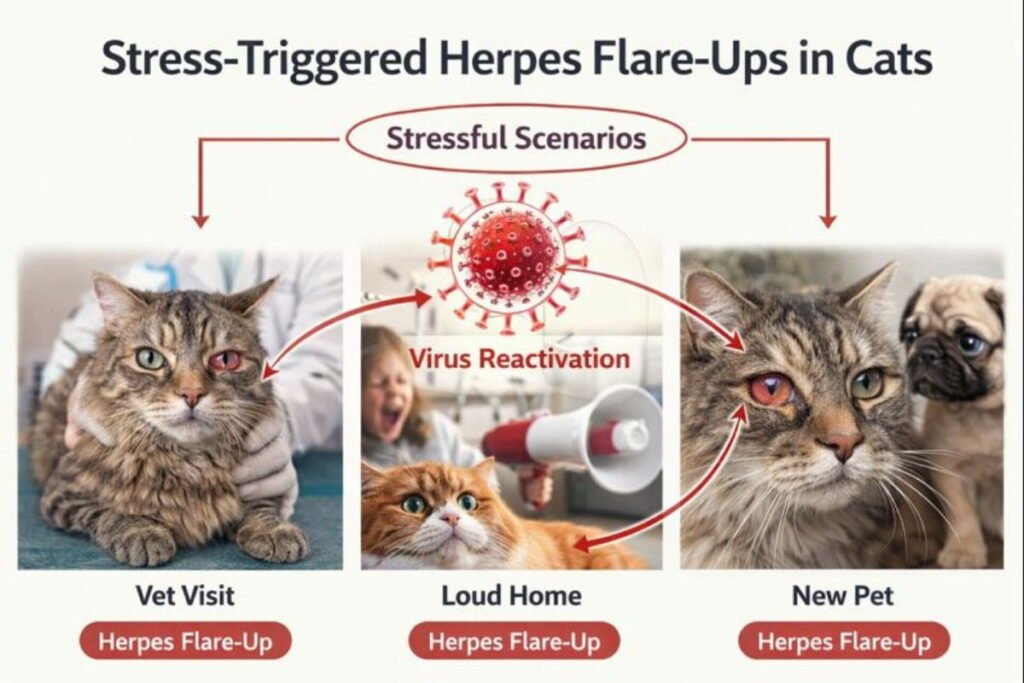
Flare-ups are the part that frustrates most owners. Your cat seems fine, but the symptoms return suddenly. This happens because the virus stays dormant and reactivates during stress. During shedding, even mild symptoms can spread infection to others. That’s why how long cat herpes is contagious is a common worry, especially in homes with multiple cats.
Triggers often involve stress. New pets, travel, loud homes, construction noise, and boarding can flip the switch. Once you spot the triggers, it becomes much easier to reduce flare-ups. Cats that flare frequently may need a long-term plan with your vet, especially if eyes are involved.
Best Daily Habits to Prevent Relapses
Routine is like medicine for nervous cats. Feed at the same time each day. Keep litter boxes clean and predictable. Provide quiet hiding places so your cat feels safe. These habits reduce stress and reduce the chance of relapse.
Also, keep the air clean. Dusty rooms can irritate breathing. A calm environment won’t erase the virus, but it can reduce flare-ups. That’s one of the best tools you have.
Prevention & Long-Term Management (Vaccines + Hygiene Tips)
Prevention doesn’t mean perfection. It means fewer sick days and milder symptoms. Vets in the USA strongly recommend core cat vaccines FVRCP, which help protect against major respiratory viruses. Many owners ask whether FVRCP prevents cat herpes. It doesn’t always stop infection fully, but it can reduce severity and shorten illness. That’s whythe best vaccine for preventing cat herpes usually points back to that core shot.
Long-term health also depends on boosters. Your vet will suggest a booster schedule for cats based on lifestyle. Cats that go to shows, board often, or live in multi-cat homes may need closer attention. In special cases, some vets consider an intranasal herpes vaccine because it may support stronger local protection in the nose.
Multi-Cat Home Prevention Checklist
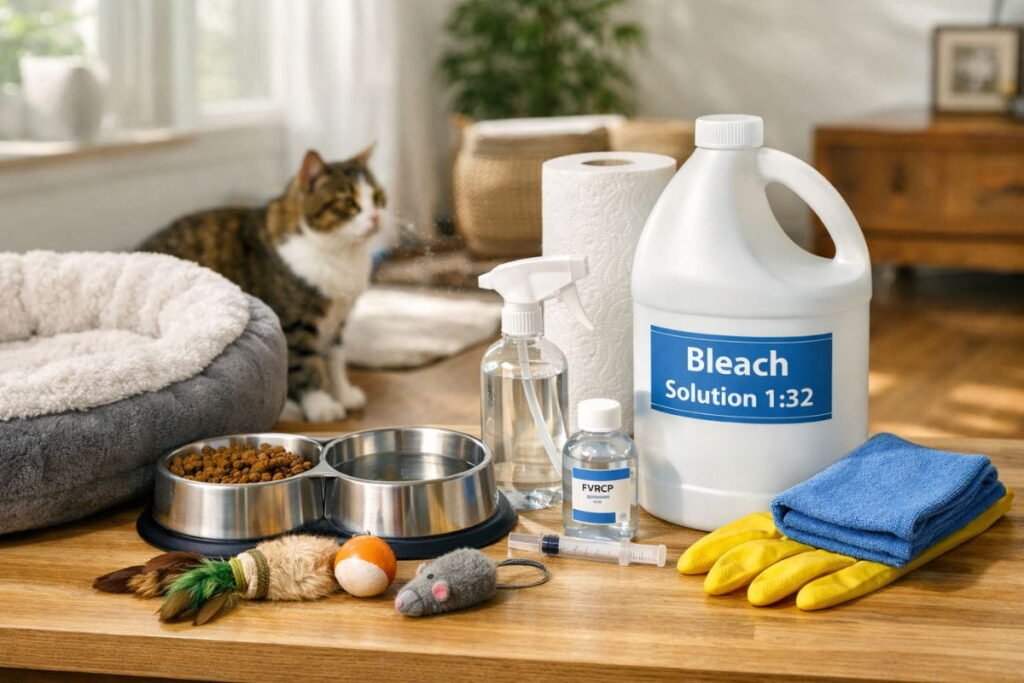
Clean habits matter because the virus can spread through surfaces. People often ask how long FHV survives on surfaces. It can live longer in moisture, and shorter once secretions dry. That’s why disinfecting the house after cat herpes helps during outbreaks. Use disinfecting cat items like bowls, carriers, and bedding to reduce the spread.
Always rinse well, ventilate the area, and keep cats away until everything is completely dry., Many owners search for a bleach solution for cat herpes virus for that reason. Wash blankets in hot water when possible. Most importantly, use isolation for a sick cat during active symptoms to protect others, especially when you have a fragile kitten at home.
Here’s a quick sanitation table to guide you.
| Item | Best Cleaning Method | Why It Matters |
| Food bowls | hot water + soap, rinse well | stops shared spread |
| Bedding | hot wash cycle + detergent | removes moist secretions |
| Hard surfaces | bleach 1:32, contact time | kills virus on counters |
| Toys | washable toys cleaned often | prevents re-exposure |
| Hands | soap + water after contact | blocks cat-to-cat transfer |
Final Thoughts: Living Well With Cat Herpes
Cat herpes can feel scary at first, but most cats do well. With smart care, flare-ups become less dramatic and less frequent. The key is early support, good hygiene, and steady routines that keep stress low. If your cat’s symptoms are severe, don’t wait to call your vet.
Your cat can still live a happy, normal life. You just learn the signs, respond quickly, and keep your home calm. That’s how you win against flare-ups, one sniffle at a time. This article is for educational purposes only and does not replace professional veterinary advice.
FAQs About Cat Herpes (FHV-1)
Is herpes serious in cats?
Usually no, but it can become serious in kittens, seniors, or cats with weak immunity.
How long can a cat live with feline herpes?
Most cats live a normal, full lifespan with proper care and flare-up control.
How to tell if a cat has herpes?
Look for sneezing, watery eyes, eye discharge, congestion, and repeated flare-ups.
Is cat herpes contagious to humans?
No, feline herpesvirus is cat-specific and does not spread to people.