The FVRCP cat vaccine is one of the most important tools veterinarians use to protect cats from serious, fast-spreading illnesses. If you’re wondering why this vaccine matters so much, the answer is simple. It supports early cat viral disease prevention and helps your cat build a strong immune system response against dangerous infections.
From young kittens to adult cats, timely vaccination lowers the risk of painful symptoms, emergency vet visits, and long-term health problems. Because it targets multiple threats simultaneously, this combination vaccine for cats plays a crucial role in modern pet care. Many experts consider it an essential feline core vaccine that safeguards cats throughout their lives.
What Is the FVRCP Vaccine for Cats? (Simple Explanation)
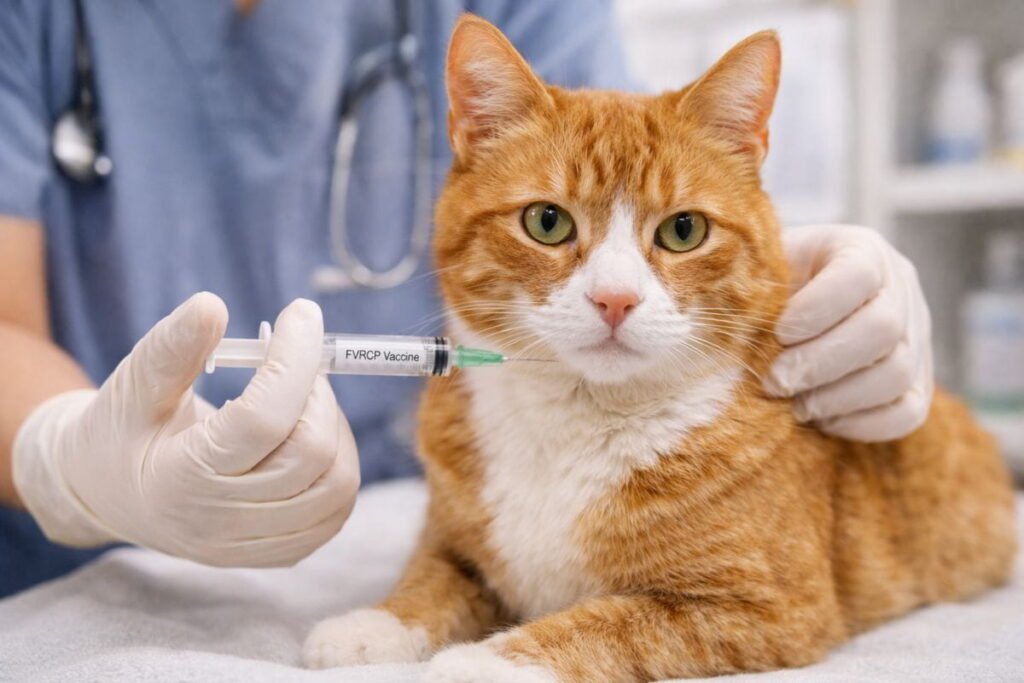
At its core, the FVRCP vaccine for cats is all about prevention. The vaccine teaches your cat’s body how to recognize and stop three major viruses before they cause harm. It works by triggering a natural immune system response that builds protection over time.
In simple terms, the FVRCP cat vaccine is one injection that covers multiple risks. Because it is part of the Feline core vaccines, vets across the USA rely on it to support long-term cat viral disease prevention and healthier lives.
What Does the FVRCP Vaccine Protect Cats Against?
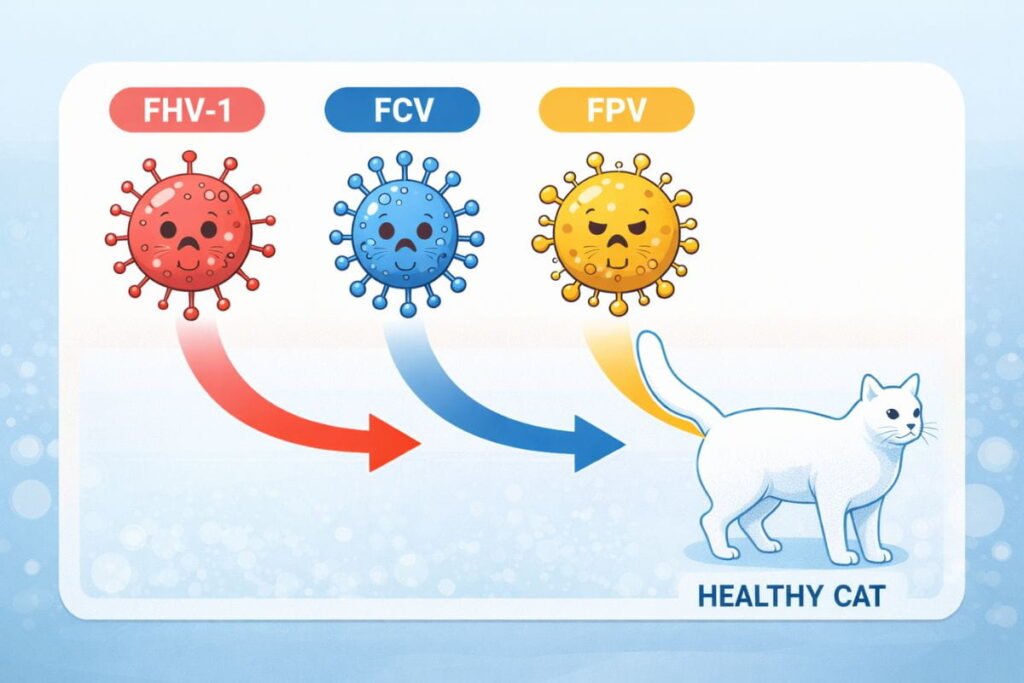
The FVRCP vaccine for cats shields against three highly contagious feline viruses that spread through sneezing, shared bowls, and contaminated surfaces. These illnesses are common in shelters, multi-cat homes, and even quiet suburban houses.
Protection includes serious respiratory and digestive threats that can overwhelm young or weak cats. By boosting vaccine-induced immunity, this shot reduces hospital visits and lowers the risk of long-term health complications.
| Virus Covered | Main Risk | Severity Without Vaccine |
| FHV-1 | Upper airway illness | Chronic symptoms |
| FCV | Oral and breathing issues | Painful flare-ups |
| FPV | Severe immune damage | Often fatal |
Feline Viral Rhinotracheitis (FHV-1) Explained

Feline viral rhinotracheitis (FHV-1) is caused by feline herpesvirus and leads to intense sneezing, watery eyes, and fever. This respiratory infection in cats spreads quickly, especially in crowded environments.
Once infected, cats may carry the virus for life. Stress can awaken symptoms, leading to chronic respiratory disease in cats. The FVRCP vaccine for cats doesn’t eradicate the virus but greatly reduces flare-ups and discomfort.
Feline Calicivirus (FCV): Causes, Symptoms & Risks
A calicivirus infection in cats often shows up as drooling, fever, and painful mouth ulcers in kittens. Some cats limp due to joint inflammation, while others struggle to eat.
This virus mutates easily and survives on surfaces, making environmental virus survival a real concern. Regular vaccination helps control outbreaks and supports steady kitten immune development.
Feline Panleukopenia (FPV): The Most Dangerous Virus
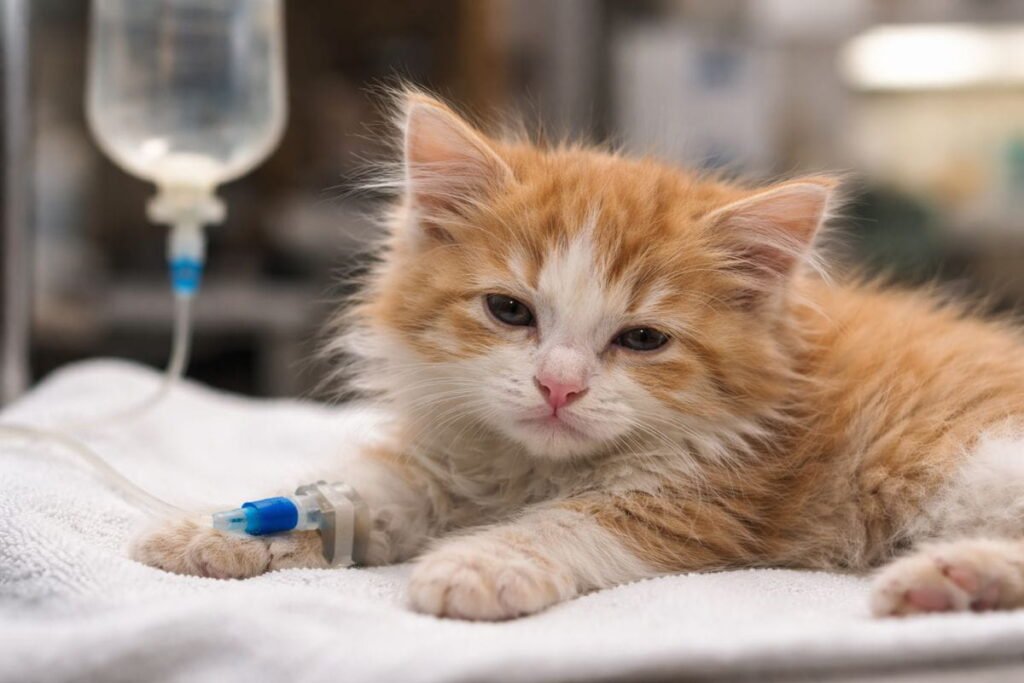
The feline panleukopenia virus, also called feline distemper, attacks the immune system and intestines. Kittens face the highest risk, and dehydration can turn fatal within days.
Because FPV survives for months in the environment, prevention matters. The FVRCP shot for kittens offers powerful protection and saves countless lives every year in the USA.
When Should Kittens and Adult Cats Get the FVRCP Vaccine?
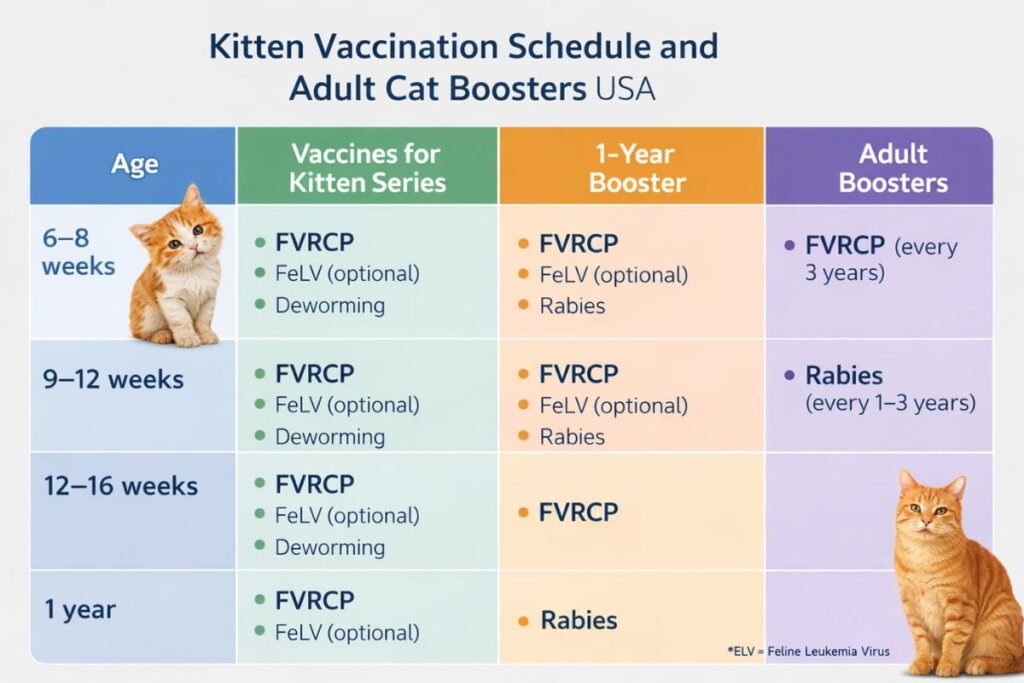
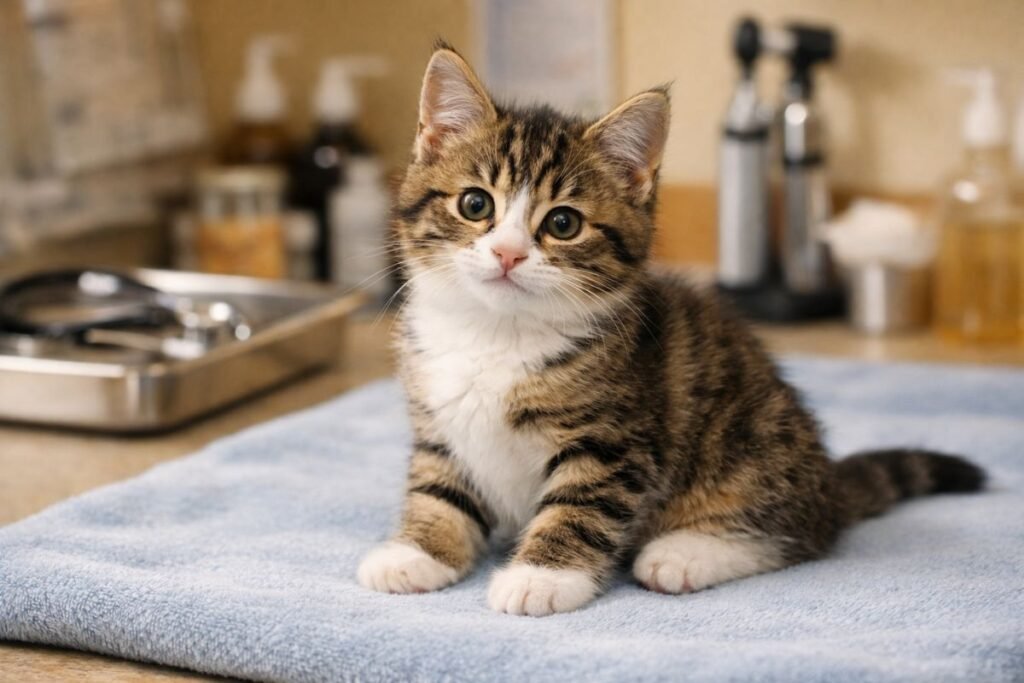
A proper Kitten vaccination schedule usually starts around six to eight weeks. Early doses work around maternal antibodies in kittens, which can block immunity if timing is wrong.
For adults, Adult cat vaccination includes regular Cat vaccine boosters. Many vets follow AAHA vaccination guidelines, recommending vaccination boosters every three years, depending on lifestyle and health.
| Age | Recommended Timing |
| 6–16 weeks | Series of initial shots |
| 1 year | First booster |
| Adults | Based on risk and vet advice |
Is the FVRCP Vaccine Safe? Side Effects & Reactions
Most cats handle this vaccine well. Mild injection site swelling or sleepiness may appear for a day. These signs usually fade quickly.
Rare issues include allergic vaccine reaction in cats or, very rarely, injection site sarcoma. Many clinics now prefer adjuvant-free vaccines to reduce risks while maintaining strong protection.
How Much Does the FVRCP Vaccine Cost in the USA?
The average FVRCP vaccine cost in the USA ranges from affordable clinic rates to lower prices at shelters. Costs vary by region, vet experience, and included exams. In most U.S. clinics, the FVRCP vaccine typically costs between $15–$40 per dose.
Preventive care always costs less than treatment. One hospital stay for FPV can exceed years of routine vaccination, making prevention a smart financial choice.
| Location Type | Typical Cost Range |
| Private clinic | Moderate |
| Low-cost clinic | Lower |
| Shelter program | Lowest |
Indoor vs Outdoor Cats: Do All Cats Need FVRCP?
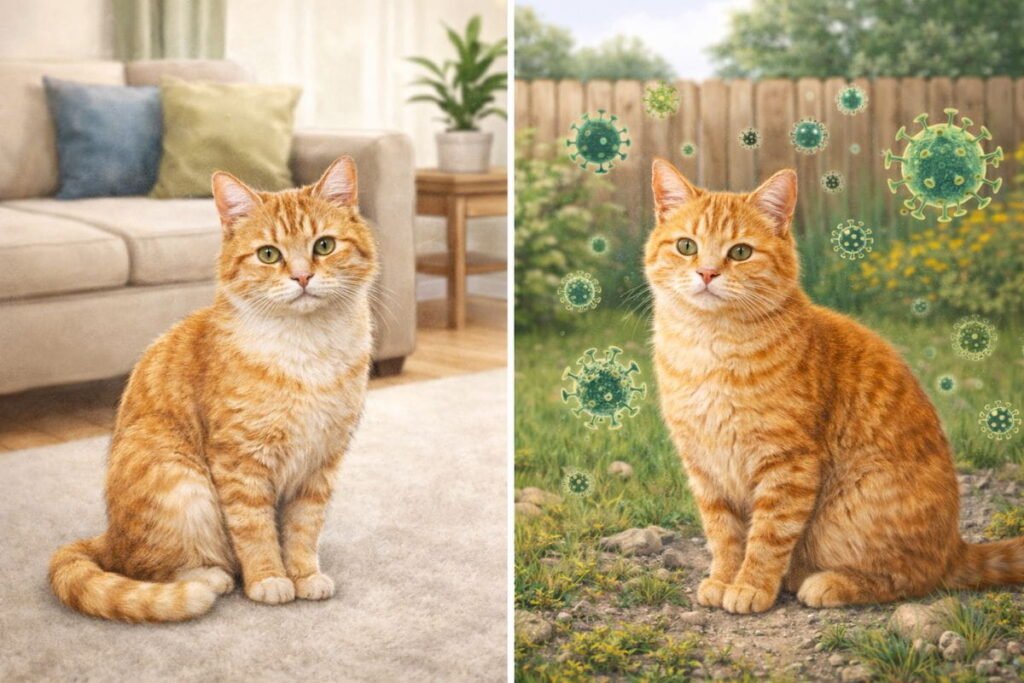
Many owners skip Indoor cat vaccination, assuming safety at home. However, viruses travel on shoes, clothes, and visiting pets.
Because exposure can happen indirectly, most vets recommend this combination vaccine regardless of lifestyle. Indoor cats still benefit from steady immunity and reduced emergency risks.
Talk to Your Veterinarian: Is FVRCP Right for Your Cat?
Every cat is unique. Age, health history, and environment shape the ideal FVRCP vaccine schedule and timing of FVRCP booster shots.
A veterinarian can assess FVRCP immunity duration and tailor care. This personalized approach ensures protection without unnecessary stress on your cat.
FVRCP Vaccine FAQs (Quick Answers for Cat Owners)
Common Questions About What Is the FVRCP Vaccine for Cats
Owners often ask whether immunity lasts forever or if seniors still need boosters. Most cats maintain protection with scheduled boosters, and older cats often benefit based on risk.
As one US veterinarian notes, “Vaccination is not about overdoing it. It’s about smart, timely protection that keeps cats thriving. This article is for educational purposes only and does not replace professional veterinary advice.
FAQs: FVRCP Vaccine for Cats
Is the FVRCP vaccine necessary for indoor cats?
Yes, indoor cats still need the FVRCP vaccine because viruses can enter homes on shoes, clothing, or visiting pets. Vaccination protects against hidden exposure risks.
Can a FVRCP vaccine make a cat sick?
Most cats feel fine after vaccination, though mild sleepiness or soreness can occur. Serious reactions are rare and usually happen within the first 24 hours.
How often do cats need to get the FVRCP vaccine?
Kittens receive a series early in life, then a booster at one year. After that, many cats need boosters every one to three years.
Is FVRCP the same as Distemper?
Partly yes. FVRCP includes protection against feline distemper, also known as panleukopenia, along with two respiratory viruses.
How long is FVRCP good for?
FVRCP protection usually lasts one to three years, depending on the vaccine type and your cat’s health. Your vet decides the best booster timing.