
Cats are pregnant for about 63–67 days (around nine weeks), which is known as the cat gestation period. Understanding how long cats are pregnant is especially important if you have an unspayed female cat, as early awareness helps you prepare for proper care and a healthy delivery. Pregnancy in cats happens gradually, and the early stages may show only subtle changes, such as shifts in the pregnant cat’s behavior or appetite.
As the pregnancy progresses, physical signs become more noticeable, making it easier to recognize cat pregnancy symptoms. This complete guide explains feline pregnancy stages, veterinary confirmation methods, labor preparation, and essential care for both the mother and kittens, helping cat owners feel confident and prepared throughout the entire journey.
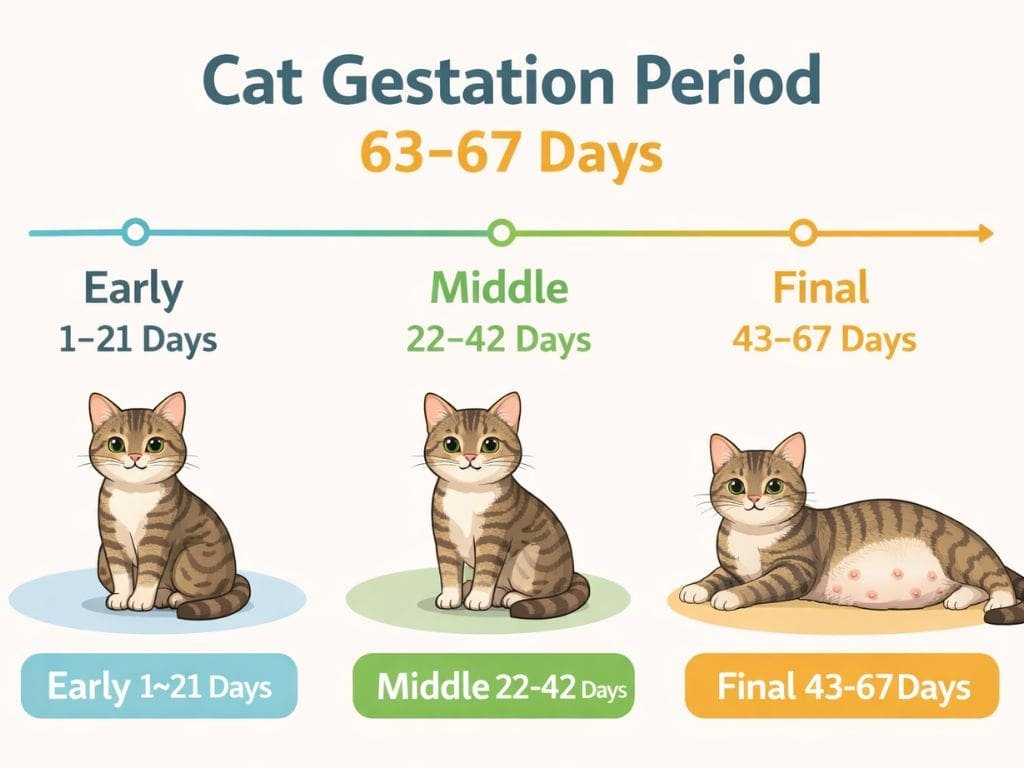
How Long Are Cats Pregnant? (Average Gestation Period)
Many owners wonder exactly how long cats are pregnant. On average, the cat gestation period lasts 63–67 days, though some cats carry slightly longer, up to 72 days. Factors like health, genetics, and litter size variation can influence this gestation timeline. Calm indoor cats usually follow the average range.
Pregnancy unfolds gradually. Early weeks may show no visible changes, making subtle pregnant cat behavior and pregnant cat appetite shifts easy to miss. Later weeks bring noticeable growth, including cat pregnancy weight gain and kitten movement. Understanding the timeline helps reduce stress and prevent surprises during delivery.
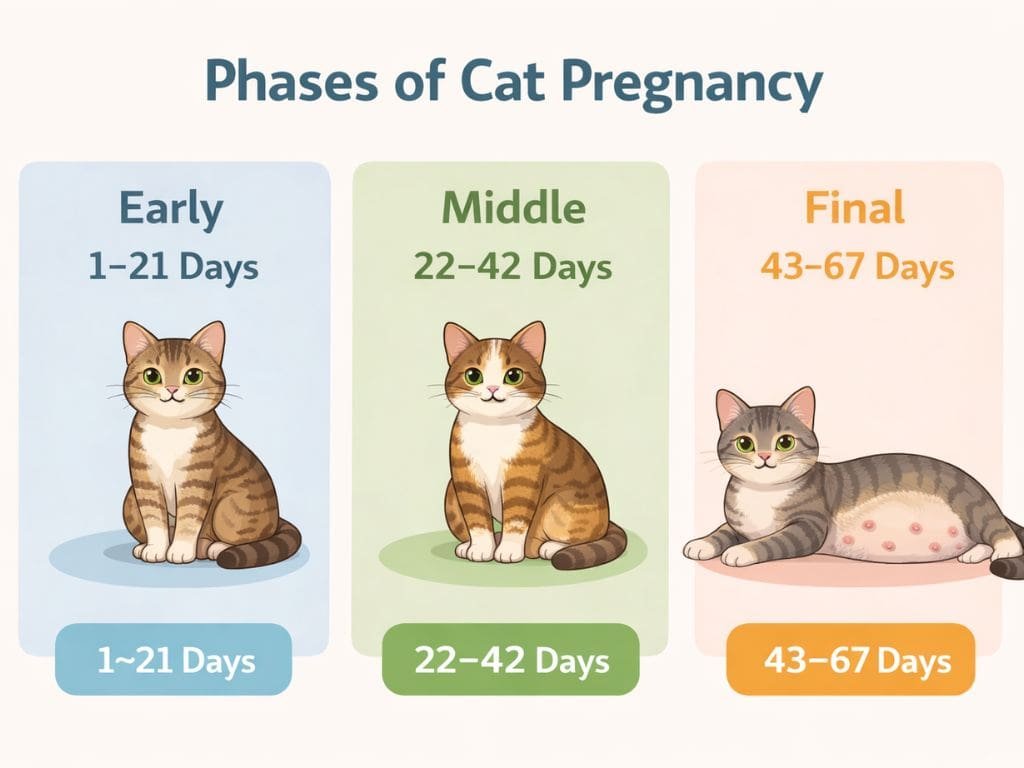
| Pregnancy Phase | Approximate Days | What Happens |
| Early phase | Days 1–21 | Hormonal changes in cats begin |
| Middle phase | Days 22–42 | Belly growth starts; kittens develop internally |
| Final phase | Days 43–67 | Cat labor preparation begins; kittens move |
At What Age Can a Cat Get Pregnant?
Many owners don’t realize a female cat in heat can become pregnant as early as four months old. Fertility begins soon after the cat’s heat cycle, and an unspayed female cat may mate multiple times in a few days, increasing chances of conception.
Pregnancy at an early age is risky. A first-time queen may not be fully developed, which increases delivery difficulties. Repeated pregnancies throughout the reproductive lifespan of cats can strain the body over time. Awareness and early care protect both mother and kittens.

Signs a Cat Is Pregnant (Early to Late Symptoms)
Early signs of pregnancy often appear quietly. Changes in pregnant cat appetite and calmer moods, along with the absence of cat heat cycle behaviors, are subtle cat pregnancy symptoms.
Later signs become more obvious. You may notice pregnant cat behavior, such as increased affection, more sleep, and cat nesting behavior. Physical signs include a swollen abdomen in cats, darkened nipples, and cat pregnancy weight gain. Together, these indicate that your pregnant queen cat is expecting kittens.
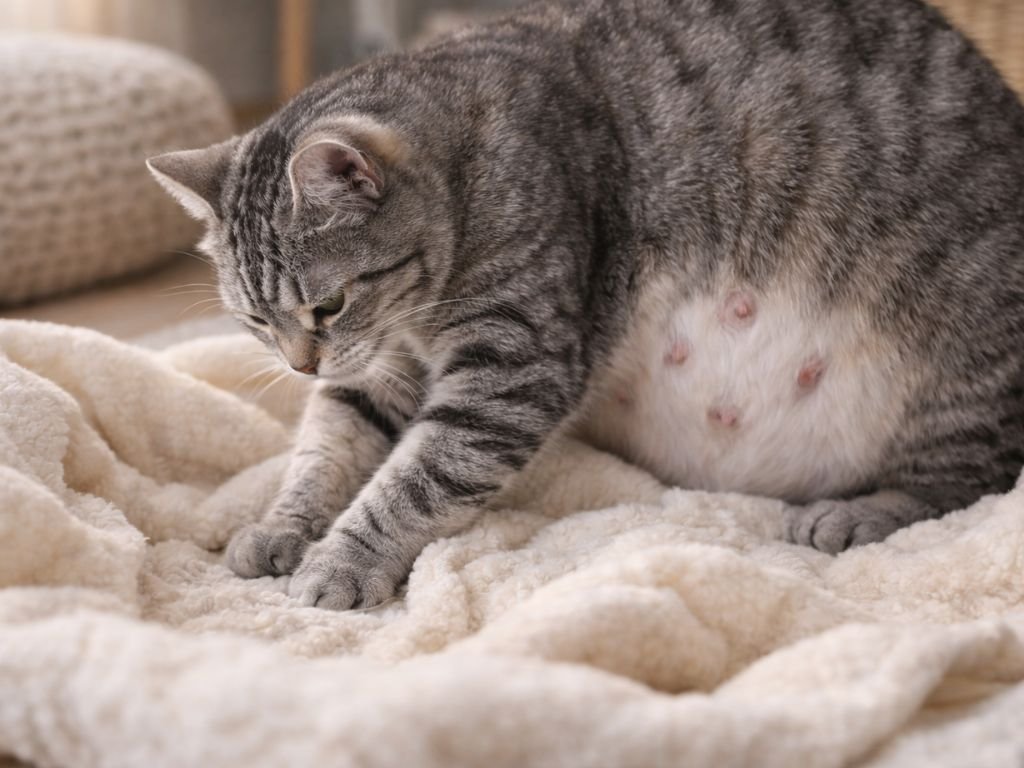
Signs a Cat Is Pregnant: Early vs Late Symptoms
| Pregnancy Stage | Signs & Symptoms | Notes |
| Early (Weeks 1–3) | Pregnant cat appetite changes, calmer moods, loss of the cat’s heat cycle | Subtle signs, often missed by new owners |
| Mid (Weeks 4–6) | Rounded belly, slight cat pregnancy weight gain, more sleep, and affectionate pregnant cat behavior | Changes become more visible |
| Late (Weeks 7–9) | Swollen abdomen in cats, darkened nipples, cat nesting behavior, and visible kitten movement | Physical signs are obvious; birth preparation starts |
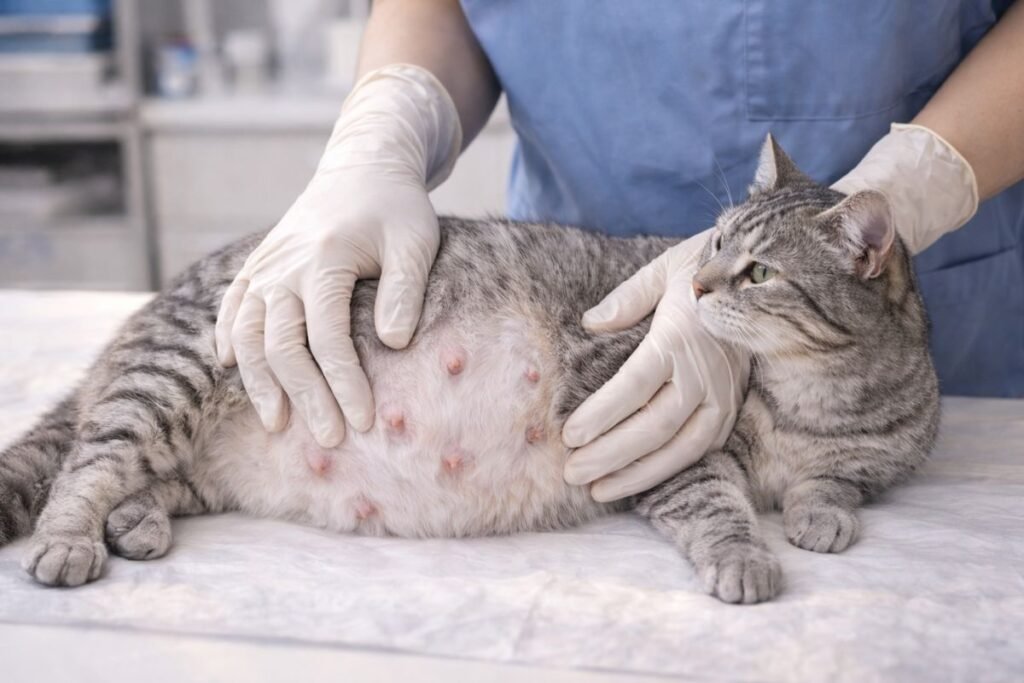
How to Tell If a Cat Is Pregnant for Sure
Veterinarians recommend confirming a cat’s pregnancy through professional medical methods rather than guessing at home. According to veterinary experts, early confirmation helps prevent complications and ensures proper nutrition and care throughout the cat’s gestation period. Guessing can cause anxiety. Vet pregnancy confirmation is the safest method. Veterinarians use abdominal palpation, ultrasound for cats, and feline X-ray imaging.
Ultrasounds for cats detect pregnancy early, while later feline X-ray imaging shows kitten skeleton development and helps count kittens. Home myths, like nipple color, are not reliable substitutes for professional checks.
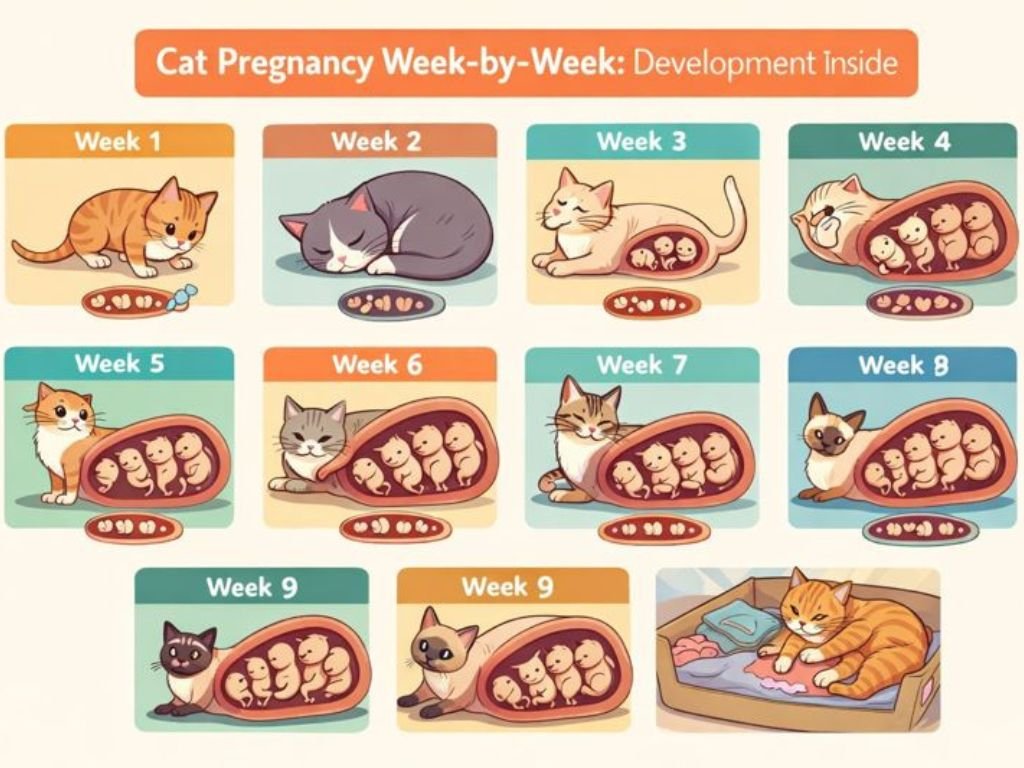
Cat Pregnancy Stages (Week-by-Week Breakdown)
Understanding feline pregnancy stages makes care easier.
| Week Range | Approx. Days | Main Changes & Symptoms |
| Week 1–3 | Days 1–21 | Fertilized eggs implant; hormonal changes in cats begin; no belly growth yet |
| Week 4–6 | Days 22–42 | Belly rounds, cat pregnancy weight gain, increased pregnant cat appetite; kittens develop internally |
| Week 7–9 | Days 43–67 | Final fetal growth; kittens reposition; cat nesting behavior begins; swollen abdomen in cats is visible |
How to Tell How Far Along Your Cat Is
Timing is crucial for cat labor preparation. Belly size, nipple enlargement, subtle kitten kicks, and a pregnant queen cat seeking solitude are strong clues. Observing these signs helps owners plan calmly and prepare for birth.
Caring for a Pregnant Cat (Diet, Comfort & Safety)
Proper pregnant cat care ensures healthy kittens. High-protein food supports growth and satisfies the pregnant cat’s appetite without overfeeding.
The environment is equally important. Provide warmth, quiet, and safety. Avoid rough handling or introducing new pets, as stress disrupts feline reproduction, increasing risks, especially for a first-time cat pregnancy.
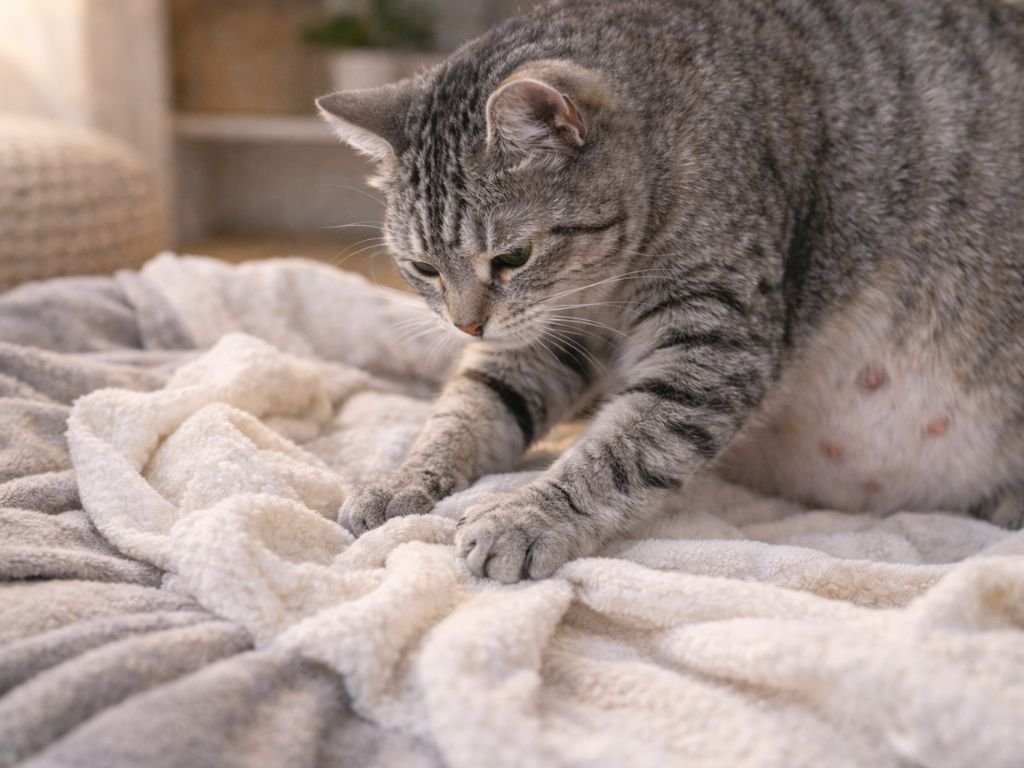
Preparing for Labor and Delivery
Preparation prevents panic. Create a warm, private nesting area with towels before labor. Avoid interruptions that may stress the pregnant queen cat.
Know when to call the vet. Long pauses between kittens or visible distress indicate emergencies. Kitten birth intervals usually range from minutes to an hour.
Signs Your Cat Is in Labor
Labor occurs in stages. Stage one: restlessness. Stage two: visible contractions and kitten delivery. Stage three: passing placentas.
Normal labor stays calm. Emergencies include excessive bleeding, pain, cries, or no kittens after contractions. Quick action prevents post-birth complications and protects the mother.
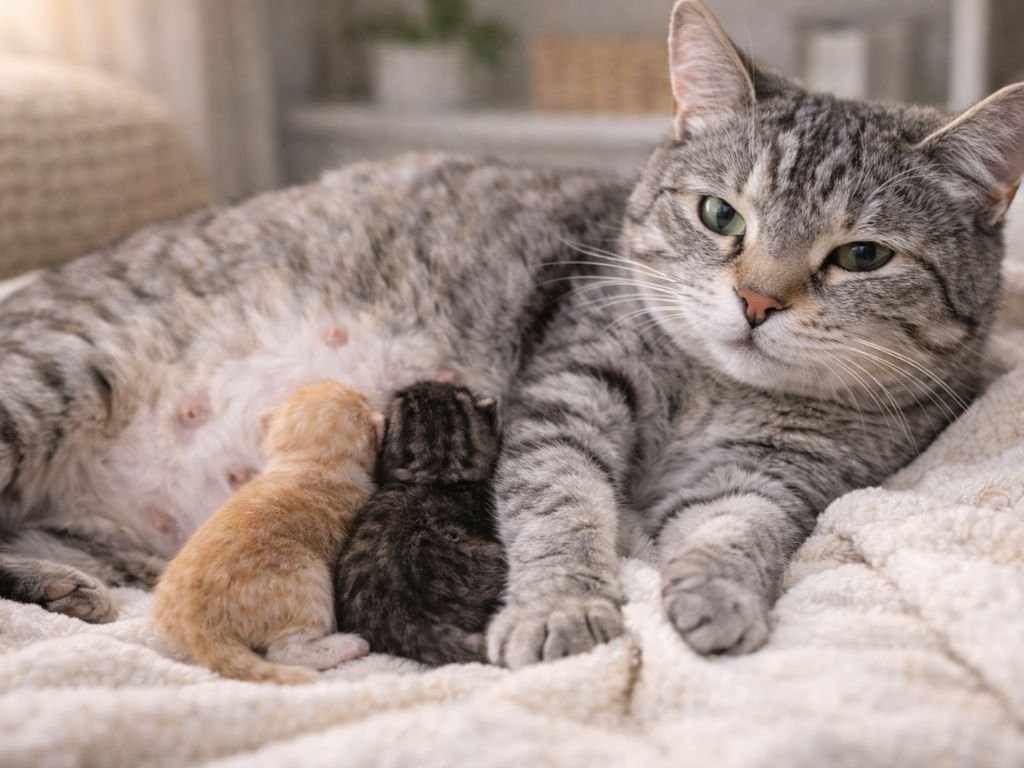
Postpartum Cat Care & Newborn Kitten Care
Monitor the mother after birth. Eating, grooming, and nursing show recovery, while weakness or fever requires immediate help.
Kittens need warmth and frequent feeding. Healthy weight gain confirms health. Watch for illness or rejection. Early care prevents losses during fragile first days.
Why You May Want to Consider Spaying Your Cat
Spaying provides long-term benefits. Early spaying benefits include fewer cancers, reduced infections, and prevention of unwanted litters.
Cats don’t experience menopause. Without spaying, pregnancy continues into old age. Responsible management of reproduction improves life quality for both cats and owners.
Conclusion
Understanding how long cats are pregnant allows owners to provide better care, recognize pregnancy signs early, and prepare for a safe delivery. From early symptoms to labor and kitten care, proper knowledge reduces stress and helps prevent complications.
If you suspect your cat is pregnant, consult a veterinarian as early as possible to ensure the health and safety of both the mother and her kittens.
For specific concerns about your cat’s health, consulting a licensed veterinarian is always recommended.
FAQs About Cat Pregnancy
How can you tell how far along a cat is?
Look for enlarged nipples, a growing belly, increased pregnant cat appetite, and cat nesting behavior. Vet pregnancy confirmation is the most accurate.
What month do cats usually give birth?
Cats typically deliver about two months after mating, often in spring or early summer. Feline pregnancy stages and gestation timeline vary slightly by health and litter size variation.
How many kittens can a first-time queen have?
Usually 2–4 kittens, though breed-based litter size differs. Siamese litters tend to be larger, while Persian cat pregnancies usually produce fewer kittens.
How do you know when a cat is about to give birth?
Look for restlessness, cat nesting behavior, loss of appetite, vocalizing, and a drop in body temperature within 24 hours. Proper cat labor preparation reduces post-birth complications.