
Many cat owners worry about how their pet will act after surgery. That concern is completely natural. Male cat behavior after neutering often changes in positive and predictable ways, especially once hormones begin to settle. Before the procedure, unneutered males may show strong instincts like male cat behavior before neutering, including loud vocalizing, restlessness, or unwanted marking inside the home.
After surgery, most cats become calmer and easier to manage. Understanding why neutering a male cat helps you set realistic expectations and reduce anxiety. Beyond behavior, the benefits of neutering male cats also include long-term health protection and a more relaxed daily routine. A neutered male cat usually feels safer, less stressed, and more focused on bonding with you rather than acting on instinct.
What Is Neutering in Male Cats?
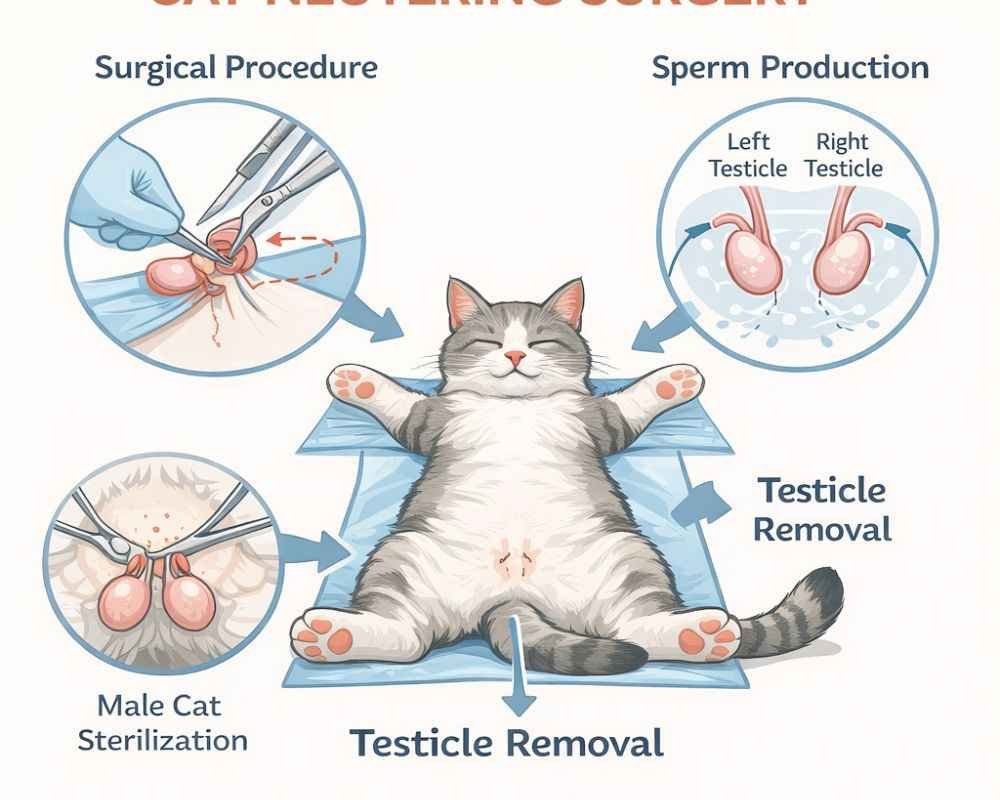
Neutering is a common veterinary procedure also known as male cat sterilization. During this surgical procedure, a vet performs testicle removal, which permanently stops sperm production. This procedure prevents reproduction and changes how hormones affect daily behavior. It is one of the most important parts of routine preventive care for cats in the United States.
Most clinics perform cat neutering surgery using general anesthesia, which keeps your cat asleep and pain-free. The operation itself is quick. In many cases, cats return home the same day. Veterinarians often discuss neutering kittens versus adult cats, as younger cats tend toheal faster, while adults may take slightly longer to adjust.
Why Neutering Male Cats Is Highly Recommended
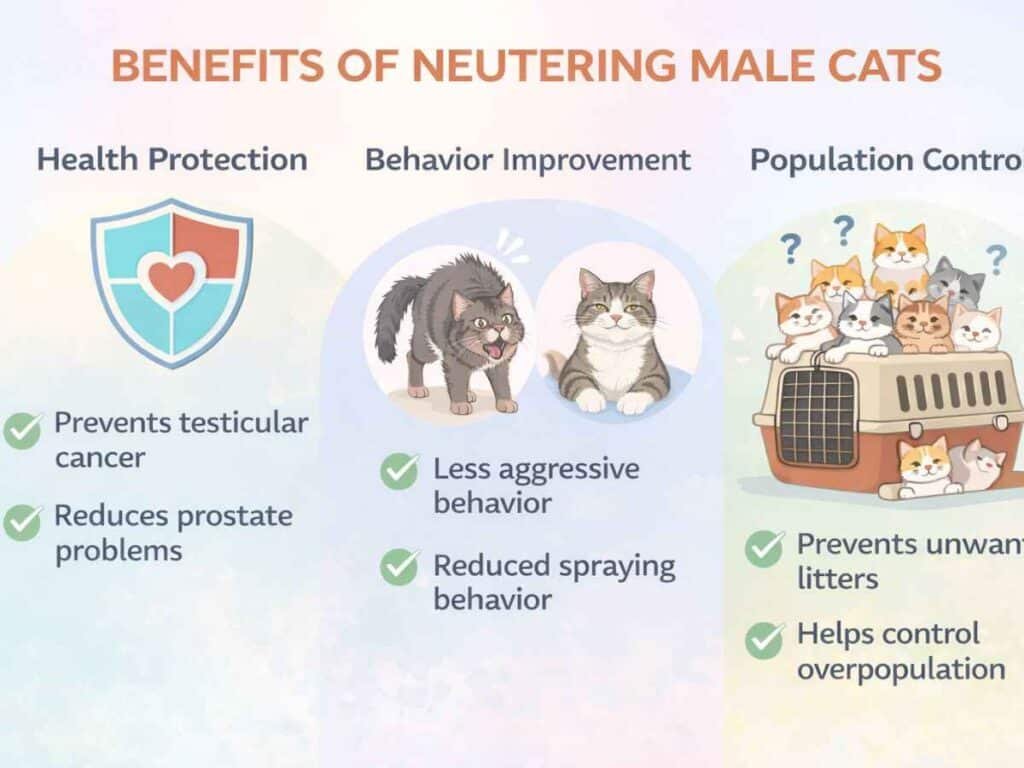
Veterinarians strongly recommend neutering because the benefits of neutering male cats go far beyond preventing kittens. Neutering lowers the risk of testicular cancer and reduces prostate problems, giving long-term male cat health benefits. It also lowers exposure to serious illnesses like feline leukemia virus (FeLV) and feline immunodeficiency virus (FIV) caused by fights.
There is also a social reason. Millions of cats enter shelters every year. Cat overpopulation remains a major problem in the U.S. Cat population control improves when more owners commit to fixing male cats, even when discussing neutering indoor cats who never go outside.
Male Cat Behavior Before Neutering

Before surgery, hormone-driven instincts dominate daily life. Male cat behavior before neutering often includes loud vocalizing, restlessness, and strong urges to escape. These behaviors feel natural to the cat but stressful for owners trying to maintain a calm home.
Common issues include aggressive behavior, territory marking, strong spraying behavior, and constant roaming behavior. These actions are not personality flaws. They are driven by biology. Testosterone pushes male cats to compete, wander, and defend space, especially in multi-cat households.
Male Cat Behavior After Neutering

After hormones begin to drop, male cat behavior after neutering usually becomes calmer. Spraying often decreases or stops completely. Fighting urges fade. Many cats show less anxiety and fewer nighttime yowls within weeks.
Behavior does not change overnight. Hormones already in the body take time to fade. Most owners notice steady improvement between two and six weeks. Over time, male cat behavior after neutering becomes more predictable, relaxed, and easier to manage indoors.
Will My Male Cat’s Personality Change After Neutering?
This is one of the biggest fears owners have. The short answer is no. Your cat’s core personality stays intact. Neutering removes hormone-driven impulses, not affection or playfulness. A cuddly cat stays cuddly. A curious cat stays curious.
What changes is intensity. Territorial stress softens. Aggression drops. Your cat feels safer and less driven to compete. Over time, male cat behavior after neutering feels more balanced, not dulled or robotic.
What to Expect on Neutering Surgery Day
On surgery day, your vet follows strict veterinary instructions to ensure safety. Your cat receives general anesthesia, and the entire procedure often takes less than thirty minutes. Clinics monitor breathing, heart rate, and temperature the entire time.
After surgery, cats may seem sleepy or unsteady. This is normal. Vets provide clear post-op instructions and may schedule a follow-up appointment. Carefully following these steps helps reduce stress and speed healing.
Male Cat Recovery After Neutering (Day-by-Day Timeline)
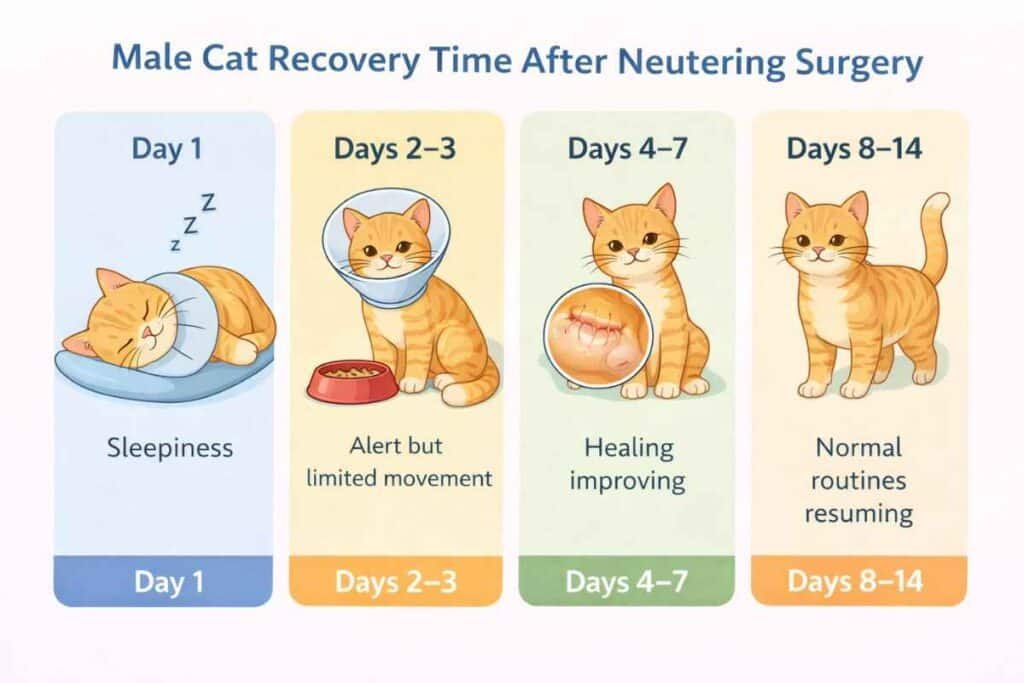
The first day focuses on rest. Appetite may drop slightly. Movement looks slow. Over the next few days, energy returns gradually. Male cat recovery time after neutering depends on age, health, and activity level.
Below is a simple recovery overview.
| Recovery Stage | What You’ll Notice |
| Day 1 | Sleepiness, low appetite |
| Days 2–3 | More alert, limited movement |
| Days 4–7 | Healing improves, calmer mood |
| Days 8–14 | Normal routine resumes |
How to Care for Your Male Cat After Neutering
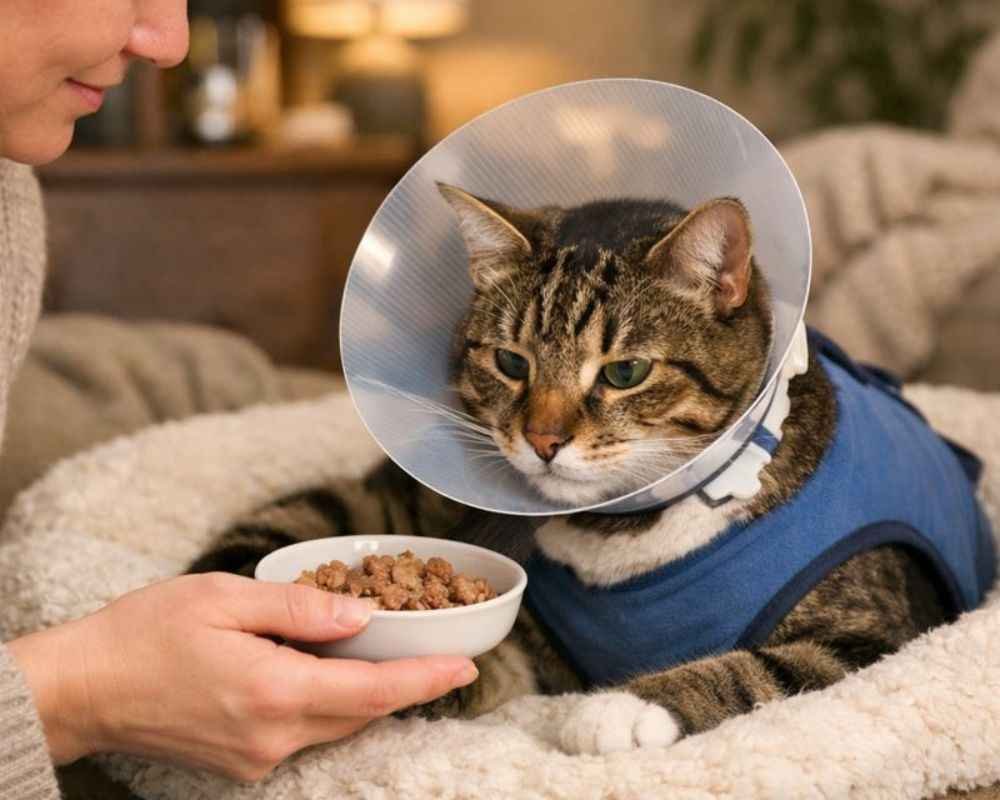
Proper post-operative care matters. Keep activity low and monitor the male cat’s incision site daily. Vets often use internal sutures and surgical glue, so stitches are rarely visible. Mild swelling and redness can be normal early on.
To prevent licking, use a recovery suit or e-collar (Elizabethan collar) if recommended. Follow all feeding and rest guidelines carefully. Good care supports faster incision healing and smoother emotional adjustment.
Neutering Side Effects & Signs of Complications
Most cats recover without issues. However, watch closely for infection signs like discharge, strong odor, or worsening swelling. Vomiting, diarrhea, or extreme lethargy lasting over 24 hours requires a vet call.
Behavioral changes can also signal discomfort. Hiding, shaking, or refusal to eat should never be ignored. Early response protects your cat and prevents complications.
How Long Does It Take a Male Cat to Fully Recover From Neutering?
Physically, healing often completes within two weeks. Behaviorally, changes may continue for several weeks as hormones decline. Adult cats may take longer than kittens, which is why vets explain the differences between neutering kittens vs adult cats.
By one month, most owners see stable routines and improved behavior. At that stage, male cat behavior after neutering reflects comfort, security, and reduced stress rather than hormonal urges.
Male Cat Neutering FAQs
How long does it take for a male cat to recover from being neutered?
Most male cats recover within 10–14 days, although mild behavior changes may continue improving for several weeks.
How do you comfort a male cat after neutering?
Provide a quiet space, gentle affection, follow vet instructions, and limit activity until healing is complete.
What are the disadvantages of neutering a male cat?
Temporary soreness, low appetite, or mild lethargy can occur, but serious long-term disadvantages are rare.
Do male cats calm down after neutering?
Yes, most male cats become calmer as hormone-driven behaviors like spraying and roaming decrease.
Are male cats happier neutered?
Many neutered male cats appear more relaxed and content because they experience less stress and frustration.