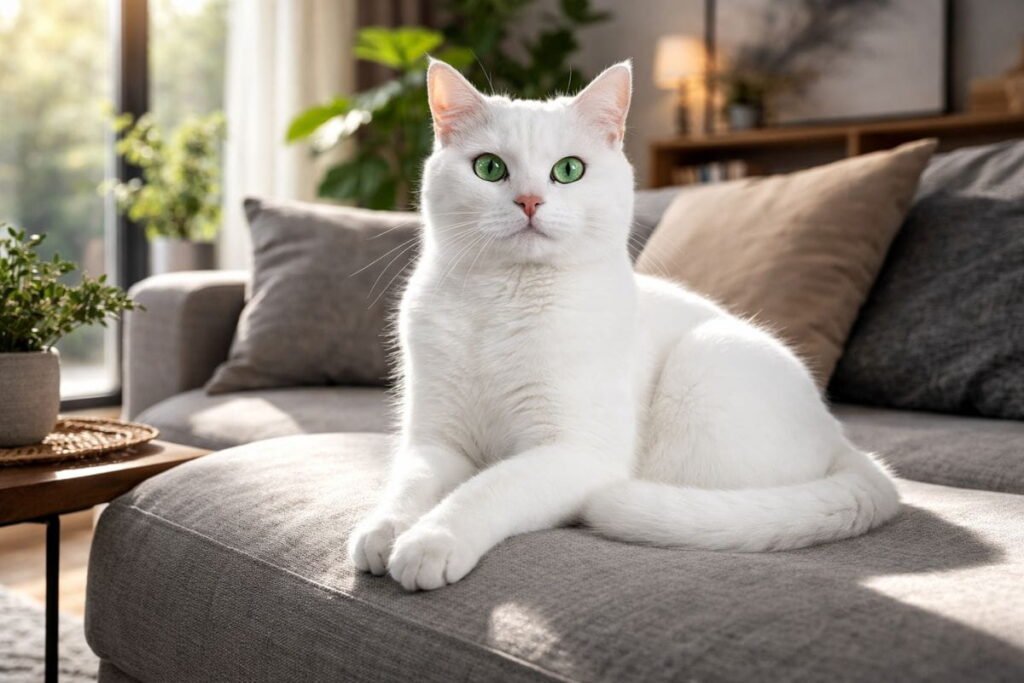
The Russian White cat is a purebred white cat known for quiet charm and loyalty. This rare white cat breed belongs to the Russian Blue descendant family and shares many similar traits. Owners love its calm nature, graceful body, and bright green eyes.
This quiet indoor cat fits modern homes perfectly. The Russian White cat size is medium, and the Russian White cat weight ranges from 7 to 15 pounds. With proper care, the Russian White cat lifespan reaches 15–20 years, making it a true long lifespan house cat.
| Feature | Details |
| Height | About 10 inches |
| Weight | 7–15 pounds |
| Lifespan | 15–20 years |
| Energy | Low to moderate |
| Coat | Short, dense white |
History and Origins of the Russian White Breed
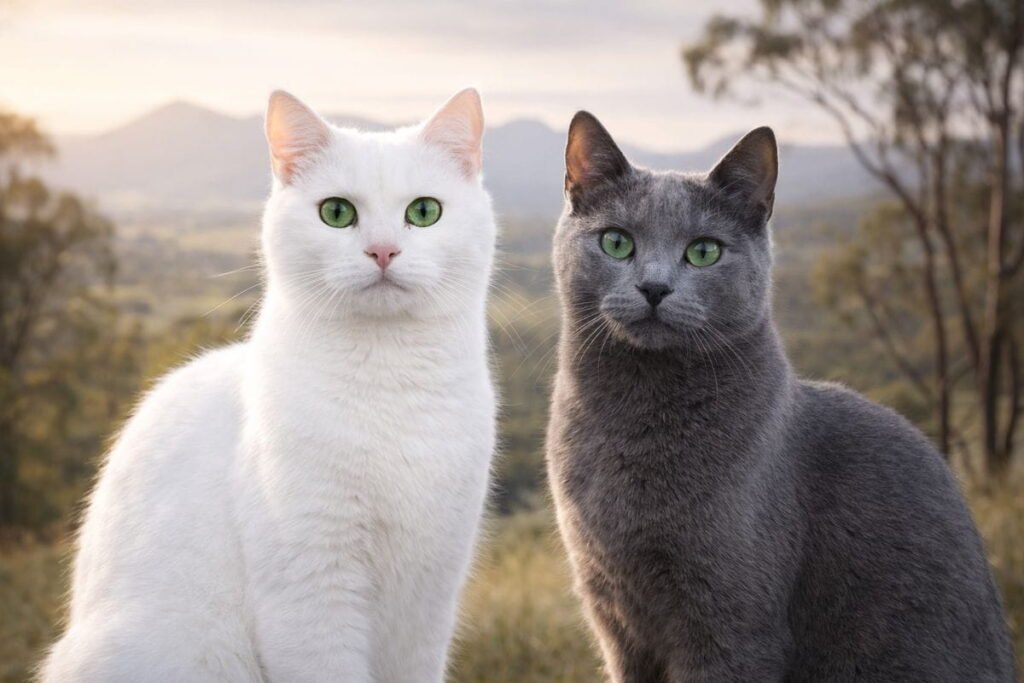
The story of the Russian White cat breed began when breeders wanted a white version of the Russian Blue. This breed was developed in Australia in 1971 through careful pairing. The goal was to keep the famous temperament while creating a snowy coat.
Because of controlled breeding, the Russian White cat rare breed has stable traits. It is not a random white cat. It carries consistent personality, health patterns, and structure, which makes it reliable for families seeking a predictable companion animal personality.
Russian White Appearance: Coat, Eyes, and Physical Traits
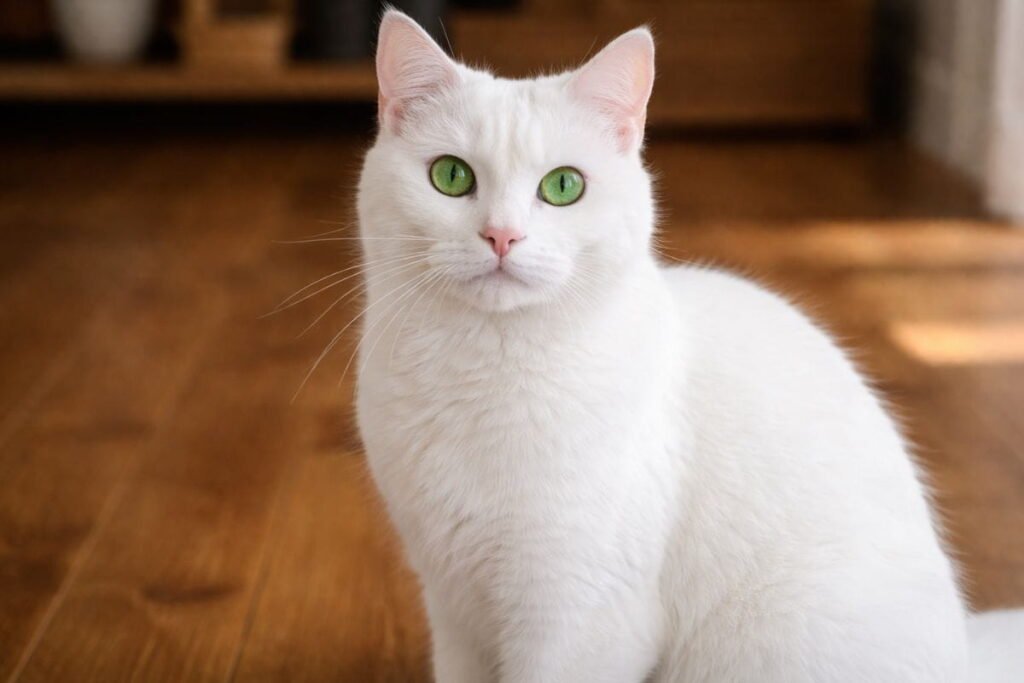
The Russian White cat characteristics include a plush double coat that feels soft and thick. Although dense, this is a low-shedding shorthaired cat most of the year. However, seasonal shedding in cats may occur during spring.
This breed has a lean but muscular body and bright emerald eyes. The coat reflects light beautifully. Because of its structure and neat fur, many owners describe it as a low-maintenance grooming cat compared to long-haired white breeds.
Russian White Personality and Temperament
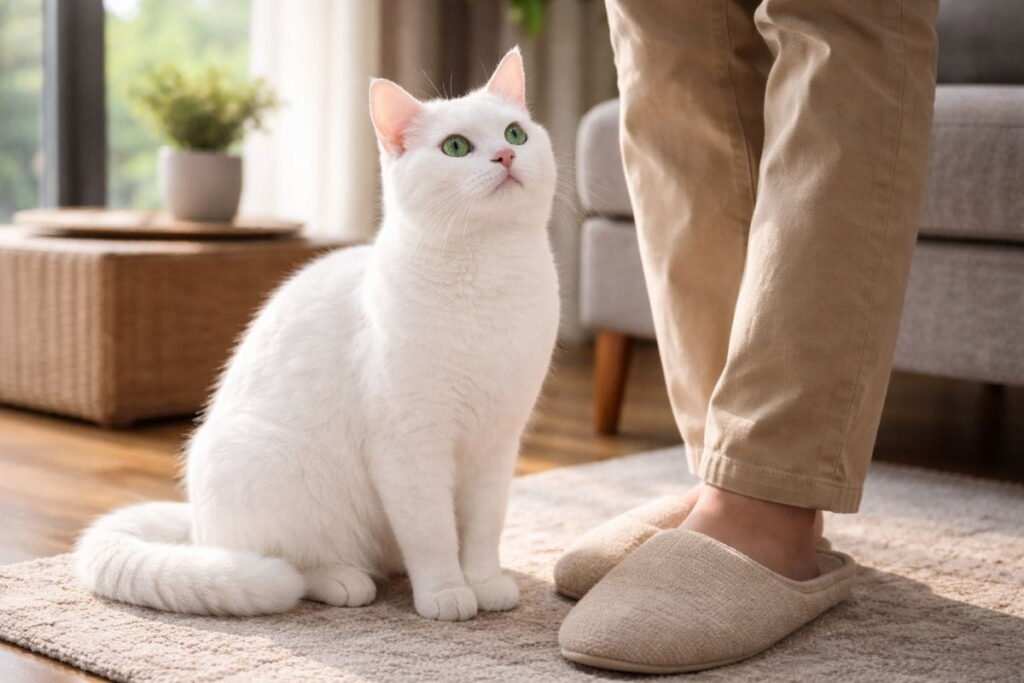
The Russian White cat personality is calm, observant, and deeply loyal. This calm cat breed often follows its favorite person around the home. Many owners describe strong dog-like cat behavior and emotional attachment.
The Russian White temperament suits quiet homes best. This laid-back feline prefers routine and peaceful spaces. It may be shy around strangers, but once comfortable, it becomes an affectionate companion cat and a classic, loyal one-person cat.
Are Russian White Cats Good for Families and Other Pets?

The Russian White cat family pet works well in calm households. It is a family-friendly cat and usually a cat good with children, especially older kids who understand gentle handling.
This breed is also a cat good with other pets if introductions are slow. Because of its gentle nature, loud environments or very active dogs may cause stress. A peaceful indoor lifestyle cat helps this breed feel safe and confident.
Complete Care Guide for Russian White Cats
Proper Russian White cat care starts with diet and routine. Feed high-protein cat food designed for indoor cat nutrition. Since this is a low-energy cat breed, careful feeding supports obesity prevention in cats.
The Russian White cat grooming routine is simple. Weekly cat brushing keeps the coat healthy and shiny. Regular play supports Russian White cat exercise and provides mental stimulation for indoor cats through toys, puzzles, and climbing spaces.
Daily Routine Tips for Russian White Cat Owners
Consistent timing improves Russian White cat training and behavior. Provide daily feeding, play, and quiet bonding. Add cat climbing and enrichment structures to support instincts and healthy activity levels.
Common Health Issues and Lifespan Expectations
The Russian White cat health profile is generally strong. However, inactivity may lead to weight gain. Extra weight increases the risk of arthritis and diabetes, which are common feline health problems in indoor cats.
Good habits make a big difference. Regular dental care for cats prevents gum disease. Routine checkups and preventive veterinary care help this breed maintain its reputation as a healthy, long lifespan house cat.
Russian White Kitten Guide: What to Expect in the First Year
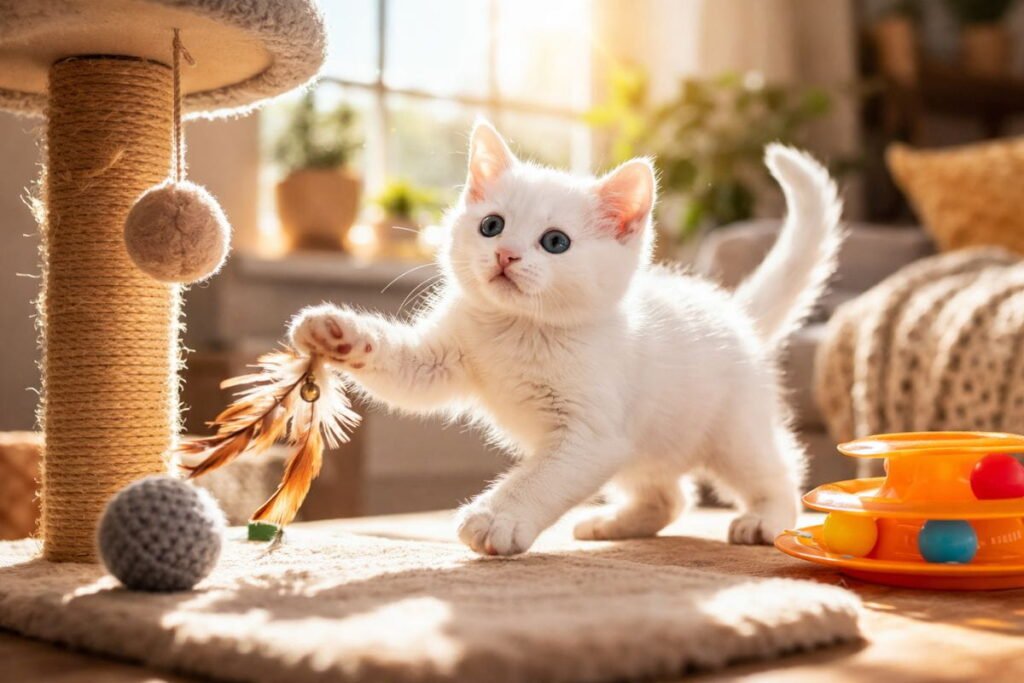
A Russian White kitten shows more energy than adults. Early months include active play, social learning, and bonding. Gentle handling helps shape confident Russian White cat behavior later in life.
Vaccinations, early nutrition, and routine help the kitten grow steadily. Over time, playful energy settles into the calm personality typical of the adult Russian White cat breed.
| Age | What to Expect |
| 2–4 months | High play energy |
| 4–8 months | Social bonding |
| 8–12 months | Personality settles |
Russian White Cat Price, Adoption, and Availability
Because the Russian White cat rare breed is uncommon in the United States, finding one may take time. Breeder prices usually range from $800 to $2,000 depending on lineage and location.
Adoption is rare but possible through specialty rescues. Always request health records and breeder information. A true purebred white cat should come with documentation and early health screening.
Russian White vs Russian Blue vs Other White Cats (Comparison Guide)
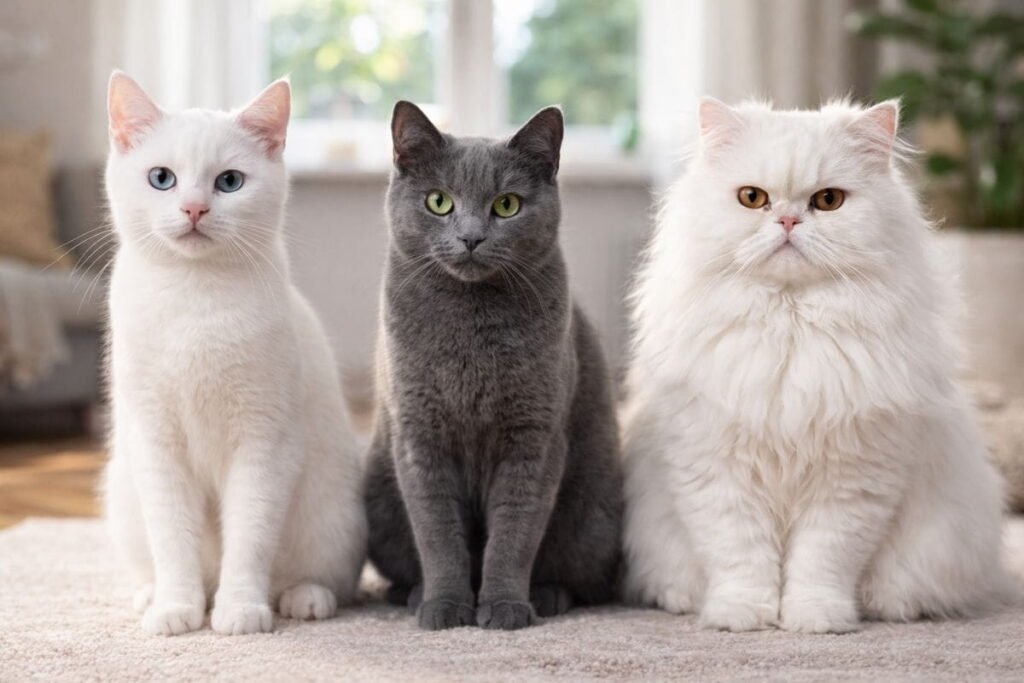
The white variety shares personality with the Russian Blue but differs in coat color. Both are intelligent, quiet, and loyal. However, the white version often attracts owners seeking a distinctive look.
Compared to fluffy white breeds, the Russian White requires less grooming and adapts better as a quiet indoor cat. Its balanced temperament and moderate activity make it ideal for modern homes.
| Breed | Coat | Grooming | Energy |
| Russian White | Short white | Low | Low |
| Russian Blue | Short gray | Low | Low |
| Persian | Long white | High | Low |
Pros and Cons of Owning a Russian White Cat
The biggest advantage of the Russian White cat is its calm and affectionate nature. This indoor lifestyle cat forms strong bonds and fits well into quiet homes and apartments.
However, its sensitivity to noise and strangers may not suit busy households. Limited availability and higher cost also require planning before choosing this elegant companion.
FAQs About Russian White Cats (Search Intent Section)
Many people ask if this feline is hypoallergenic. While the Russian White cat sheds moderately, no cat is completely allergy-free. Regular grooming and clean living spaces help reduce allergens.
Another common question involves lifespan and training. With proper care, this breed lives long and learns routines easily. Its calm nature and predictable habits make it one of the easiest breeds for quiet American homes.
“A Russian White doesn’t demand attention. It earns your heart quietly.”
This guide covers everything you need to know about the Russian White cat. From personality to care and health, this elegant breed offers loyalty, calm energy, and lasting companionship for the right home. If you love peaceful evenings and a cat that bonds deeply with one person, this breed may feel like it was made just for you.
FAQs
How rare are Russian White cats?
Russian White cats are very rare, as they come from a small, carefully controlled breeding program.
How much is a Russian White cat worth?
Prices typically range from $800 to $2,000, depending on lineage and breeder reputation.
What is the calmest type of cat?
Russian White cats, along with breeds like Ragdolls and British Shorthairs, are among the calmest cat breeds.
What is special about White Russian cats?
Their pure white coat, emerald eyes, and dog-like loyalty make them unique among domestic cats.