Cats often appear mysterious. Yet their daily habits reveal fascinating social secrets. One behavior that surprises many owners is cats licking each other during quiet moments. If you’ve ever wondered why do cats groom each other, the answer goes far beyond hygiene. It involves friendship, trust, communication, and survival instincts.
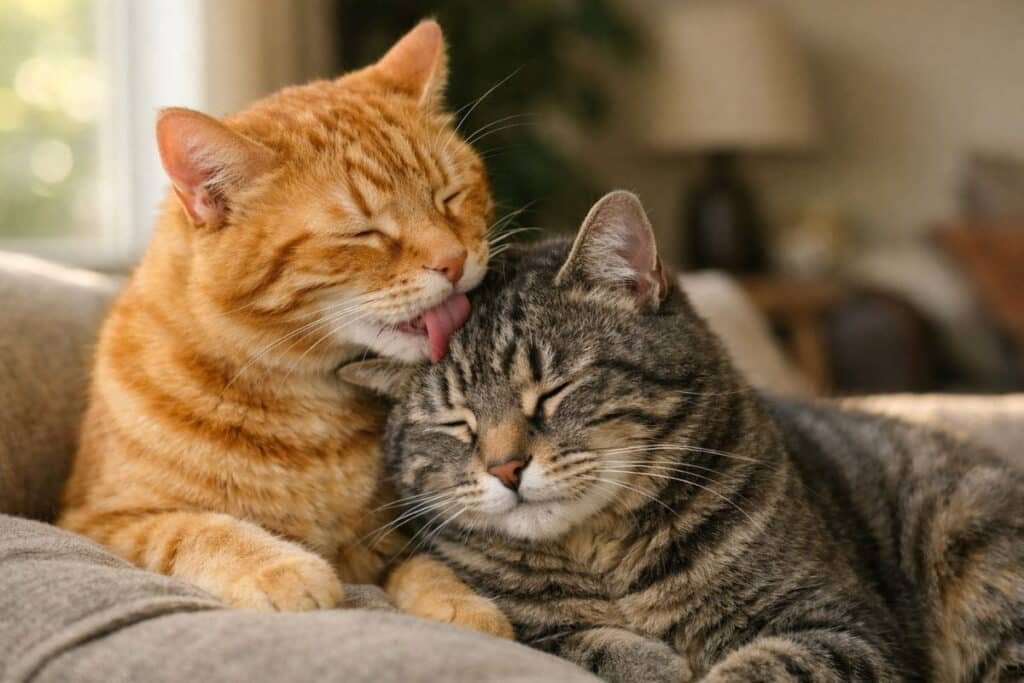
Veterinarians and animal behaviorists describe this behavior as cat mutual grooming, an important form of cat social interaction. In fact, studies on feline social structure show that grooming strengthens relationships in cat groups. When you watch cats cleaning each other, you’re seeing a language of affection and cooperation unfold.
A simple grooming session might look ordinary. However, beneath the surface lies a complex mix of cat bonding signals, scent sharing, and emotional reassurance. Understanding why cats lick each other can help you read your cat’s feelings and improve harmony in your home.
What Is Mutual Grooming in Cats? (Allogrooming Explained)
Veterinary behaviorists call cat mutual grooming by a scientific name: allogrooming in cats. This term describes grooming between cats where one cat licks or cleans another. Unlike self-grooming, which maintains cleanliness, this shared ritual strengthens cat friendship behavior and trust between companions.
Researchers studying feline grooming behavior explain that cats grooming habits evolved in small colonies. Grooming helps maintain cat hygiene and also spreads a cat colony scent among group members. This shared odor becomes a group scent in cats, which signals belonging and safety.
Most of the time, cats grooming head and neck areas during grooming sessions. These places are difficult to clean alone. Because of this, cats bonding through grooming becomes both practical and social. Grooming partners rely on each other for comfort and cleanliness.
Scientists also note that this activity forms part of a natural cats grooming routine. It strengthens emotional bonds and reinforces cat relationships in homes with several cats.
7 Main Reasons Why Cats Groom Each Other
Understanding why do cats groom each other requires looking at several biological and emotional reasons. Grooming is not random behavior. Instead, it reflects complex cat grooming instincts shaped by evolution and social life.
Animal behavior experts often link cats social bonding behavior with grooming rituals. These moments signal comfort and acceptance among cats living together. Observing grooming behavior in multi-cat homes reveals patterns of trust, hierarchy, and companionship.
Strengthening Social Bonds and Friendship
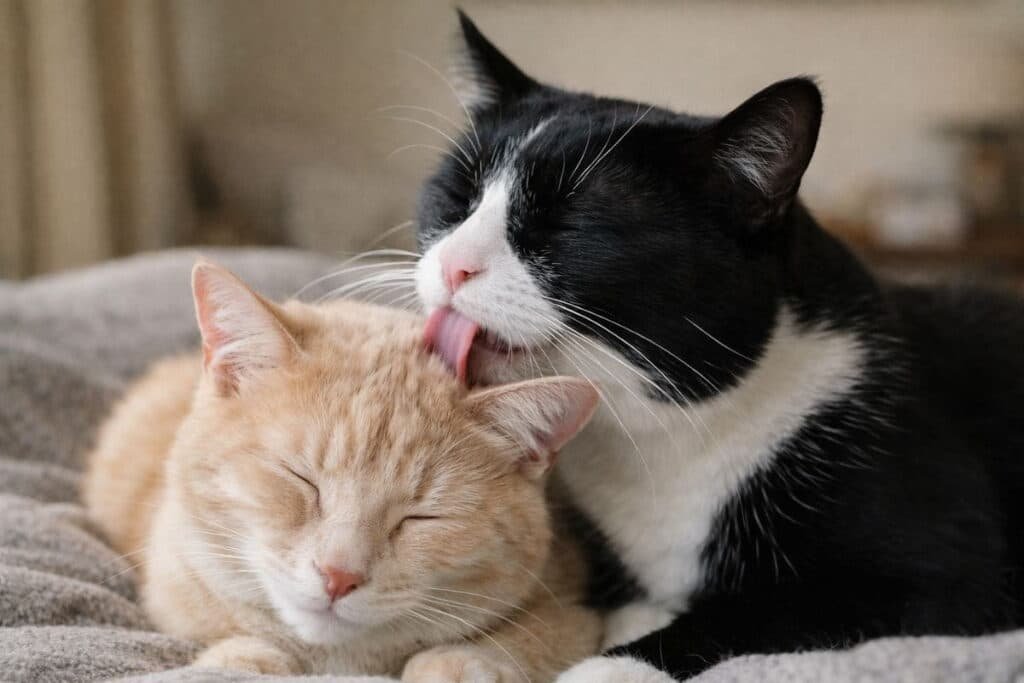
One major reason behind cat mutual grooming is friendship. When cats feel safe together, they develop cat bonding signals that reinforce closeness. Grooming is among the strongest signs of cats showing affection toward their companions.
In many households, do bonded cats groom each other becomes an obvious question because the answer is usually yes. When cats groom regularly, they display a clear cat emotional connection. Experts call this grooming and cat friendship, a behavior that helps cats maintain peaceful relationships.
Showing Affection and Trust
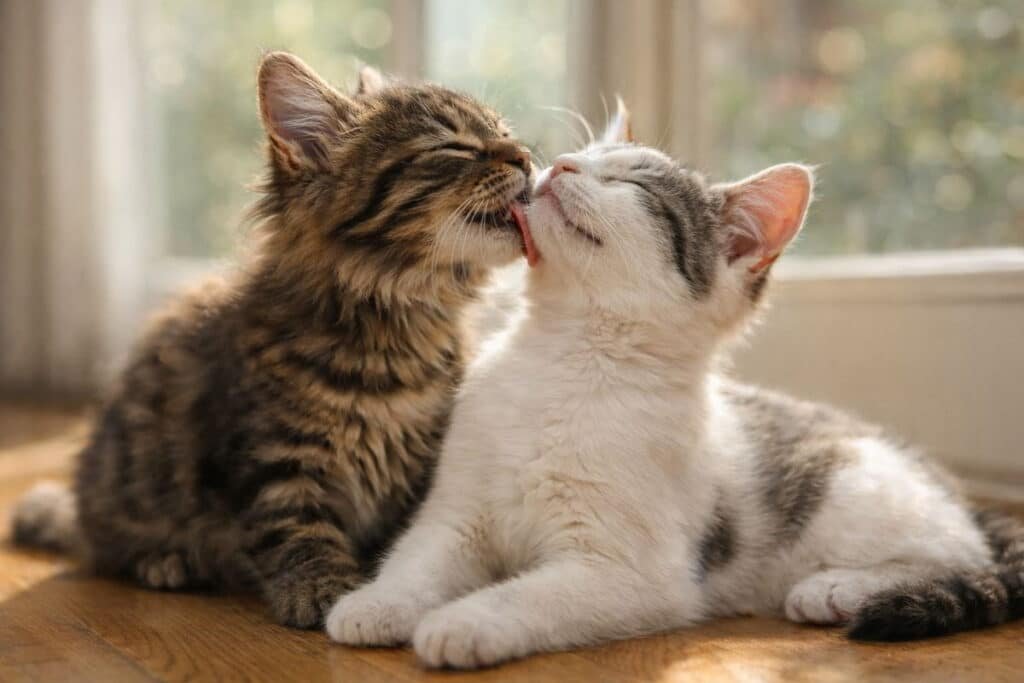
Many owners notice why cats lick each other’s faces during calm moments. This behavior represents cats showing trust. Just like slow blinking or head bumps, grooming signals love and comfort.
Researchers observing cats licking each other often describe grooming as emotional reassurance. Cats groom individuals they trust deeply. Because of this, grooming becomes one of the clearest cat comfort behavior signals in feline communication.
Reducing Stress and Creating Calm
Scientists studying cat stress relief behavior discovered that grooming releases calming brain chemicals. This explains why do cats groom after fighting or stressful events. Grooming helps restore balance in the group.
Some behaviorists describe this as grooming to reduce aggression. After a brief disagreement, cats may groom each other to rebuild trust. These moments show how grooming functions as emotional therapy within multi-cat household behavior.
Establishing Social Hierarchy
Another explanation for why cats lick each other relates to cat social hierarchy. Within groups, grooming sometimes reflects leadership roles.
Experts studying dominant cat grooming found that confident cats may groom companions first. Meanwhile, relaxed acceptance from the other cat reflects subordinate cat behavior. This interaction supports cats establishing dominance without serious conflict.
Helping Clean Hard-to-Reach Areas
One simple reason for cats cleaning each other involves hygiene. Cats cannot easily reach every spot on their body. This is why you may notice why do cats clean each other’s ears or why do cats groom each other’s neck.
During grooming between cats, partners often focus on the ears, face, and neck. These spots collect dirt or loose fur. Mutual grooming ensures both cats maintain proper cat hygiene behavior.
Learned Behavior From Kittenhood
Grooming habits begin early. In the first weeks of life, mother cat grooming kittens teaches essential life skills. This early care creates strong kitten grooming behavior patterns that kittens later repeat with siblings.
Because of this early learning stage, many cats continue grooming companions as adults. The instinct becomes part of their natural cat’s grooming routine and social communication.
Sharing a Group Scent
Cats rely heavily on scent communication. During grooming sessions, cats sharing scent across their fur creates a unified smell. This scent becomes the cat colony scent that signals family membership.
Researchers studying group scent in cats discovered that this shared odor helps reduce territorial conflict. Through grooming, cats blend their scents and reinforce social harmony within their group.
Do All Cats Groom Each Other? Understanding Cat Relationships
Many owners wonder whether it is normal for cats to groom each other. The answer depends on the relationship between the cats. Grooming usually happens between cats that feel comfortable and safe together.
Cats that lack a close bond may avoid grooming entirely. In contrast, strong companions display consistent cat social interaction through grooming. Observing cat relationship behavior helps owners understand which cats share genuine friendships.
However, personality differences matter. Some cats simply prefer independence. Even in homes with several cats, only certain pairs develop strong cats bonding through grooming patterns.
Why Do Cats Lick Each Other and Then Suddenly Fight?
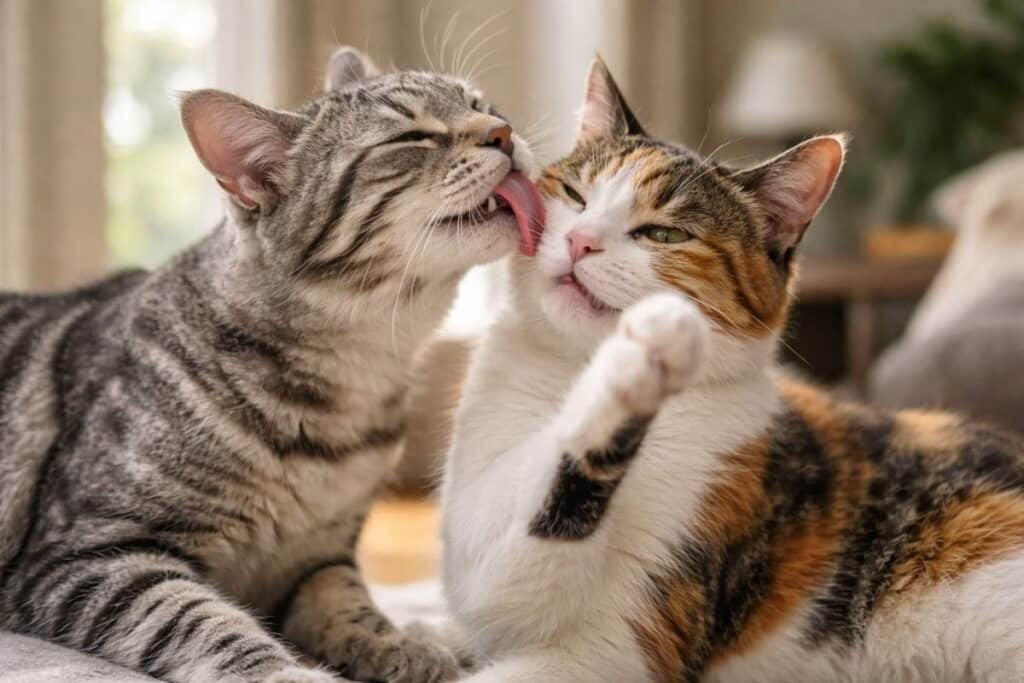
Many owners search for answers to why do cats groom each other then fight. The explanation often involves overstimulation. Grooming can feel pleasant at first, but become irritating after prolonged licking.
During intense sessions, one cat may react suddenly. A small bite or paw swipe interrupts grooming. This behavior explains why do cats lick each other and then bite during interactions.
Another reason involves cat social hierarchy. Occasionally, grooming shifts into playful dominance testing. Although it may look dramatic, most encounters remain harmless unless aggression becomes frequent.
Is It Normal for Cats to groom the private areas of Other Cats?
Owners sometimes worry when they notice grooming near sensitive areas. Yet is it normal for cats to groom each other in these spots? In most cases, the answer is yes.
Cats rely on grooming to maintain cleanliness. During cats grooming habits, partners may clean areas near the tail or stomach. This behavior supports overall cat hygiene behavior.
However, constant licking may indicate irritation or infection. If grooming appears obsessive, a veterinary visit helps rule out medical concerns.
When Cat Grooming Becomes a Problem
Although grooming usually reflects healthy relationships, excessive licking can signal stress. Overgrooming may cause bald patches or irritated skin.
Behavior experts observing feline grooming behavior sometimes connect this issue to anxiety or boredom. In rare cases, one cat may groom another excessively as a form of dominance.
When grooming appears aggressive or compulsive, owners should monitor closely. Identifying triggers helps restore balance within the household.
Should You Ever Stop Cats From Grooming Each Other?
In most homes, grooming remains harmless and beneficial. Stopping normal grooming could disrupt natural cat social interaction patterns.
However, intervention becomes necessary if one cat appears distressed. Suddenly, hissing, biting, or fur pulling indicates grooming has crossed into aggression.
Providing separate resting areas often helps reduce tension. Encouraging positive interactions supports healthier grooming behavior in multi-cat homes.
How to Encourage Positive Relationships Between Cats
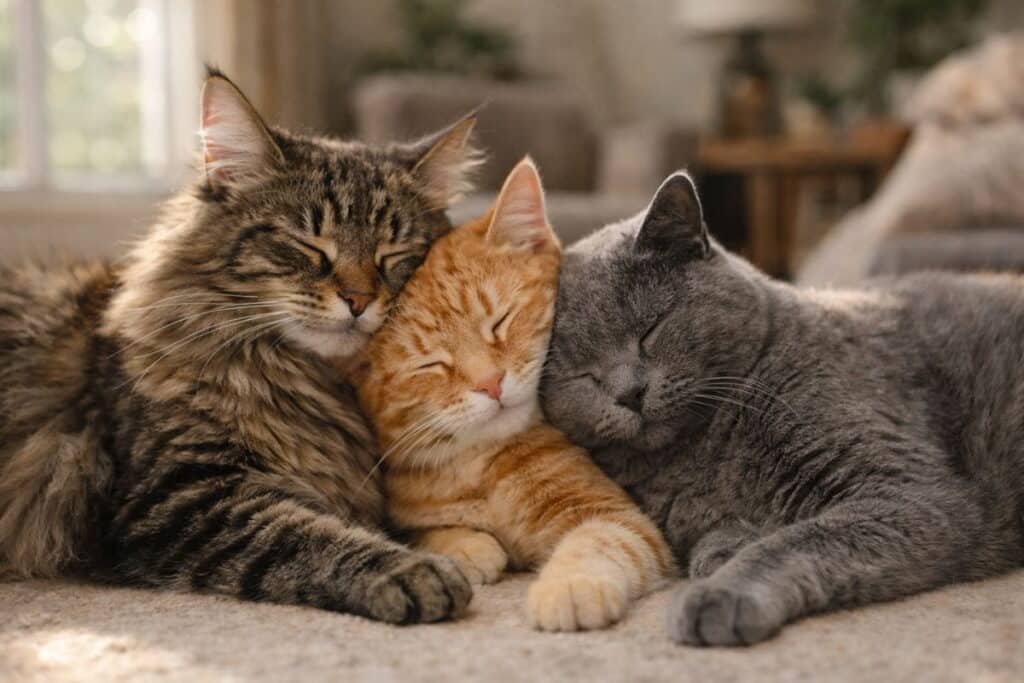
Healthy relationships encourage calm grooming sessions. Creating a peaceful environment supports natural cats’ social bonding behavior.
Experts recommend ensuring each cat has personal space, food bowls, and litter boxes. When resources remain plentiful, competition decreases.
Interactive play also strengthens companionship. Activities stimulate instincts while reinforcing cat friendship behavior and cooperation between cats.
Final Thoughts: What Mutual Grooming Says About Your Cats
Watching cats licking each other reveals more than simple cleaning. These quiet moments express trust, friendship, and belonging.
When you understand why do cats groom each other, you gain deeper insight into feline emotions. Grooming shows comfort, respect, and emotional safety.
Ultimately, cat mutual grooming reflects the complex social world of cats. Through scent sharing, affection, and communication, grooming helps cats maintain harmony within their group.
Quick Facts About Cat Mutual Grooming
| Behavior | Meaning |
| Cats groom their head or neck | Trust and assistance with hard-to-reach areas |
| Grooming after conflict | Emotional repair and stress relief |
| One cat grooming another repeatedly | Possible dominance or bonding |
| Grooming with a relaxed body posture | Strong friendship and comfort |
FAQ: Why Do Cats Groom Each Other?
Is the cat that grooms the dominant one?
Sometimes, yes. In some cases, dominant cat grooming shows social status, but often grooming simply reflects trust and friendship between cats.
Is it true that cats lay on your chest to heal you?
Not exactly. Cats rest on your chest because your warmth, heartbeat, and breathing make them feel safe and relaxed.
How do you say “I love you” in a cat?
Cats show love through behaviors like slow blinking, head bunting, purring, and grooming you or other cats.
Are cats bonded when they groom each other?
Yes. Cat mutual grooming usually means the cats share trust, comfort, and a strong emotional bond.