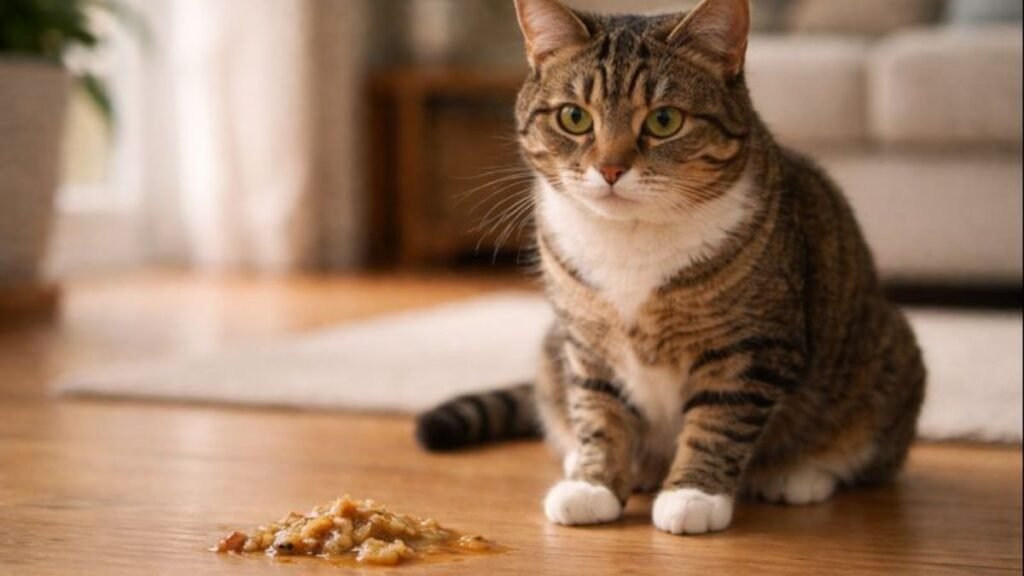
If you’re asking why is my cat vomiting, you’re not alone. Almost every cat owner faces this stressful moment. One minute, everything feels normal. The next minute, there’s a mess on the floor and worry in your chest. Cat throwing up can mean something mild, or it can signal a serious health issue.
Vomiting in cats is not a diagnosis. It’s a symptom. Understanding the reasons cats vomit helps you decide what to do next. This guide explains cat vomiting causes, how to read the signs, and what to do if cat is vomiting, using simple language and real-world insight.
Is Cat Vomiting Ever Normal—or Always a Problem?
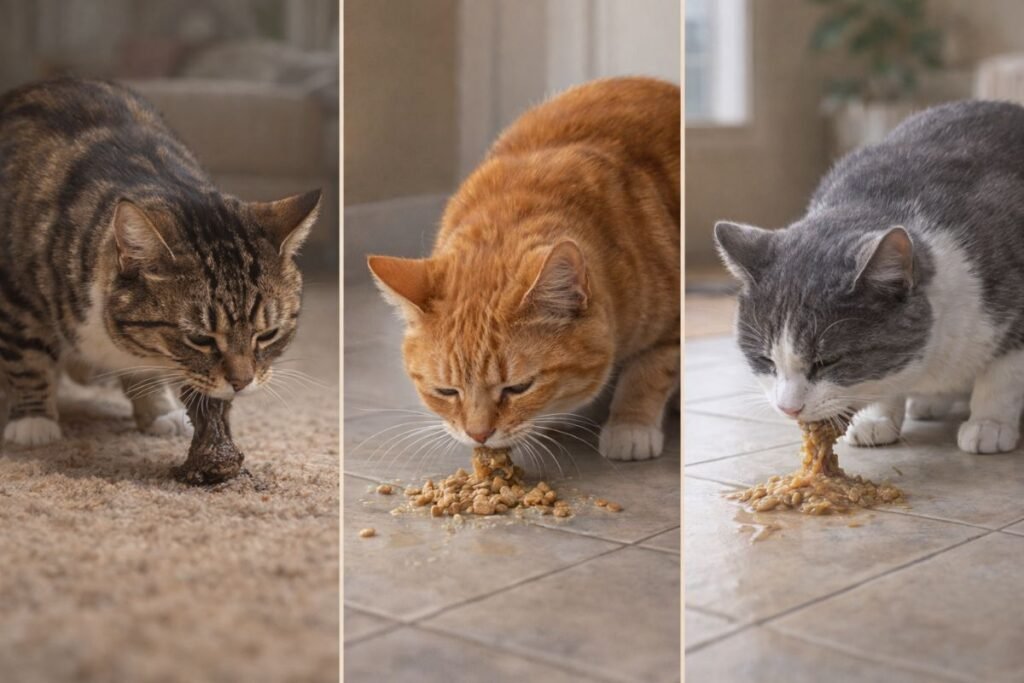
Many people believe occasional vomiting is normal for cats. That idea is outdated. While rare episodes may happen, frequent vomiting is never something to brush off. If you keep asking why is my cat vomiting, your cat is telling you something important through their body.
A healthy cat should not vomit regularly. When a cat keeps vomiting, it often points to irritation, inflammation, or disease inside the digestive system. Ignoring it allows small problems to grow. Cats hide illness well, which makes early attention critical.
Vomiting vs. Regurgitation vs. Hairballs (Know the Difference)
True vomiting involves stomach contractions and nausea. Regurgitation happens quietly, often right after eating. Cat vomiting hairballs looks dramatic, but usually includes compact fur. Confusing these leads many owners astray when figuring out why is my cat vomiting.
Understanding the difference protects your cat. Hairballs in cats come from grooming. Vomiting brings up digested or partially digested food. Regurgitation releases food unchanged. Each pattern points toward different cat vomiting causes and requires different responses.
Why Hairballs Are Often Misunderstood
Hairballs are common, but frequent ones are not harmless. Excess grooming or poor digestion can worsen dietary issues in cats. If hairballs appear weekly, your cat’s gut may already be inflamed or sluggish.
Acute vs. Chronic Cat Vomiting (What Timing Tells You)
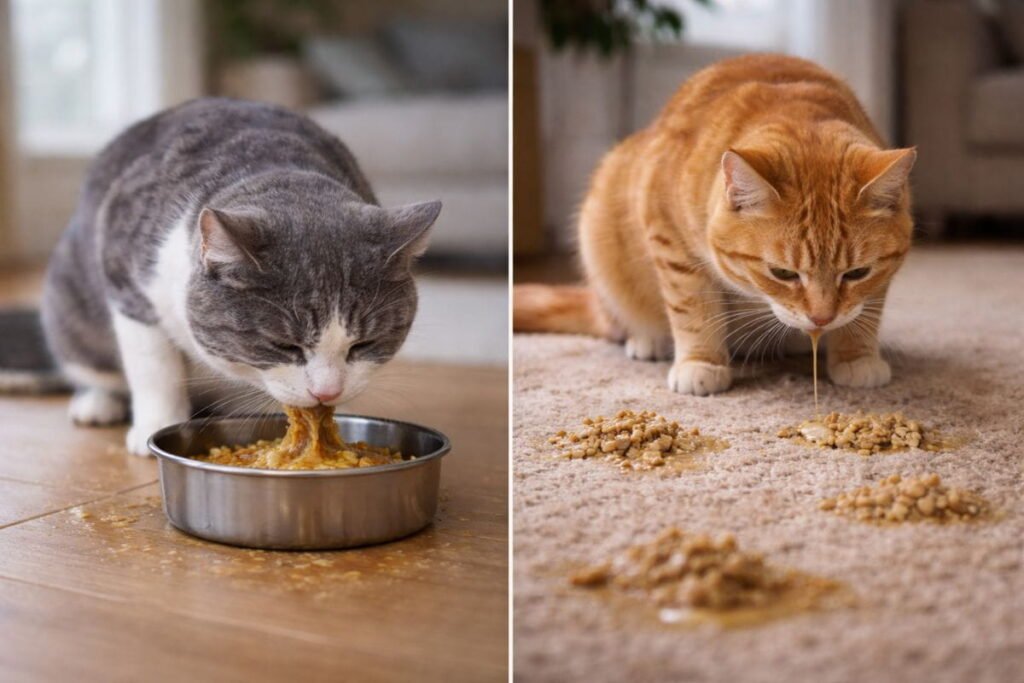
Acute vomiting in cats starts suddenly and lasts a short time. It often follows eating spoiled food or stress. While alarming, it may resolve quickly with rest and hydration if no other symptoms appear.
Chronic vomiting in cats lasts weeks or months. This pattern raises concern. It often links to kidney disease in cats, diabetes in cats, or inflammatory bowel disease (IBD). Timing tells vets where to look and how urgently to act.
What Causes Cats to Vomit? (From Common to Serious)

The common causes of cat vomiting range from simple stomach upset to life-threatening illness. Food changes, eating too fast, or scavenging cause mild irritation. These explain many cases of cat vomiting after eating.
More serious reasons cats vomit include foreign object ingestion, infections, and organ disease. A swallowed string can cause an intestinal blockage in cats, while illnesses like pancreatitis in cats quietly damage digestion over time.
Digestive and Medical Triggers
Some cats react poorly to certain proteins. Food intolerance in cats and food allergies in cats inflame the gut lining. Others suffer from bacterial infections in cats, viral infections in cats, or intestinal parasites, especially outdoor cats.
What Your Cat’s Vomit Looks Like—and What It Means
The appearance of vomit offers clues. Clear or foamy liquid often means an empty stomach. Yellow bile suggests irritation. Undigested food points to eating too fast or regurgitation. Cat vomiting blood is always an emergency.
Color, texture, and frequency matter more than one isolated episode. When vomiting and diarrhea in cats appear together, the risk rises fast. Watching patterns helps vets identify the root cause of why my cat is vomiting.
| Vomit Appearance | Possible Meaning |
| Clear or foamy | Empty stomach irritation |
| Yellow bile | Digestive inflammation |
| Undigested food | Regurgitation or fast eating |
| Blood present | Internal injury or disease |
Warning Signs That Mean Vomiting Is Serious
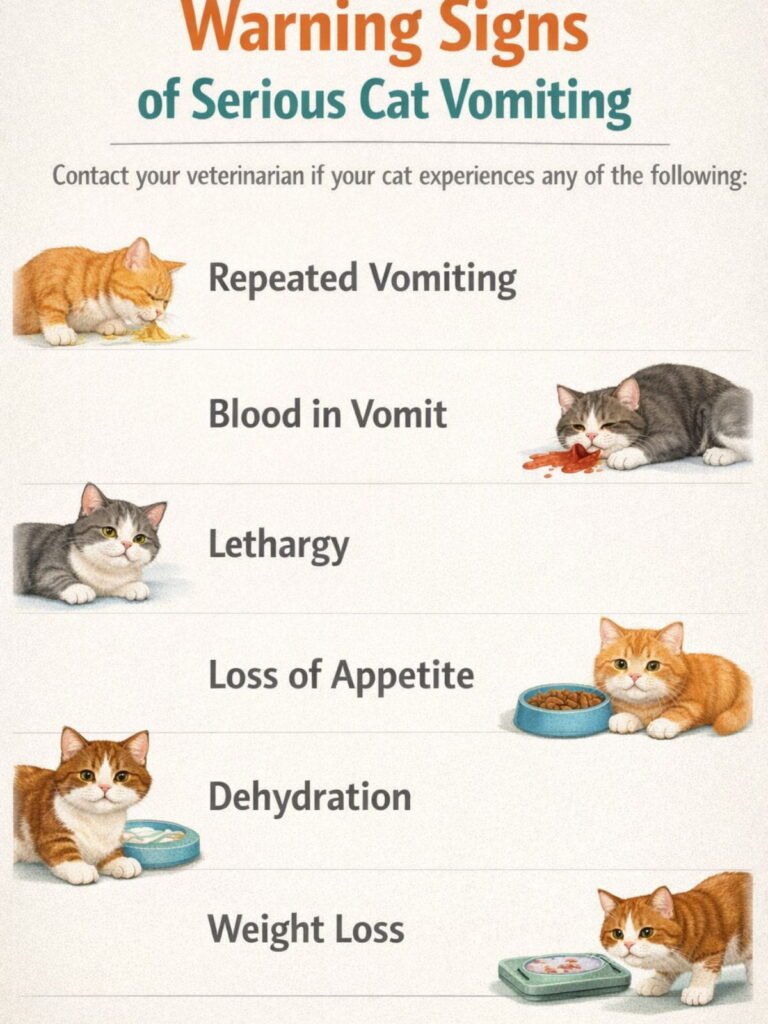
Some symptoms change everything. Weight loss in cats, loss of appetite in cats, and lethargy suggest deeper illness. Dehydration in cats happens quickly and worsens outcomes.
If vomiting pairs with pain or weakness, it’s time to act. Knowing when to worry about cat vomiting can save your cat’s life. Cats decline faster than dogs, and delays carry real risks.
When to Call the Vet Immediately vs. Monitor at Home
Occasional vomiting without other symptoms may allow short monitoring. However, repeated vomiting, blood, or refusal to eat requires immediate veterinary care. Trust your instincts. They matter.
If your cat has an existing disease, vomiting becomes urgent. Cats with liver disease in cats, kidney issues, or diabetes should never wait. Early treatment often shortens recovery and lowers cost.
How Veterinarians Diagnose the Cause of Cat Vomiting
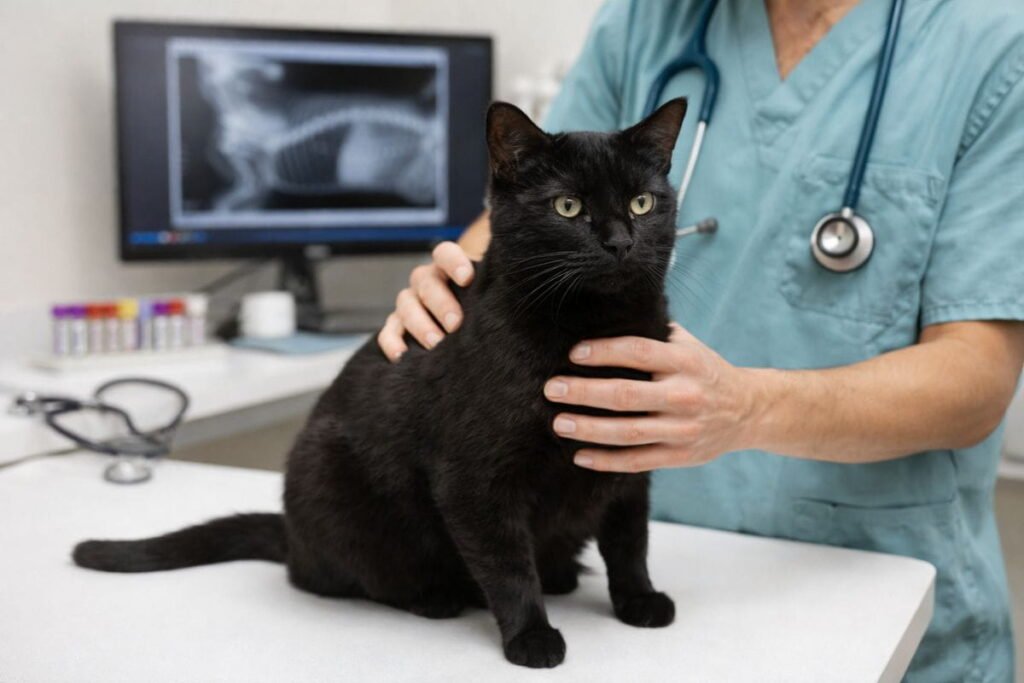
Diagnosis begins with history and a physical exam. Vets then use blood work for cats to assess organs and hydration. Imaging, such as x-rays for cats checks for blockages or abnormal organs.
Advanced cases may need an ultrasound or biopsies. Each step narrows the answer to why is my cat vomiting. Diagnosis guides treatment, which prevents guesswork and repeat visits.
Treatment Options for Cat Vomiting (Based on the Cause)
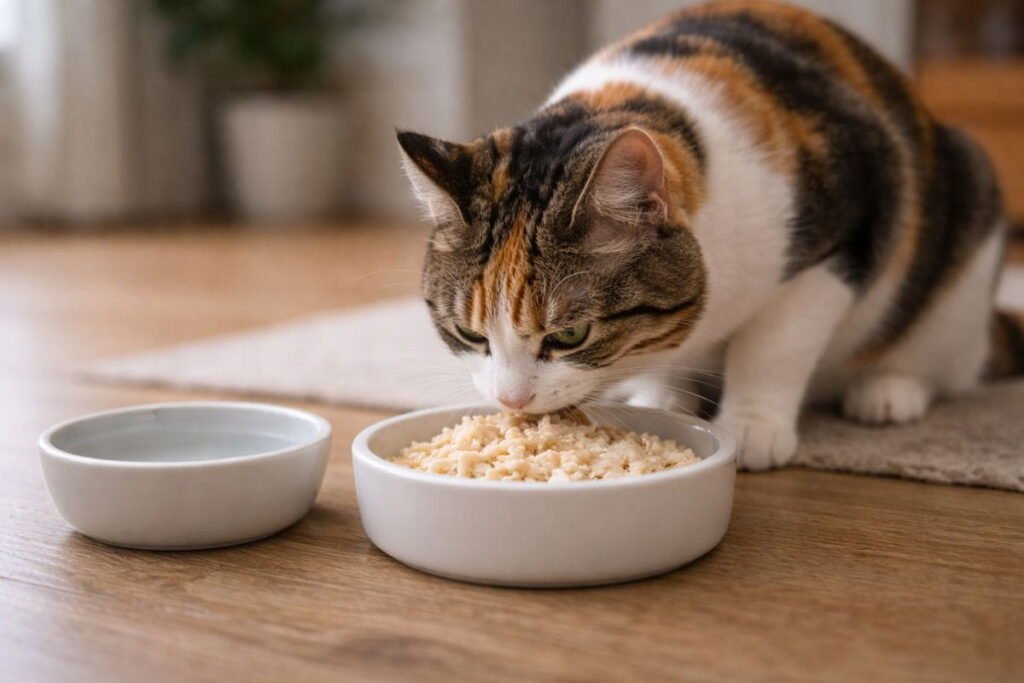
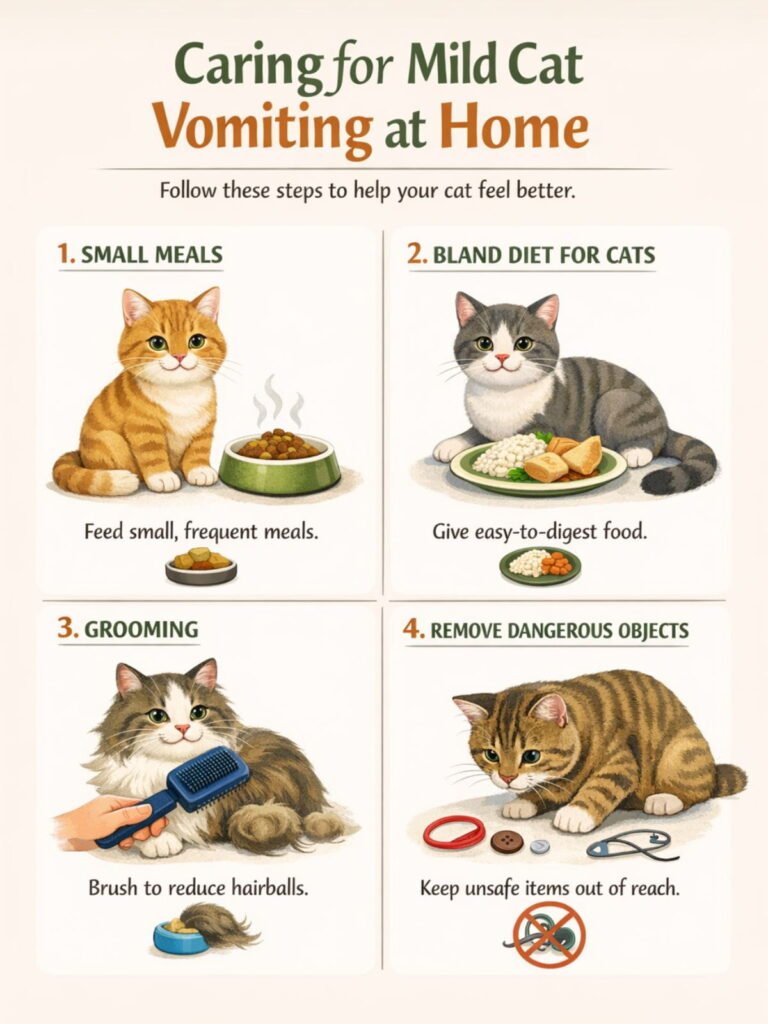
Treatment depends entirely on the cause. Mild cases improve with rest and a bland diet for cats, using an easily digested diet. Infections need medication. Parasites require targeted treatment.
Severe cases need hospitalization. Fluid therapy for cats corrects dehydration and supports organs. Some cats need subcutaneous fluids at home for long-term care. Treating the cause always matters more than stopping symptoms alone.
How to Reduce Future Vomiting and Protect Your Cat’s Health
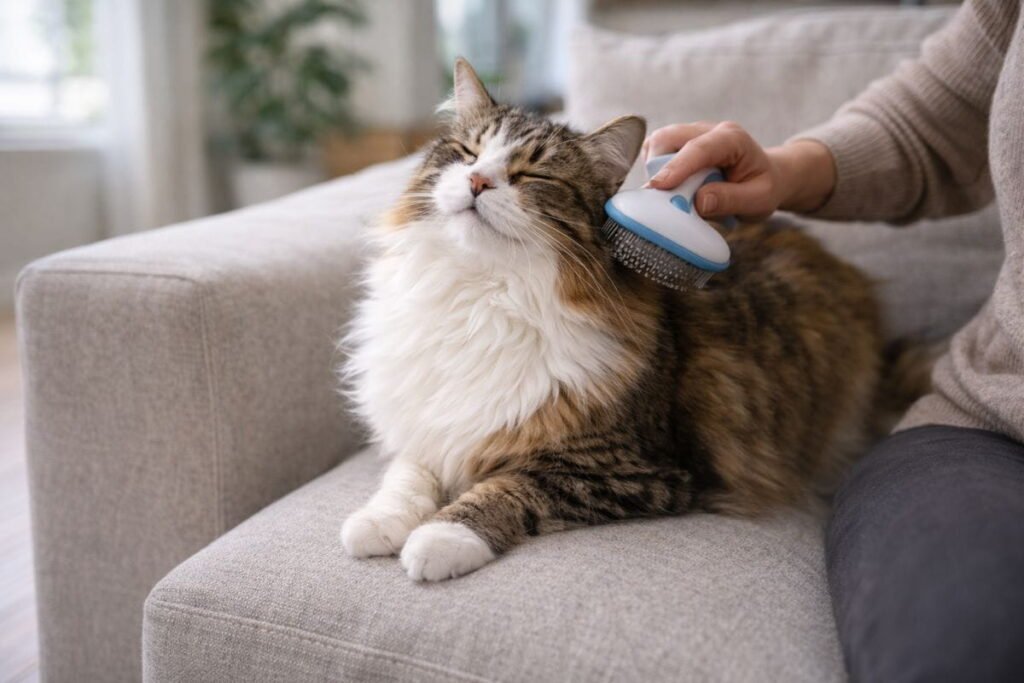
Prevention starts with consistency. Feed measured meals. Avoid sudden food changes. Groom regularly to reduce hair ingestion. Remove strings and small objects from reach to prevent foreign object ingestion.
Observe patterns closely. Early action prevents chronic disease. When you understand why is my cat vomiting, you protect your cat’s comfort, health, and lifespan. Your attention is their strongest defense.
FAQs: Cat Vomiting Questions Every Owner Asks
When should I be concerned about my cat throwing up?
You should worry if vomiting happens more than once in a day or keeps returning. Seek veterinary care if your cat seems weak, won’t eat, or shows blood in vomit.
Is it normal for indoor cats to vomit?
No, indoor cats vomiting often is not normal. Even indoor cats can develop dietary issues, hairball problems, or medical conditions that need attention.
What can I give my cat for vomiting?
Only give a bland, easily digested diet if your vet agrees. Never give human medicine, as it can be dangerous for cats.
What is your cat’s vomit telling you?
The color, texture, and frequency reveal clues about digestion or illness. Watching patterns helps your vet find the real cause faster.