A wood cat tree is more than a pet accessory. It is long-term indoor cat furniture that supports health, comfort, and style. This guide explains how a cat tree made of wood works, why it lasts longer, and how to choose the right one for your home in the USA.
What Is a Wood Cat Tree and How Is It Different From Regular Cat Trees?
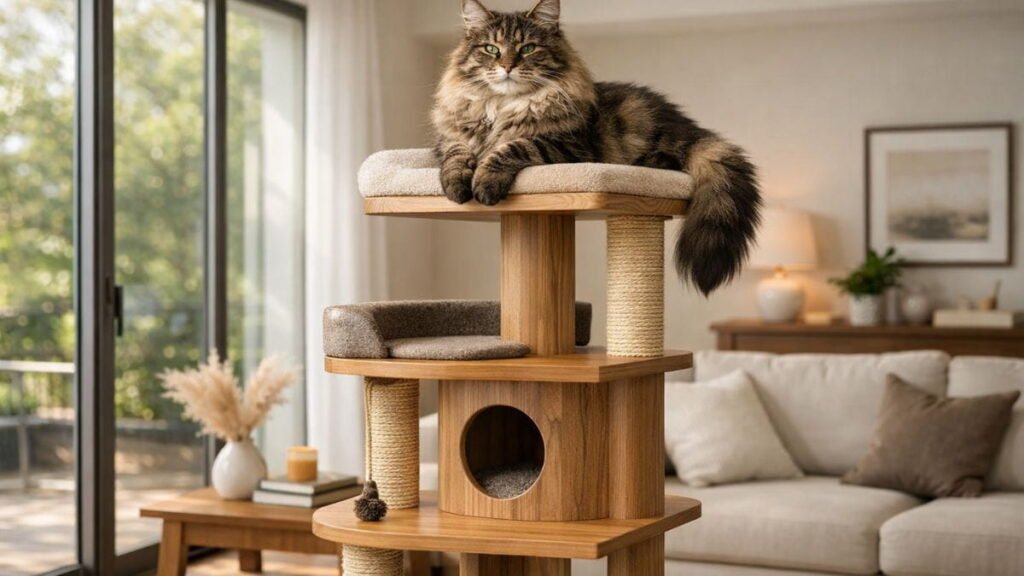
A wood cat tree is a cat climbing structure built from real or engineered wood rather than carpet-wrapped fiberboard. It feels solid under your cat’s paws. The surface stays clean longer. The frame resists bending. Many owners prefer a real wood cat tree because it blends into living spaces naturally.
Regular cat trees rely on fabric and glue. Over time, they smell and sag. A wooden cat tree uses strong joints and a stable cat tree base, which improves safety. Think of it as furniture first and pet gear second. That balance matters in modern American homes.
Benefits of Choosing a Wood Cat Tree for Your Cat and Home
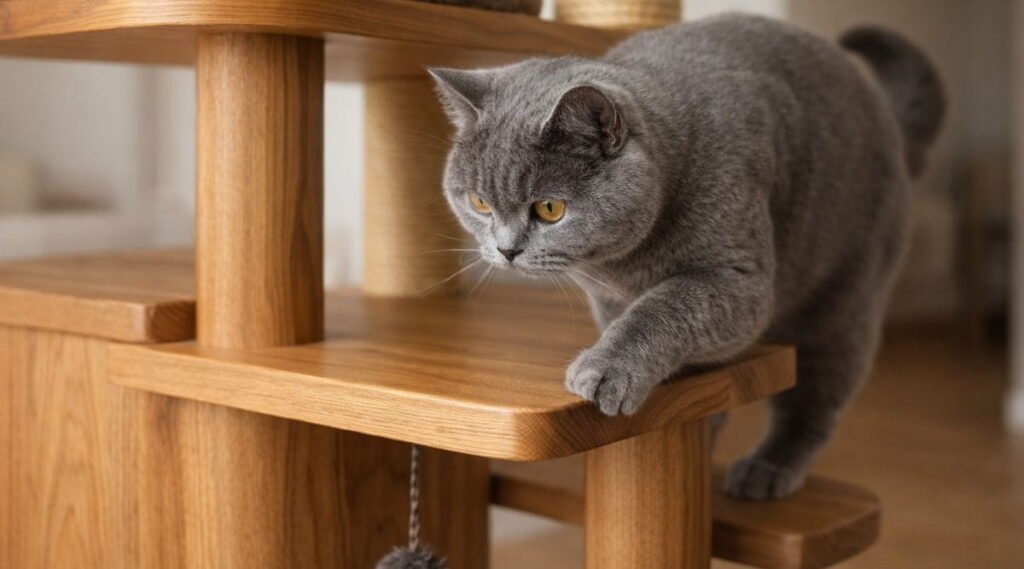
Strength is the first benefit. A solid wood cat tree supports jumping without shaking. This matters for daily cat exercise and play, especially in indoor-only cats. The structure stays firm even during rough use, which makes it durable cat furniture.
The second benefit is hygiene. Wood does not trap fur or odors. A natural wood cat tree wipes clean in seconds. Many owners choose a home décor friendly cat tree because it looks intentional, not temporary, inside living rooms or apartments.
Types of Wood Cat Trees: Solid Wood, Plywood, and Engineered Wood Options
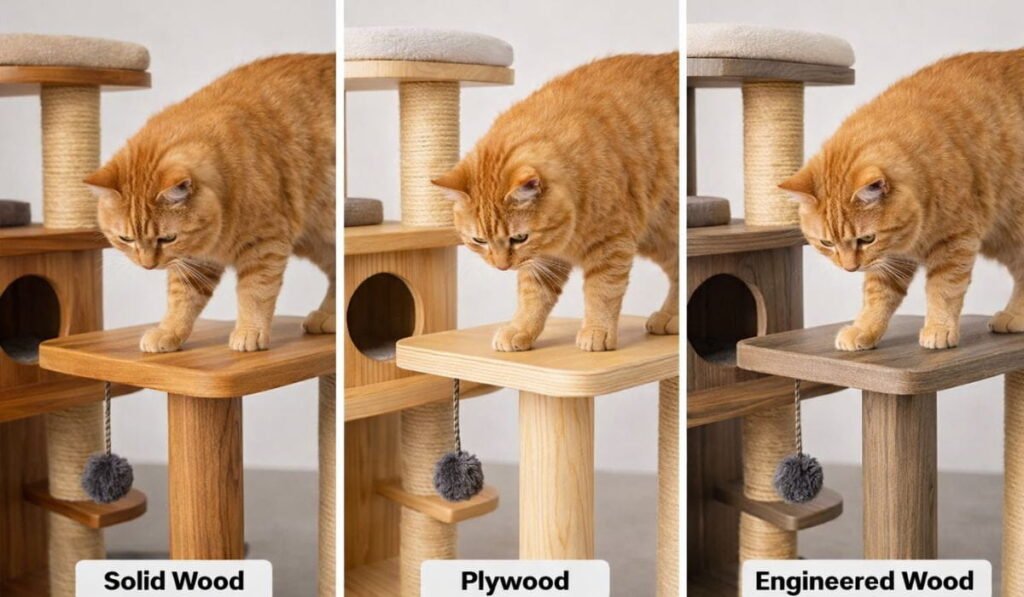
A solid wood cat tree uses pine, birch, or rubberwood. These models handle high activity and offer excellent weight capacity for cats. They cost more but last longer. Many premium brands in the USA focus on this category.
Plywood and engineered wood reduce cost and weight. When layered well, they still create a heavy-duty wood cat tree. Many designs mix materials to balance price and performance. This approach works well for a modern wooden cat tree used daily.
Is a Wood Cat Tree Safe for Cats? Materials, Finishes, and Toxicity Explained
Safety depends on the finish and construction. A quality wood cat tree uses rounded edges and tight fittings. Always look for a non-toxic wood finish and clearly listed pet-safe materials. Water-based sealants protect cats and humans.
Avoid strong chemical varnishes. Cats groom with their mouths. A safe scratching post material like sisal prevents harm. Reputable manufacturers label safety clearly. This transparency builds trust in any wood cat furniture purchase.
Best Wood Cat Tree Designs for Different Cat Needs
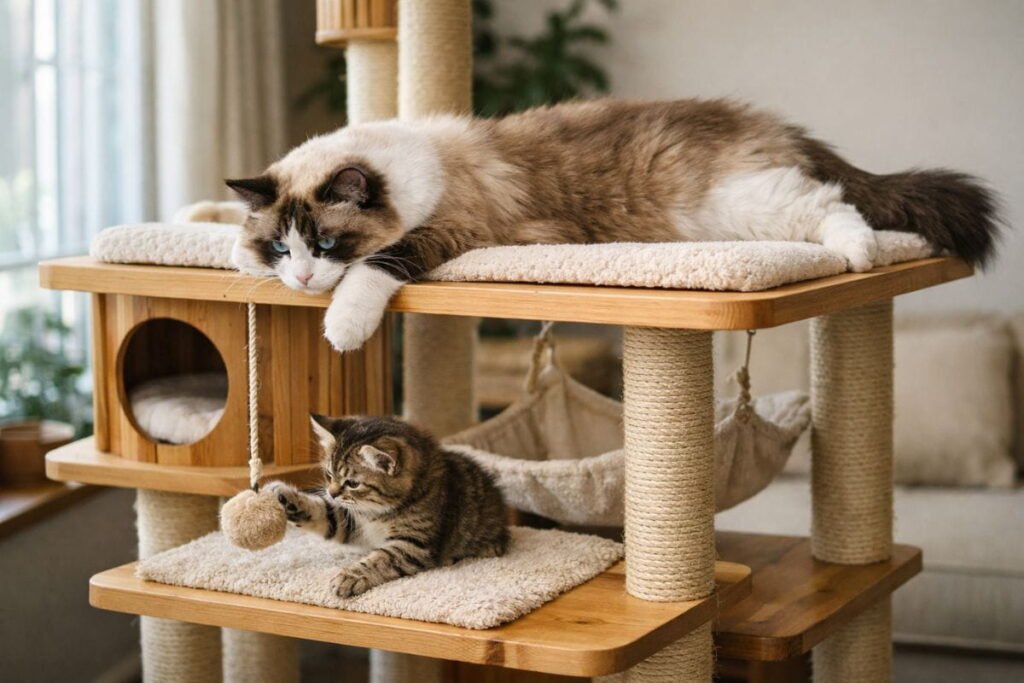
Kittens need lower platforms and gentle climbs. Senior cats prefer wide steps and stable surfaces. A wooden cat climbing tree adapts well to these needs. The structure feels predictable under movement, which reduces stress.
Large cats require space. A wood cat tree for large cats offers wide shelves and reinforced posts for large breed cat support. Multi-level layouts with a cat perching platform keep cats active without crowding.
How to Choose the Right Wood Cat Tree: Size, Stability, and Placement
Measure your space first. Height, base width, and ceiling clearance matter. A good wood cat tree includes an anti-wobble design that stays steady during jumps. Stability always matters more than height.
Place the tree near windows or family areas. Cats enjoy views and interaction. Proper placement turns a multi level cat tree into daily cat enrichment furniture instead of unused décor.
Wood Cat Tree vs Carpet Cat Tree: Which One Is Better?
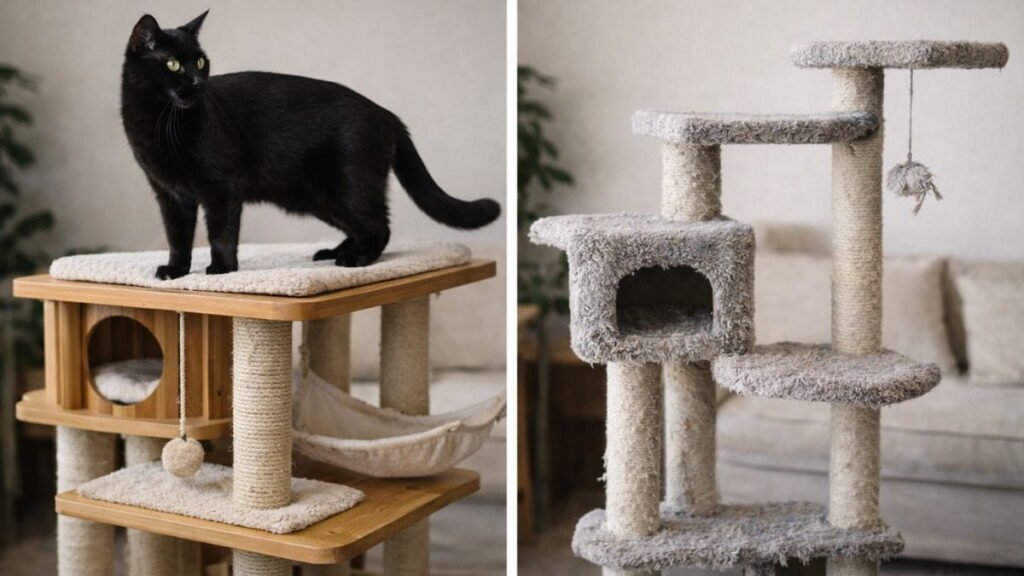
When comparing a wood cat tree vs carpet cat tree, wood wins in durability and cleanliness. Carpet holds hair and odor. Wood wipes clean. This makes owners ask, is wooden cat tree better long term? The answer is usually yes.
Below is a simple comparison table.
| Feature | Wood Cat Tree | Carpet Cat Tree |
| Cleaning | Easy wipe | Traps fur |
| Lifespan | Long | Short |
| Stability | High | Medium |
| Style | Modern | Bulky |
How to Maintain and Clean a Wood Cat Tree for Long-Term Use
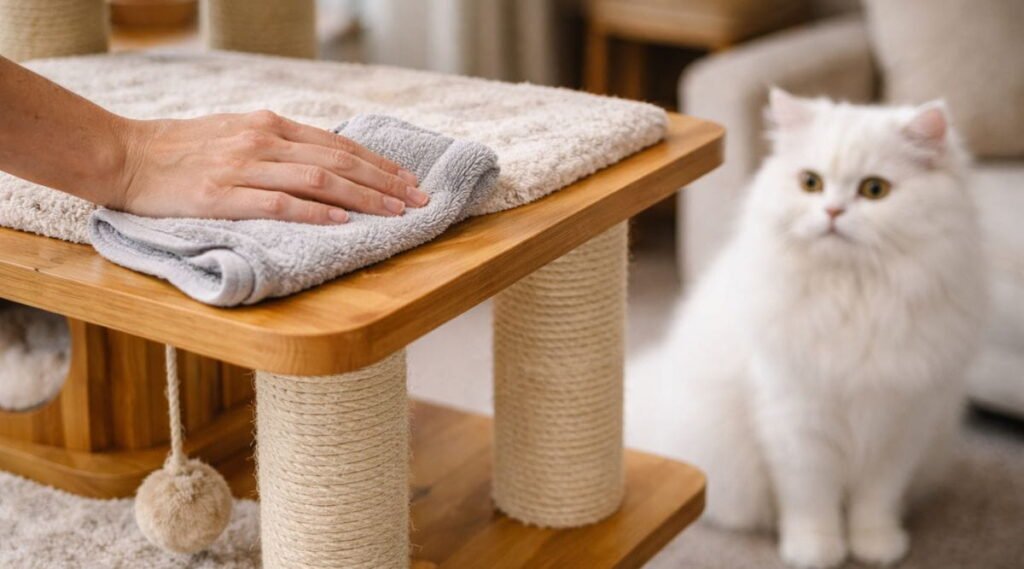
Cleaning is simple. Wipe surfaces weekly. Vacuum the sisal rope scratching area. Tighten bolts every few months. This routine keeps the wooden cat tower quiet and firm.
Light sanding removes claw marks. Rope replacement costs less than a full replacement. Proper care turns a premium wood cat tree into a decade-long investment.
DIY vs Store-Bought Wood Cat Trees: Cost, Effort, and Safety Considerations
DIY projects attract creative owners. A handmade wooden cat tree saves money but demands tools and skill. Errors affect balance and safety fast. Many DIY builds fail load testing.
Store-bought models include tested designs and warranties. A professionally built, custom or luxury wooden cat tree removes the guesswork. For most owners, safety outweighs savings.
Are Wood Cat Trees Worth the Price? Cost Breakdown and Value Over Time
A wood cat tree costs more upfront. However, replacement cycles drop sharply. Many owners replace carpet trees every two years. A well-built, affordable wooden cat tree often lasts five to ten years.
Below is a simple value table.
| Type | Average Lifespan | Long-Term Cost |
| Carpet Tree | 2 years | High |
| Wood Tree | 7+ years | Lower |
This math explains why the best wood cat tree often delivers better value over time.
Final Thoughts on Choosing a Wood Cat Tree
A wooden cat condo supports health, safety, and style. The right design encourages movement, scratching, and rest. Choose quality materials. Focus on stability. Your cat will use it daily, and your home will still look calm and clean.
FAQs
Wood Cat Tree for Large Cats
A wood cat tree for large cats offers strong support, wide platforms, and high weight capacity for big breeds.
Wood Cat Tree for Sale
A wood cat tree for sale is available online and in pet stores, with prices based on size, wood type, and design.
Natural Wood Cat Tree
A natural wood cat tree is made from real wood with safe finishes, giving cats a sturdy and eco-friendly climbing space.
Wood Cat Tree Modern
A modern wood cat tree features clean lines, a minimalist design, and blends easily with stylish home interiors.