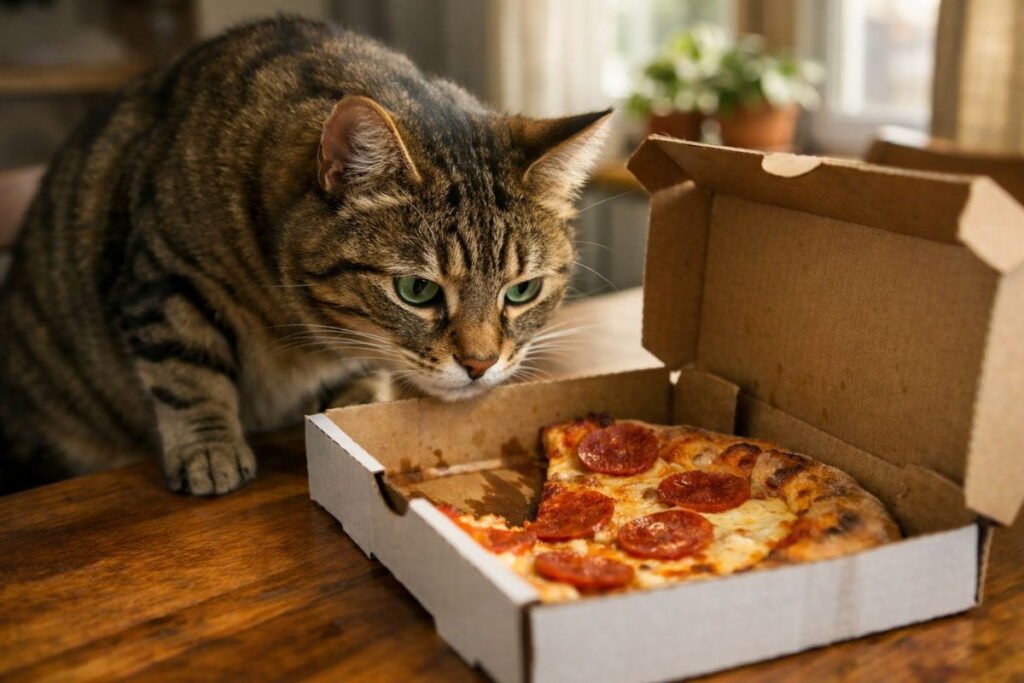
Pizza night feels cozy, and your cat’s curious eyes make sharing tempting. Many pet parents ask, can cats have pepperoni, and the answer deserves careful thought. While cats love the smell, their bodies react differently to processed foods than ours do.
This guide explains everything in simple terms. You’ll learn whether can cats eat pepperoni, why it can be risky, and what safer options exist. If you care about cat diet safety and want a strong feline nutrition guide, this article will help you make smarter choices. One slice of pizza can lead to serious health trouble for your cat. Many owners don’t realize how dangerous processed meats can be.
Can Cats Eat Pepperoni? The Short Answer (Vet Perspective)
The short answer is simple. Yes, a tiny bite rarely harms a healthy adult cat. But is pepperoni safe for cats regularly? No. Vets don’t recommend feeding pepperoni for cats because it falls into the category of processed meat for cats, which contains salt, fat, and additives.
Cats need clean animal protein, not seasoned snacks. Treats should follow safe treat portions for cats and support a balanced feline diet. If you often wonder about human foods cats can eat, remember this rule. Simple and plain foods are safer than flavored or cured meats.
What Is Pepperoni Made Of? Ingredients That Affect Your Cat
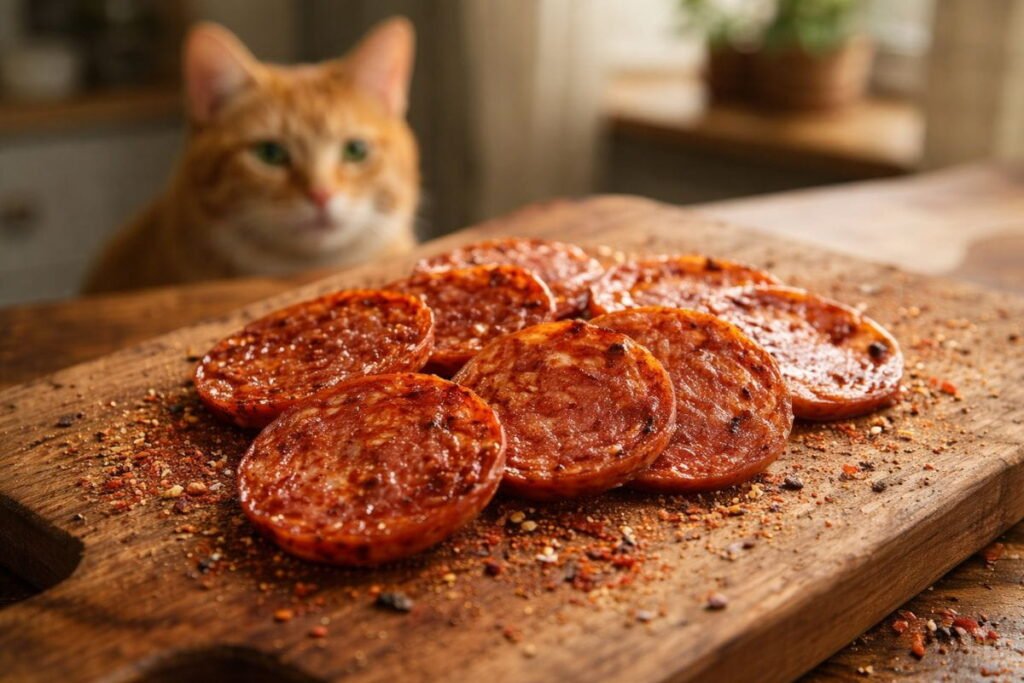
Pepperoni may look like meat, but it is heavily processed. It contains pork or beef mixed with spices, oils, and curing agents. Many brands include preservatives and nitrates, which help shelf life but don’t support long-term health in cats.
The bigger concern is seasoning. Some products contain garlic or onion powder, creating risks of garlic and onion toxicity cats. Pepperoni also belongs to high sodium foods for cats, which increases strain on small feline bodies over time.
Pepperoni vs Plain Meat
| Food Type | Salt Level | Fat Level | Safety for Cats |
| Pepperoni | Very high | High | Not recommended |
| Plain chicken | Low | Moderate | Safe in small amounts |
| Cooked turkey | Low | Low | Safe option |
Why Pepperoni Is Bad for Cats: Key Health Risks
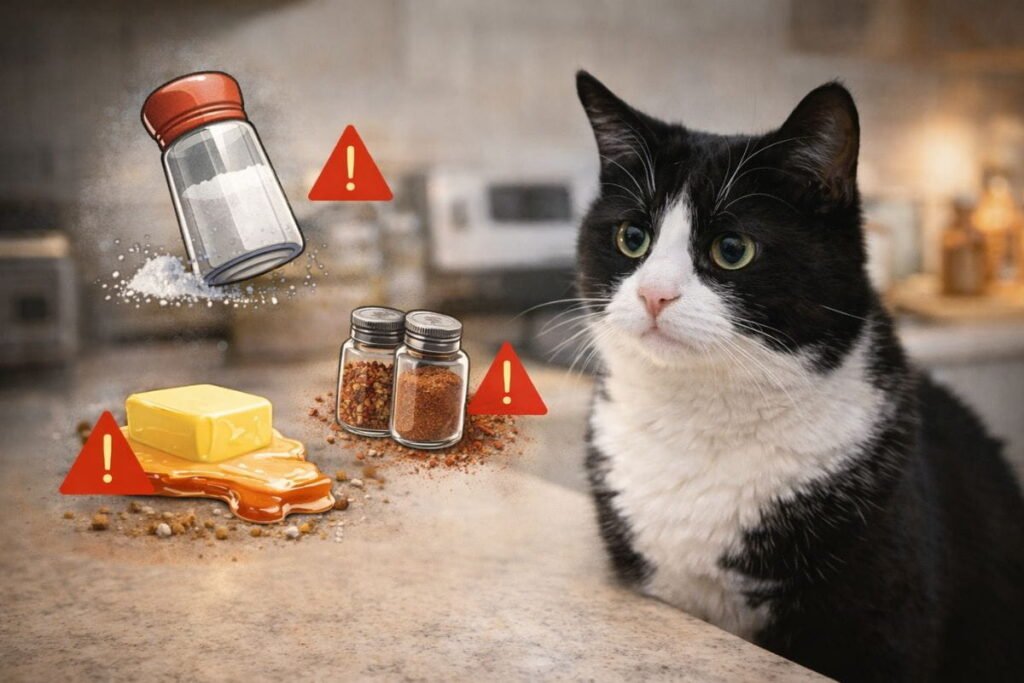
Salt is the biggest danger. Too much sodium leads to dehydration and may trigger salt toxicity in cats. Frequent exposure increases excessive salt intake cats, especially in indoor pets or seniors.
Fat creates another problem. Pepperoni is one of the common high-fat foods for cats. Regular feeding raises the chance of pancreatitis in cats and increases long-term obesity risk in cats, which later connects to diabetes and kidney problems in cats.
What Happens If a Cat Eats Pepperoni? Symptoms to Watch For
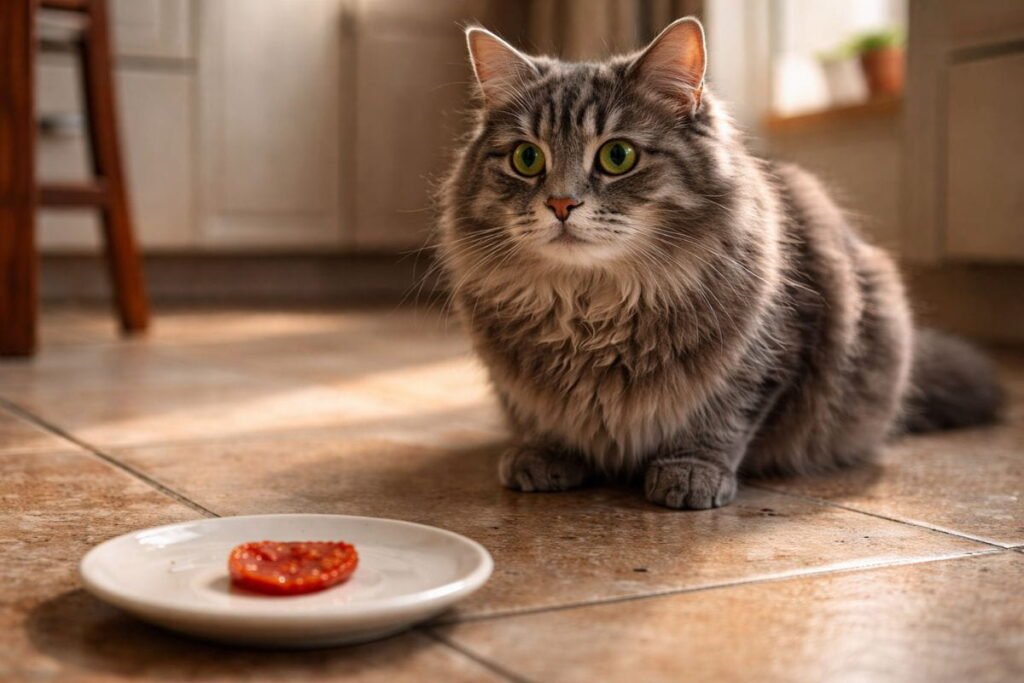
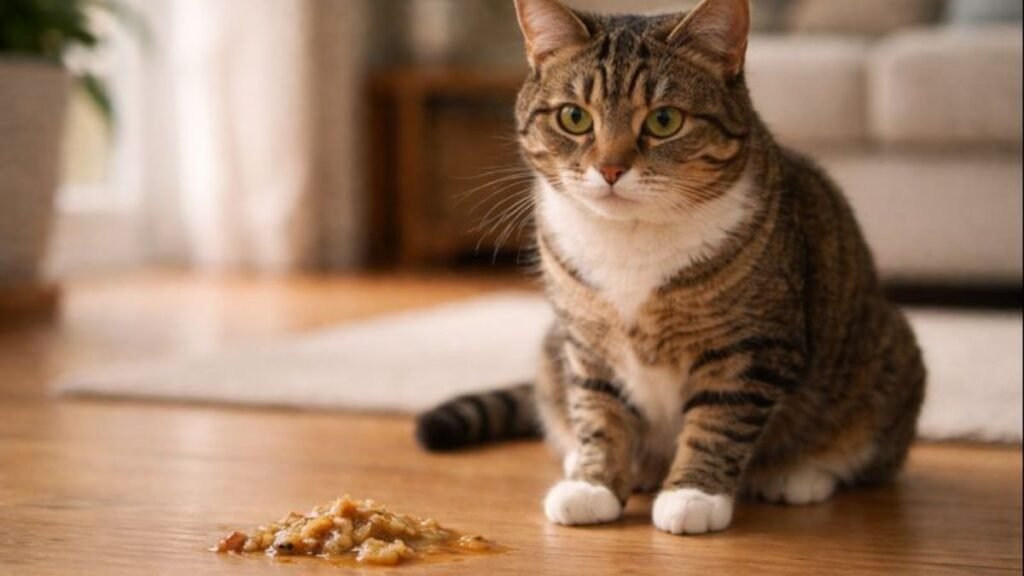
Most reactions start with mild digestive trouble. Watch closely for vomiting and diarrhea in cats, extra thirst, or restlessness. These early symptoms after eating pepperoni often appear within a few hours.
More serious reactions need attention. Lethargy, shaking, or refusal to eat may signal worsening feline digestive problems. These are considered emergency signs in cats, especially if symptoms appear quickly or continue through the day.
What to Do Immediately If Your Cat Eats Pepperoni
First, don’t panic. Remove access to more food and check the amount eaten. Small pieces usually require observation only. However, large portions increase the risk of salt overload, so knowing what to do if cat eats pepperoni is important.
Provide fresh water and monitor behavior closely. If you notice unusual symptoms or if your cat has health conditions, it’s time to act. Knowing when to contact a veterinarian early can prevent serious complications.
Why Cats Are Attracted to Pepperoni (And Why That’s Misleading)
Cats rely on smell more than taste. The strong aroma of cured meat triggers hunting instincts. This explains why many pets become interested, as cats attracted to fatty foods often react to rich protein and oil scents.
However, attraction doesn’t mean safety. Many unhealthy treats for cats smell appealing, but harm their bodies over time. This interest often leads to begging for human food cats behavior, which needs gentle training and consistency.
How Much Pepperoni Is Too Much? Safe Limits Explained
If you’re still asking, can cats have pepperoni? Think very small. A crumb-sized taste once in a while may be tolerated. Anything more increases exposure to salt and fat, especially for small breeds or older cats.
Portion control matters. Treats should stay within ten percent of daily calories. Following safe treat portions for cats helps protect long-term health and keeps your pet aligned with a proper, balanced feline diet.
Safe and Healthy Alternatives to Pepperoni for Cats
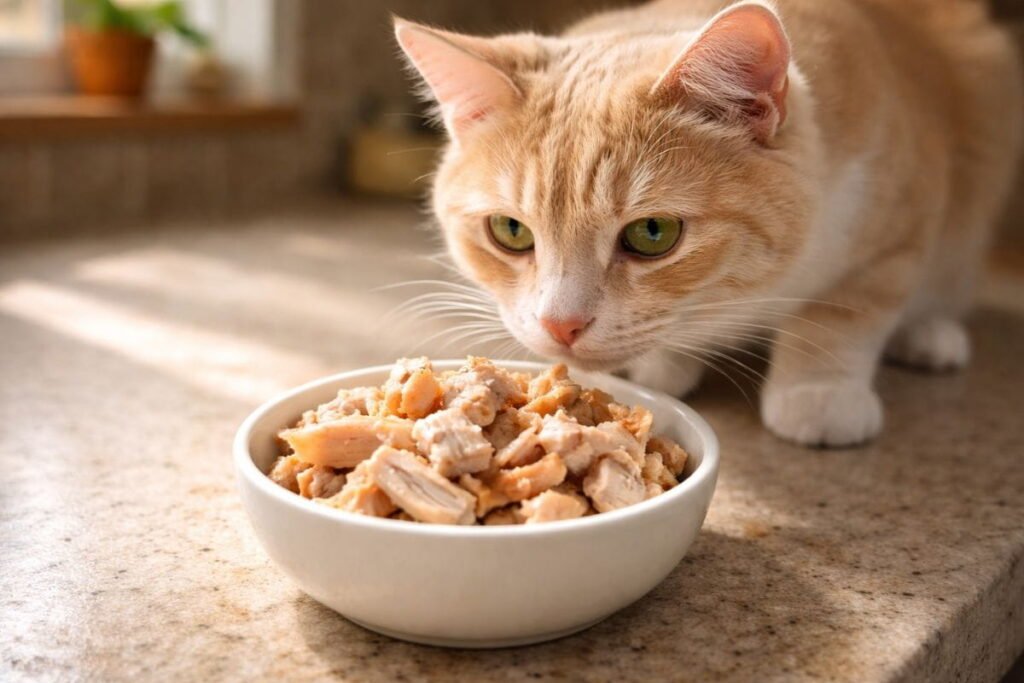
There are better ways to treat your cat. Fresh, unseasoned protein supports muscle health without added salt. Small pieces of plain cooked meat for cats, such as chicken or turkey, work well and fit natural dietary needs.
Commercial snacks are also helpful. Choose vet-approved cat treats made with simple ingredients. These options provide healthy alternatives for cats and keep nutrition balanced without the risks found in processed meats.
Foods Similar to Pepperoni That Cats Should Avoid
Pepperoni is not the only concern. Many owners ask, can cats eat salami, can cats eat sausage, or can cats eat deli meat. These foods carry the same risks because they are cured, salted, and heavily processed.
Pizza creates extra danger. People often wonder, can cats eat pizza toppings, cheese, oils, and seasonings add unnecessary fat and salt. These items fall into the category of foods cats should avoid and represent what foods are bad for cats.
How to Prevent Food Stealing and Keep Human Foods Away
Prevention works better than correction. Feed your cat before family meals so they feel full and calm. This reduces attention to strong food smells and helps preventcats from stealing food around the table.
Store leftovers securely and avoid sharing from your plate. Consistency helps break begging for human food cats habits. Over time, your cat learns boundaries and stays focused on safe meals instead of risky human snacks.
Quick Reference: Safe vs Unsafe Treats
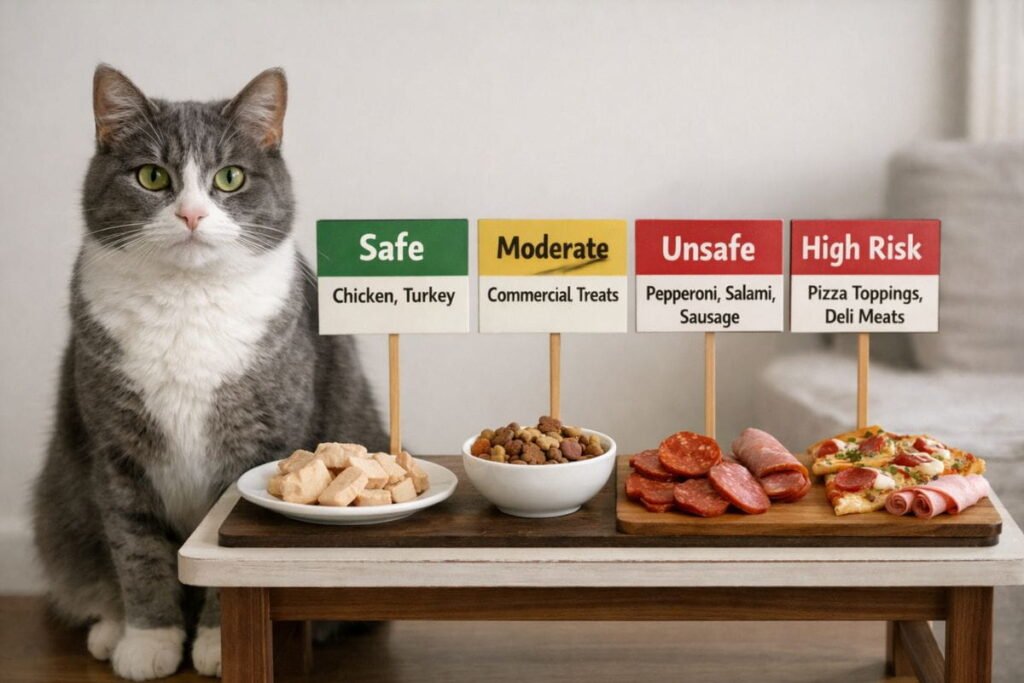
| Category | Examples | Recommendation |
| Safe | Plain chicken, turkey, lean beef | Small amounts only |
| Moderate | Commercial treats | Choose quality brands |
| Unsafe | Pepperoni, salami, sausage | Avoid completely |
| High Risk | Pizza toppings, deli meats | Not recommended |
Final Thought
Pepperoni may seem harmless, but small choices affect long-term health. If you care about strong energy, a healthy weight, and a long life, focus on simple foods and smart portions. When in doubt, choose fresh protein and keep processed snacks off the menu. Your cat’s body will thank you.
FAQs
Can pets have pepperoni?
No, pepperoni isn’t recommended for pets because it contains high salt, fat, and spices that can upset digestion and harm long-term health.
Can I give my cat a little bit of pizza?
It’s best not to. Pizza contains cheese, oil, and seasoned toppings that are heavy, salty, and difficult for cats to digest safely.
Is pepperoni a healthy treat for cats?
No, pepperoni is not a healthy treat. It is high in sodium and fat and offers no nutritional benefit for a cat’s diet.
Are cats allowed Peperami?
No, Peperami is processed meat with salt, preservatives, and spices, which can be harmful and should be avoided for cats.