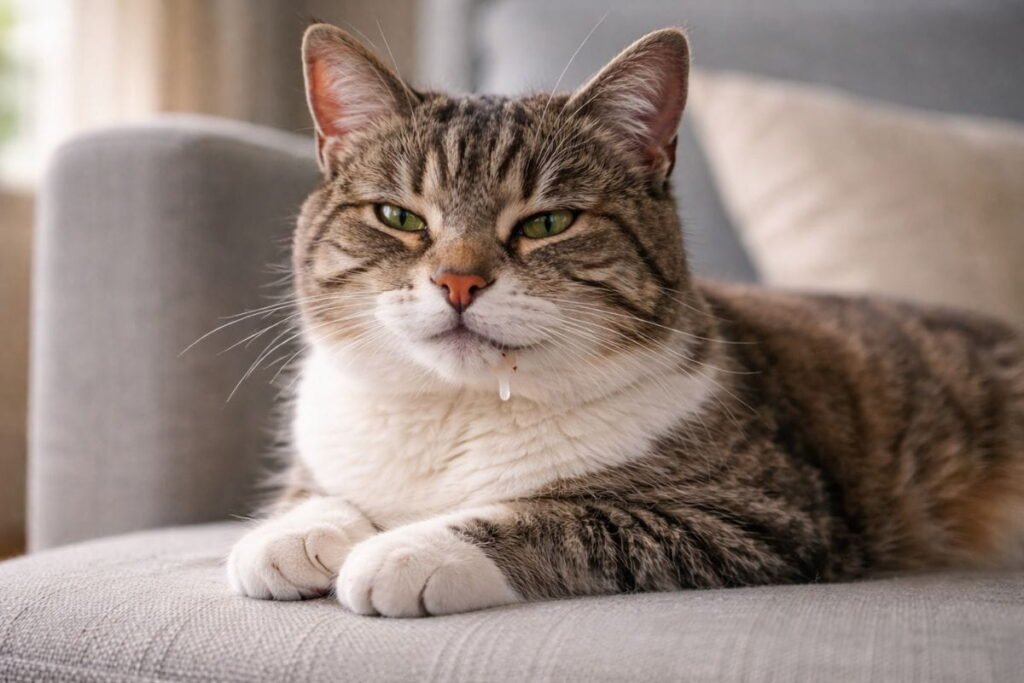
Cat drooling can seem cute during cuddle time, yet it sometimes signals a deeper issue. Many owners notice cat drooling while purring or gentle moisture when their pet feels calm and secure. In fact, mild cat drooling when kneading often reflects comfort and trust. However, ongoing excessive salivation may point to hidden health problems such as dental disease in cats or nausea in cats symptoms.
The key is knowing what’s normal and what isn’t. This guide explains the common causes, warning signs, and simple steps to protect your cat’s health, so you can act quickly and confidently when drooling seems unusual. You’re petting your cat and suddenly notice drool. Cute or a warning sign?
Do Cats Normally Drool? Understanding What’s Normal
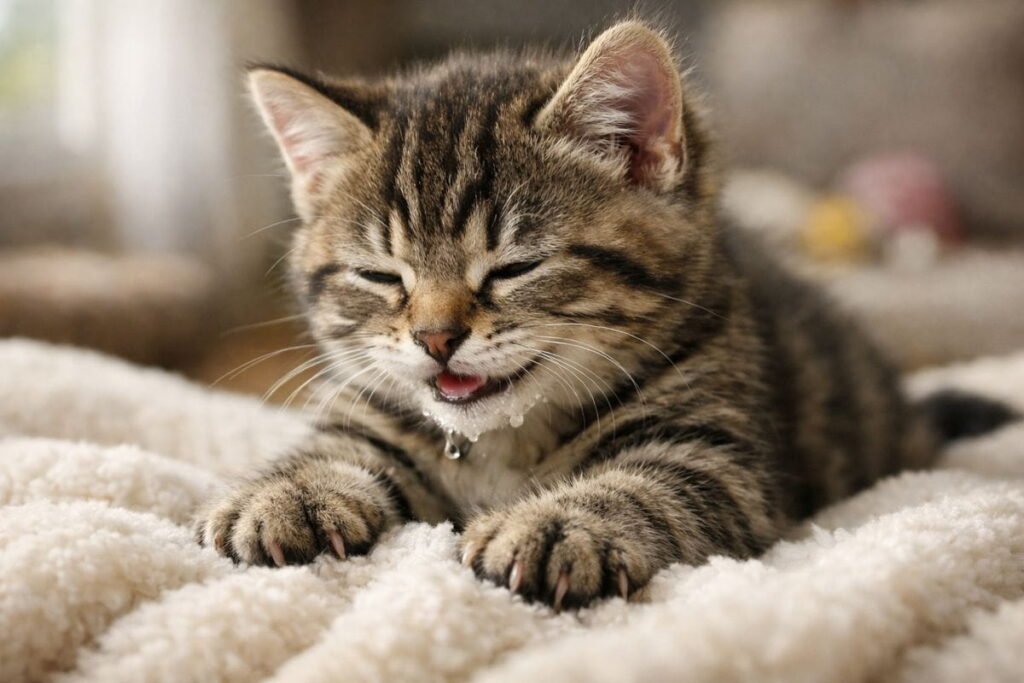
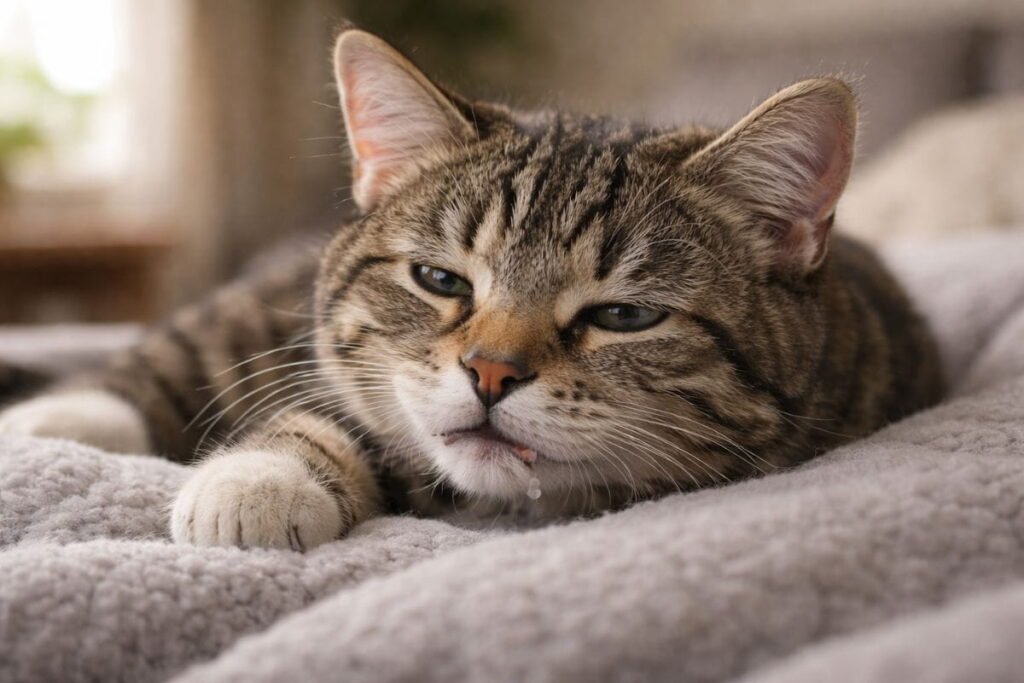
Many owners notice cat drooling while purring during quiet cuddle time. This happens when your pet feels safe and deeply relaxed. A cat drooling when kneading or cat making biscuits drooling often reflects kitten memories. For some cats, drooling becomes a true drooling sign of happiness in cats.
You may also see cat drooling when being petted or during naps. This gentle drooling when relaxed cat behavior usually stops quickly. If your cat seems healthy and happy, this mild feline hypersalivation is normal and doesn’t require a veterinary examination.
Common Causes of Cat Drooling (From Mild to Serious)
Not all drooling means danger, but sudden changes matter. Mild triggers include excitement, cat drooling after eating, or cat drooling but acting normal. However, persistent excessive salivation may indicate underlying causes such as illness, injury, or toxin exposure.
If you’re wondering why is my cat drooling all of a sudden, look at the full picture. Behavior changes, appetite loss, or low energy often signal deeper problems. When drooling lasts more than a day, schedule a routine wellness exam or an annual vet checkup.
Dental and Oral Problems: The Most Frequent Cause
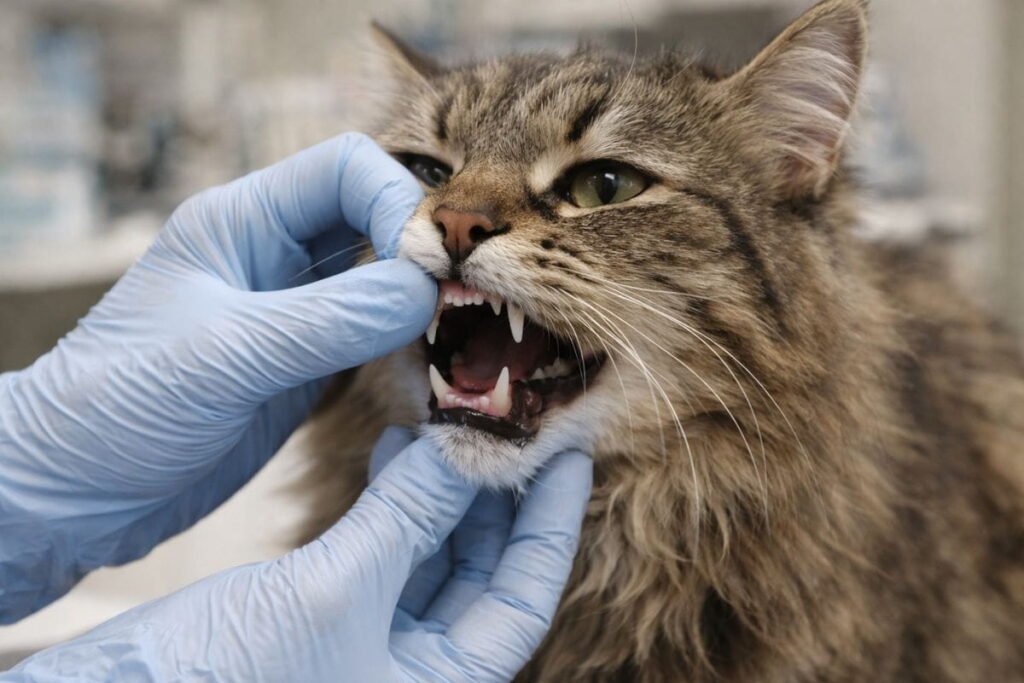
Dental problems are the most common cause of drooling in adult cats. Common issues include dental disease in cats, gum disease in cats, mouth ulcers in cats, and tooth resorption in cats. These painful conditions create severe oral pain in cats and lead to constant feline dental problems.
Watch for cat drooling and bad breath, bleeding gums, or food dropping while eating. Many cats need professional dental cleaning under general anesthesia for cats. Early care prevents infection and protects long-term health.
Common Dental Causes Table
| Condition | What You May Notice |
| Gum infection | Red, swollen gums |
| Tooth damage | Dropping food, chewing on one side |
| Oral ulcers | Pawing at the mouth |
| Resorption | Sudden pain while eating |
Medical Conditions Linked to Excessive Drooling
Internal illness often explains ongoing excessive salivation. Digestive upset causes nausea in cats symptoms, including lip licking, vomiting and drooling. Chronic illness, such as kidney disease in cats signs may also appear with drooling.
Other hidden causes include gastrointestinal problems in cats, internal parasites in cats, and sudden loss of appetite in cats. A full veterinary examination with blood tests and diagnostics, and organ function testing helps identify the root cause.
Toxin Exposure and Poisoning in Cats
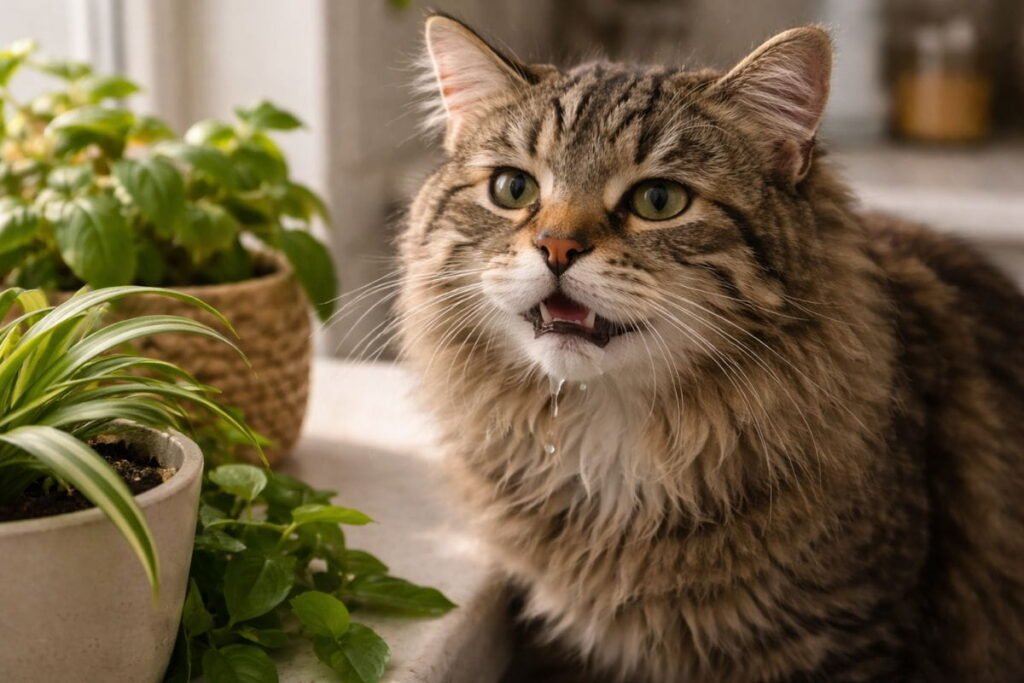
One dangerous cause of sudden cat drooling is toxin poisoning in cats. Common risks include poisonous plants for cats, household cleaners, and accidental chemical exposure in cats. Even flea products made for dogs can be toxic.
Emergency signs include tremors, vomiting, and extreme feline hypersalivation. If you suspect exposure, seek emergency veterinary care immediately. Quick treatment often makes the difference between recovery and serious complications.
Drooling and Not Eating: What It Means
When cat drooling appears with food refusal, take it seriously. Pain, infection, or blockage may prevent normal eating. Dental disease, nausea, and throat injuries often explain this worrying combination.
A foreign object stuck in cat mouth is another common cause. Owners sometimes notice string stuck in cat mouth or chewing problems. Never pull the string yourself. This situation needs urgent veterinary examination.
Behavioral Causes: Stress, Anxiety, and Motion Sickness
Not every case involves illness. Emotional stress can trigger drooling. Owners often report cat drooling during car rides, along with motion sickness in cats. Travel, noise, or new environments may cause anxiety drooling in cats.
Watch for other stress in cats symptoms, such as hiding or trembling. Vet visit stress cat reactions, and car ride anxiety cat episodes usually improve with training, calm handling, and gradual exposure.
Warning Signs That Require Immediate Veterinary Care
Some symptoms should never be ignored. Sudden heavy cat drooling with swelling, breathing trouble, or collapse suggests a medical emergency. Injury cases such as a mouth injury in cats, broken jaw in cats, or an electrical burn in cats need urgent help.
Persistent drooling beyond 24 hours also counts as one of the key warning signs. Severe lethargy, seizures, or toxin exposure require immediate emergency veterinary care without delay.
Diagnosis and Treatment Options Your Vet May Recommend
Treatment begins with a full veterinary examination. Your vet may perform oral checks, imaging, blood tests and diagnostics. These tests reveal infection, organ disease, or hidden injury.
Care depends on the cause. Options include medication, fluids, dental therapy, or surgery. Many cases resolve quickly once the underlying problem is treated and supported through proper organ function testing and follow-up care.
Prevention Tips to Keep Your Cat’s Mouth Healthy
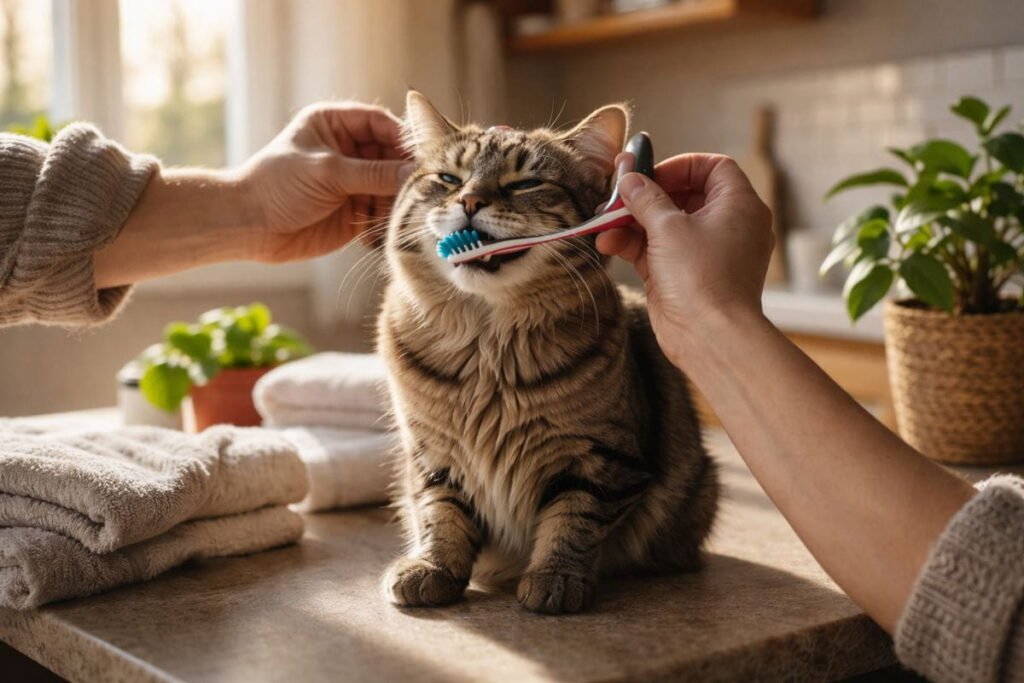
Good prevention reduces the risk of future cat drooling. Regular dental care, safe toys, and toxin control protect your pet from many hidden dangers. Routine monitoring helps you notice small changes early.
Schedule an annual vet checkup and maintain a consistent home routine. Preventive care, safe feeding habits, and a clean environment remain the most vet-approved way to avoid serious symptoms and protect lifelong health.
Final Thoughts
Most cat drooling cases are harmless moments of comfort. Still, sudden changes deserve attention. If you ever wonder what to do if my cat is drooling, trust your instincts and contact your vet. Early care keeps small problems from becoming big ones.
FAQs
When should I worry about my cat drooling?
Worry if drooling is sudden, excessive, lasts over 24 hours, or comes with vomiting, lethargy, swelling, or loss of appetite.
Why is my cat dripping water from his mouth but acting normal?
If your cat is otherwise active and eating well, mild drooling may be from relaxation, excitement, or a happy response to petting.
Do cats drool when happy?
Yes, some cats drool when they feel safe, relaxed, or affectionate, especially during purring or kneading.
What are the first signs of feline leukemia in cats?
Early signs include low energy, weight loss, poor appetite, fever, and frequent infections due to a weakened immune system.