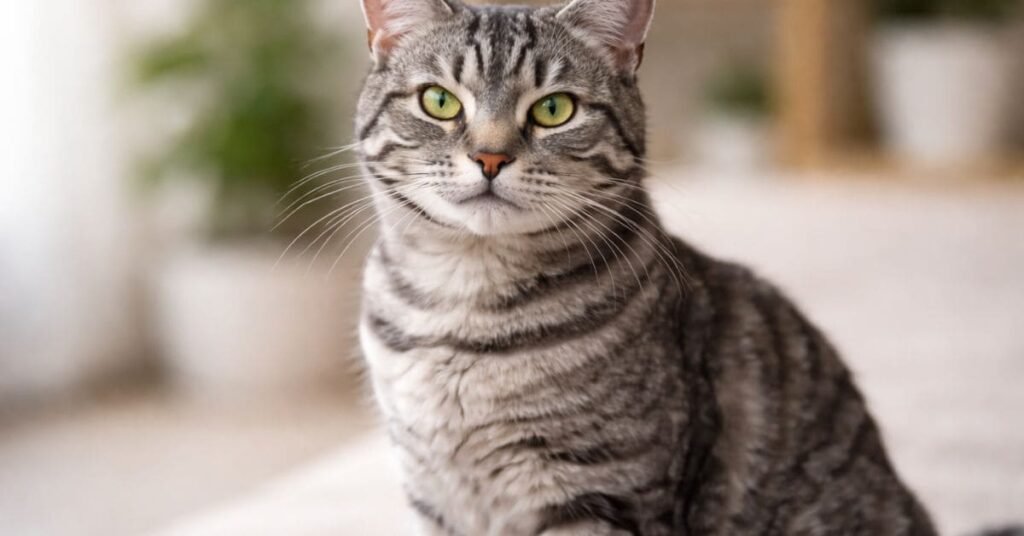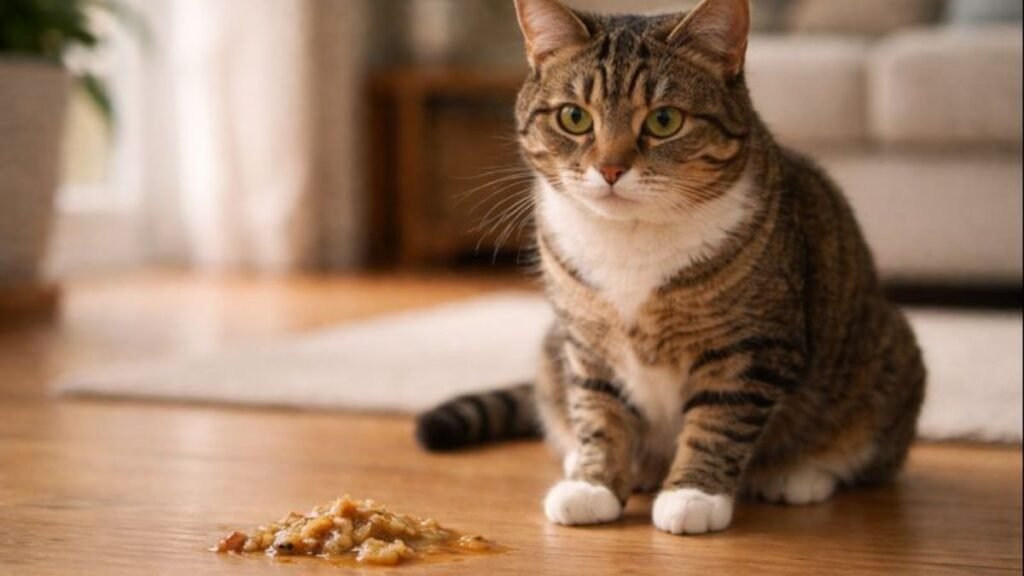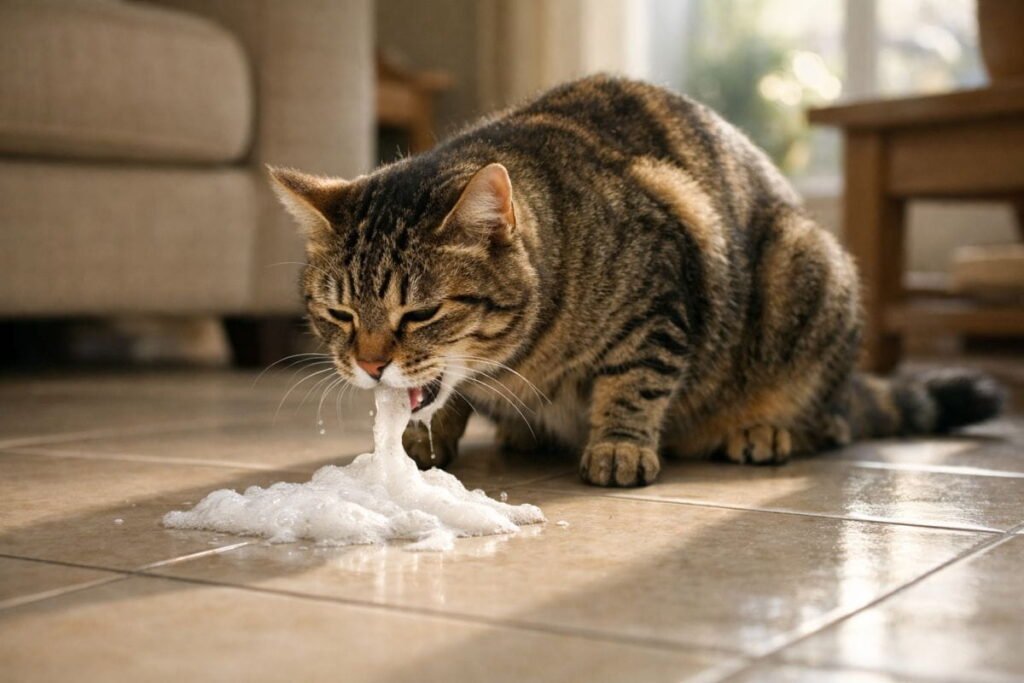
Watching your cat throwing up white foam is unsettling, and it can make any pet parent panic. You might wonder, why is my cat vomiting white foam, and what does it mean for their health? While sometimes it’s just an empty stomach or mild stomach irritation in cats, repeated episodes could point to more serious problems like pancreatitis in cats, intestinal blockage in cats, or gastritis in cats.
Understanding the causes, recognizing the warning signs, and knowing how to help your cat bringing up white foam can save precious time—and even your cat’s life. This guide walks you through everything you need to know.
What Does White Foamy Vomit Mean in Cats?
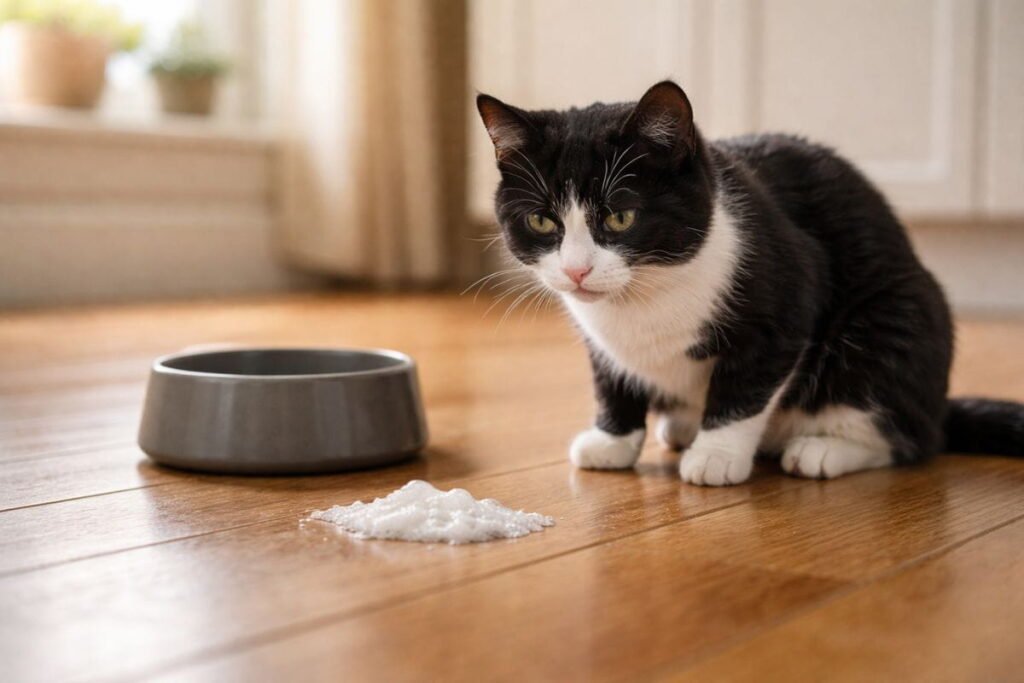
When you see a cat bringing up white foam, it usually means the stomach is empty. The foam forms when stomach acid and saliva mix with air. This often happens during empty stomach vomiting, especially early in the morning before breakfast.
The white bubbles may also contain small amounts of bile. If your cat shows mild nausea, slight drooling, or subtle abdominal contractions, the stomach lining may be irritated. Occasional foamy vomit in cats without other symptoms is often mild and short-lived.
Common Causes of Cats Vomiting White Foam (From Mild to Serious)
Mild causes are common. Hairballs in cats, cat eating too fast vomiting, or simple stomach irritation in cats can trigger white foam. Gastritis in cats, and even mild acid reflux, may inflame the gastric lining, leading to inflammation and foam.
More serious causes include pancreatitis, kidney disease, liver disease, hyperthyroidism, and diabetes. An intestinal blockage in cats, foreign body obstruction in cats, or toxin exposure in cats can cause repeated cat throwing up white foam and even systemic illness.
| Mild Causes | Moderate Causes | Serious Causes |
| Hairballs | Gastritis | Intestinal blockage |
| Eating too fast | Parasites | Pancreatitis |
| Empty stomach | Food intolerance | Kidney disease |
Is It an Emergency? Red Flags You Should Never Ignore
If your cat vomits once and acts normal, monitor calmly. However, persistent vomiting in cats is different. Blood in cat vomit, severe abdominal pain, or a bloated abdomen require fast action. A lethargic cat vomiting repeatedly needs urgent care.
Call a vet immediately if you notice rapid breathing, labored breathing, or signs of cat poisoning symptoms after possible toxin ingestion. If your cat cannot keep water down, fluid loss may cause electrolyte imbalance and dangerous dehydration in cats.
Acute vs. Chronic Vomiting: Why Duration Matters
Acute vomiting starts suddenly. It may follow diet changes or mild irritation. Chronic vomiting happens weekly or monthly. Chronic cat vomiting white foam often links to inflammatory bowel disease in cats or other long-term feline digestive problems.
Watch for appetite changes, weight loss, or excessive thirst. These may suggest a hidden metabolic disorder. Duration tells your vet whether the issue is temporary or part of a deeper disease affecting the gastrointestinal tract.
What Does the Appearance of Vomit Tell You?
White foam suggests an empty stomach. Yellow fluid means more bile. Thick mucus may indicate inflammation. Dark red streaks point toward ulcers or bleeding in the gastric lining.
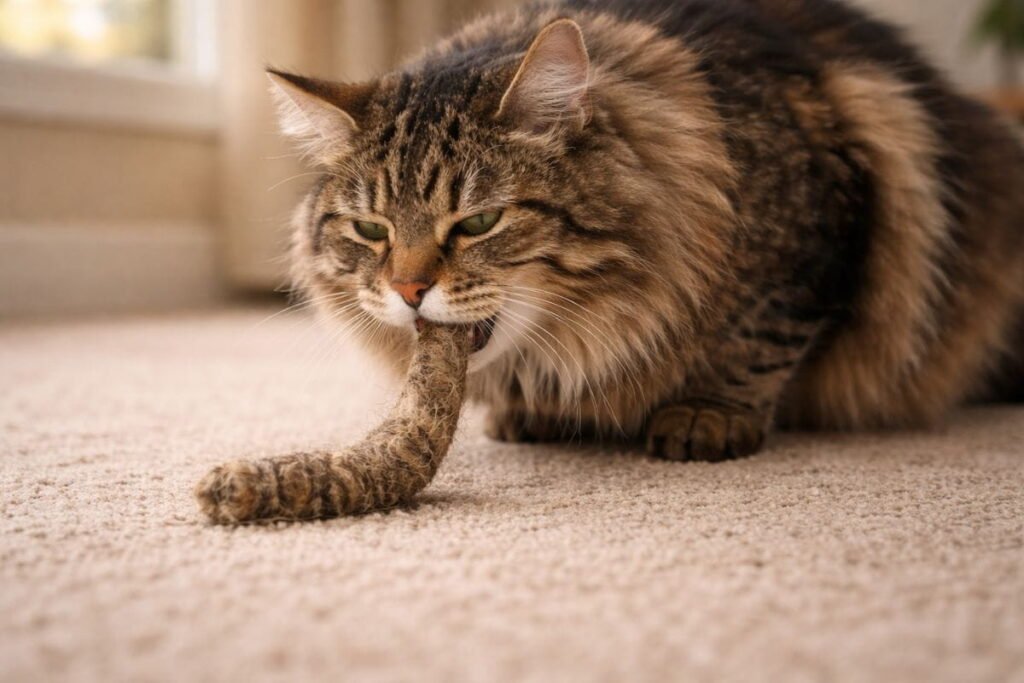
If you see tubular hairballs, that confirms long-haired cat vomiting, especially with Maine Coon hairballs or Persian cat hairballs. Foam mixed with coughing sounds may relate to coughing vs gagging, not true vomiting.
How to Help a Cat Vomiting White Foam at Home (Safe First Steps)
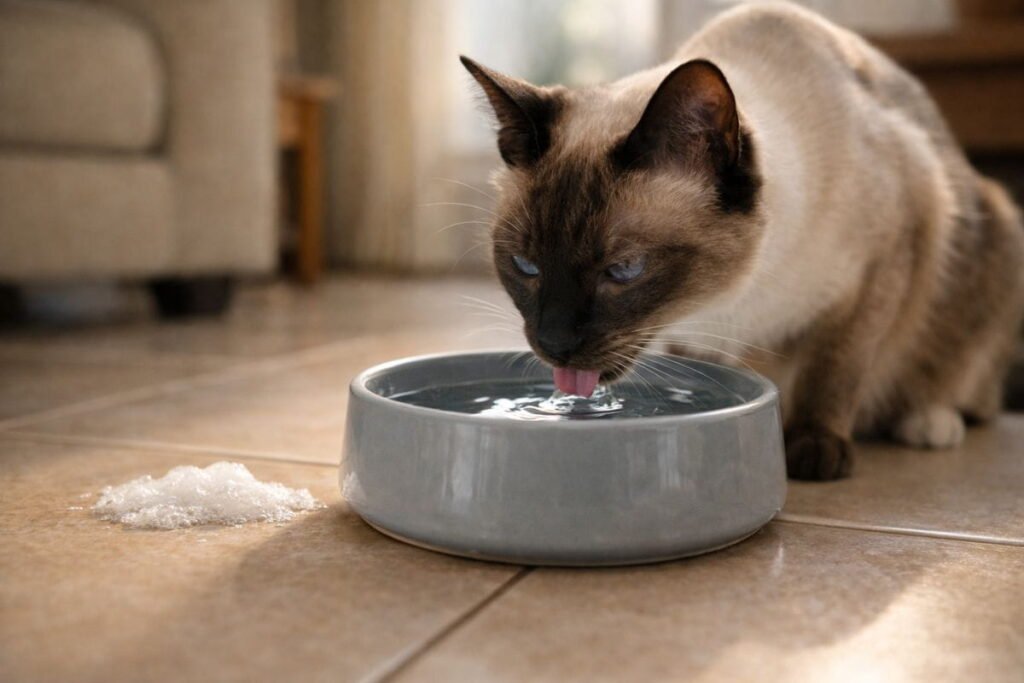
Start with feeding changes. Offer small frequent meals instead of one large meal. Adjust the feeding schedule to prevent empty stomach vomiting. A slow feeder bowl helps with cat eating too fast vomiting.
Encourage hydration support using wet food and fresh water. Some owners try gentle home remedies for cat vomiting, like a bland diet for cats or probiotics for cats to improve gut health and restore beneficial bacteria.
How Vets Diagnose the Cause of White Foam Vomiting
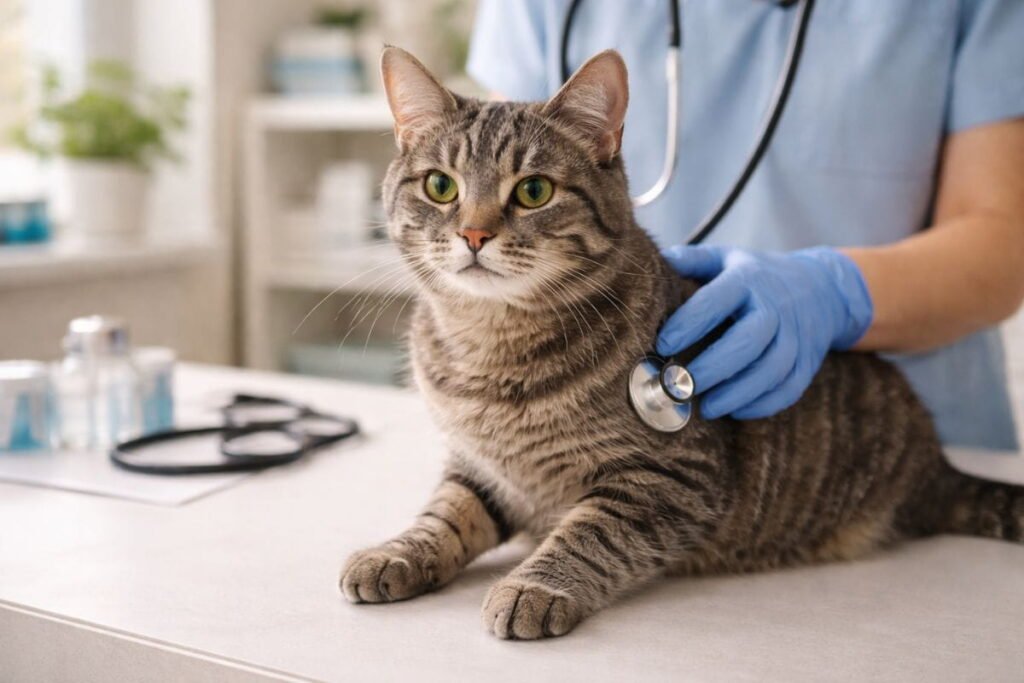
If the cat throwing up white foam continues, vets perform exams and lab tests. A hematology profile and biochemistry panel check organ function. A bloodwork for vomiting cat often detects hidden problems early.
Imaging tests such as abdominal X-ray, abdominal ultrasound for cats, and advanced ultrasound imaging help find blockages or swelling. A fecal analysis, stool test for cats, and urinalysis check for intestinal parasites in cats and other infections.
Treatment Options Based on the Underlying Cause
Treatment depends on the diagnosis. Mild gastritis may improve with anti-nausea medication for cats, like maropitant for cats, or acid reducers such as omeprazole for cats. Parasites require deworming cats and strong parasite prevention.
Severe cases may require intravenous fluids for dehydration. A confirmed foreign body obstruction in cats may need surgical intervention. Long-term illness like kidney disease demands ongoing routine veterinary care and careful monitoring.
How to Prevent Future Episodes of White Foam Vomiting
Prevention begins at home. Maintain consistent meals and avoid sudden food switches. Use sensitive stomach cat food when needed. Regular grooming supports hairball prevention for cats and reduces the risk of excessive grooming in cats.
Schedule annual exams for early detection of worms in cats symptoms, tapeworm in cats, and other issues linked to raw diet parasite risk. Good prevention protects the entire gastrointestinal tract from chronic inflammation.
Frequently Asked Questions About Cats Vomiting White Foam
Why Is My Cat Throwing Up White Foam but Acting Normal?
If your cat vomits once and stays playful, mild stomach irritation is likely. Still, monitor closely for dehydration signs like tacky gums or reduced skin elasticity. If episodes repeat, ask your vet when to take cat to vet for vomiting for safety.
Quick Case Study From a U.S. Clinic
A five-year-old indoor cat presented with cat bringing up white foam twice weekly. Tests showed mild gastritis in cats and diet sensitivity. After switching to sensitive stomach cat food and adding fiber supplement, vomiting stopped within three weeks.
FAQs
Cat throwing up white foam multiple times
If your cat is vomiting repeatedly in one day, it may signal irritation, blockage, toxin exposure, or illness. Multiple episodes always require veterinary advice.
Cat vomiting white foam and died
Severe underlying issues like toxin ingestion, organ failure, or untreated blockage can become fatal if not treated quickly. Sudden decline after vomiting is a medical emergency.
Why is my cat vomiting white foam and not eating
Loss of appetite with white foam vomiting may indicate nausea, pain, infection, or metabolic disease. If your cat refuses food for 24 hours, contact a vet.
Cat throwing up white foam multiple times but acting normal
Even if your cat seems fine, repeated vomiting is not normal. Ongoing stomach irritation or early illness may be developing silently.
Cat throwing up white foam but acting normal
A single episode with normal behavior is often linked to an empty stomach or mild digestive upset. Monitor closely and seek help if it happens again.