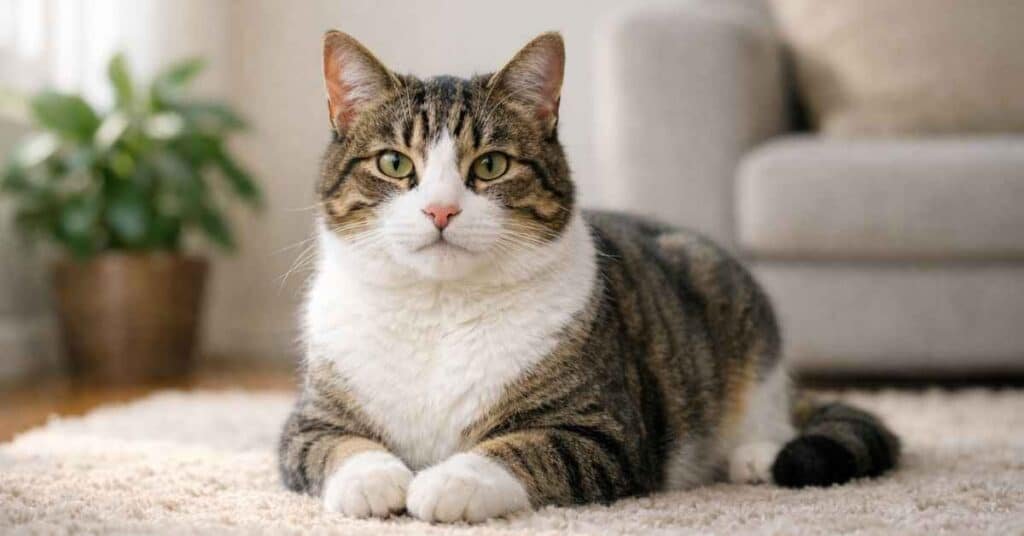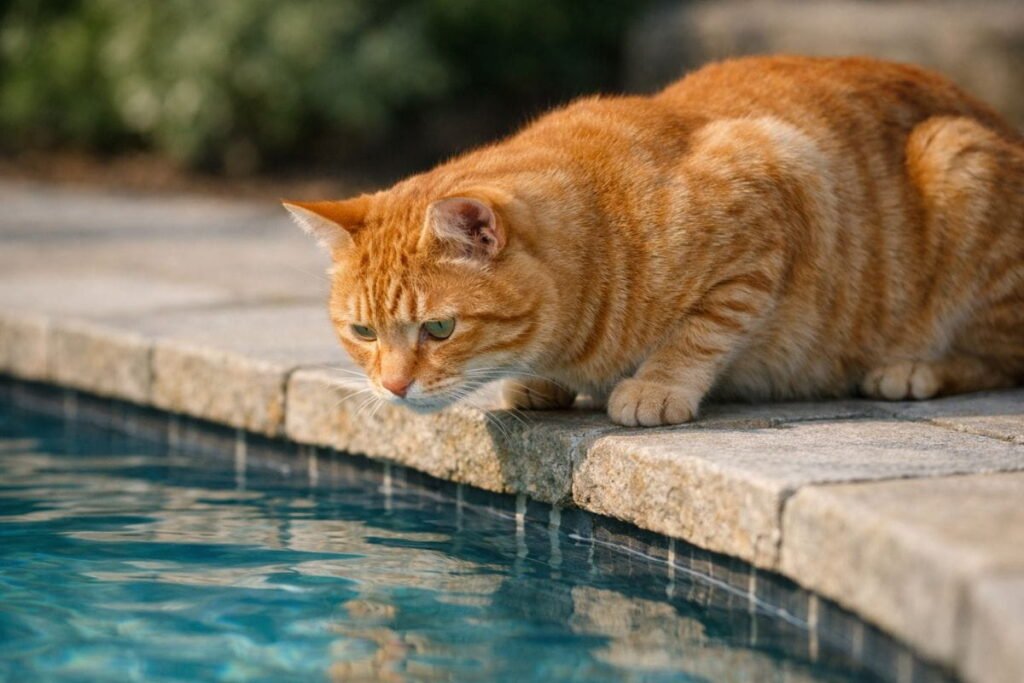
If you’ve ever watched your cat stare at a sink or tiptoe near a pool, you’ve probably wondered, can cats swim? Many Americans assume the answer is no. Yet the truth is more nuanced. Cats and water share a complicated relationship shaped by biology, history, and personality.
In this in-depth guide, you’ll learn whether can cats swim naturally, how safe it really is, and what responsible owners in the U.S. should consider before introducing water. We’ll explore science, safety, health, and real-life situations involving cats and swimming pools, and cats and bathtubs.
Can Cats Swim Naturally? Understanding Feline Swimming Instincts
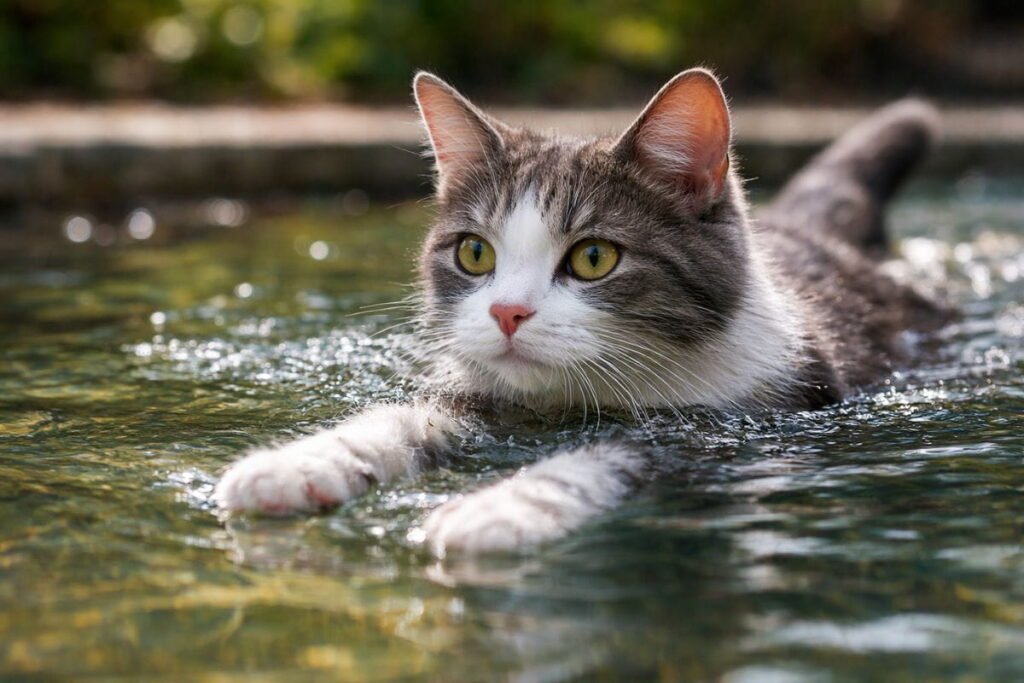
So, can cats swim naturally? In short, yes. Most cats have a survival instinct that activates when they hit water. This triggers a natural paddling reflex supported by their feline body structure, including a flexible spine and powerful hind legs. These features allow brief movement through water. When I first started researching cat behavior, I assumed every cat would panic around water. But after spending time with different cats, I noticed each reacted differently. One avoided even a damp floor, while another happily played with running water from the faucet. That reminded me that every cat has its own personality, and water should never be forced.
However, feline swimming ability varies. Some owners ask, do cats know how to swim, or are cats natural swimmers? Technically, many can paddle short distances. You might also wonder, do house cats float? Mild buoyancy is possible due to body composition. Still, endurance is limited and panic increases drowning risk quickly.
Quick Fact Table: Physical Traits and Swimming
| Physical Trait | How It Helps in Water |
| Flexible spine | Allows body extension while paddling |
| Powerful hind legs | Generates short bursts of propulsion |
| Light body mass | Supports brief flotation |
| Clawed paws | Helps grip pool edges |
Why Do Most Cats Hate Water? Psychology and Evolution Explained
Even though can cats swim is often true, many owners still ask, why do cats hate water? The answer lies in desert ancestry. Wild ancestors lived in dry climates. Swimming was unnecessary. Over time, cats developed a strong water aversion.
Water changes how their coat feels. Wet fur discomfort and heavy coat water absorption affect insulation. Cats also have high temperature sensitivity. Cold water shocks the system. This can trigger a feline anxiety response and intense cats in water behavior that looks dramatic.
Do Some Cats Actually Enjoy Swimming? Breeds and Personality Differences
Despite common myths, some cats break the mold. Owners often ask, do cats like water? A few truly do. Certain water-friendly cat breeds such as Maine Coons and Turkish Vans show strong curiosity behavior around water.
Still, personality matters more than breed. Some cats that enjoy water will splash in sinks or explore fountains. Others avoid it completely. So when someone says are cats natural swimmers, remember individuality plays a larger role than genetics alone.
Can Kittens Swim? Age, Development, and Risk Factors
Another frequent question is, can kittens swim? Technically, older kittens may paddle briefly. Very young kittens lack muscle strength and coordination. Their tiny bodies increase drowning risk even in shallow spaces.
Because development differs, supervised exposure is essential. Even if instinct appears early, stamina does not. When asking can indoor cats swim safely at a young age, the answer depends on strength, environment, and constant monitoring.
Is It Safe for Cats to Swim? Drowning Risks and Real Dangers
Let’s talk honestly about safety. Many American homes have backyard pools. That raises concerns about cats and swimming pools and overall cats and pool safety. Chlorine irritates skin. Panic causes exhaustion.
The same applies to cats and bathtubs. Slippery surfaces increase escape attempts. Without exit ramps, drowning risk rises sharply. Installing a pool alarm system or adding visible steps reduces danger. Real swimming safety for cats always requires preparation.
Safety Checklist Table
| Risk Factor | Prevention Method |
| Slippery pool walls | Install escape ramps |
| Uncovered pools | Use secure covers |
| Panic behavior | Keep sessions short |
| Lack of supervision | Never leave unattended |
Health Benefits of Swimming for Cats (When Done Safely)
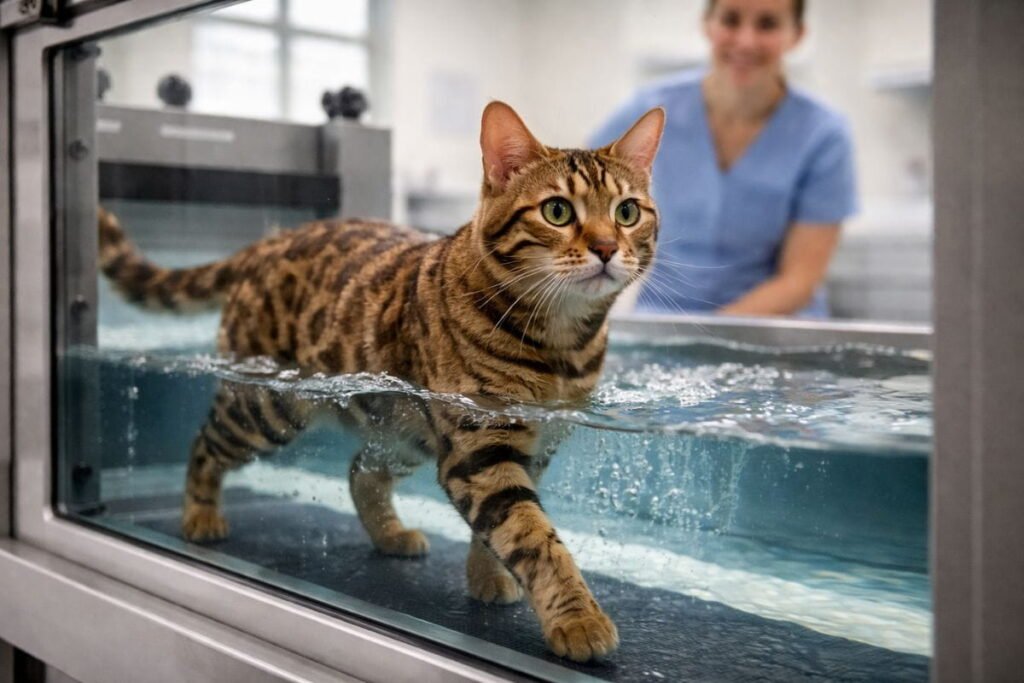
Under strict control, water can support health. Veterinarians sometimes recommend hydrotherapy for cats. It provides low-impact exercise that protects joints. This can improve mobility and deliver gentle joint support.
For senior pets, swimming may assist with arthritis relief or post-surgery rehabilitation. It also helps with cooling down in summer and supports overheating prevention. Still, these benefits apply only when professionals guide the process safely.
How to Introduce Your Cat to Water (Step-by-Step Guide)
If you decide on introducing a cat to water, start small. Use a sink with shallow water. Encourage exploration. Offer treats during shallow water play. This builds trust.
When teaching a cat to swim, use gradual water introduction and calm voice cues. Never force immersion. Gentle positive reinforcement training works better than pressure. You may even use floating toys for cats to create positive associations.
Signs of Stress or Panic in Water and When to Stop Immediately
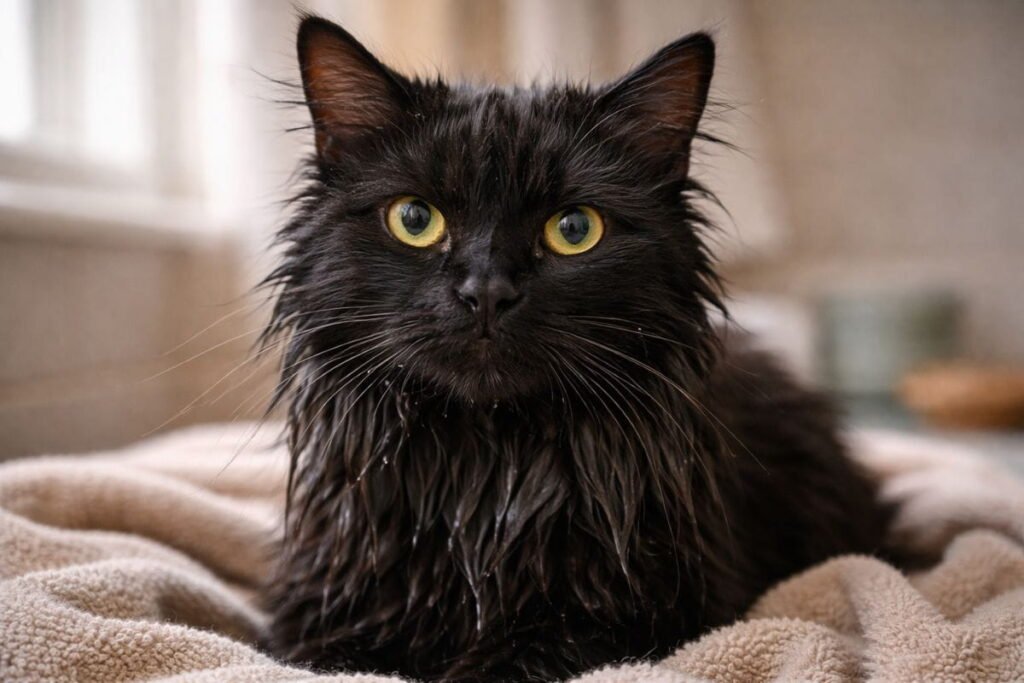
Watch closely for stress signals in cats. Warning signs include dilated pupils, flattened ears, and loud, excessive meowing. Rapid breathing also signals fear.
If you see frantic escape attempts, remove your cat immediately. Emotional trauma lasts longer than physical discomfort. Remember, even if can cats swim, physical safety matters just as much.
Swimming Alternatives: Safer Ways to Keep Your Cat Cool and Active

Swimming is not the only option. Many owners seeking safe water activities for cats can explore alternatives. Running water fountains encourage hydration. Cooling mats help regulate body heat.
Indoor play provides enrichment without water stress. These options support activity without triggering water aversion. For most cats, creative cooling works better than full swimming sessions. Before introducing your cat to water, it’s worth reviewing guidance from veterinary professionals. The ASPCA explains important pet safety tips around water, while the Cornell Feline Health Center provides trusted information about feline behavior and health. These resources can help you make safer decisions based on your cat’s individual needs.
Can Cats Swim in Pools, Lakes, or the Ocean?
Not all water is equally safe for cats. Swimming pools contain chlorine that may irritate your cat’s skin or eyes if exposure is prolonged. Lakes and ponds can hide bacteria, parasites, or sharp objects, while ocean water contains high levels of salt that may cause stomach upset if swallowed. Whenever your cat is near any body of water, constant supervision is essential, and fresh drinking water should always be available afterward.
Should You Let Your Cat Swim? Final Verdict for Responsible Owners
So, can cats swim? Yes, many can paddle briefly thanks to instinct and body design. However, ability does not equal enjoyment or safety. Each cat differs.
Before deciding, evaluate personality, environment, and veterinary advice. Consider safety tools like a pet flotation device if needed. In most cases, caution wins. When handled thoughtfully, your choice protects both health and trust.
Final Verdict: Should You Let Your Cat Swim?
So, can cats swim? Yes. Most cats have a natural survival instinct that allows them to paddle through water for a short time. However, being able to swim doesn’t mean they enjoy it or should be encouraged to do it regularly. Every cat has a different personality, confidence level, and comfort with water.
If your cat shows curiosity around water, introduce it slowly, never force the experience, and always supervise closely. For most indoor cats, swimming offers very few benefits compared with safe indoor enrichment and play. Your goal isn’t to teach your cat to swim—it’s to keep them healthy, confident, and safe. When in doubt, follow your veterinarian’s advice and always put your cat’s comfort and well-being first.

Wahsay Ahmed is the founder of FelineNest and a cat care writer. His interest in feline health began in 2023 after adopting two cats, Whisker and Mochi. Since then, he has spent two years studying trusted veterinary resources, feline behavior, nutrition, and preventive care while applying that knowledge through daily care of his own cats.