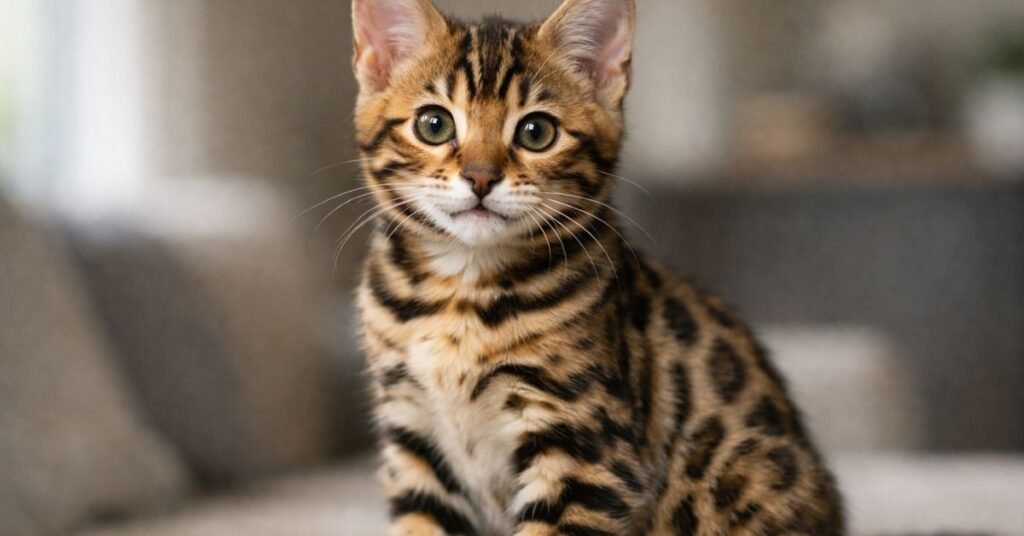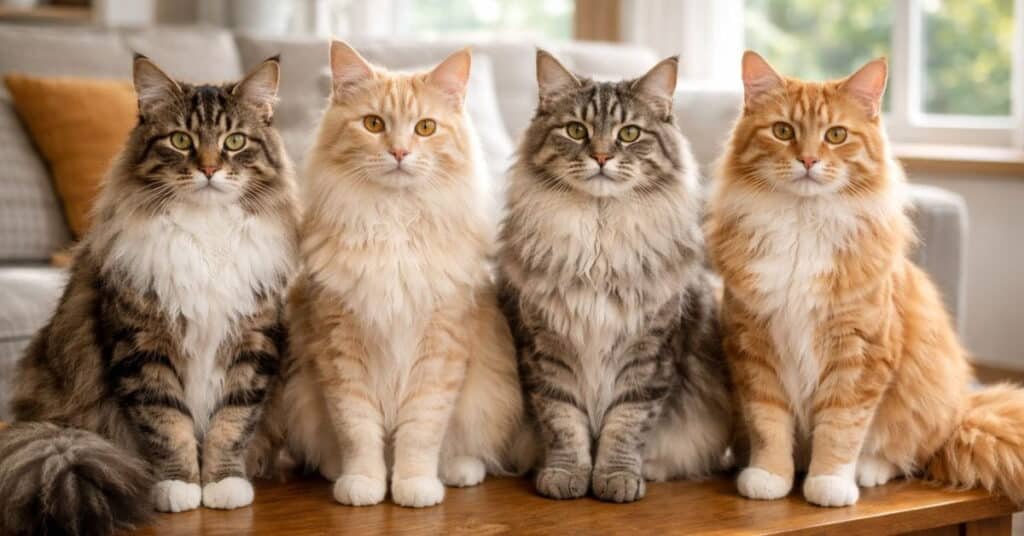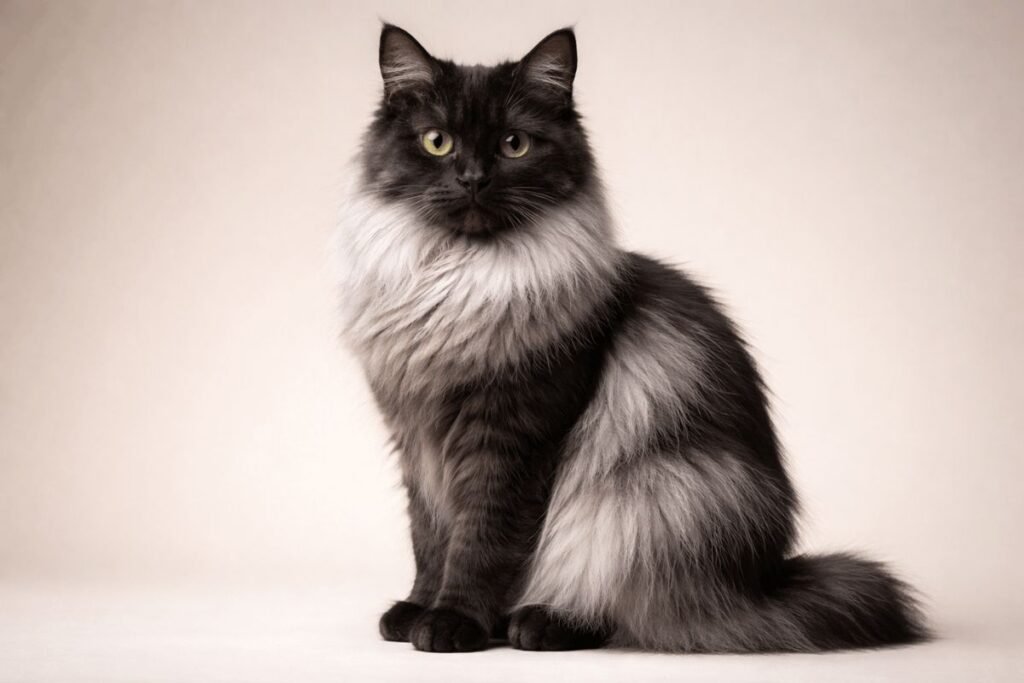
The salty licorice cat is one of the most fascinating discoveries in modern feline science. At first glance, this cat stands out with its soft gradient coat, blending dark roots into pale tips. This rare look belongs to salmiak coat color cats, a striking example of unique cat fur patterns found in nature.
Many people confuse it with a black and white cat coat variation, yet its fading effect feels far more unusual. In fact, it ranks among the rarest cat coat patterns ever documented. This guide will help you understand the beauty, science, and mystery behind this incredible cat.
What Is a Salty Licorice Cat? (Salmiak Pattern Explained Clearly)
A salty licorice cat is a rare feline known for its unusual fur pattern called salmiak coat color cats. The coat shows dark roots and lighter tips, creating a soft fade. This look stands out among rare cat coat patterns and feels almost as if it were painted by nature.
If you’re wondering what a salmiak cat is, it’s not a breed. It’s a feline coat color mutation caused by natural cat mutations. This makes every cat unique, like a fingerprint made of fur.
What Does a Salty Licorice Cat Look Like? (Key Visual Traits)
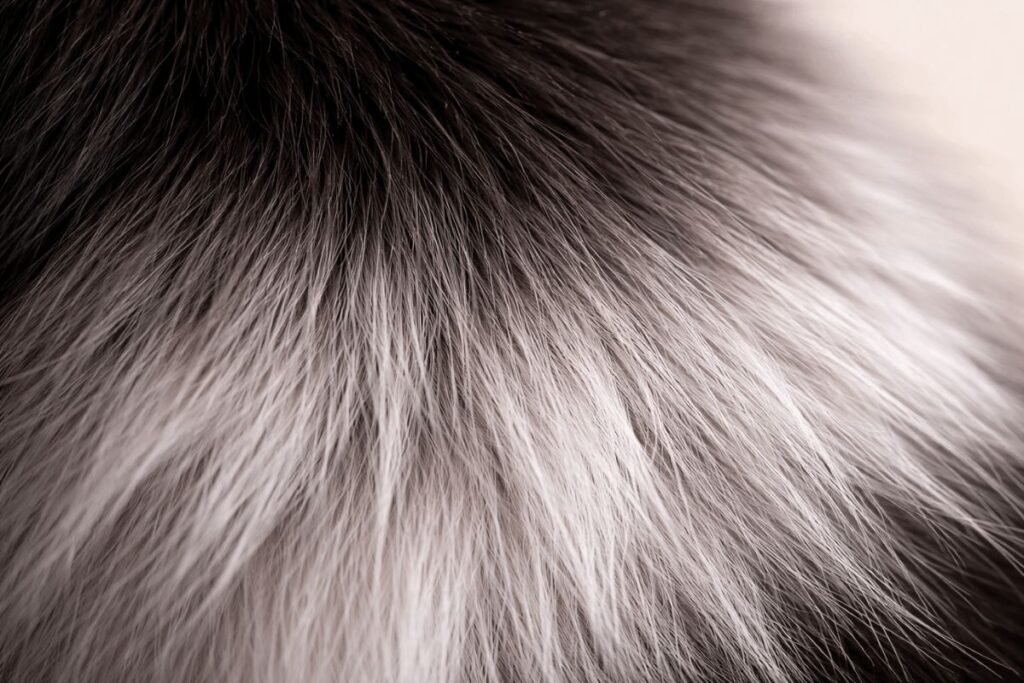
At first glance, the salty licorice cat looks like a mix of shadow and frost. The base color stays dark, often black, while white-tipped fur cats show pale ends. This creates a dreamy cat coat gradient pattern across the body.
Some may confuse it with a black-and-white coat variation or a tuxedo coat variation. However, the gradient effect makes it different. Many describe it as a black cat with white tips, which looks soft and smoky.
The Science Behind the Salmiak Gene (Genetic Mutation Explained)
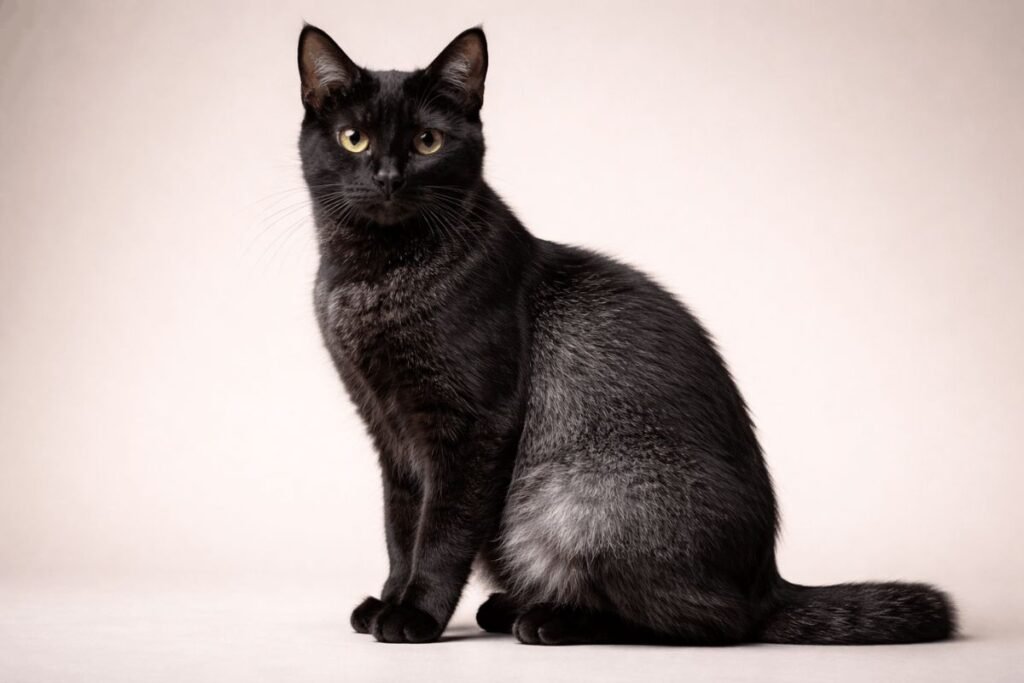
The beauty of the salty licorice cat comes from science. Researchers found links to the KIT gene in cats and a genetic mutation in cats. This gene controls pigment flow, which changes how color spreads through each hair.
Studies like the University of Helsinki cat study and Wisdom Panel cat genetics confirmed this pattern. The mutation affects coat pigmentation in cats and gene expression in animals, creating the signature fading effect.
Inheritance & Breeding: How Do Salty Licorice Cats Occur?
You might ask, can salmiak cats be bred easily? The answer is no. The salty licorice cat genetics follow recessive gene inheritance cats, meaning both parents must carry the hidden trait.
Even then, results are uncertain. This unpredictability exists in the inheritance of coat color and genetic variants in animals. That’s why this pattern remains rare and difficult to reproduce.
Where Did Salty Licorice Cats Originate? (Discovery Story)
The story begins in Finland. Scientists first noticed these cats in a feral cat population Finland. These animals were part of the non-pedigree cats genetics, making the discovery even more surprising.
Later, researchers used genome sequencing cats and DNA testing for cats to confirm the mutation. This answered the question, where do salmiak cats come from, and gave the pattern its name.
Is the Salty Licorice Cat a Breed or Just a Coat Pattern
Many people think the salty licorice cat is a new breed. However, it’s only a coat variation. This answers the question, is salmiak cat a breed or a mutation? It belongs to rare domestic cat genetics, not a specific lineage.
This means it can appear in different cats. Still, most cases come from salmiak cats Finland and wild populations. Breeding programs haven’t fully developed around this trait yet.
How Rare Are Salmiak Cats? (Availability & Population Insights)
If you’re asking how rare the salty licorice cat is, the answer is very rare. Only a small number exist worldwide. These cats belong to rare cat coat patterns explained and unique genetic cases.
Unlike common pets, they are not widely bred. Their rarity comes from unusual cat coloration and unpredictable genetics. This makes spotting one feel like finding a hidden treasure.
Price & Adoption: How Much Does a Salty Licorice Cat Cost?
The salty licorice cat price and availability vary greatly. Since they are not commonly sold, pricing depends on rarity. If available, the cost may be high due to demand for unique cat fur patterns.
However, adoption is more likely than buying. Many of these cats come from natural populations. Ethical adoption remains the best choice for anyone interested in rare cats.
Health, Behavior & Care: Are They Different From Other Cats?
A common worry is health. Luckily, the salty licorice cat does not suffer from issues linked to this mutation. The change only affects fur, not overall wellness, according to feline genetics research.
Behavior stays normal, too. Personality depends on upbringing, not coat. So caring for these cats is the same as caring for any other. This answer does the salmiak gene affect health?
Common Myths & Confusions About Salty Licorice Cats
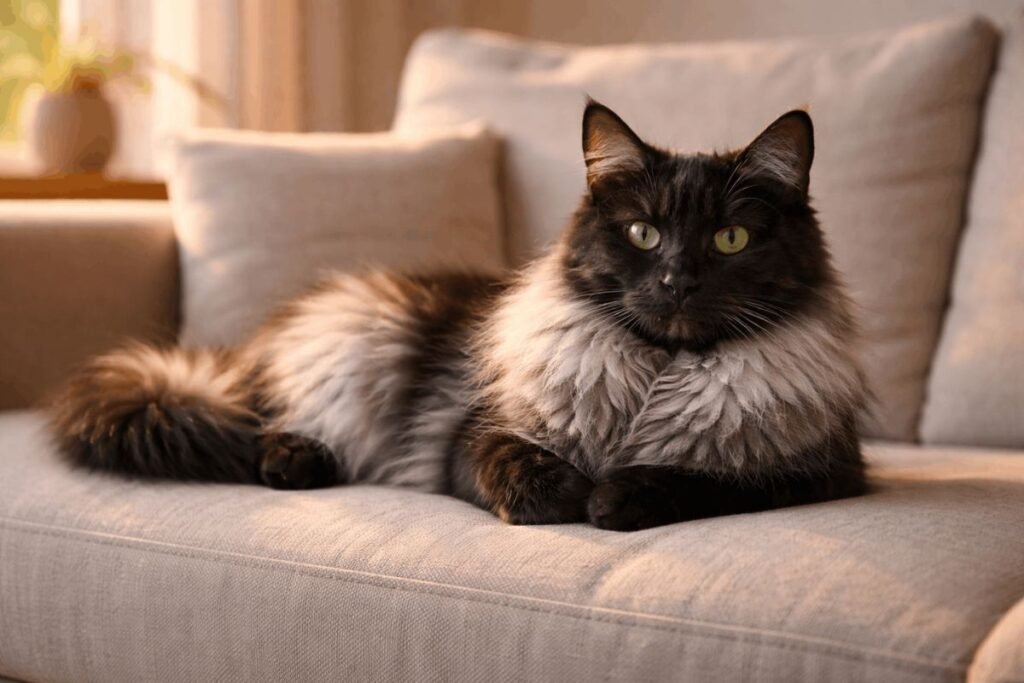
Some believe diet causes this look. That’s false. The pattern comes from a genetic mutation in cats and not food. Others confuse it with smoke or fever coats.
Understanding what causes white-tipped fur in cats helps clear confusion. The answer lies in genes, not environment. This makes the salty licorice cat truly special.
Salty Licorice vs Similar Coat Patterns (Comparison Guide)
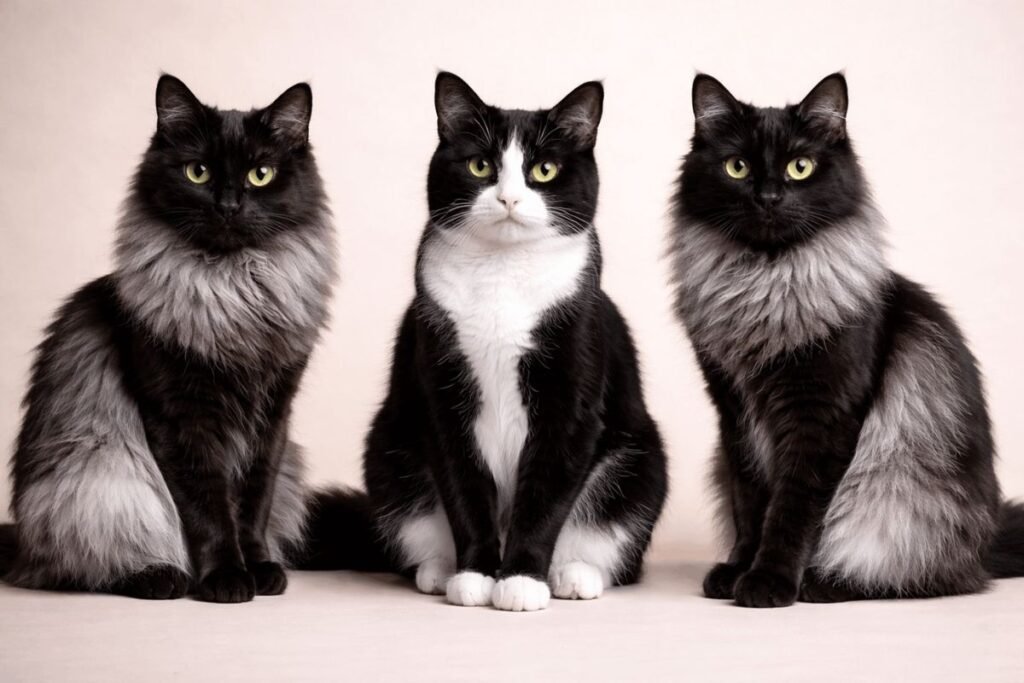
The salty licorice cat often gets confused with other patterns. However, key differences exist. The table below explains it clearly.
| Pattern Type | Key Feature | Difference |
| Salmiak | White tips on dark fur | Gradient effect |
| Smoke | Light roots, dark tips | Opposite shading |
| Tuxedo | Solid black and white patches | No gradient |
This comparison helps explain how the KIT gene affects cat color and shows why salmiak stands out.
Should You Get a Salty Licorice Cat? (Realistic Expectations)
Owning a salty licorice cat sounds exciting. However, finding one is extremely difficult. You shouldn’t rely on availability, as they appear randomly in nature.
Instead, focus on personality and connection. While the coat looks beautiful, a loving bond matters more than appearance. This keeps expectations realistic and healthy.
FAQs About Salty Licorice Cats
Salty licorice cat breeds:
The salty licorice cat is not a breed. It’s a rare coat pattern that can appear in different non-pedigree cats.
Salty licorice cat for sale:
These cats are extremely rare and not commonly sold. You’re more likely to find one by chance than through breeders.
Salty licorice cat price:
There’s no fixed price due to rarity. If available, it could be expensive because of its unique coat.
When was the salty licorice cat discovered:
The salty licorice cat was first observed around 2007 in Finland within a feral cat population.
Final Thoughts
The salty licorice cat is more than just a pretty face. It represents the beauty of nature and science working together. From genetics to rarity, this cat reminds us that the animal world still holds many secrets waiting to be discovered.

Wahsay Ahmed is the founder of FelineNest and a cat care writer. His interest in feline health began in 2023 after adopting two cats, Whisker and Mochi. Since then, he has spent two years studying trusted veterinary resources, feline behavior, nutrition, and preventive care while applying that knowledge through daily care of his own cats.