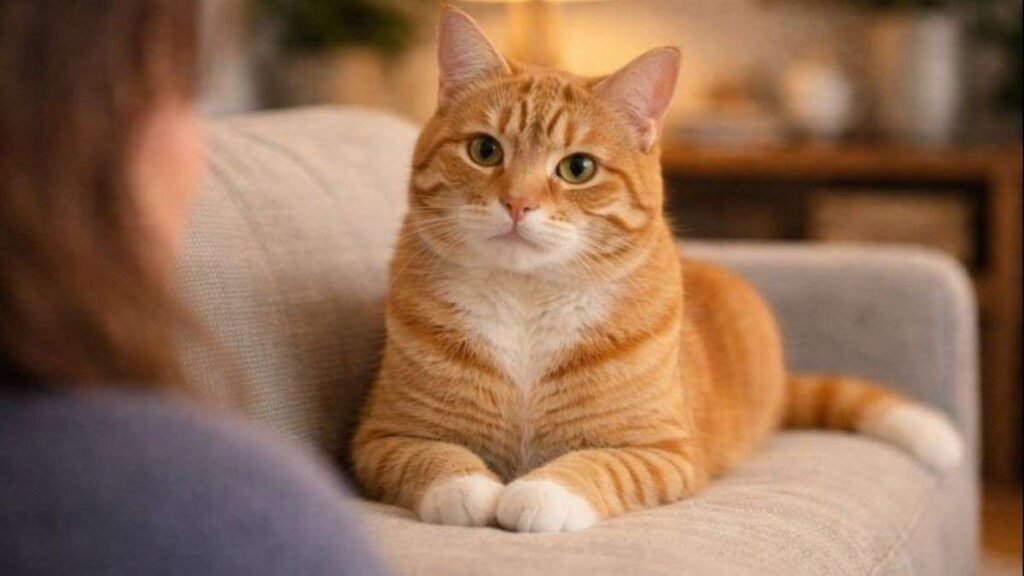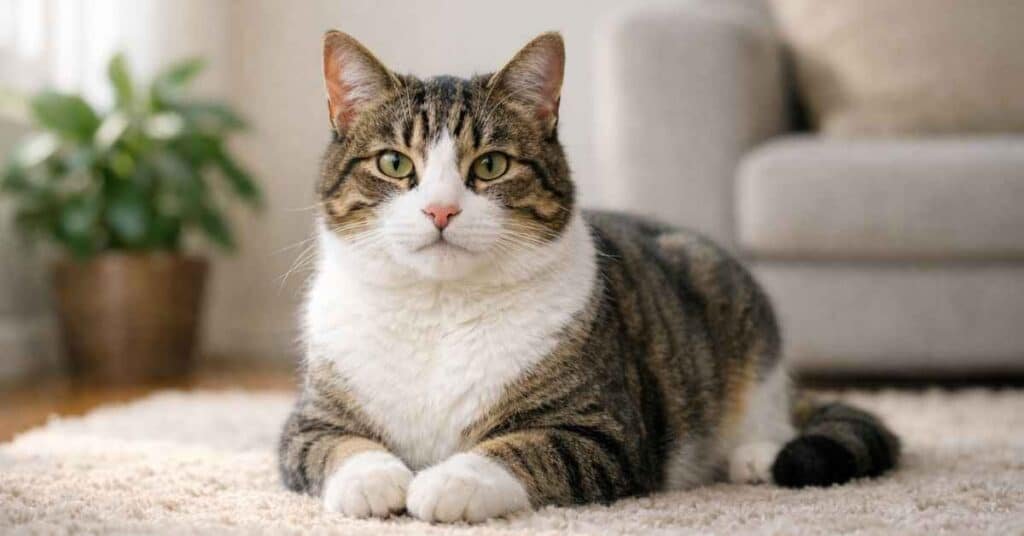
Cats never run out of ways to surprise you. One moment, they’re knocking things off your counter, and the next, they’re making the most adorable sound you’ve ever heard. That sound is cat trilling — a soft, closed-mouth vocalization that sits somewhere between a purr and a meow. Unlike other cat sounds, the trill carries almost exclusively positive energy. It’s how your feline expresses happiness, greets you after a long day, or simply says, “hey, pay attention to me.”
Understanding cat vocalization unlocks a whole new level of communication with your pet. This guide breaks down everything you need to know about cat trilling — what it means, why it happens, and what your cat is really telling you.
What Exactly Is Cat Trilling?
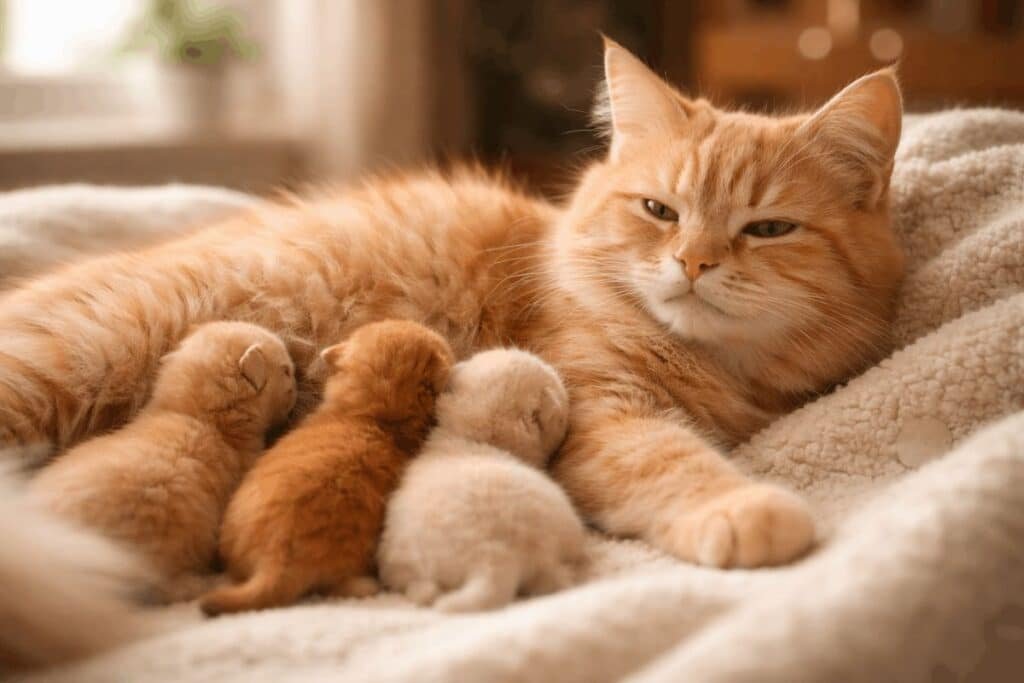
Most people hear a trill and think their cat is somewhere between a meow and a purr. That’s actually a pretty accurate description. A trill is a short, high-pitched sound your cat makes with her mouth completely closed, pushing air through her vocal cords in a rapid, rolling burst. It lasts only a second or two. But in that brief moment, she’s saying a lot.
The sound is distinctly musical. Some folks compare it to a soft bird chirp. Others say it sounds like a little motorized purr with a melodic twist. Either way, it’s one of the most charming of all feline vocalizations — and once you hear it, you’ll always recognize it.
From my own experience with cats, I’ve noticed that trilling almost always happens during happy moments. One of my cats often gives a soft trill when I enter the room or before leading me to the kitchen for dinner. Over time, I realized these sounds weren’t random—they were consistent ways of greeting me, asking me to follow, or simply expressing comfort. Paying attention to when and why your cat trills can help you understand their unique way of communicating.
How Is Cat Trilling Different From Meowing?
A meow demands attention loudly and directly. A trill is far more polite — almost conversational. When your cat meows, she’s usually asking for something specific: food, the door, or your lap. When she trills, she’s typically just saying hello or sharing a happy thought. It’s the difference between someone yelling your name and someone leaning over to whisper a warm greeting.
What Does Cat Trilling Sound Like?
Imagine a soft, rolling “brrr” sound — almost like a tiny engine purring at high speed but with a musical lift at the end. That’s a thrill. It combines the warmth of a cat purring and the expressiveness of a cat meowing into one compact, cheerful package.
Some cats trill loudly and often. Others do it so quietly you might miss it. Breed, personality, and mood all shape how a trill sounds. A confident, social cat often produces a fuller, more resonant trill. A shy cat’s trill might be barely a whisper. Here’s a quick comparison to help you tell the sounds apart:
| Sound | Mouth Position | Tone | Common Meaning |
| Meow | Open | Variable | Demand or request |
| Purr | Closed | Low, continuous | Contentment or comfort |
| Trill | Closed | High, short, rolling | Greeting or happiness |
| Chirp | Open or half-open | Sharp, staccato | Excitement, prey focus |
| Chatter | Open | Fast clicking | Frustration at prey |
Why Do Cats Trill? The 7 Real Reasons
Understanding why cats trill requires you to think like a feline for a moment. Cats don’t waste energy on sounds that serve no purpose. Every vocalization carries intent. Cat trilling is almost exclusively tied to positive emotions, which already sets it apart from most other sounds in your cat’s repertoire.
Here are the seven genuine reasons your cat trills, drawn from feline behavior research and everyday experience:
1. Greeting You When You Come Home
Your cat hears your key in the lock before you even open the door. By the time you step inside, she’s ready. That rising, rolling trill you hear the moment you walk in? That’s her version of “welcome back, I missed you.” It’s warm, immediate, and utterly sincere.
2. Expressing Contentment or Happiness
A cat who trills while you pet her isn’t asking for anything. She’s simply happy. Cat contentment signs don’t always involve grand gestures — sometimes it’s just a tiny trill that says “this is exactly where I want to be.”
3. Asking for Attention or Food
Trilling is a polite nudge. Your cat might trill near her empty bowl, near the treat cabinet, or right at your feet when she wants you to notice her. It’s far more refined than a loud meow — essentially, cat attention seeking behavior dressed in its Sunday best.
4. Communicating With Other Cats or Kittens
Cats don’t just trill at humans. In a multi-cat household, you’ll often catch cats trilling at each other as a form of social acknowledgment. It’s the feline equivalent of a casual nod between friends.
5. Trilling While Jumping or Landing
Some cats let out a little trill mid-jump or right after landing. Behaviorists believe this is a mix of motivation and self-expression — a small vocal burst tied to physical effort and excitement. It’s completely normal and often adorable.
6. Responding to Being Pet or Touched
Cat trilling while being pet is one of the clearest signs of pleasure you can get from a feline. She isn’t asking you to stop. She’s telling you to keep going. It signals a sense of comfort and deep trust between the two of you.
7. Watching Birds or Prey From the Window
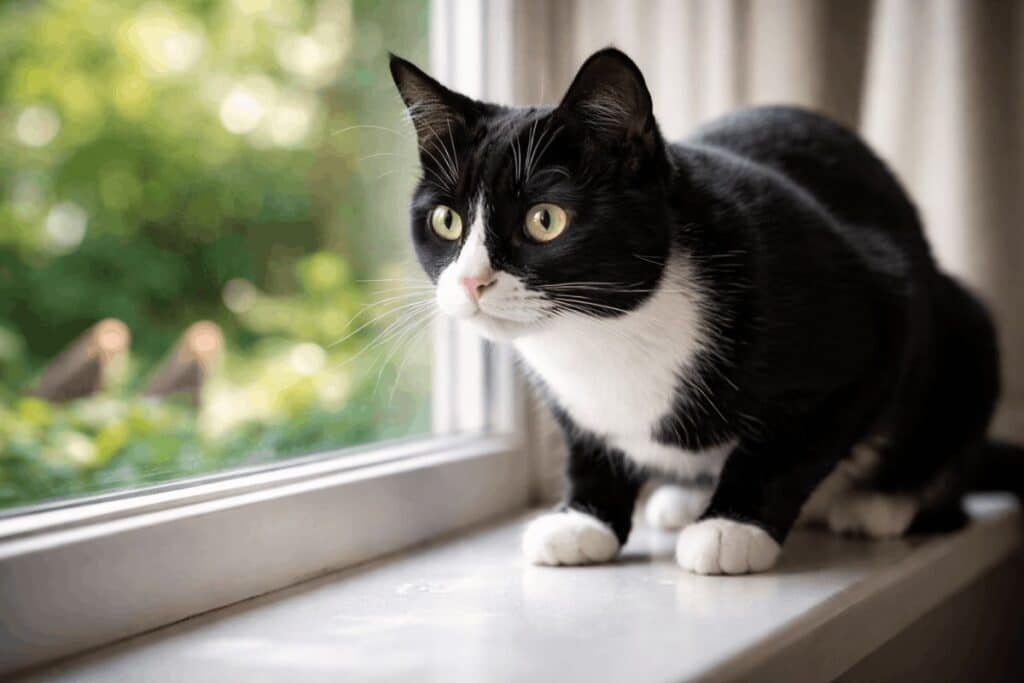
This one’s fascinating. Consider Ralphie, a usually quiet and stoic patient at a vet clinic. The moment his owner plays YouTube videos of birds at a feeder, Ralphie transforms — pupils wide, ears forward, and a stream of chirps and trills pouring out of him. His cat chirping at birds behavior reveals the hunting instinct beneath his calm exterior. Many cats do this. Cat watching birds outside triggers something primal, and the trill emerges as a release of that pent-up excitement.
Where Does Cat Trilling Come From? The Science Behind It
Here’s the angle every competitor misses: cat trilling isn’t a random habit. It has deep biological roots. The queen — that’s the mother cat — uses a trill to communicate with her kittens from their very first days of life. During nursing, she trills softly to comfort them and signal safety. As the kittens grow and begin to move around, she uses the trill as a guiding call: “Stay close, follow me.”
Kittens learn to mimic the queen early. They trill at her, then at each other. By the time they’re weaned, the trill is already embedded in their feline social signals toolkit. When your adult cat trills at you, she’s essentially treating you the way her mother once treated her — or the way she’d call to a kitten she trusted. That’s not a small thing. That’s deeply wired cat social bonding behavior directed straight at you.
The science of how cats communicate is still evolving. Researchers at universities, including Sweden’s Lund University, have studied cat vocalizations extensively, finding that domestic cats have developed a uniquely wide range of sounds specifically for interacting with humans. The trill is one of the most positive entries in that catalog. Research published by Cornell Feline Health Center explains that cats use a wide range of vocalizations to communicate with both humans and other cats, and understanding these sounds can help owners better interpret feline behavior.
Do All Cats Trill, or Just Some Breeds?
Not every cat trills. That’s just the truth of it. Some cats go through life barely making a sound, while others narrate their entire day. Personality drives this more than breed, though some breeds do trend toward being more vocal.
Cats like the Siamese, Maine Coon, and Turkish Angora are known for their communicative nature, and trilling shows up more frequently in these breeds. On the quieter end, breeds like the Russian Blue or Chartreux tend to speak less overall. However, domestic cat behavior varies enormously even within breeds. An individual cat’s confidence, history, and relationship with her owner shape her willingness to vocalize. If your cat doesn’t trill, it doesn’t mean she’s unhappy or that something’s wrong. She simply has a quieter communication style.
Age also matters. Kittens trill instinctively. Some cats mellow as they age and trill less. Others grow more communicative with their humans over the years of bonding. The relationship you build determines a lot.
Cat Trilling vs. Other Cat Sounds: A Quick Comparison
People frequently confuse cat chirping, trilling, chattering, and purring. They’re related — all produced in the throat, all tied to emotion — but they’re distinct. Knowing the difference helps you understand how cats communicate on a much deeper level.
Cat chirping tends to be sharper and more staccato than a trill. It often happens in short bursts, especially when a cat spots prey. Chattering — that rapid clicking sound cats make at birds through the window — is a frustration response, possibly mimicking a kill bite. Purring is longer, lower, and continuous. The trill lives in its own space: brief, closed-mouth, warm, and rolling. Think of it as the most conversational sound your cat makes.
| Sound | Duration | Emotion | Triggered By |
| Trill | 1–2 seconds | Happiness, affection | Greeting, touch, positive interaction |
| Chirp | Short bursts | Excitement | Prey sighting, play |
| Chatter | Rapid sequence | Frustration | Unreachable prey |
| Purr | Continuous | Contentment, comfort | Petting, resting |
| Meow | Variable | Various | Demands, communication |
How Should You Respond When Your Cat Trills at You?
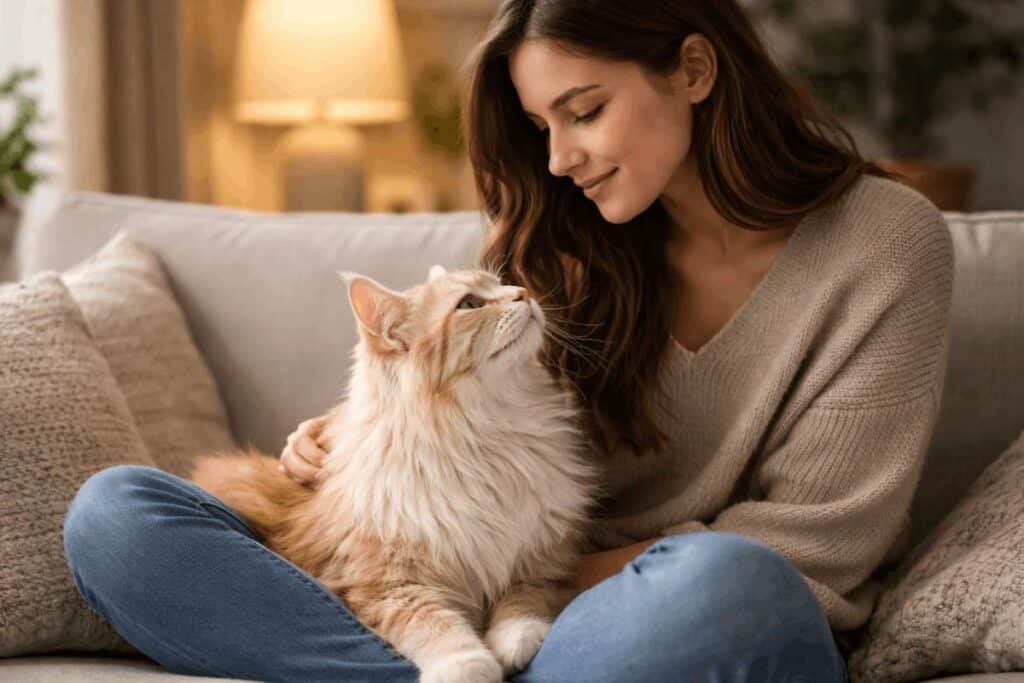
Here’s good news: you can trill back. Seriously. Many cats respond warmly when their owners mimic the sound — it signals that you’re engaged and paying attention. You don’t need to nail the exact pitch. The effort alone communicates something meaningful to your cat.
Beyond trilling back, the best response to how to respond to cat trilling is simply to acknowledge her. Make eye contact. Speak softly. If she trills near her bowl, check if it’s empty. If she trills while you’re petting her, keep going — she’s telling you she loves it. Cat greeting behavior is a two-way street. The more you respond, the more she’ll communicate. That’s how the bond deepens.
When Should Cat Trilling Concern You?
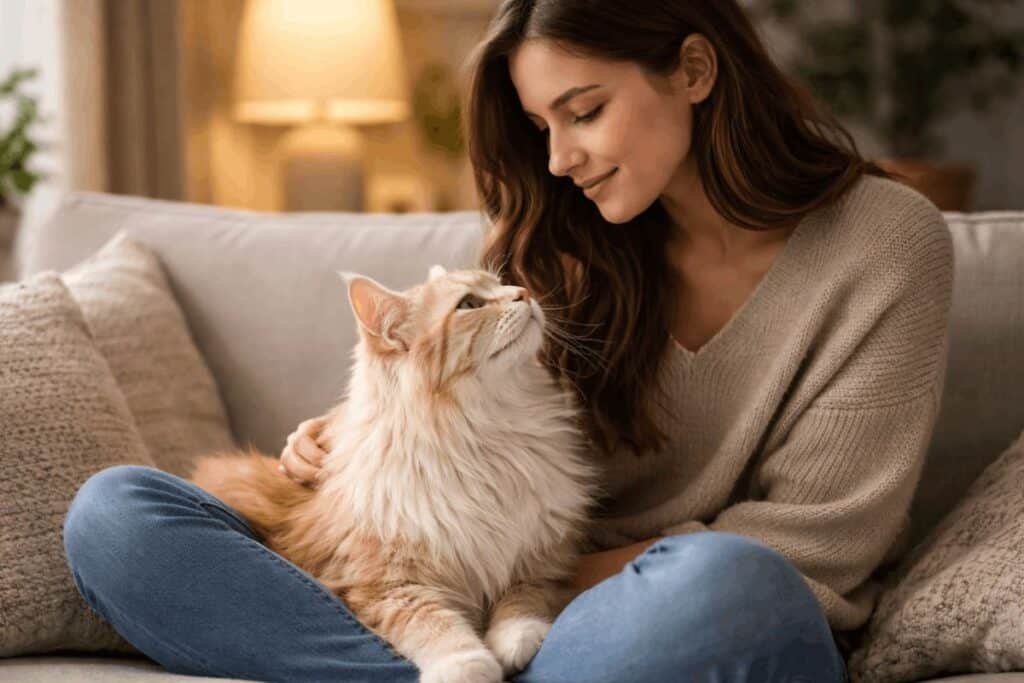
Is cat trilling normal? In the vast majority of cases, absolutely yes. But sudden changes in any vocalization pattern deserve attention. If a cat who rarely trilled begins doing so constantly — especially paired with other behavioral changes — it’s worth a closer look.
Watch for trilling combined with hiding, reduced appetite, lethargy, or changes in litter box habits. These combinations can signal discomfort, cognitive changes in older cats, or underlying health conditions. Senior cats sometimes vocalize more frequently due to feline cognitive dysfunction, a condition similar to dementia in humans. If the trilling sounds distressed rather than happy — more urgent, less musical — trust your instincts and consult your vet. A single behavioral signal rarely tells the whole story, but you know your cat better than anyone.
What a Sudden Increase in Trilling Can Mean
A cat who suddenly trills far more than usual might be experiencing anxiety, confusion, or pain. She might also simply be entering a new social phase — some cats become more vocal after a change in household routine, the arrival of a new pet, or even a shift in your own schedule. Context matters enormously. Track when the trilling happens and what surrounds it. That pattern will tell you more than the sound alone.
Can You Teach Your Cat to Trill More (or Less)?
This is the question no competitor asks — and the answer is genuinely interesting. You can absolutely encourage trilling through positive reinforcement. When your cat trills, respond warmly. Talk back. Give her a gentle chin scratch. Over time, she’ll associate trilling with a pleasant response from you and do it more often.
Reducing trilling is a trickier business. Since trilling is tied to positive emotions, you’d essentially be discouraging happy communication, which most owners don’t actually want to do. If the frequency feels overwhelming, the better approach is to ensure your cat’s needs are consistently met so she doesn’t feel the urgency to vocalize. A well-fed, well-stimulated, securely bonded cat trills contentedly rather than insistently. cat expressing happiness through sound is a gift. Lean into it.
Final Thoughts
Cat trilling is one of the most beautiful forms of feline vocalizations your cat offers you. It carries warmth, trust, and joy in a single rolling sound. It traces back to the very first days of a cat’s life — a mother calling her kittens close — and it travels forward into the bond your cat shares with you. Every trill is a small declaration: I’m happy, I trust you, I’m glad you’re here.
So the next time your cat looks up at you and lets out that soft, musical little sound, don’t rush past it. Trill back. Make eye contact. Say hello. Because in cat body language, a trill is one of the kindest things she knows how to say.
FAQs
What does it mean if my cat trills a lot?
A highly vocal cat is simply a happy, confident communicator. It means she feels safe with you and genuinely enjoys your company.
What does it mean when my cat trills when she sees me?
She’s greeting you with pure joy. That thrill the moment she spots you is her way of saying, “Finally, you’re here.”
What is the 3-3-3 rule for cats?
It’s an adoption guideline — 3 days to decompress, 3 weeks to learn your routine, 3 months to feel truly at home, and show their real personality.
What is “I love you” in cat language?
A slow blink. When your cat holds eye contact and slowly closes her eyes, she’s telling you she trusts you completely — that’s the feline version of “I love you.”

Wahsay Ahmed is the founder of FelineNest and a cat care writer. His interest in feline health began in 2023 after adopting two cats, Whisker and Mochi. Since then, he has spent two years studying trusted veterinary resources, feline behavior, nutrition, and preventive care while applying that knowledge through daily care of his own cats.