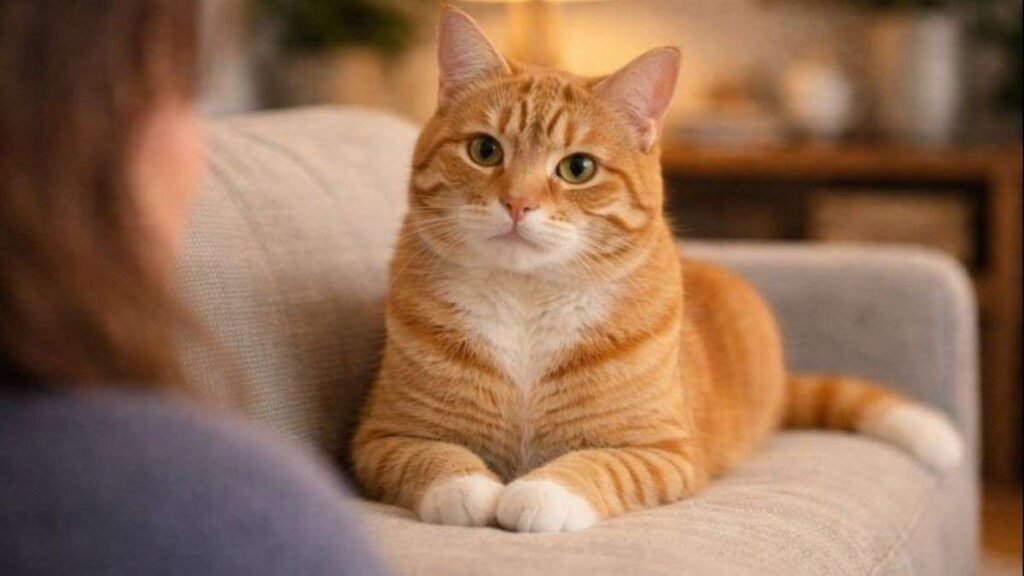
Why do cats knead? If your cat climbs into your lap and rhythmically pushes their paws against you, you’ve witnessed one of the most familiar feline behaviors. Often called “making biscuits,” kneading can be linked to kittenhood nursing, relaxation, scent marking, affection, and other natural behaviors. While every cat is different, understanding the context can help you better understand what your cat may be communicating. In this guide, we’ll explain 7 common reasons cats knead, why some cats knead their owners, when kneading may signal stress, and how to make the behavior more comfortable for both of you.
What Is Cat Kneading — and Why Do They Call It Making Biscuits?
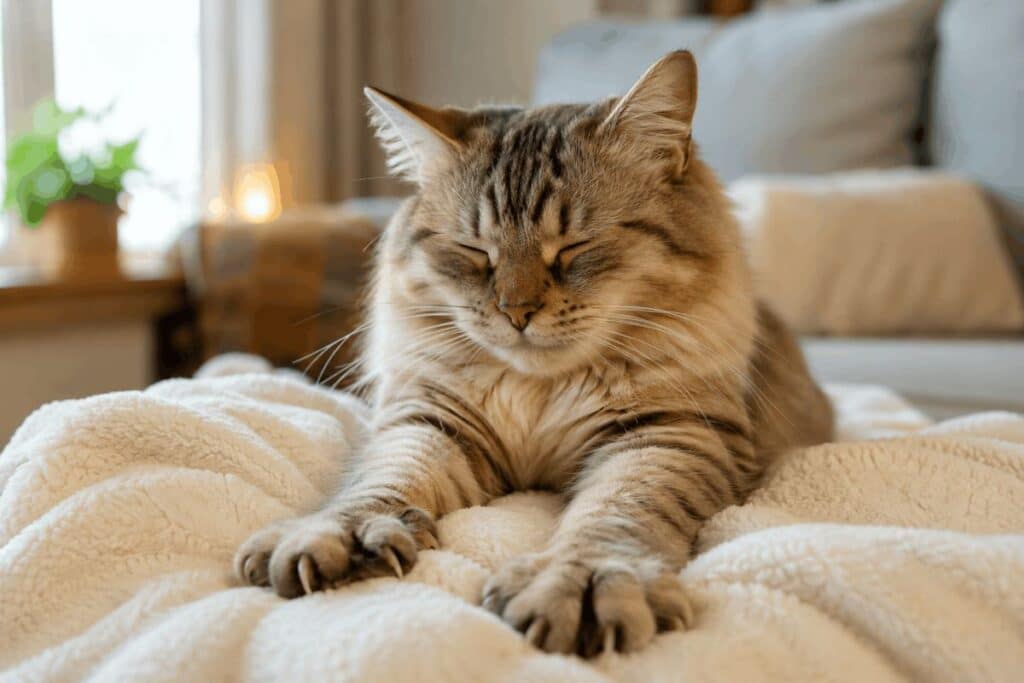
Kneading, often referred to as “making biscuits,” is one of the behaviors domestic cats are best known for. It’s an instinctual behavior where the cat alternates pushing his paws into a soft surface, such as a blanket, several times in a row, similar to how a person would knead dough. The name stuck because the motion looks exactly like a baker working dough — press, release, press, release — over and over again with hypnotic rhythm.
Kneading behavior varies among cats. Some do it constantly, others infrequently, while others do not do it at all. Additionally, some have their claws out when kneading, while others have them retracted. Some knead on humans and even fellow pets, while others stick to blankets, carpets, and other soft surfaces. None of these variations signal a problem — they simply reflect your individual cat’s unique personality.
What Does Cat Kneading Look Like
Your cat places both front paws on a soft surface — your lap, a blanket, or a pillow. They push down with one paw, release, then push down with the other in a steady alternating rhythm. Some cats purr loudly while kneading. Some drool slightly. Some even appear to enter a trance-like state of pure contentment that makes every cat owner smile.
Is Cat Kneading Normal
Cat kneading is normal behavior. Whether your cat kneads constantly or only occasionally — both are perfectly normal feline expressions. Never punish your cat for kneading. It is one of the most positive signals a cat can send to the humans they love and trust completely.
Why Do Cats Knead — 7 Real Reasons Explained
Kneading could mean a wide variety of things. Therefore, context is important. The same behavior can communicate completely different things depending on when, where, and how your cat kneads. Here are the 7 most common and well-documented reasons behind this beloved behavior.
| # | Reason | What It Signals |
| 1 | Nursing instinct from kittenhood | Comfort and security from earliest memories |
| 2 | Contentment and happiness | Your cat feels deeply safe and relaxed |
| 3 | Marking territory with scent glands | Claiming ownership of you or their space |
| 4 | Preparing a sleeping spot | Ancient wild instinct before resting |
| 5 | Showing love and affection | Bonding behavior directed at trusted humans |
| 6 | Stress relief and self-soothing | Managing anxiety or discomfort naturally |
| 7 | Stretching muscles | Physical relief — especially for senior cats |
Reason 1 — Nursing Instinct From Kittenhood
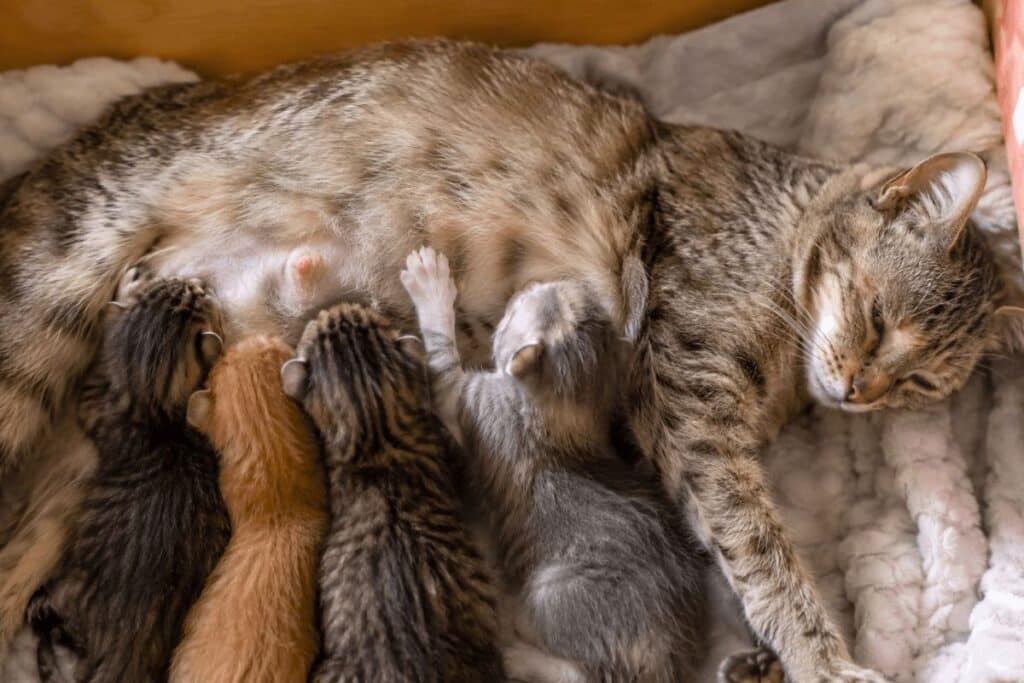
Probably the most widely-held theory is that kneading is a remnant from kittenhood when cats make the same motion with their paws on their mother’s stomach while nursing. This stimulates milk production and flow from the mother’s teats. The theory is this behavior continues past weaning and into adulthood because the motion of kneading has positive associations with the comfort of nursing.
Kittens usually knead on their mother’s abdomen and breasts to stimulate milk production. Kneading starts at a young age, and besides getting the mother cat to release milk, it also provides the kittens with comfort and reassurance. Kneading in adulthood likely provides them with the same soothing feeling. Every time your adult cat kneads — they’re reliving the safest, warmest moment of their entire life.
Does Kneading Mean My Cat Was Taken From Its Mother Too Early
This is one of the most common questions cat owners ask. The honest answer is no — not necessarily. Many cats knead as adults to create feelings of calm and relaxation regardless of when they were weaned. Kneading in adult cats is not a sign of trauma or developmental problems. It simply means your cat found something that feels as safe and comforting as their mother once did.
Reason 2 — Contentment and Pure Happiness
Cats often knead when they feel relaxed and content. When your cat climbs into your lap and starts making biscuits, it can be a sign that they feel comfortable and secure around you. Kneading can also be soothing for cats, and some may purr or even fall asleep while doing it. However, kneading does not always have one single meaning, so it’s best to consider your cat’s overall body language and situation.
Kneading is a relaxing and soothing thing for cats to do. You may even notice your cat appears to be zoned out while he or she is kneading. Sometimes cats will drift off to sleep while enjoying the motion of kneading. That dreamy, faraway look in your cat’s eyes while they knead your lap? Pure bliss.
Reason 3 — Marking Territory With Scent Glands
Kneading may also play a role in scent marking. Cats have scent glands in their paw pads, and pressing their paws against surfaces may help leave their individual scent. Your cat may knead blankets, beds, or even your lap as part of this natural behavior. When kneading happens alongside relaxed body language, it may simply be another way your cat interacts with a familiar and comfortable environment.
Why Cats Knead Blankets Specifically
Cats often knead soft surfaces such as blankets, pillows, and beds because these textures are comfortable and relaxing. Soft materials may also remind them of the comfort associated with kittenhood. For some cats, kneading a blanket becomes part of their routine before resting or sleeping.
Reason 4 — Preparing a Sleeping Spot — Ancient Wild Instinct
One theory suggests that kneading may be connected to an instinct to prepare a comfortable resting area. Wild felines may have pressed down vegetation or other surfaces before resting, although the exact evolutionary origin of modern cat kneading is not fully established. In domestic cats, the behavior may simply appear when they settle onto blankets, cushions, or other soft surfaces.
In the same way you may see a dog spin in circles before laying down and getting comfortable, you may see a cat kneading to create a soft sleeping place before they lay down and get comfortable. It’s not random restlessness — it’s ten thousand years of wild cat wisdom happening right on your sofa.
Reason 5 — Showing Love and Affection to You
“Some cats knead when they are feeling particularly affectionate towards their owners or other animals,” says Dr. Alejandro Caos, DVM, a general practitioner veterinarian with The Vets. “It may be a way for them to bond and show their love.”
Each gentle push of their paws can signal something about how they feel. When your cat chooses your body as their kneading surface specifically — over every blanket and cushion available — that’s deliberate. That’s love. You are their person and they want you to know it in the only language they have available.
Reason 6 — Stress Relief and Self-Soothing
Kneading can also be a way that cats manage stress and anxiety, functioning as a self-soothing mechanism in situations that feel uncertain or overwhelming. A new home, a new pet, a loud thunderstorm — stress triggers kneading in many cats as an automatic comfort response rooted in their earliest emotional memories.
Kneading may also act as a self-soothing behavior for some cats. A cat may knead when feeling relaxed, stressed, or uncertain. If your cat suddenly starts kneading much more than usual, or the behavior appears alongside changes in appetite, grooming, activity, or litter-box habits, speak with your veterinarian.
When Kneading Signals a Problem
Kneading itself is usually normal, but a sudden change in your cat’s behavior deserves attention. If your cat begins kneading excessively or stops a behavior they have regularly shown, look for other signs of stress, pain, or illness. Changes in appetite, movement, grooming, sleep, or litter-box habits are more useful warning signs than kneading alone. If several changes appear together, contact your veterinarian.
Reason 7 — Stretching Muscles and Physical Relief
Kneading naturally moves the front paws, wrists, and shoulders, so it may provide a gentle stretch. However, kneading should not be assumed to be a sign that a cat is treating arthritis or muscle pain. If an older cat suddenly changes how they move, jump, walk, or use their limbs, a veterinary examination is more appropriate.
If your older cat has recently started kneading more than usual — consider whether joint stiffness or muscle soreness might be contributing. A vet checkup can rule out underlying arthritis or pain that kneading is helping them manage naturally at home.
Why Does My Cat Knead Me Specifically?
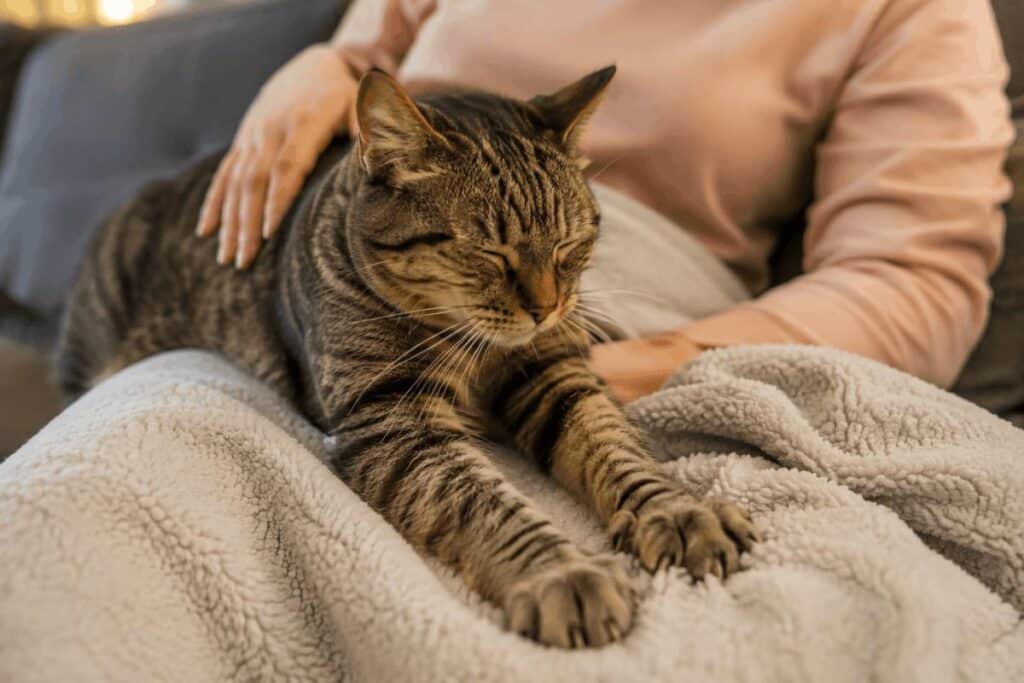
When a cat kneads you, they may simply feel safe, comfortable, and relaxed in your presence. Your body is also warm and soft, making your lap an appealing place to knead. Some cats combine kneading with purring, rubbing, or settling down for a nap.
The location can offer clues, but it does not have one fixed meaning. Your cat’s body language and the situation matter more than the exact place they choose.
| Kneading Location | Possible Meaning |
| Your lap | Comfort and relaxation |
| Blankets or pillows | Soft, familiar resting surface |
| Your stomach or chest | Warmth and closeness |
| Other pets | Social comfort or bonding |
| Bed or random soft surfaces | Relaxation or instinctive behavior |
How to Handle Cat Kneading When It Hurts
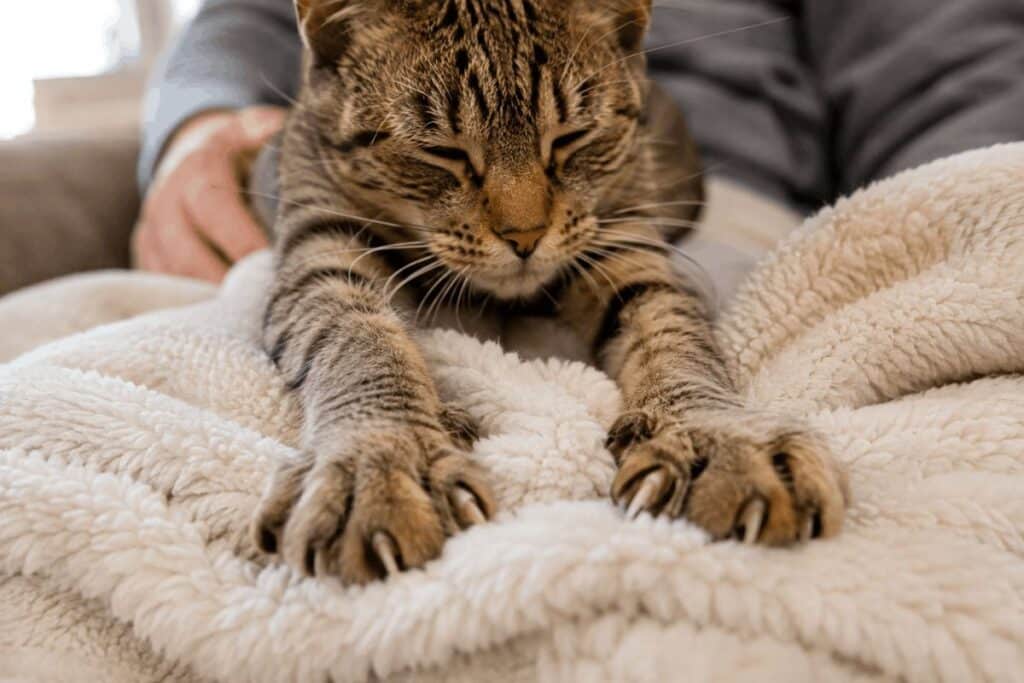
Sometimes kneading can be uncomfortable when your cat extends their claws. You do not need to punish or push your cat away. Instead, place a thick blanket between your cat and your skin. You can also gently move your cat toward a soft blanket when necessary.
Regular nail trimming can help reduce scratches, but only trim the sharp tip and avoid cutting into the quick. If you are unsure how to trim your cat’s nails safely, ask your veterinarian or a professional groomer for guidance.
Keep your cat’s claws trimmed regularly. Short claws make kneading comfortable for both of you — and regular trimming is healthy for your cat regardless of kneading habits. You can also try to distract them with a treat or a toy, but it’s never appropriate to punish your cat for this natural behavior.
| Solution | How It Helps |
| Thick blanket | Protects your skin |
| Regular nail trimming | Reduces sharp scratching |
| Gentle redirection | Moves kneading to a safer surface |
| Calm distraction | Changes focus without punishment |
Do All Cats Knead
No — and that’s completely normal too. Why do some cats knead throughout their lives, but others don’t continue the behavior past kittenhood? Every cat is different. Some knead constantly from kittenhood through their senior years. Others stop after weaning. Others never start. The absence of kneading does not mean your cat loves you less — it simply means they express comfort in different ways that are equally valid and meaningful.
Frequently Asked Questions
Why do cats knead blankets?
Cats often knead blankets because soft surfaces are comfortable and may help them relax. The behavior may also be connected to kittenhood instincts and resting routines.
Why do cats knead and purr at the same time?
Kneading and purring often occur together when a cat is relaxed and comfortable. However, purring can have several meanings, so consider your cat’s overall body language.
Is it okay if my cat kneads with claws out?
Yes. Some cats extend their claws while kneading, while others keep them mostly retracted. If it hurts, place a blanket between your cat and your skin and keep the claws appropriately trimmed.
Why does my cat knead me but not my partner?
Your cat may prefer your warmth, scent, lap, or the way you interact with them. It does not necessarily mean your cat dislikes your partner.
Should I stop my cat from kneading?
Usually, no. Kneading is a normal feline behavior. If the claws hurt, gently redirect your cat to a blanket or another soft surface instead of punishing them.
Final Thoughts — Why Do Cats Knead
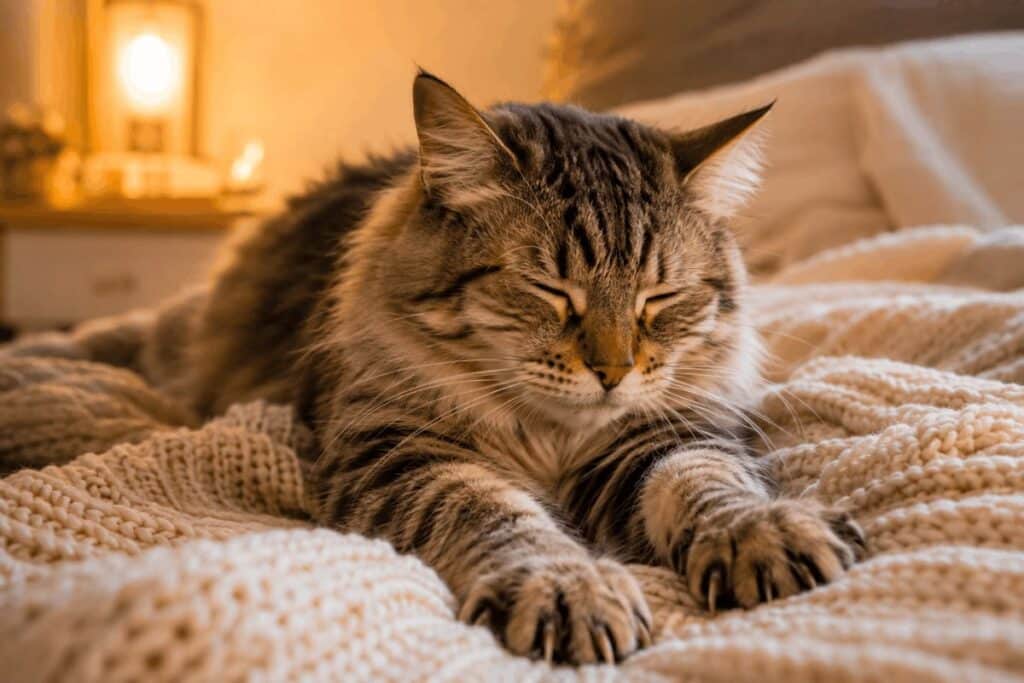
Why do cats knead? Your cat kneads you because they love you. Because they feel safe. Because something in their ancient feline brain connects the rhythm of those tiny paws with the warmest, safest feeling they have ever known. Every biscuit your cat makes on your lap is a love letter written in the only language they have. Kneading is a natural behavior for cats — and a wonderful bonding experience for both felines and humans alike!
Next time those little paws start pressing into your lap — put down your phone. Stay still. Let them knead. That moment is pure love happening in real time.
For more honest cat behavior guides, explore the rest of the FelineNest blog!
This article was reviewed for accuracy using trusted veterinary sources including PetMD, AAHA, Daily Paws, and Preventive Vet before publication.
This article is for informational purposes only and does not substitute professional veterinary advice. If you notice sudden changes in your cat’s kneading behavior, consult a licensed veterinarian.

Wahsay Ahmed is the founder of FelineNest and a cat care writer. His interest in feline health began in 2023 after adopting two cats, Whisker and Mochi. Since then, he has spent two years studying trusted veterinary resources, feline behavior, nutrition, and preventive care while applying that knowledge through daily care of his own cats.