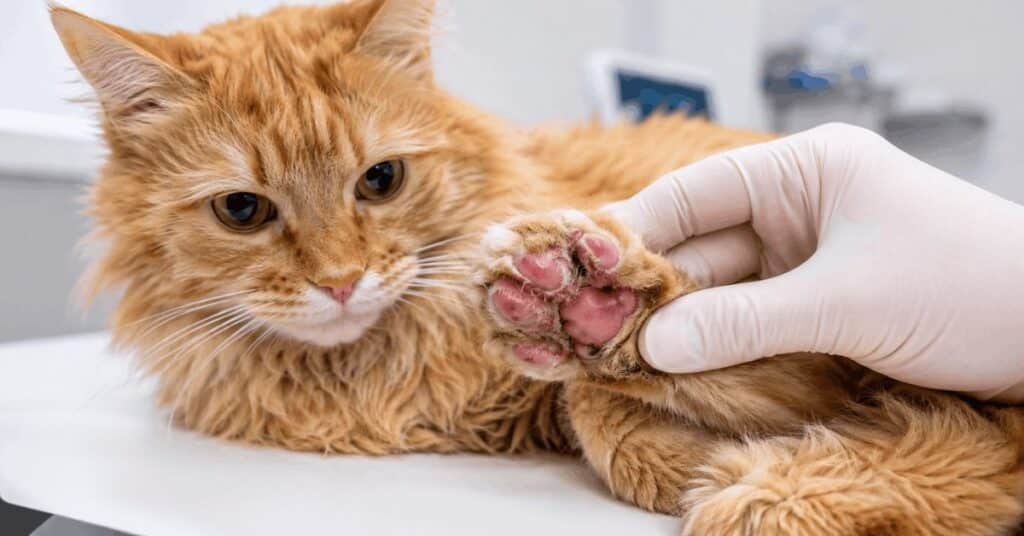
A cat paw infection occurs when bacteria, fungi, or other pathogens enter the tissue of the paw — including the pads, toes, nail beds, or the skin between the toes. The result is inflammation, pain, and in many cases, a progressive infection that spreads deeper into the tissue if left untreated.
What makes cat paw infections particularly dangerous is how quickly they escalate. A small puncture from a thorn, a bite from another cat, or even an ingrown claw can introduce bacteria within hours. Without proper treatment, what starts as localized swelling can become an abscess, a deep tissue infection, or — in worst cases — a systemic illness with fever and lethargy.
The Anatomy of a Cat’s Paw — Why Infections Spread Fast
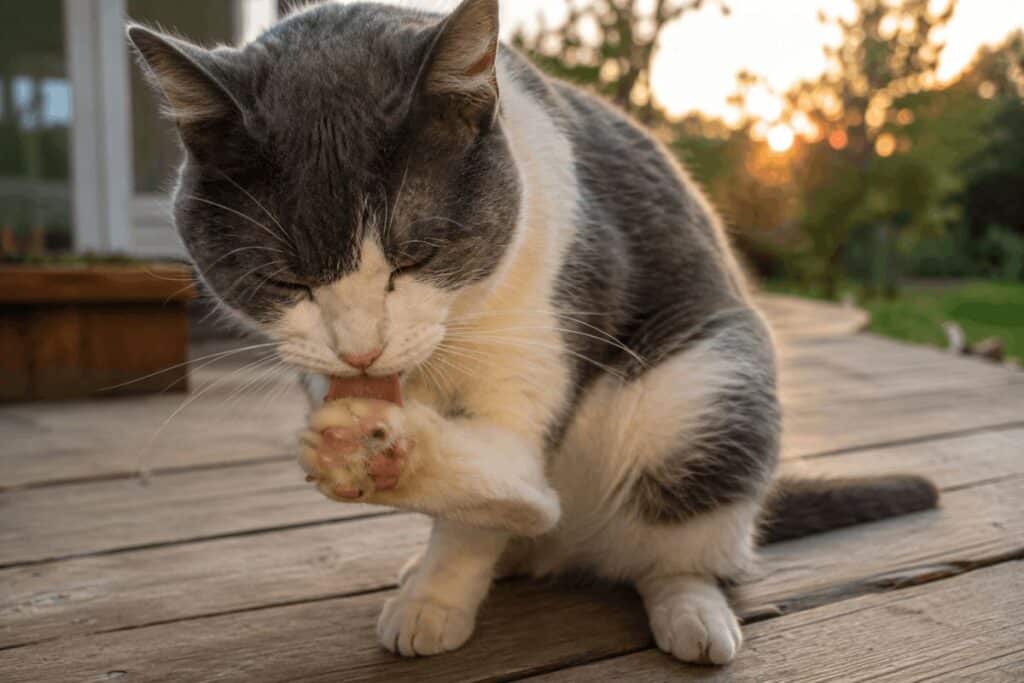
A cat’s paw is densely packed with soft tissue, blood vessels, and lymph nodes, with very little space between structures. This means an infection has very little room to “stay contained.” Once bacteria enter through even a small wound, the warm, moist environment between the toes and under the nail beds creates ideal conditions for rapid microbial growth. I remember noticing one of my own cats licking the same paw over and over for almost two days.
At first, I thought a small piece of litter was bothering her, but a closer look revealed a tiny cut between her toes that had already started to swell. After a quick visit to the vet and a short course of antibiotics, she recovered completely. That experience reminded me that even a small paw injury can turn into a painful infection if it’s ignored.
Cats also make infections worse by licking the affected area. It feels soothing to them, but saliva introduces more bacteria, keeps the wound moist, and prevents healing. An infected paw that a cat licks continuously will almost always worsen without intervention.
Pododermatitis vs Paronychia — Two Conditions Every Owner Should Know
Two specific conditions frequently appear in cat paw infections that most competitors never explain clearly.
Pododermatitis is inflammation of the skin on the foot pads and surrounding tissue. According to Royal Canin’s veterinary team, it can affect one or multiple paws simultaneously and may be caused by bacteria, fungi, allergies, immune conditions, or systemic disease. Plasma cell pododermatitis — a rare variant — causes the paw pads to become soft, spongy, and swollen across multiple feet at once, and requires different treatment than a standard infection.
Paronychia is a specific infection of the nail fold — the tissue surrounding the base of the nail. It produces swelling, discharge, and intense pain around individual nails. Ingrown claws are one common cause. According to The Pet Vet’s 2026 clinical guide, paronychia often requires targeted antibiotic treatment and, in some cases, minor surgical drainage.
| Condition | Area Affected | Common Cause | Key Sign |
| Pododermatitis | Paw pads and foot skin | Bacteria, fungi, allergy, and immune disorders | Swelling across one or more whole pads |
| Paronychia | Nail fold/nail bed area | Ingrown claw, bacteria, fungi | Swelling and discharge at the base of a specific nail |
| Abscess | Any deep tissue in the paw | Cat bite wound, puncture | Hard lump under skin, hot to touch, pus pocket |
| Interdigital cyst | Skin between toes | Bacteria, foreign body, allergy | Red nodule between the toe webbing |
| Yeast infection | Between toes, pads | Candida / Malassezia overgrowth | Brown staining, musty smell, intense licking |
| Plasma cell pododermatitis | Multiple pads simultaneously | Immune-mediated condition | Soft, mushy swelling on several paws at once |
8 Causes of Cat Paw Infections
Cat paw infections are caused by a wide range of triggers. Understanding the cause matters because it determines the treatment. A bacterial infection needs antibiotics. A fungal infection needs antifungals. An abscess may need surgical drainage. A vet cannot guess — and neither should you.
Bacterial Infections — The Most Common Cause
Bacterial infections are the most frequent cause of cat paw infections. They typically enter through cuts, scrapes, puncture wounds, or bite injuries. Pasteurella multocida is one of the most common bacteria found in cat bite wounds. Staphylococcus and Streptococcus species are also frequent offenders.
Outdoor cats face the highest risk — stepping on debris, fighting with other animals, and walking on contaminated soil all create entry points for bacteria. Even indoor cats are not immune: a snag on carpet, an ingrown nail, or a minor household injury can introduce bacteria in minutes.
| Cause | Cat Type Most at Risk | Time to Show Symptoms |
| Cat bite / fight wound | Outdoor, unneutered males | 24–72 hours |
| Puncture from a sharp object | Outdoor and indoor cats | 12–48 hours |
| Ingrown claw | Indoor cats, older cats, and cats not groomed | 1–2 weeks gradual |
| Cut or abrasion | Any cat | 24–48 hours |
| Post-surgery wound | Recently operated cats | 48–96 hours |
| Walking on a contaminated surface | Outdoor cats, barn cats | 24–72 hours |
Fungal and Yeast Infections — The Silent Culprit
Fungal infections are less dramatic than abscesses but just as uncomfortable. Yeast (most commonly Malassezia or Candida) normally lives harmlessly on a cat’s skin — but changes in immune function, humidity, or skin condition allow it to overgrow and cause infection.
According to Royal Canin’s veterinary dermatology team, yeast tends to accumulate in warm, moist body areas — making the spaces between a cat’s toes particularly vulnerable, especially in humid climates. Signs include brown or rust-colored staining of the fur between the toes, a distinctive musty odor, intense and persistent licking, and red, inflamed skin.
Underlying conditions like hypothyroidism, Cushing’s disease, or food allergies frequently trigger yeast overgrowth. Treating the surface infection without addressing the underlying cause leads to recurrence.
Abscess From Cat Bites — An Outdoor Cat Emergency
A cat bite abscess is one of the most painful and rapidly progressing cat paw infections. When a cat bites another cat’s paw during a fight, the puncture wound is small but deep. The small hole closes over the skin surface quickly — trapping bacteria inside the warm tissue below.
Within 24 to 72 hours, a pocket of pus forms. The paw becomes noticeably swollen, hot, and extremely painful to the touch. Some cats run a low fever and stop eating. If the abscess ruptures on its own, you will see foul-smelling discharge and raw, open tissue. This is not a “good sign” — it means the infection was already severe.
Abscesses always require veterinary treatment. Draining an abscess at home is dangerous — incomplete drainage leaves bacteria behind, and improper technique can cause deeper tissue damage.
How to Tell If Your Cat’s Paw Is Infected — Complete Symptom Guide
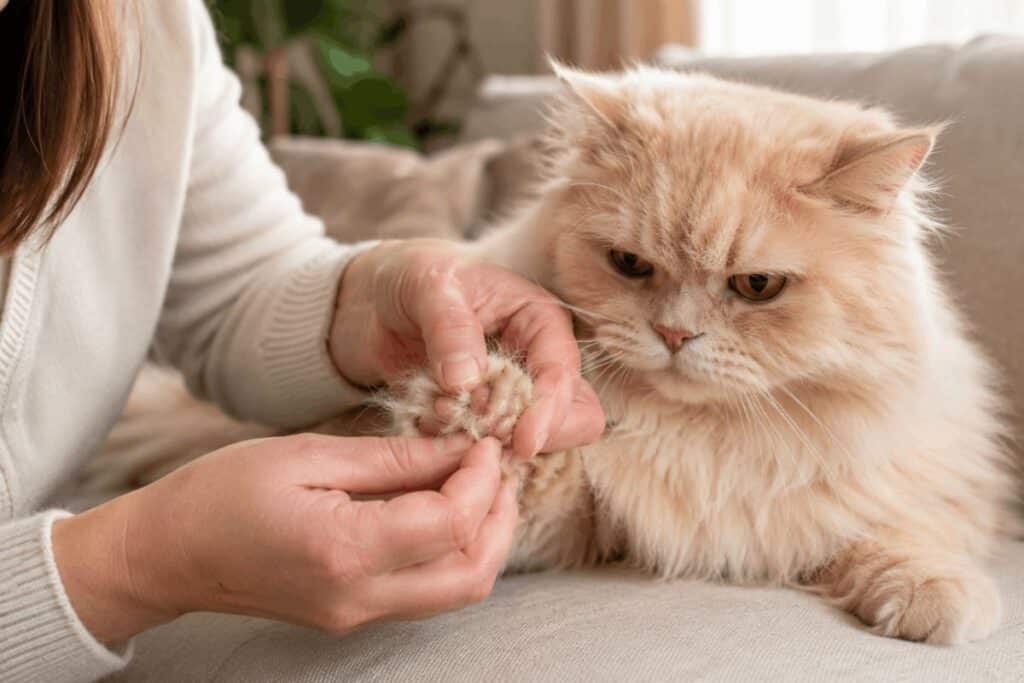
The challenge with cat paw infections is that cats instinctively hide pain. By the time your cat is visibly limping or refusing to bear weight on a paw, the infection may already be at a moderate or serious stage. Knowing what to look for earlier makes a significant difference in outcome.
Early Warning Signs (Do Not Ignore These)
These signs are easy to dismiss as normal cat behavior. They are not. If you see two or more of these together, examine the paw closely.
| Early Sign | What It Looks Like | What It May Mean |
| Excessive licking of one paw | The cat returns to the same paw repeatedly | Discomfort or early inflammation |
| Slight swelling or puffiness | One toe or pad looks marginally bigger | Early bacterial infiltration |
| Holding paw slightly off the floor | The cat shifts its weight subtly when standing | Pain response beginning |
| Change in walking pattern | Subtle limp or reluctance to jump | Paw sensitivity developing |
| Withdrawal from touch | Pulls paw away when you try to look | Pain on contact |
| Mild redness around the pad or nail | Skin appears pinker than usual | Inflammation beginning |
Serious Symptoms That Require Same-Day Vet Care
The following symptoms mean call your vet immediately — not tomorrow, not after the weekend. Same day.
- Visible pus or discharge from any part of the paw — yellow, green, or bloody
- Hot, hard lump under the skin (abscess forming)
- Paw more than 25% larger than normal size
- Open wound that is not closing after 24 hours
- Fever combined with paw swelling — lethargy, loss of appetite, hiding behavior
- Limping that worsens rather than improves over 12 to 24 hours
- Blue, grey, or black discoloration of any paw tissue — this indicates tissue death and is an emergency
ManyPets’ veterinary team states clearly: “Except minor abrasions, most paw infections will require medication to resolve — and delaying treatment can lead to serious problems.”
The Real Owner Story — When a “Small Wound” Cost Marcus $780
Marcus from Dallas noticed his outdoor tabby, Rex, licking his right front paw more than usual on a Monday evening. The paw looked fine — no visible wound, just some mild swelling near the base of the middle toe.
He decided to wait and see. By Wednesday, Rex had stopped eating and was holding his paw completely off the ground. The paw had swelled to nearly twice its normal size. When Marcus pressed gently, Rex yowled and tried to bite him.
The emergency vet found a deep abscess from a bite wound — almost certainly from a neighborhood cat fight two days earlier. The small puncture had closed over, and the infection had built up rapidly underneath. Rex needed surgical drainage under sedation, a two-week course of antibiotics, and pain medication. Total bill: $780.If you’d like to learn more about common paw injuries, wound care, and keeping your cat’s paws healthy, Pet Health Network offers helpful veterinarian-reviewed information for cat owners.
“If I had gone Monday, the vet said it would have been a $150 antibiotic injection,” Marcus said. “Waiting cost me five times more — and Rex five times more pain.”
Cat Paw Infection Treatment — What Vets Actually Do
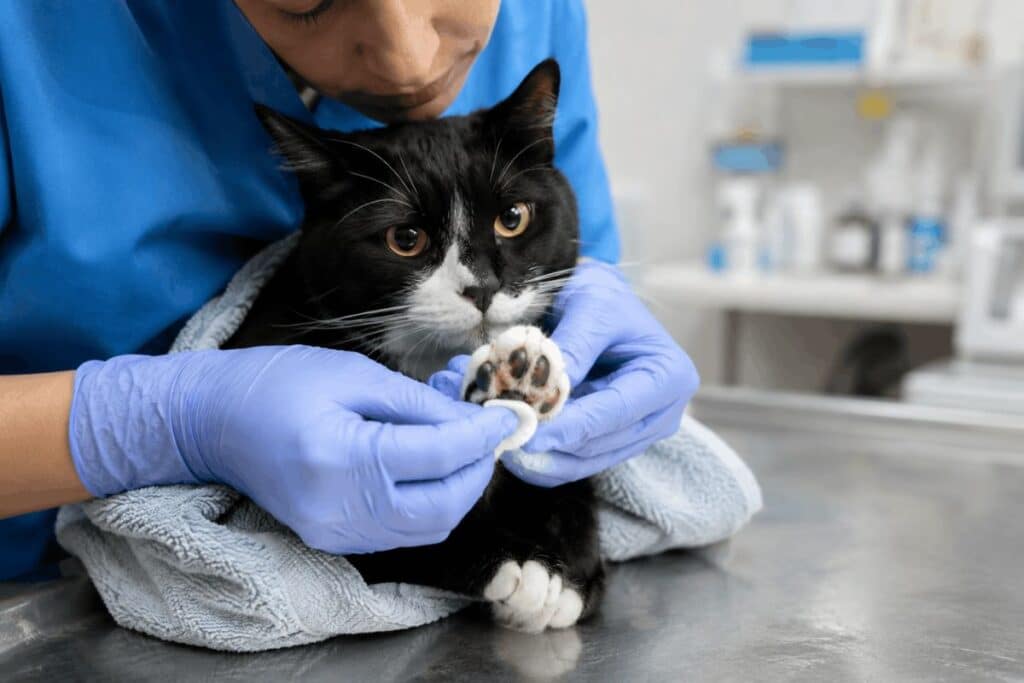
Treatment depends entirely on the type and severity of the infection. This is exactly why a vet diagnosis is non-negotiable for anything beyond a very superficial surface scratch.
Vet Diagnosis Process Step by Step
Here is what happens at a typical vet appointment for a cat paw infection:
- Physical examination — the vet palpates the paw, checks each toe and pad, and assesses swelling and heat
- History taking — indoor vs outdoor cat, when symptoms started, any known injuries or fights
- Skin scraping or culture swab — identifies whether bacteria or fungi are causing the infection
- X-ray — ordered if a foreign object (thorn, splinter, glass) is suspected inside the tissue
- Blood work — recommended if systemic infection, fever, or immune issues are suspected
- FeLV/FIV testing — may be suggested for outdoor cats with bite wounds, as these viruses affect the immune response
Most mild-to-moderate infections are diagnosed and treated in a single appointment. Severe abscesses or infections with systemic signs may require same-day hospitalization.
Medications Vets Prescribe for Cat Paw Infections
| Infection Type | Typical Medication | Duration |
| Bacterial (mild) | Oral amoxicillin-clavulanate or cephalosporin | 7–14 days |
| Bacterial (abscess) | Antibiotic injection + oral course | 14–21 days |
| Fungal / yeast | Topical antifungal + oral itraconazole or fluconazole | 3–6 weeks |
| Pain and inflammation | Meloxicam or buprenorphine (NSAIDs) | 3–7 days |
| Abscess drainage | Sedation + surgical lance and flush | One-time procedure |
| Elizabethan collar | E-collar to prevent licking | Duration of healing |
Never give your cat human antibiotics or pain medications. Ibuprofen and acetaminophen are toxic to cats and can cause fatal organ failure.
Safe Home Care While You Wait for a Vet Appointment
If your cat has a paw infection and the vet appointment is a day or two away, here is what you can safely do in the meantime.
Safe to do:
- Gently bathe the paw in warm (not hot) water to remove debris and keep the wound clean
- Apply a clean, dry bandage loosely to prevent licking — check it every few hours for tightness
- Put on an Elizabethan (cone) collar to stop the cat from licking the wound further
- Confine your cat to a clean, dry indoor space — no outdoor access until treated
Do not do:
- Do not squeeze or attempt to drain a pus pocket yourself
- Do not apply hydrogen peroxide — it damages healthy tissue and slows healing
- Do not use human antibiotic creams like Neosporin unless your vet specifically approves
- Do not wrap the bandage too tightly — it can cut off circulation
How to Prevent Cat Paw Infections
Most cat paw infections are preventable with a minimal daily routine. The cats most at risk for repeated infections are those whose owners never check their paws.
Daily Paw Check Routine That Takes 60 Seconds
[image: owner gently lifting each cat paw to inspect pads, toes, and nail beds during daily check]
Sixty seconds per day is all it takes to catch an infection before it becomes expensive.
| Step | What to Check | What to Look For |
| 1 | Top of each paw | Redness, swelling, wounds |
| 2 | Paw pads on the bottom | Cuts, embedded debris, discoloration |
| 3 | Between each toe | Redness, crusting, and moisture buildup |
| 4 | Each nail and nail bed | Overgrowth, ingrown claws, swelling at the base |
| 5 | Overall paw temperature | One paw significantly warmer than the others = see a vet |
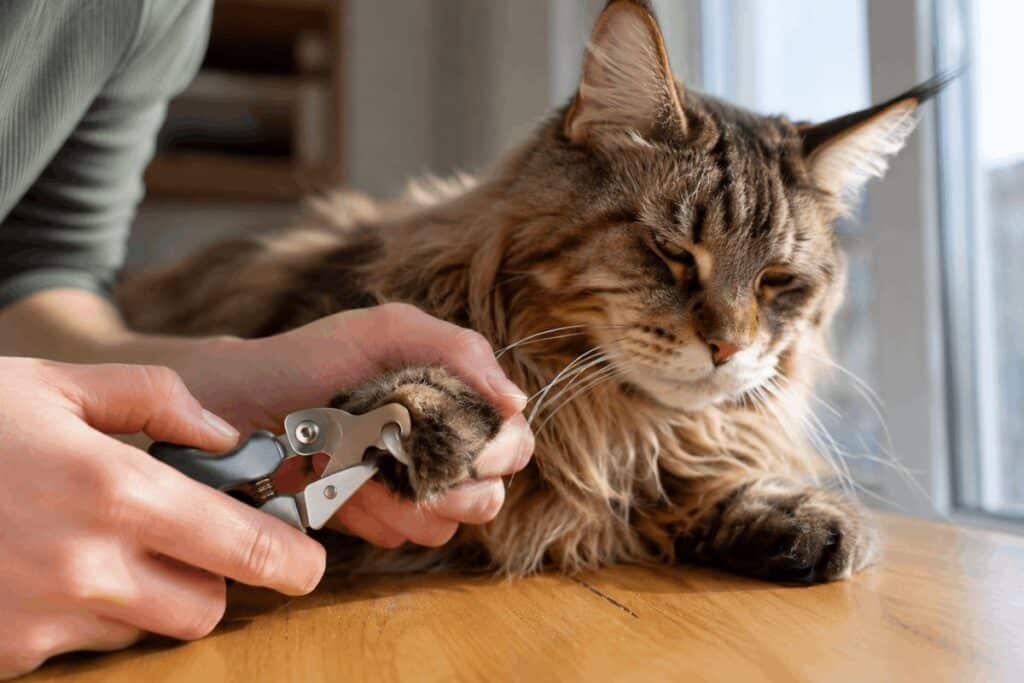
Trim your cat’s nails every two to three weeks. Ingrown claws are a leading preventable cause of cat paw infections, especially in senior cats and indoor cats who do not wear their claws naturally.
What Never to Put on an Infected Cat Paw
This section is the one most competitor articles skip entirely — and it matters enormously.
| Product | Why It Is Dangerous |
| Hydrogen peroxide | Destroys healthy tissue cells, slows healing significantly |
| Neosporin (unless vet-approved) | Contains polymyxin B, which can cause serious reactions in cats |
| Tea tree oil | Highly toxic to cats — even small amounts cause neurological symptoms |
| Rubbing alcohol | Painfully burns tissue and damages the skin barrier |
| Bleach or antiseptic sprays | Extreme toxicity risk if licked |
| Human NSAIDs (ibuprofen) | Fatal to cats — causes kidney failure even in tiny doses |
When in doubt, warm water and a clean cloth are safer than any household remedy until you can reach your vet.
Final Thought
A cat paw infection is painful, fast-moving, and far more serious than it looks on the surface. What starts as a small wound can become an abscess within two days. What starts as an abscess can become a systemic infection within a week. The owners who catch it early spend $150. The owners who wait spend $780 — and watch their cat suffer longer.
Trust your instincts. If your cat is licking one paw obsessively, favoring it, or if the paw looks or feels different, look closely. Then call your vet. A brief phone consultation costs nothing and can tell you within minutes whether you need to come in today or can safely monitor for 24 hours.
Your cat cannot tell you it hurts. But she is showing you every single day. Learn to read those signs — and act on them.
Frequently Asked Questions
How do I know if my cat’s paw is infected?
Look for swelling, redness, heat, limping, or obsessive licking of one paw. Any visible pus or discharge means call your vet immediately — do not wait.
Can I treat a cat paw infection at home?
Very mild surface scratches can be cleaned with warm water and monitored for 24 hours. Anything with pus, significant swelling, or limping needs veterinary medication — not home remedies.
What does a cat paw abscess look like?
A warm, firm lump under the skin near a bite or puncture wound. The paw is hot and swollen, and your cat may refuse to put weight on it.
How long does a cat paw infection take to heal?
Minor bacterial infections heal in 7 to 14 days with antibiotics. Abscesses take 2 to 3 weeks. Fungal infections take the longest — often 3 to 6 weeks of antifungal treatment.
Can a cat paw infection spread to other pets?
Bacterial infections are not contagious. However, fungal infections like ringworm can spread to other cats, dogs, and even humans — use gloves and isolate the infected cat until cleared.

Wahsay Ahmed is the founder of FelineNest and a cat care writer. His interest in feline health began in 2023 after adopting two cats, Whisker and Mochi. Since then, he has spent two years studying trusted veterinary resources, feline behavior, nutrition, and preventive care while applying that knowledge through daily care of his own cats.