An outdoor cat tree is more than just a climbing structure. It’s a smart way to bring safe adventure into your cat’s daily life. Unlike indoor towers, this form of outdoor cat furniture is built to handle sun, rain, and changing temperatures. A well-designed weatherproof cat tree encourages natural movement, confidence, and curiosity.
Whether you need a cat tree for backyard play or a cat tree for patio relaxation, the right setup supports healthy activity and mental balance. Many cat owners notice calmer behavior indoors once their pets enjoy outdoor enrichment. When chosen carefully, an outdoor cat tree becomes a reliable, long-term space your cat will truly love.
What Is an Outdoor Cat Tree and How Is It Different From Indoor Cat Trees?
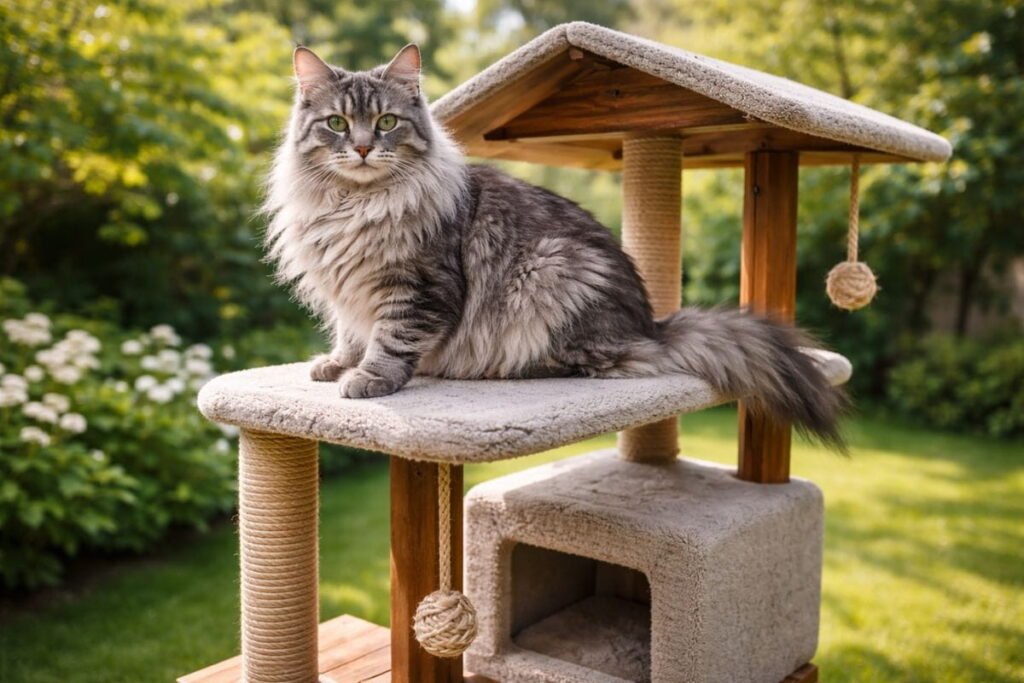
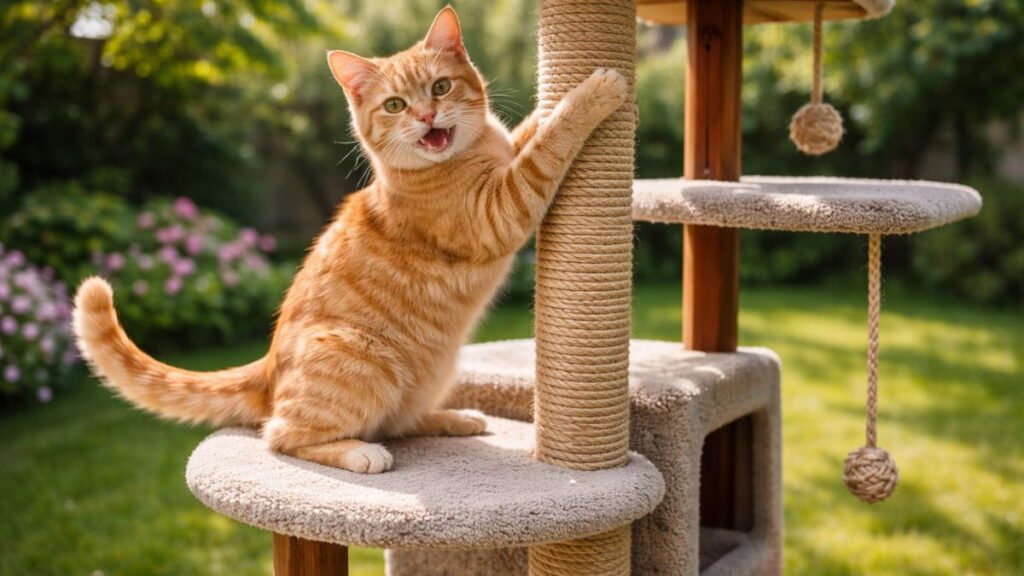
An outdoor cat tree is a purpose-built climbing structure designed for open-air use. It falls under outdoor cat furniture and handles rain, sun, and wind without falling apart. Unlike indoor models, it uses weather-resistant materials, stronger joints, and wider bases to create a stable cat platform outdoors.
Indoor trees absorb moisture and tip easily outside. A true cat tree for outside use supports jumping, scratching, and resting in natural light. Think of it as an outdoor pet furniture piece built for durability, safety, and feline curiosity rather than soft décor.
Benefits of an Outdoor Cat Tree for Cats (Physical, Mental, and Behavioral)
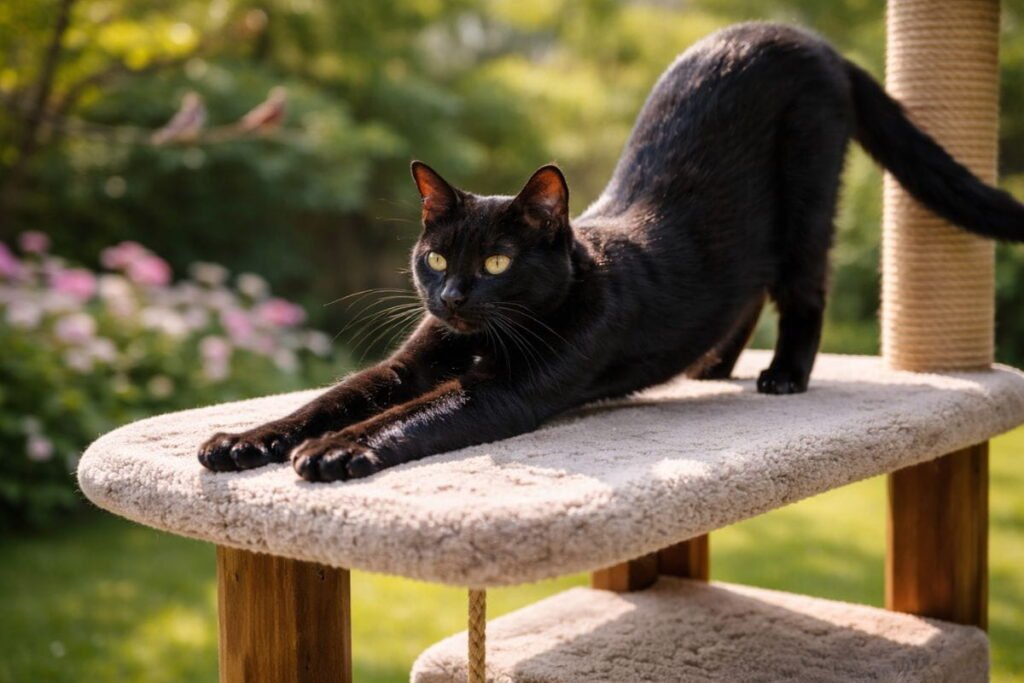
An outdoor setup supports muscles, joints, and balance through real movement. Cats stretch, climb, and jump in ways indoor spaces rarely allow. This taps into natural climbing behavior and promotes healthy weight control, especially for bored indoor cats.
Mentally, it fuels feline enrichment outdoors. Birds, wind, and scents keep the brain busy. Many owners notice calmer behavior indoors. One U.S. vet quote often shared is, “Outdoor enrichment reduces stress behaviors by giving cats control over their environment.”
Is an Outdoor Cat Tree Safe for Cats? Key Safety Considerations
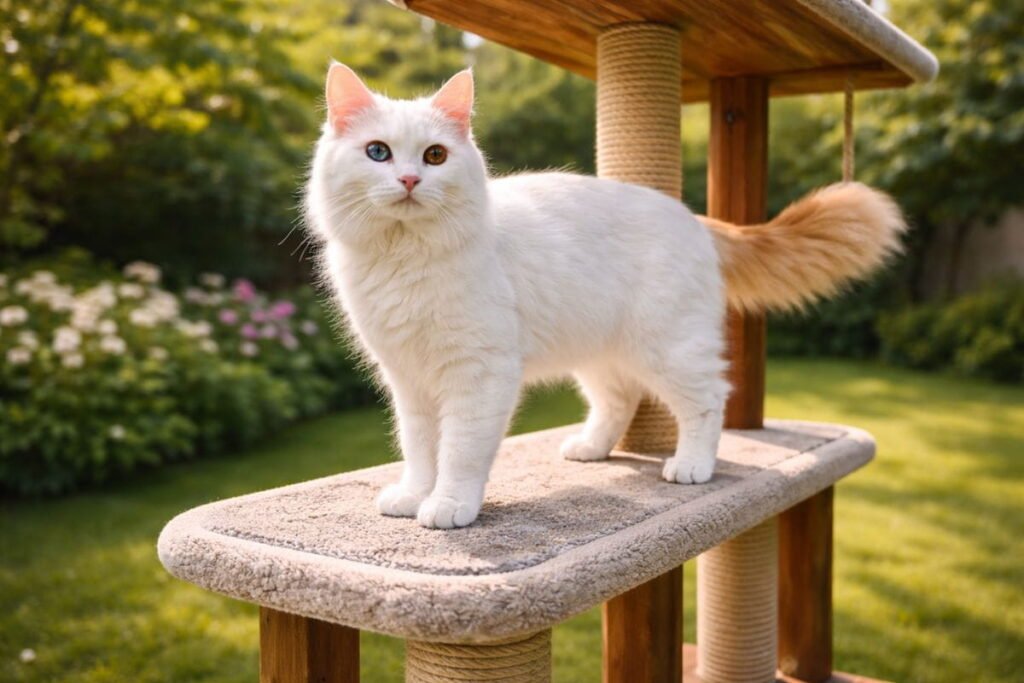
Many owners ask, are outdoor cat trees safe for cats. The answer depends on design and placement. A safe build includes anti-slip surfaces, low center gravity, and proper anchoring. Height matters. Platforms should prevent risky leaps or falls.
Weather exposure also matters. Shade prevents overheating, while drainage stops rot. A safe outdoor cat setup protects paws, joints, and confidence. Supervision helps at first, especially for kittens or seniors learning new terrain.
Best Materials for Outdoor Cat Trees (Weatherproof & Long-Lasting)
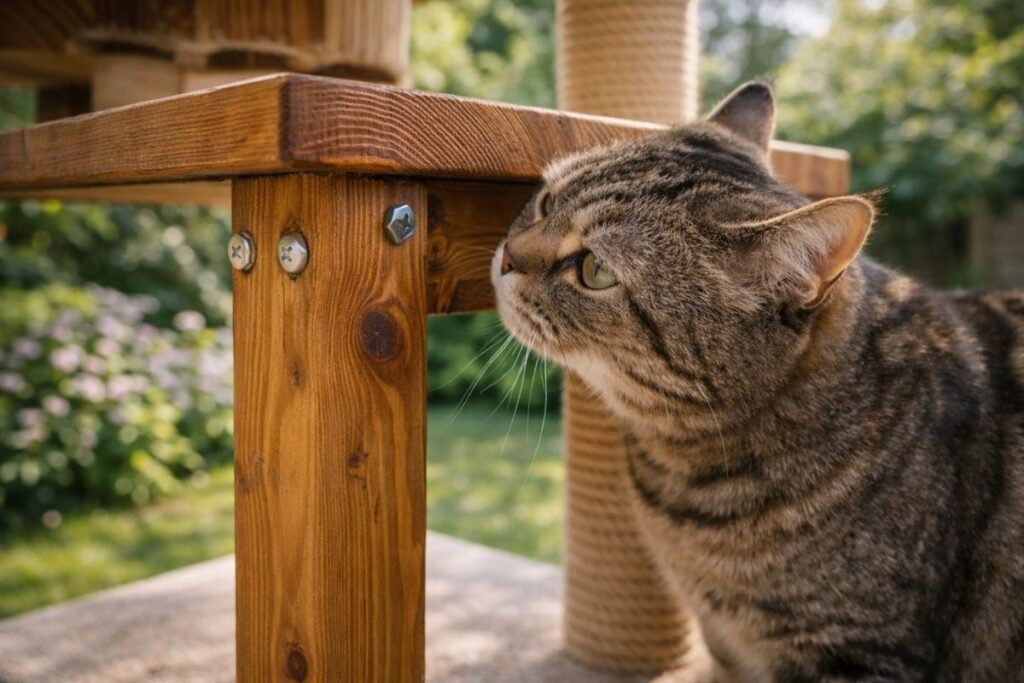
Best Materials for Outdoor Cat Trees (Weatherproof & Long-Lasting)
The best builds rely on treated wood cat tree frames, sealed against moisture. Cedar and marine-grade lumber resist insects and rot. A UV-resistant finish prevents cracking from harsh U.S. sun, especially in southern states.
Fasteners matter more than most owners realize. Rust-proof hardware keeps joints tight for years. Standard steel screws and bolts rust within one season outdoors — weakening the structure and staining the wood with orange streaks. Always verify that any outdoor cat tree uses stainless steel, zinc-coated, or hot-dipped galvanized hardware throughout.
Cat Tree Materials — Rust Resistance Rating
This is the table most outdoor cat tree guides never include — and it is exactly what buyers need to make the right choice.
| Material | Rust Risk | Weather Rating | Best For | Price Range |
|---|---|---|---|---|
| Cedar wood (sealed) | ❌ No rust | ⭐⭐⭐⭐⭐ Excellent | Frames, platforms, bases | $80–$300+ |
| Marine-grade plywood | ❌ No rust | ⭐⭐⭐⭐⭐ Excellent | Platforms, wide surfaces | $100–$250+ |
| Stainless steel hardware | ❌ No rust | ⭐⭐⭐⭐⭐ Excellent | Bolts, screws, connectors | Premium only |
| Galvanized steel hardware | ⚠️ Minimal | ⭐⭐⭐⭐ Very Good | Budget outdoor builds | Mid-range |
| Sisal rope | ❌ No rust | ⭐⭐⭐ Good | Scratching posts | Moderate — fades in sun |
| ABS plastic (UV-stable) | ❌ No rust | ⭐⭐⭐⭐ Very Good | Platforms, connectors | Mid-range |
| PVC pipe frame | ❌ No rust | ⭐⭐⭐ Good | Lightweight DIY builds | $30–$80 |
| Standard steel hardware | 🔴 Rusts fast | ⭐ Poor | Indoor only — avoid outdoors | Budget |
| Carpet-covered platforms | ⚠️ Molds | ⭐⭐ Fair | Covered patio only | Budget |
| Untreated pine | 🔴 Rots fast | ⭐ Poor | Indoor only — avoid outdoors | Budget |
The #1 mistake owners make: buying an “outdoor” cat tree that uses standard steel hardware and carpet-covered platforms. Within one season, the hardware rusts, the carpet absorbs moisture and molds, and the structure weakens. A truly rust-proof cat tree uses cedar or marine-grade wood, stainless steel or galvanized hardware, and sisal (not carpet) on scratching surfaces.
Best Rust Proof Cat Trees — 3 Top Picks for 2026
Without specific product names, it is impossible to know if what you are buying is genuinely rust-proof. These three options are built specifically for outdoor use with hardware and materials that will not corrode.
1. Merry Products Wooden Cat Tree House (Best Overall)
Merry Products builds its outdoor cat tree from natural cedar wood — one of the most rot and insect-resistant woods available without chemical treatment. The hardware is stainless steel throughout, and the platforms are sealed against moisture absorption. No carpet — sisal rope on all scratching surfaces means no mold risk.
Multiple platforms at varying heights give cats observation points and climbing routes. The wide base prevents tipping in the wind. Available on Amazon and Chewy. Price: $150–$250 depending on configuration.
2. On2Pets Cat Furniture Collection (Best for Large Cats)
On2Pets uses powder-coated metal frames — a coating process that seals metal against rust far more effectively than standard paint. The platforms are UV-stable ABS plastic that does not absorb moisture or fade in the sun. No wood to rot, no carpet to mold.
Designed specifically for large cat breeds — platforms are wide enough for Maine Coons and Ragdolls. Assembles and disassembles easily for storage in winter. Available on Amazon. Price: $180–$320.
3. Infinity Cedar Cat Tree (Best DIY-Style)
For owners who want the most natural aesthetic, Infinity Cedar uses whole cedar log posts rather than processed lumber. Cedar naturally repels insects, resists moisture, and does not require chemical sealing to perform outdoors. Hardware is galvanized steel — resistant to rust for multiple seasons.
The natural log construction means every tree looks slightly different — a handmade aesthetic that blends into garden settings. Price: $200–$400.
| Product | Material | Hardware | Best For | Price |
|---|---|---|---|---|
| Merry Products Wooden | Cedar wood | Stainless steel | Best overall rust-proof | $150–$250 |
| On2Pets Cat Furniture | Powder-coated metal + ABS | Rust-proof coating | Large cats, easy assembly | $180–$320 |
| Infinity Cedar | Natural cedar logs | Galvanized steel | Garden aesthetic, natural look | $200–$400 |
How to Make a Cat Tree Rust Resistant
If you already own an outdoor cat tree that is showing early rust signs — or want to weatherproof a new one before the season starts — these maintenance steps significantly extend the lifespan.
Step 1 — Replace standard hardware immediately. Remove all visible screws, bolts, and brackets. Replace them with stainless steel or hot-dipped galvanized equivalents. Available at any hardware store for under $15. This single step prevents 90% of rust-related structural failure.
Step 2 — Apply exterior wood sealant. Use a water-based exterior wood sealant or marine varnish on all wooden surfaces. Reapply annually before the rainy season. Focus on the underside of platforms and the base — areas that collect pooled water.
Step 3 — Replace carpet with sisal. Carpet absorbs and holds moisture against wooden surfaces, accelerating both rot and rust. Re-wrap any carpet-covered posts with natural sisal rope using exterior wood glue and stainless steel staples.
Step 4 — Elevate the base. Place rubber feet or small treated wood blocks under the base to lift it slightly off the ground. Direct ground contact traps moisture against the wood — even treated wood eventually succumbs to constant contact with wet soil or concrete.
Step 5 — Cover in severe weather. A basic weatherproof cover ($15–$25 on Amazon) keeps the structure dry during heavy rain or snow. Not required for covered patios, but essential for fully exposed garden placements.
How to Choose the Best Outdoor Cat Tree for Your Space
Space defines everything. A cat tree for backyard can be tall and wide, while a cat tree for patio needs compact stability. Apartment dwellers often prefer a cat tree for balcony with vertical height instead of depth.
Weight limits also matter. Large breeds need thicker posts and broader platforms. Multi-cat homes should consider an outdoor cat tree for multiple cats to prevent conflict and promote sharing without stress.
Outdoor Cat Tree Design Features Cats Actually Use
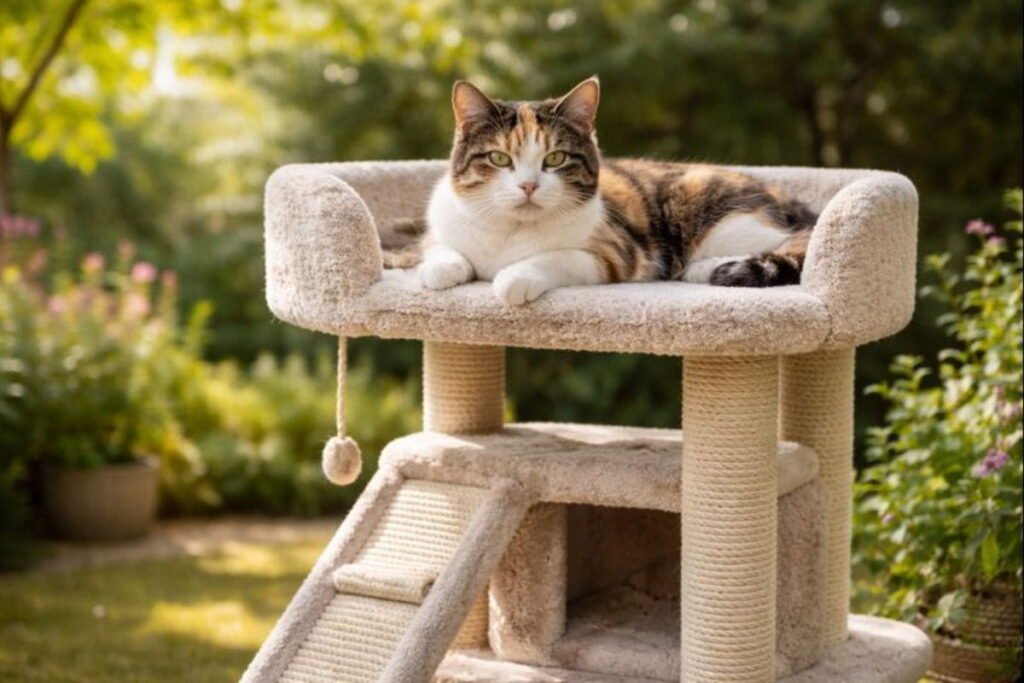
Cats love height. Elevated resting platforms let them observe without feeling exposed. Scratching areas should be placed where cats naturally land, using scratching posts for outdoor cats instead of decorative ropes.
Shade matters more than toys. A shaded cat perch or small roof encourages longer use. Many cats also enjoy a warm sunbathing platform, balancing heat and comfort during cooler mornings.
DIY Outdoor Cat Tree vs Store-Bought: Which Is Better?
DIY appeals to hands-on owners searching for DIY outdoor cat tree ideas. You can customize size, shape, and cost. However, mistakes in balance or sealing can shorten the lifespan and reduce safety.
Store-bought options offer tested designs and warranties. Many people search for outdoor cat tree reviews before they buy outdoor cat tree online. A quality model often becomes the best outdoor cat tree long-term, even if the upfront cost feels higher.
Where to Place an Outdoor Cat Tree for Maximum Use and Safety
Placement affects usage more than design. Cats prefer spots near doors or windows where they feel connected. In gardens, place a cat tree for the garden near fences, creating a cat-friendly garden setup without escape risks.
Avoid open wind paths. A corner location improves stability. A weatherproof outdoor cat tree for backyard lasts longer when protected from constant rain or snow runoff.
How to Maintain and Weatherproof an Outdoor Cat Tree
Many owners ask, can cat trees be left outside year-round. Yes, with care. Sealing wood annually and tightening bolts keeps structures solid. Cleaning prevents mold and insect damage.
Learning how to weatherproof a cat tree extends its life. Replace worn surfaces early. Maintenance turns a basic weatherproof cat tree into a dependable outdoor feature rather than a short-term toy. If you want to learn more about how cat colors and patterns are inherited, The International Cat Association (TICA) is a useful resource. It provides information about cat breeds, genetics, and coat characteristics from a recognized feline organization.
Personal Experience With a Dilute Calico Cat
I once spent time with a dilute calico that immediately caught my attention. Her soft gray, cream, and white coat looked even more beautiful in natural light. She was curious but relaxed, often coming closer when someone sat quietly nearby. That experience made me understand why so many people find dilute calicos special.
Outdoor Cat Trees for Different Cat Types (Kittens, Seniors, Large Breeds)
Kittens need lower heights and gentle ramps. Seniors benefit from wider steps and reduced jumping. A large outdoor cat tree supports heavier bodies with thicker posts and reinforced joints.
For big breeds, choose a heavy-duty outdoor cat tree or an outdoor cat tree for large cats. These designs reduce wobble and protect joints. Owners often ask whether cats use outdoor cat trees. The answer is yes, when the design matches their body and age.
| Cat Type | Ideal Feature | Benefit |
| Kittens | Low platforms | Confidence |
| Seniors | Ramps | Joint safety |
| Large cats | Wide bases | Stability |
Final Thought
A well-built outdoor cat climbing tree, outdoor cat tower, or cat play structure for outdoors isn’t a luxury. It’s enrichment with purpose. When chosen wisely, an outdoor cat tree becomes a daily retreat that keeps cats active, calm, and deeply content.
FAQs About Outdoor Cat Trees
Can I put a cat tree outside?
Yes, you can put a cat tree outside if it is specifically designed for outdoor use and made with weatherproof, sturdy materials that won’t rot or tip over.
What outdoor trees are safe for cats?
Safe outdoor trees for cats include purpose-built outdoor cat trees made from sealed wood or PVC, with stable bases, non-toxic finishes, and secure platforms.
Is it neglect to leave a cat outside?
It is not neglect if the cat has shelter, food, water, and safety. However, cats should never be left outside unsupervised for long periods in unsafe conditions.
What can I put outside for cats?
You can place an outdoor cat tree, shaded resting spots, scratching posts, and safe hiding areas outside to keep cats active, comfortable, and mentally stimulated.

Wahsay Ahmed is the founder of FelineNest and a cat care writer. His interest in feline health began in 2023 after adopting two cats, Whisker and Mochi. Since then, he has spent two years studying trusted veterinary resources, feline behavior, nutrition, and preventive care while applying that knowledge through daily care of his own cats.