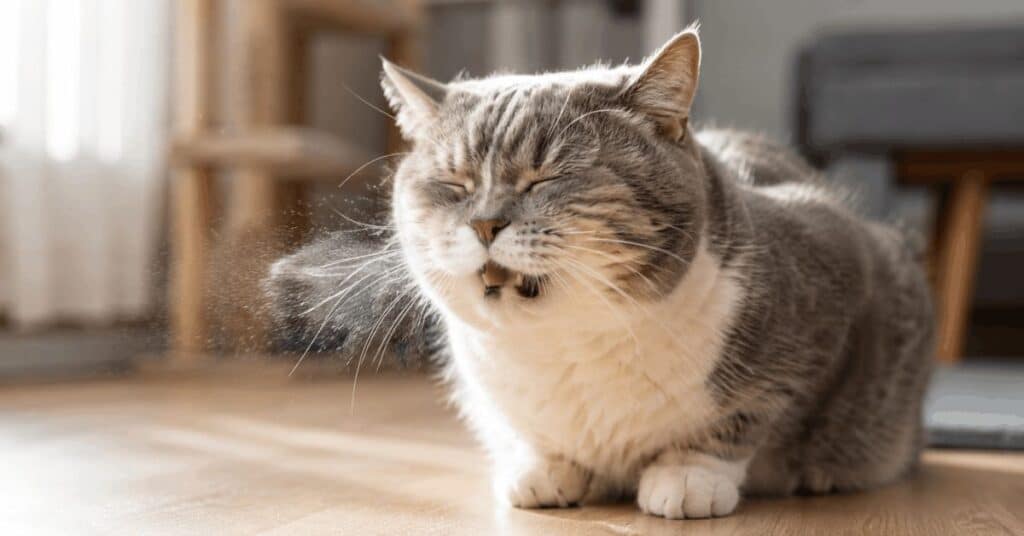
My cat keeps sneezing — and if yours is too, you already know how unsettling it feels. One sneeze is cute. Ten sneezes a day is a different story entirely.
When your cat keeps sneezing, the answer is rarely simple. It could be dust from a new litter brand. It could be feline herpesvirus — a condition carried silently by 80 to 90 percent of all cats. It could be a blade of grass stuck in her nasal passage. Or it could be dental disease. The sneeze looks the same. The cause is completely different.
This guide covers all 9 reasons your cat might keep sneezing, what the discharge color is telling you, which home remedies are actually safe, and the exact symptoms that mean stop waiting and call the vet today.
According to the Merck Veterinary Manual, persistent sneezing in cats may be associated with viral infections, bacterial disease, dental problems, nasal inflammation, or other underlying conditions. Observing accompanying symptoms and seeking timely veterinary care can help identify the cause and improve recovery.
One Sneeze vs Constant Sneezing — Know the Difference
Not every sneezing cat needs a vet visit. But some do — urgently. This table helps you read the situation clearly.
| Type | What It Looks Like | What to Do |
| Occasional single sneeze | 1–2 sneezes, returns to normal | Monitor — no action needed |
| Sneezing fits | 5–10 rapid sneezes in a row | Watch for 24–48 hours |
| Daily persistent sneezing | Sneezing every day for 3+ days | Call your vet |
| Sneezing with clear discharge | Watery, runny nose + sneezing | Monitor closely |
| Sneezing with colored discharge | Yellow, green, or bloody mucus | Vet visit needed |
| Sneezing + appetite loss | Not eating alongside sneezing | Vet within 24 hours |
| Sneezing blood | Blood in mucus or from the nose | Emergency — vet today |
Is That Really a Sneeze? Reverse Sneezing and Common Mistakes
Here is something most cat owners do not know: what sounds like a sneeze is not always one. Veterinarians at Peak Veterinary Referral Center warn that coughing, gagging, reverse sneezing, hiccupping, and wheezing are all commonly mistaken for sneezing — and each has completely different causes and treatments.
Reverse sneezing is the most common mix-up. Instead of expelling air outward like a sneeze, reverse sneezing rapidly draws air inward, producing a loud honking or snorting sound. The cat usually extends her neck and looks alarmed. It is rarely dangerous — but it is not a sneeze.
| Sound | What It Is | Action Needed |
| Short burst of air outward | Real sneeze | Monitor or vet if persistent |
| Rapid inward honking sound | Reverse sneeze | Usually harmless — monitor |
| Wet gurgling from the throat | Cough/gag | Vet visit needed |
| High-pitched wheezing | Possible asthma | Vet visit needed |
| Repeated hiccups | Hiccupping | Usually resolves — monitor |
If you are unsure which one your cat is doing, record a short video on your phone and show it to your vet. This is one of the most useful things you can bring to any vet appointment.
9 Reasons Why My Cat Keeps Sneezing
Understanding the cause matters enormously — because the treatment is completely different depending on what is driving the sneezing. A bacterial infection needs antibiotics. A virus needs rest and antivirals. An allergen needs environmental changes. A foreign body needs a vet procedure under anesthesia.
Feline Herpesvirus — The Most Common Cause Nobody Talks About
Here is a fact that shocks most cat owners: approximately 80 to 90 percent of all cats carry feline herpesvirus, according to Peak Veterinary Referral Center specialists. The virus lives dormant in the nervous system and causes no problems most of the time. But when a cat experiences stress — a move, a new pet, a change in routine — the virus reactivates.
When it reactivates, sneezing is the primary symptom. It is usually paired with watery eyes, clear nasal discharge, and a mild reduction in appetite. Feline calicivirus is the second most common viral cause, producing similar symptoms, plus sometimes mouth ulcers.
There is no cure for feline herpesvirus. But most flare-ups resolve within 7 to 10 days with supportive home care. For chronic or severe cases, veterinarians prescribe famciclovir — an antiviral medication that shortens flare-ups significantly. L-lysine supplements may also help reduce symptom frequency in some cats, though evidence is mixed.
Bacterial Infections — When the Discharge Turns Yellow or Green
Bacterial infections rarely start the problem, but they jump in once a virus weakens the nasal defenses. According to Dr. Matthew Miller at PetMD, common bacterial culprits include Bordetella, Mycoplasma, and Chlamydia species.
The telltale sign of bacterial involvement is discharge color. Clear discharge typically means a viral cause. Yellow or green discharge almost always means bacteria have joined the infection.
Bacterial infections respond well to antibiotics — doxycycline or Clavamox are most commonly prescribed. Treatment typically runs 7 to 14 days. Starting treatment early prevents secondary complications like chronic rhinitis, where the nasal lining becomes permanently damaged.
Airborne Irritants and Allergens — The Invisible Triggers
This is the most underestimated cause of cat sneezing. Cats have approximately 200 million scent receptors — compared to about 5 million in humans. What barely registers to your nose can be deeply irritating to your cat’s nasal passages.
Common household triggers include scented candles, air fresheners, cigarette smoke, cleaning product fumes, perfume, essential oil diffusers, and dusty clay cat litter. If your cat sneezes immediately after you light a candle or spray something in the room, an airborne irritant is almost certainly the cause.
Seasonal allergens like pollen, mold spores, and dust mites are also culprits. Unlike humans, cats more often show allergies through skin irritation than sneezing — but respiratory allergic reactions do happen, particularly in flat-faced breeds like Persians and Himalayans.
Dental Disease — The Surprising Sneeze Cause Most Owners Miss
This one surprises almost every cat owner. The roots of a cat’s upper teeth sit directly adjacent to the nasal passages and sinuses. When an upper tooth becomes infected or severely inflamed, bacteria can cross that thin barrier and trigger sneezing — sometimes with unilateral (one-sided) nasal discharge.
According to Hill’s Pet veterinary team, dental disease as a cause of sneezing is also accompanied by bad breath, drooling, appetite loss, and sometimes bloody saliva. If your cat’s sneezing comes with any of these signs, a dental exam under anesthesia is needed to diagnose and treat the root cause — literally.
Foreign Object, Fungal Infection, and Other Serious Causes
A blade of grass, a piece of litter, a small seed — any foreign object lodged inside the nasal passage triggers sudden, violent, repetitive sneezing. These fits come on abruptly and are often much more forceful than normal sneezing. Do not attempt to remove a foreign object yourself — this can push it deeper. A vet removes it safely under anesthesia via nasal flush.
Fungal infections — most commonly Cryptococcus — are less common but serious. They cause swelling over the nose bridge, thick discharge from one nostril, and in severe cases, weight loss and neurological symptoms.
In older cats, nasal tumors — including adenocarcinoma, nasal lymphoma, and squamous cell carcinoma — must be ruled out when sneezing is persistent, progressive, and does not respond to treatment. While researching feline respiratory conditions for FelineNest, I’ve learned that persistent sneezing is often mistaken for a minor allergy when it may have a completely different underlying cause. Understanding the pattern of sneezing and noticing changes like nasal discharge, appetite, or behavior can help cat owners know when it’s time to seek veterinary advice.
What the Discharge Color Is Telling You
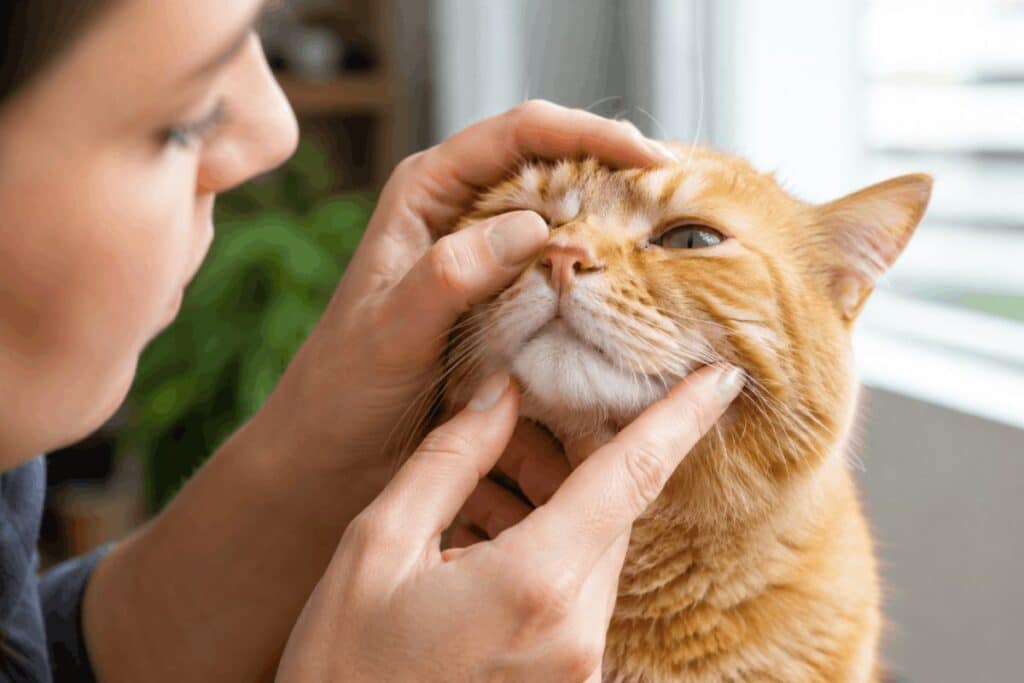
The color and consistency of your cat’s nasal discharge are two of the most useful diagnostic clues you can share with your vet. Here is exactly how to read it.
| Discharge Color | What It Suggests | Urgency |
| None — dry sneeze | Environmental irritant or mild herpes flare | Low — monitor 2–3 days |
| Clear and watery | Viral infection, early stage or mild allergy | Low-Moderate — watch |
| Thick and clear | More established viral infection | Moderate — vet within days |
| Yellow or green | Secondary bacterial infection | High — vet visit needed |
| One-sided discharge | Foreign body, dental disease, or nasal mass | High — same-day vet visit |
| Bloody streaks | Foreign body, dental disease, or trauma | High — same-day vet visit |
| Heavy bloody discharge | Nasal tumor, polyp, or serious injury | Emergency — vet today |
Photograph any discharge before your vet visit. Show the photo at the appointment — it can speed up diagnosis significantly, especially since cats rarely sneeze on command in the clinic.
The Real Owner Story — When “Just Sneezing” Became a $900 Vet Bill
Lisa from Denver had noticed her five-year-old tabby, Maple, sneezing every day for about two weeks. No discharge, still eating, seemed fine otherwise. She figured it was seasonal allergies and decided to wait it out.
By week three, Maple’s sneezing had become violent fits. A thick yellow discharge appeared from both nostrils. Maple stopped eating on day four of the discharge.
The emergency vet found a severe secondary bacterial infection layered on top of a herpesvirus reactivation. Maple needed IV fluids because she had not eaten in four days — cats enter starvation mode after just 2 to 3 days without food, according to BluePearl Pet Hospital. The bill: $900.
“The vet told me if I had come in at week one, it would have been antibiotics and maybe $150,” Lisa said. “Waiting turned a simple infection into a crisis.”
Safe Home Remedies for a Sneezing Cat
For mild sneezing with no colored discharge, no appetite loss, and no lethargy — these home approaches can ease your cat’s discomfort while you monitor the situation.
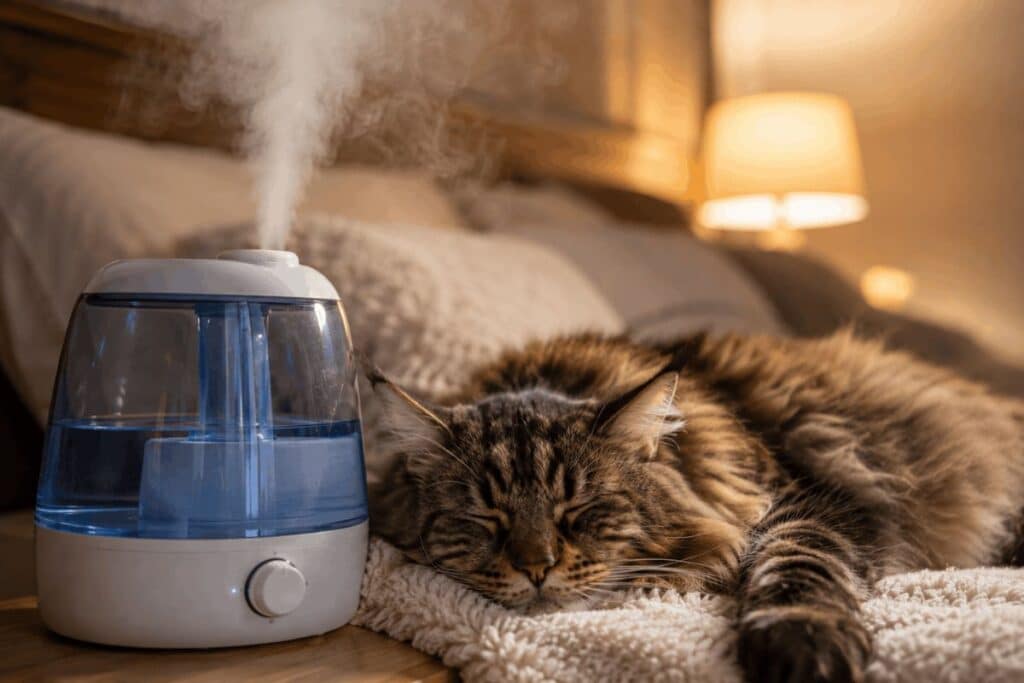
Run a humidifier near her sleeping area. Dry air inflames nasal passages and makes sneezing worse. A cool-mist humidifier in the same room provides immediate relief and loosens nasal congestion.
Try a steam session. Run a hot shower and sit with your cat in the steamy bathroom for 10 to 15 minutes. The warm moisture helps open nasal passages and loosen discharge. Do not place your cat directly in the water stream.
Wipe discharge gently. Use a warm, damp cloth to wipe discharge from around the nose and eyes twice daily. This also helps your cat smell her food — cats with blocked noses often refuse to eat because they cannot smell the food.
Warm her food. Warming wet food to just above room temperature releases more aroma and significantly increases appetite in cats who are congested.
Switch to low-dust litter. If sneezing happens mostly right after litter box use, dusty clay litter may be the trigger. Switch to a 99% dust-free formula and observe for 48 hours.
Remove airborne irritants. Stop using scented candles, air fresheners, aerosol sprays, and essential oil diffusers until the sneezing resolves. These are more common causes than most owners realize.
What Never to Give a Sneezing Cat at Home
This is the section that can save your cat’s life. Many well-meaning home remedies are actively dangerous for cats.
| Product | Why It Is Dangerous |
| Ibuprofen / Advil | Fatal to cats — causes kidney failure even in tiny doses |
| Acetaminophen / Tylenol | Highly toxic — destroys red blood cells in cats |
| Human antihistamines (Benadryl) | Only safe at specific doses — always ask vet first |
| Essential oils (tea tree, eucalyptus, peppermint) | Highly toxic to cats — never use near a sneezing cat |
| Hydrogen peroxide | Burns nasal tissue — never use around a cat’s face |
| Zinc or Vitamin C supplements | Human doses are dangerous for cats |
| Nasal decongestant sprays | Toxic to cats — do not use without vet approval |
The only safe over-the-counter option is plain saline nasal spray — and even that should be confirmed with your vet before use. When in doubt, call your vet before giving your cat anything.
When to Take Your Sneezing Cat to the Vet
Most mild sneezing — a few sneezes per day with no other symptoms — can be safely monitored at home for 2 to 3 days. But the calculation changes immediately when any of the following appear.
Call your vet within 24 hours if:
- Sneezing has lasted more than 3 days without improvement
- Yellow, green, or thick discharge appears
- Your cat is eating noticeably less
- Your cat seems lethargic or is hiding more than usual
- Sneezing is coming from only one nostril
Senior cats and kittens should be seen sooner. Kittens have immature immune systems and can deteriorate rapidly. Senior cats face higher risks for nasal tumors and dental disease. Do not wait for any of the above signs in these age groups.
Emergency Signs — Go Today, Not Tomorrow
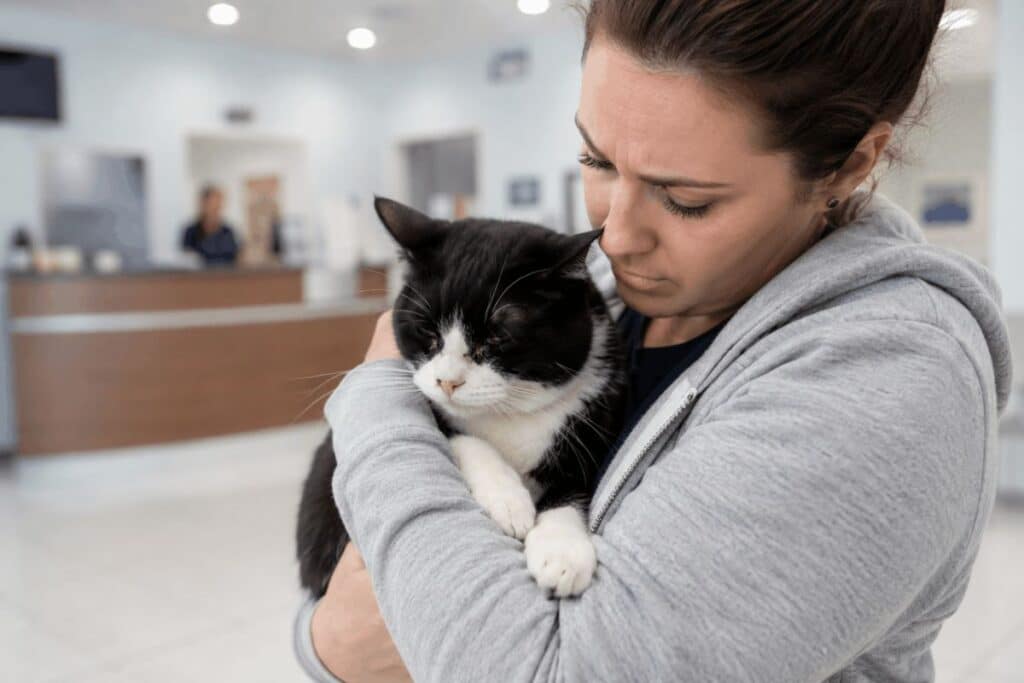
These symptoms mean same-day veterinary care — not tomorrow, not after the weekend:
- Blood in any discharge or from the nose
- Your cat has not eaten in 24 hours — hepatic lipidosis risk begins within 48 hours
- Open-mouth breathing or wheezing — respiratory distress
- Blue, grey, or pale gums — oxygen deprivation emergency
- Swelling on or around the nose — possible fungal infection or tumor
- Violent repeated sneezing fits that have come on suddenly — possible foreign body
BluePearl veterinary specialists note that a cat’s body enters dangerous starvation mode after just 2 to 3 days without food. A cat that has stopped eating alongside sneezing is always a same-day emergency.
Final Thought
When your cat keeps sneezing, it is her body telling you something is irritating, inflaming, or infecting her nasal system. Most of the time — especially with prompt attention — it resolves completely within one to two weeks.
The mistake most owners make is the same one Lisa made: waiting too long because the cat seems “mostly fine.” A sneezing cat that still eats, plays, and acts like herself can transition to a seriously unwell cat within 48 hours if an infection progresses.
Pay attention to what the sneeze looks like. Read the discharge color. Remove irritants first. And when in doubt — call your vet. A five-minute phone consultation costs nothing and can tell you exactly whether to come in today or safely monitor for another day.
Your cat cannot tell you she feels terrible. But she is showing you every time she sneezes. Learn to listen.
Frequently Asked Questions
Why does my cat keep sneezing but seems fine?
Most likely a mild herpesvirus flare-up or an airborne irritant like dusty litter or a scented candle. Monitor for 2 to 3 days — if sneezing continues or new symptoms appear, call your vet.
Is it normal for cats to sneeze multiple times in a row?
Occasional fits happen, but sudden, repeated sneezing fits that are new may indicate a foreign object or active infection. Record a video and show your vet if it continues.
When should I be worried about my cat sneezing?
Worry if sneezing lasts more than 3 days, discharge turns yellow or green, your cat stops eating, or sneezing comes from one nostril only. Kittens and seniors need to be seen sooner.
What home remedy can I give my cat for sneezing?
Run a humidifier nearby, try a steamy bathroom session for 10 minutes, wipe discharge with a warm, damp cloth, and warm her food. Never give human medications — ibuprofen and Tylenol are fatal to cats.
Can cats catch colds from humans?
No, human cold viruses cannot infect cats. But cat respiratory infections like herpesvirus and calicivirus are highly contagious between cats, so isolate a sneezing cat from other pets.

Wahsay Ahmed is the founder of FelineNest and a cat care writer. His interest in feline health began in 2023 after adopting two cats, Whisker and Mochi. Since then, he has spent two years studying trusted veterinary resources, feline behavior, nutrition, and preventive care while applying that knowledge through daily care of his own cats.