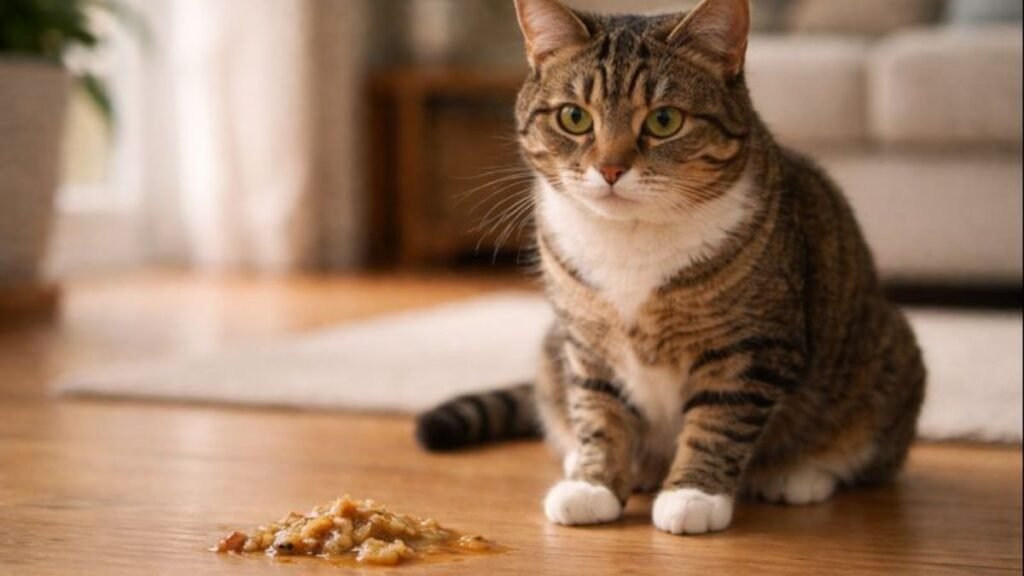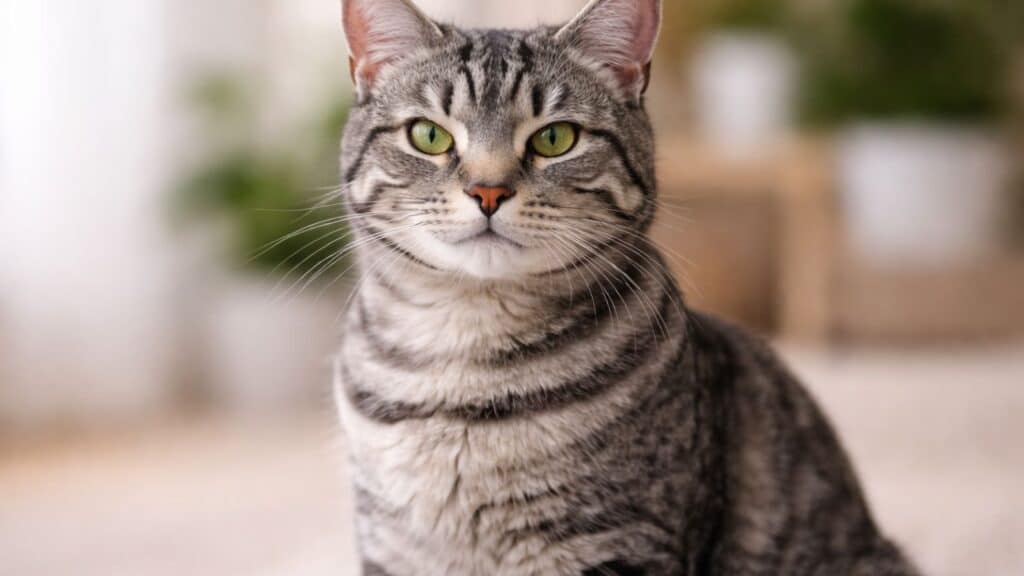
The first time I saw Whisker — my grey tabby cat — I was convinced he was some kind of tiny wild tiger. Those bold silver stripes, the sharp “M” on his forehead, those watchful amber eyes. He arrived in 2023, and he has taught me more about grey tabby cats than any guide ever could.
If you’re here because you love these silver-striped beauties — or you’re thinking of bringing one home — you are in the right place. This is the most complete guide to grey tabby cats online, covering everything from genetics and personality to care, lifespan, and 15 facts that will genuinely surprise you.
What Exactly Is a Grey Tabby Cat?
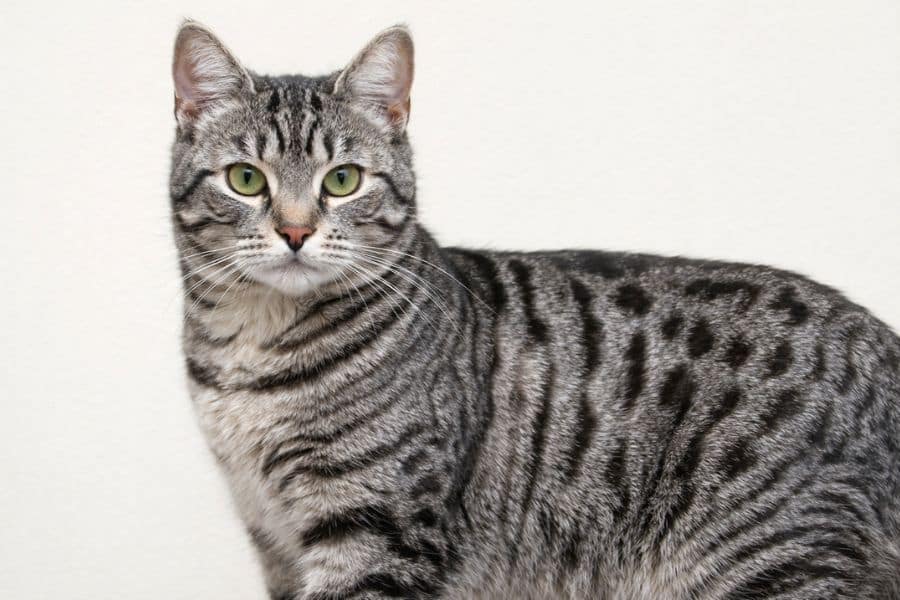
Here is the single most important thing to understand: a grey tabby is not a breed. “Tabby” describes a coat pattern — stripes, swirls, or spots — and “grey” describes the color. This combination can appear in dozens of different breeds and in countless mixed-breed domestic cats.
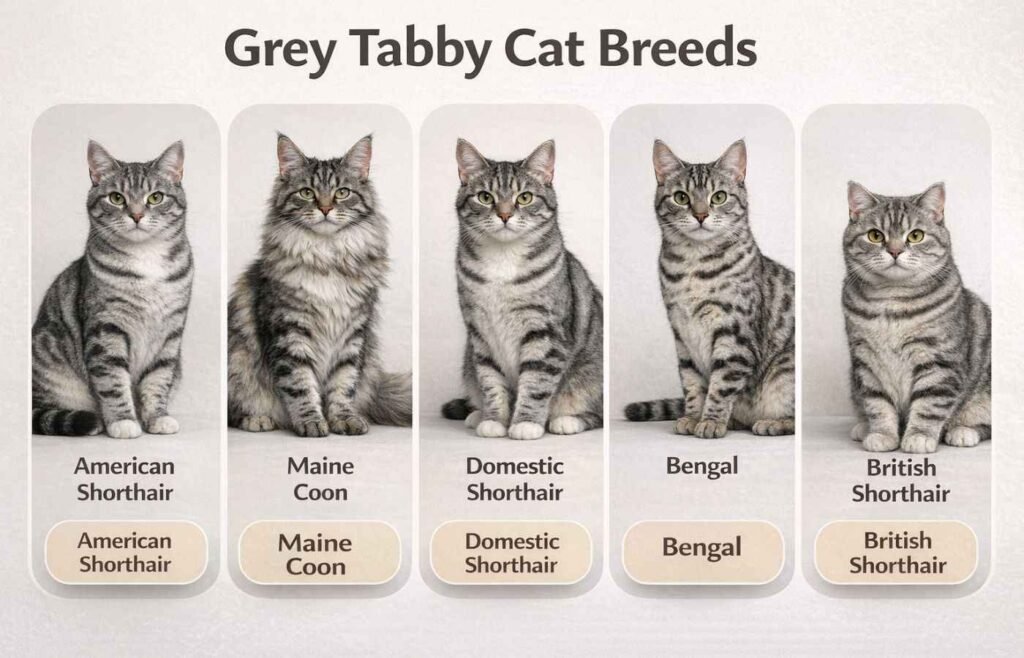
Over 80 cat breeds can carry the tabby pattern. From the fluffy Maine Coon to the sleek American Shorthair, grey tabby markings show up everywhere. The grey color itself is genetically a diluted form of black, caused by a recessive dilution gene (d/d) that reduces the concentration of eumelanin in the fur.
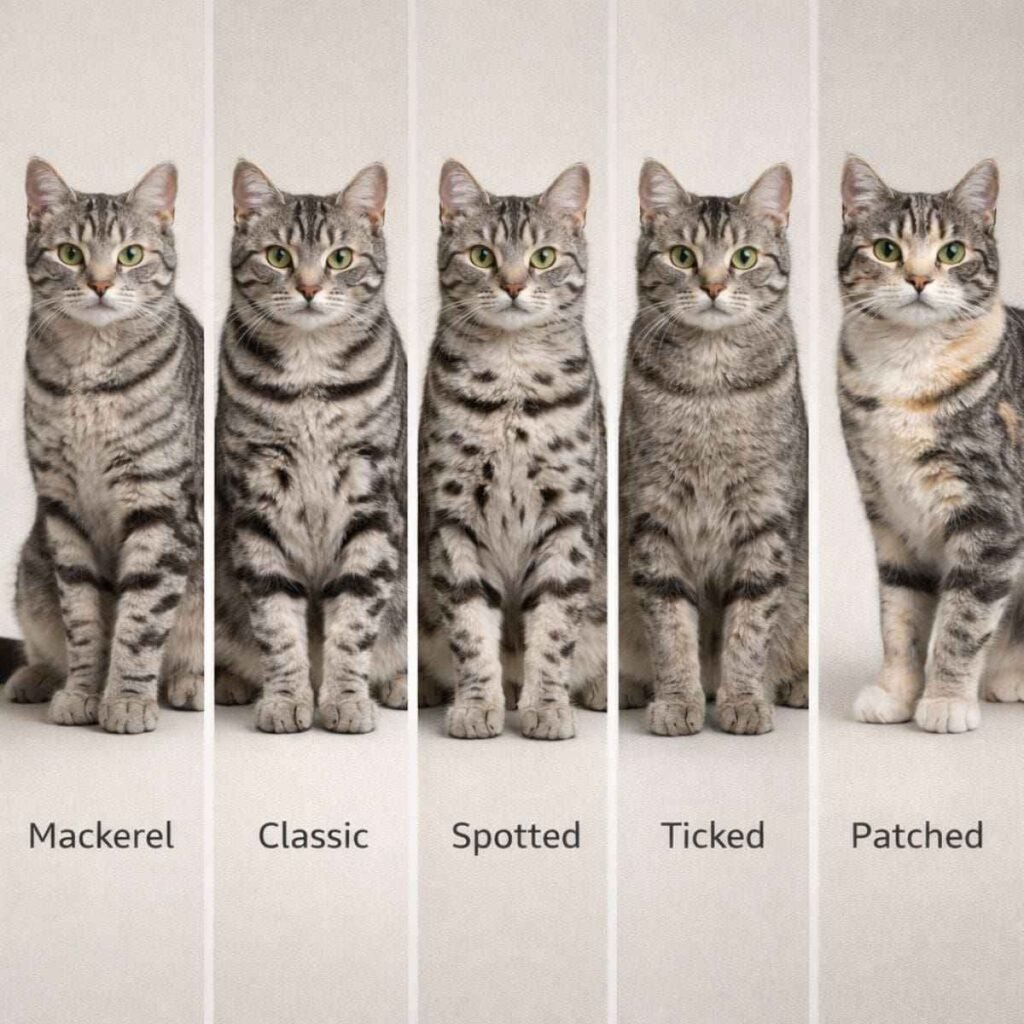
The 4 Grey Tabby Coat Patterns Explained
| Pattern | What It Looks Like | Famous Breed Example |
| Mackerel (striped) | Narrow parallel stripes — like a tiny tiger | American Shorthair |
| Classic (blotched) | Bold swirls and a “bullseye” on the sides | British Shorthair |
| Spotted | Small spots or broken stripes across the body | Bengal (grey variant) |
| Ticked (agouti) | No bold stripes — each hair has banded color | Abyssinian |
The mackerel pattern is the most common and what most people picture when they think “grey tabby.” Every single one of these patterns features the iconic “M” marking on the forehead — the one constant across all tabbies.
Grey vs Silver Tabby — What Is the Real Difference?
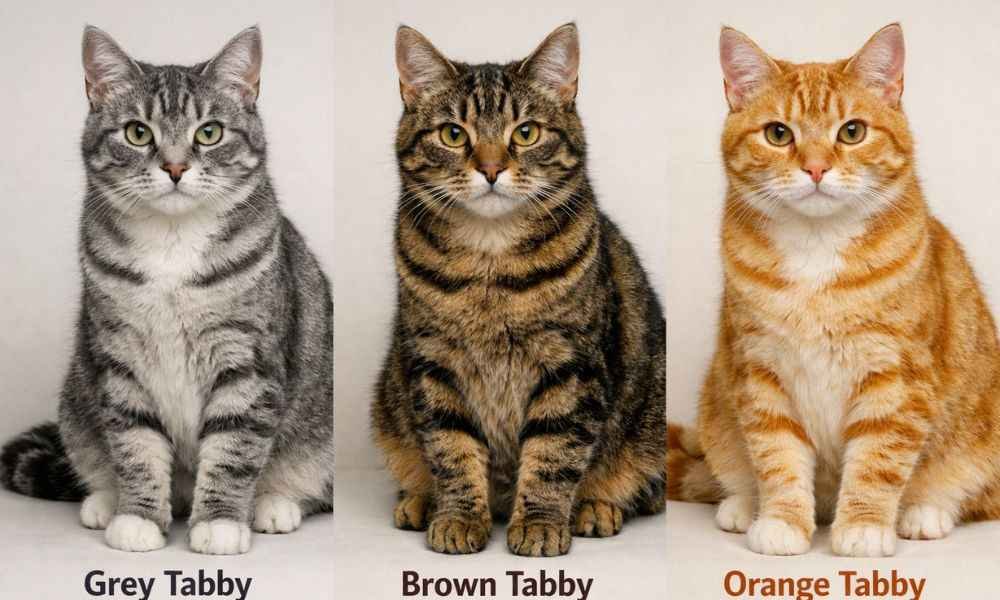
This is one of the most common questions cat lovers ask, and almost no other guide answers it clearly.
| Feature | Grey Tabby | Silver Tabby |
| Base coat color | Medium to deep grey | Very pale, near-white background |
| Genetic cause | Dilution gene (d/d) | Dilution gene + inhibitor gene |
| Stripe visibility | Clear, bold dark stripes | High contrast — dark stripes on pale base |
| Overall appearance | Warm, dusky grey tones | Cool, shimmery silver sheen |
| Common breeds | American Shorthair, Maine Coon | British Shorthair, Norwegian Forest Cat |
A silver tabby is technically a type of grey tabby — but with an additional inhibitor gene that suppresses pigment in the lighter parts of each hair shaft. The result is that signature shimmer that silver tabbies are famous for.
Grey Tabby Cat Personality — What Owners Actually Experience
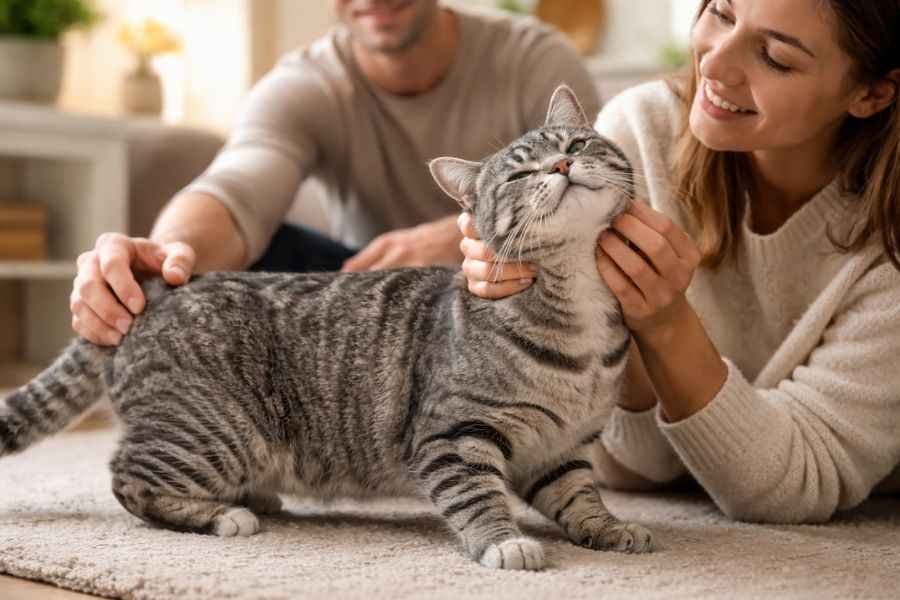
Veterinarians are careful to point out that coat color does not determine personality — that is shaped by genetics, breed, and individual upbringing. That said, cat owners consistently report similar traits in their grey tabbies: curious, intelligent, social, and playful well into adulthood.
A survey by the American Pet Products Association found that cats described as “friendly and people-oriented” are disproportionately reported as tabbies by their owners. That doesn’t mean your grey tabby will behave exactly this way — but it does suggest these traits appear more often than chance would predict.
What My Grey Tabby Whisker Taught Me
When Whisker arrived, he was cautious for exactly three days. By day four, he had claimed the sunniest windowsill, learned which cupboard held his treats, and figured out that sitting on my keyboard guaranteed attention.
What surprised me most was his problem-solving ability. He watched me open a door handle twice, then spent twenty minutes attempting it himself. He didn’t succeed — but he tried. That kind of persistent curiosity is something grey tabby owners mention again and again.
He is also an extraordinary communicator. He has at least six distinct meows that mean entirely different things, and he uses each one with what feels like deliberate precision. For more detailed information about feline preventive healthcare and common medical conditions, visit the Cornell Feline Health Center, one of the most trusted veterinary resources for cat owners.
Are Grey Tabby Cats Good With Kids and Other Pets?
| Family Situation | How Grey Tabbies Typically Adapt |
| Young children (under 6) | Generally patient, but needs safe retreat space |
| Older children (6+) | Excellent — loves interactive play partners |
| Other cats | Usually adapts well with proper introduction |
| Dogs | Depends on dog temperament — often fine long-term |
| Single-person home | Thrives with one dedicated owner |
| Busy household | Adaptable — their social nature helps |
Grey tabbies are not typically lap cats in the passive sense. They prefer to be near you rather than on you — on the arm of your chair, watching what you’re doing, following you from room to room. They are curious companions, not decorative furniture.
15 Fascinating Facts About Grey Tabby Cats
1. Tabby is a pattern, not a breed. The term covers any cat with stripes, swirls, or spots — regardless of breed or ancestry.
2. The “M” marking has three legendary origins. Christian tradition says the Virgin Mary blessed a tabby for comforting baby Jesus, leaving her initial. Islamic legend credits a cat named Muezza who saved the Prophet Muhammad from a snake. The third theory connects it to the ancient Egyptian word “mau,” meaning cat.
3. Grey is genetically diluted black. Two copies of the recessive dilution gene (d/d) are required. This is why “grey” cats are called “blue” in formal cat breeding circles.
4. No two grey tabbies have the same stripe pattern. Like human fingerprints, each tabby’s specific arrangement of stripes and swirls is unique.
5. The tabby pattern comes from wild ancestors. The African Wildcat (Felis lybica), the primary ancestor of all domestic cats, has a mackerel tabby pattern. Your grey tabby’s stripes are ancient camouflage — still written into its DNA.
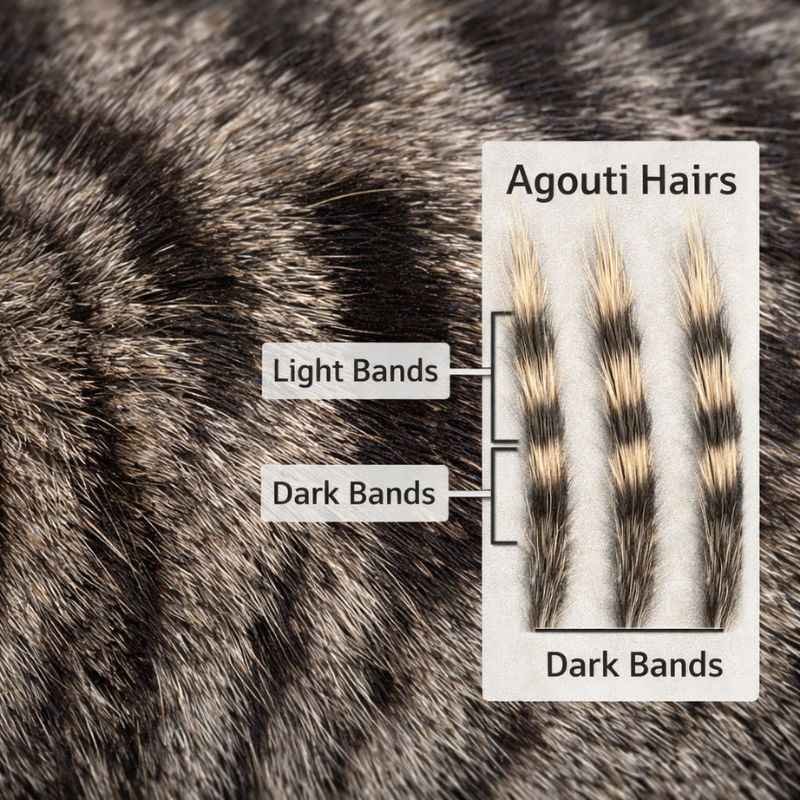
6. The agouti gene controls the whole pattern. The agouti signaling protein (ASIP) causes alternating bands of light and dark color on each individual hair. Every tabby stripe is made of thousands of these banded hairs working together.
7. A grey tabby can have yellow, green, copper, or blue eyes. Eye color is independent of coat color — which is why grey tabbies come with such a wide variety of eye shades.
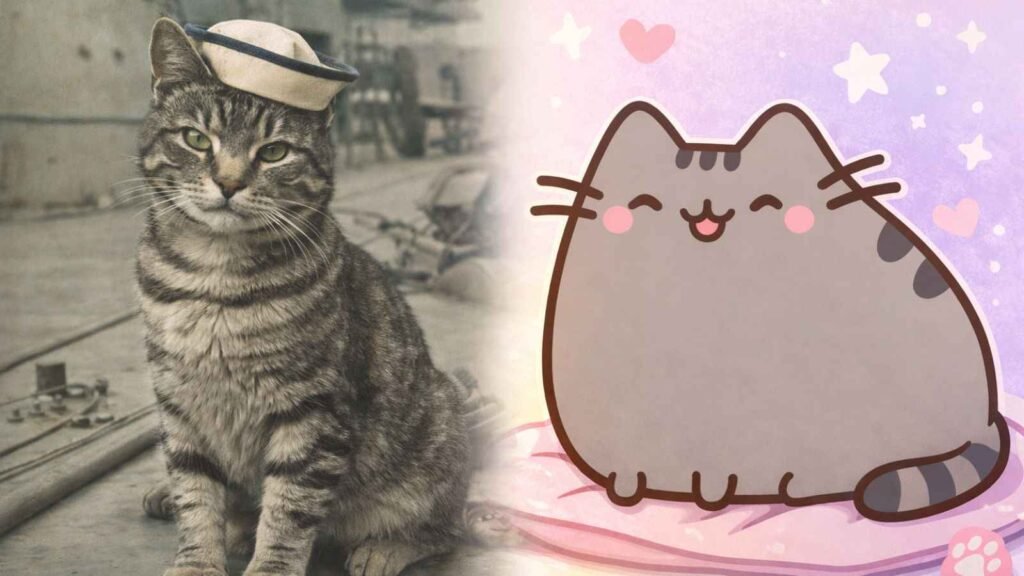
8. Pusheen is a grey tabby. The globally beloved internet cartoon cat — with her round shape, striped tail, and cheerful expressions — is drawn as a classic grey tabby. She has introduced millions to this coat pattern.
9. One of the first stuffed animal toys in the US was inspired by a grey tabby. The “Ithaca Kitty,” introduced in 1892, was based on a real grey tabby cat named Caesar Grimalkin from Ithaca, New York.
10. Grey tabbies appeared in art centuries ago. European paintings from the 1600s feature grey striped cats in domestic settings — evidence of how long this coat pattern has lived alongside humans.
11. National Tabby Day is April 30th. All tabby cats — including grey tabbies — have their own annual celebration.
12. The word “tabby” has silk origins. It comes from “Al-Attabiya,” a district in Baghdad, Iraq, famous for its striped silk fabric called “attabi.” Early European traders thought the cat’s coat resembled this silk.
13. A grey tabby’s hunting instinct stays sharp indoors. Even without prey, indoor grey tabbies show stalking behavior with toys, crinkle balls, and anything that moves unpredictably.
14. Grey tabby kittens are born with their adult pattern. Unlike some coat patterns that develop with age, the tabby stripes are visible from birth — though they become bolder as the kitten matures.
15. Silver tabbies have an extra gene grey tabbies don’t. The inhibitor gene that gives silver tabbies their pale base coat is separate from the dilution gene — which is why not every grey tabby looks silvery.
Grey Tabby Cat Care — Diet, Grooming, and Health

Grey tabby cats are hardy and relatively easy to care for — but “easy” doesn’t mean maintenance-free. Veterinarians recommend treating your grey tabby the same way you’d approach care for any active, intelligent cat: consistent nutrition, regular grooming, and annual checkups.
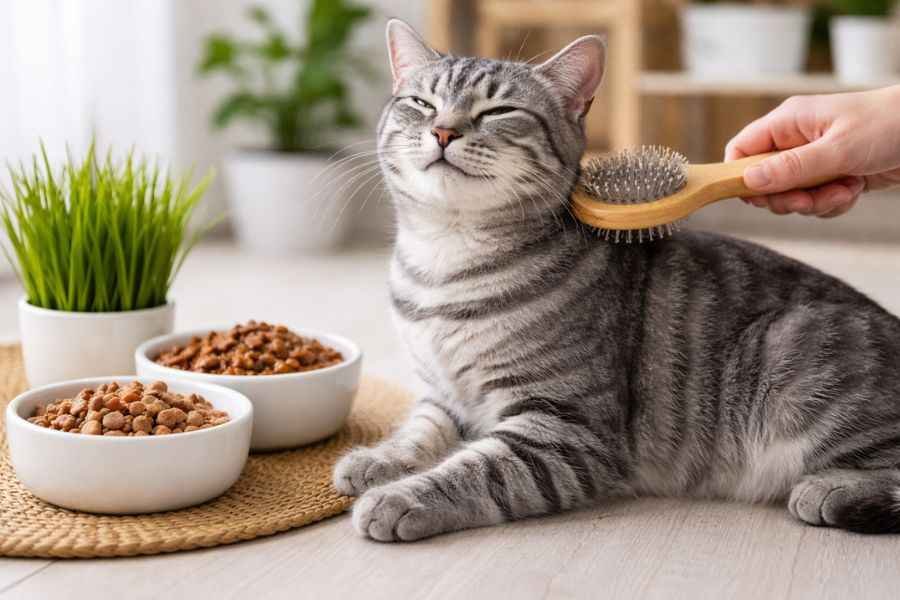
As obligate carnivores, grey tabbies need a high-protein diet with meat as the primary ingredient. Avoid food where corn, wheat, or “meat by-products” are listed first. Fresh water — kept away from the food bowl, which mimics their wild instinct not to drink near their kill — is essential daily.
For grooming, shorthaired grey tabbies need a weekly brush. In shedding season, two or three times a week keeps the silver fur off your furniture. Longhaired grey tabbies need more frequent brushing to prevent matting — particularly behind the ears and under the arms.
How Long Do Grey Tabby Cats Live?
| Lifestyle | Average Lifespan | Key Factor |
| Indoor only | 14–18 years | Protected from outdoor hazards |
| Indoor/outdoor | 10–15 years | Increased risk from traffic and illness |
| Outdoor only | 5–10 years | Highest exposure to danger and disease |
| With regular vet care | Up to 20 years | Preventive care makes the biggest difference |
Whisker is currently three years old and the vet says he is in excellent shape. My goal — and I suspect yours too — is to get to that 18-year mark.
Common Health Issues to Watch For
Grey tabbies don’t carry unique health risks based on their coat pattern — their vulnerabilities depend on their breed. However, a few conditions are common across most cats.
Obesity is the most preventable issue. Cats that free-feed or get too many treats become overweight quickly, which leads to diabetes, joint pain, and urinary tract problems. Measure portions and stick to a feeding schedule.
Hypertrophic cardiomyopathy (a thickening of the heart wall) appears in several breeds that commonly carry the grey tabby pattern, including Maine Coons and Ragdolls. Annual cardiac screening is worth discussing with your vet if you have one of these breeds.
Dental disease affects around 70% of cats over three years old, according to the American Veterinary Dental College. Starting a tooth brushing routine early — or scheduling professional cleanings — can add years to your cat’s life.
Frequently Asked Questions
Q: Is a grey tabby cat a specific breed?
No. Grey tabby describes a coat color (grey) and a coat pattern (tabby stripes, swirls, or spots). This combination appears in many breeds and mixed-breed cats — it is not a breed itself.
Q: What is the personality of a grey tabby cat?
Grey tabby cats are generally described as curious, intelligent, social, and playful. They tend to be people-oriented and enjoy following their owners around. Individual personality varies by breed and upbringing.
Q: Are grey tabby cats rare?
No — grey tabby cats are quite common, especially among domestic shorthairs. The tabby pattern is one of the most widespread coat patterns in the world. Specific breeds with grey tabby markings (like the Russian Blue tabby) are rarer.
Q: What is the difference between a grey tabby and a silver tabby?
A silver tabby has an additional inhibitor gene that creates a very pale, shimmering base coat. A grey tabby has the dilution gene but not the inhibitor gene, resulting in a warmer, medium grey color. All silver tabbies are grey tabbies — but not all grey tabbies are silver.
Q: How long do grey tabby cats live?
Indoor grey tabby cats typically live 14–18 years with proper care. Some reach 20 years or more. Outdoor cats have shorter lifespans due to hazards. Regular vet visits, good nutrition, and dental care are the biggest factors.
Q: What breeds can have a grey tabby coat?
Many breeds carry the grey tabby pattern, including American Shorthair, British Shorthair, Maine Coon, Scottish Fold, Norwegian Forest Cat, Siberian, and Bengal. It is also extremely common in domestic shorthair and longhair mixed-breed cats.
Q: What does the M marking on a tabby’s forehead mean?
The “M” is a natural result of the tabby gene’s expression on the forehead — the stripes converge there. Three legends explain it: a blessing from the Virgin Mary, the mark of a cat named Muezza in Islamic tradition, and a connection to the Egyptian word “mau” meaning cat.
Q: Do grey tabby cats make good pets for first-time owners?
Yes — grey tabby cats are widely considered excellent choices for first-time cat owners. They are adaptable, social, and relatively low-maintenance. Their intelligence makes them easy to read once you learn their signals.
Final Thoughts — Why Grey Tabby Cats Are Truly Special
Grey tabby cats are not defined by their color or their stripes. They are defined by what those stripes represent — a direct genetic link to the wild cats that first chose to live alongside humans thousands of years ago.
Whisker is asleep on my desk right now, one paw draped over the edge, tail curled perfectly. Every grey tabby carries that ancient pattern — a coat shaped by millions of years of evolution, now used primarily to look beautiful while napping in sunbeams.
If you are thinking about bringing a grey tabby home, do it. You will not regret it. For more expert cat care tips, health guides, and honest advice from real cat owners, explore the rest of the FelineNest blog — your cat deserves the best.

Wahsay Ahmed is the founder of FelineNest and a cat care writer. His interest in feline health began in 2023 after adopting two cats, Whisker and Mochi. Since then, he has spent two years studying trusted veterinary resources, feline behavior, nutrition, and preventive care while applying that knowledge through daily care of his own cats.