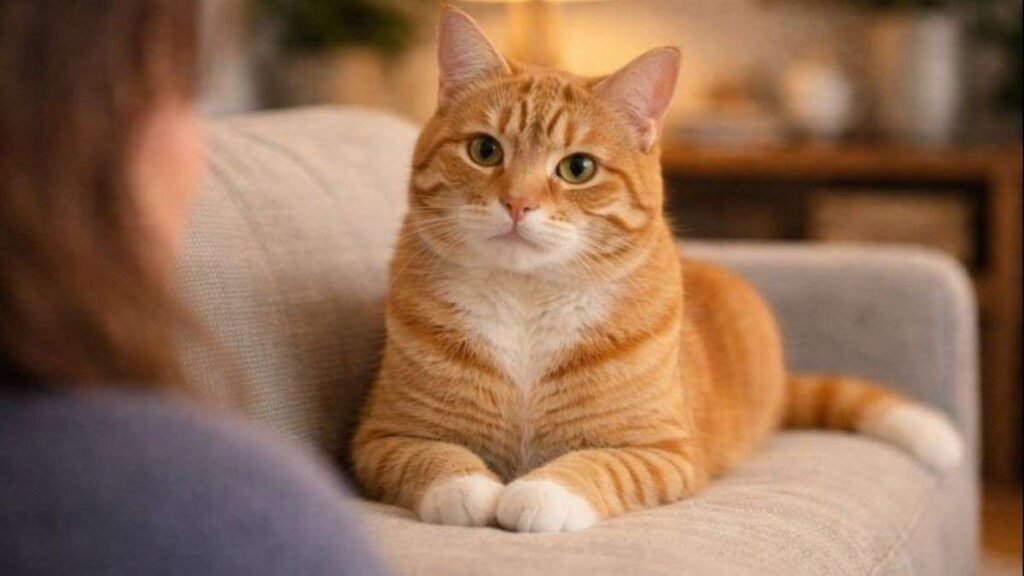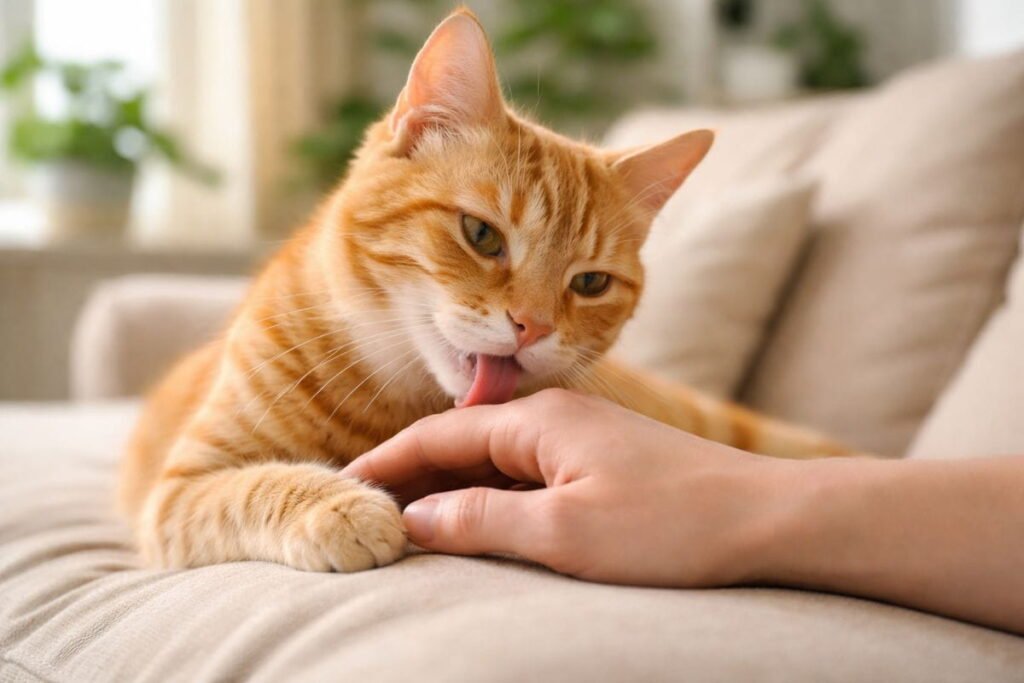
Cats express themselves in quiet, curious ways. One moment they nap, the next they lick your hand like you’re family. If you’ve ever wondered why does my cat lick me, you’re not alone. This common habit reveals emotions, instincts, and sometimes hidden needs.
Understanding cat licking behavior helps you read your pet like a book. Some licking shows love. Other times it signals stress, habit, or health issues. This guide explains the meaning, safety concerns, and simple ways to manage licking while strengthening your bond.
Is It Normal for Cats to Lick Their Owners?
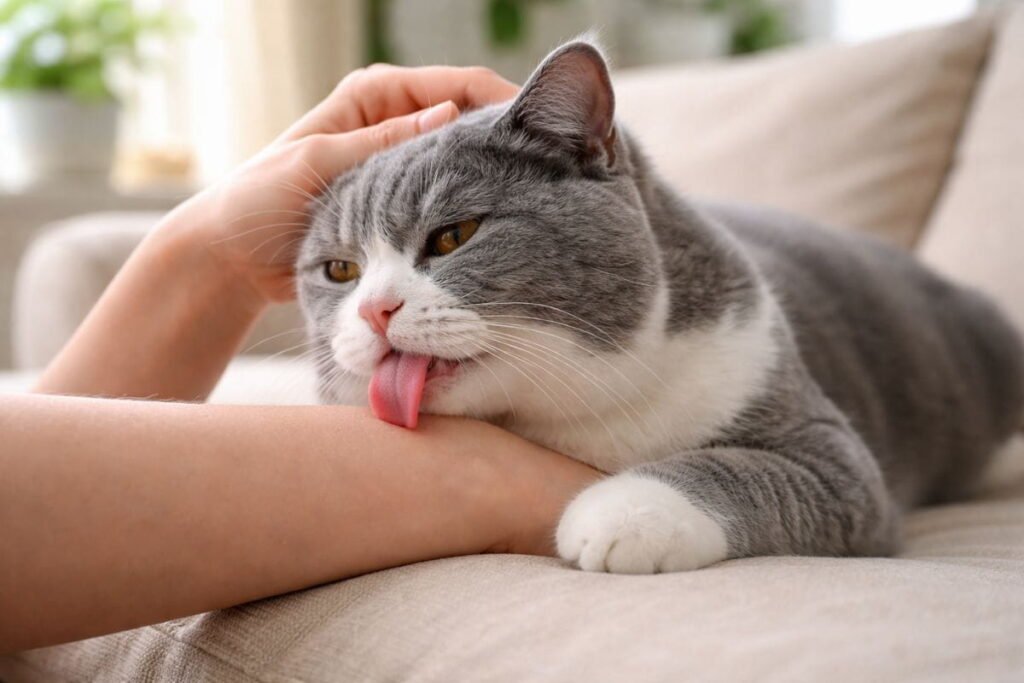
Yes, licking owners is normal and rooted in cat grooming behavior and instincts. Cats learn feline grooming early from their mothers. This behavior supports hygiene and emotional comfort. When your cat licks you, it reflects social bonding in cats and trusted companionship.
In cat society, grooming others is called allogrooming in cats. It strengthens group ties and spreads shared scent. Your cat may see you as part of their circle. This gentle ritual reflects cat bonding behavior, a strong grooming instinct, and deep emotional security.
9 Common Reasons Why Cats Lick People
If you’re asking why cats lick their owners, the answer often lies in affection and attention. Licking can be cat showing love by licking or a form of cat attention-seeking behavior. Many cats learn that licking brings petting, talking, or play through attention reinforcement.
Other reasons include comfort, habit, or emotional regulation. Some cats display self-soothing behavior in cats or comfort behavior in cats during stress. Early separation may lead to early weaning kitten behavior, including licking combined with kneading and purring and strong human-cat interaction patterns.
Why Does My Cat Lick Me Then Bite Me?
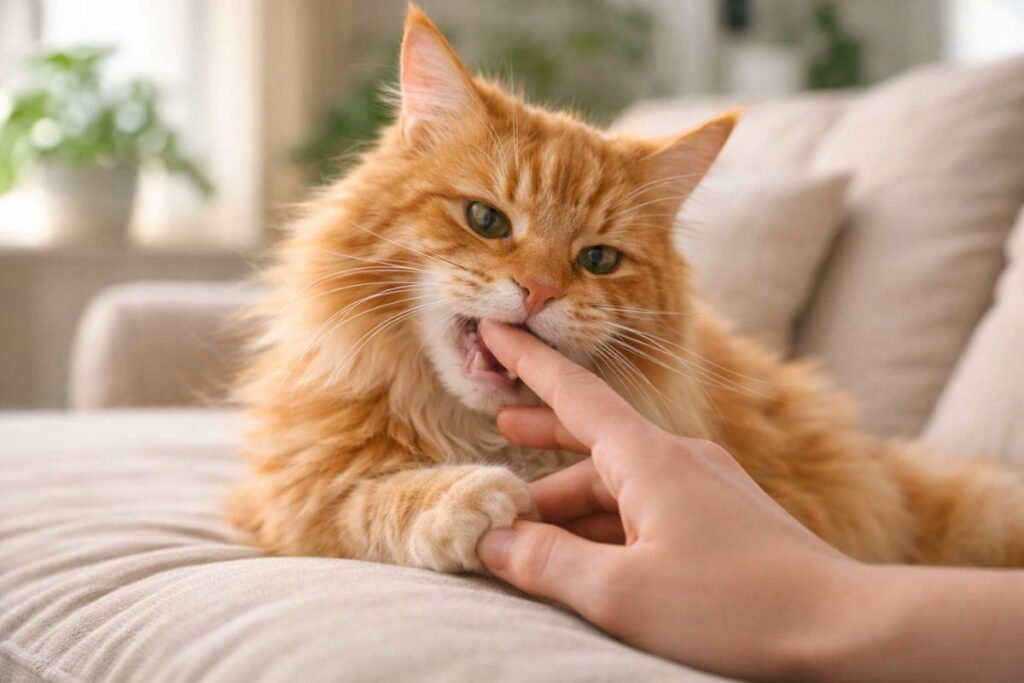
Many owners ask, why does my cat lick me then bite me. This usually relates to overstimulation in cats. Petting feels good at first. Then, sensory overload triggers gentle nips known as love bites in cats.
Watch for overstimulation warning signs like tail flicking or ear turning. These signals mean the interaction should pause. Understanding this response improves human-cat interaction and helps prevent frustration for both you and your cat.
Why Does My Cat Lick Specific Areas? (Face, Hands, Hair, Feet)
Different targets reveal different motivations. Face licking often reflects closeness and trust. Hands and feet attract cats because of human sweat and cats’ attraction, and why cats like salty skin. Many owners notice why does my cat lick my hands and feet during quiet moments.
Hair licking often connects to scent or texture. Some cats enjoy cat licking hair or skin due to smells or oils. Others respond to cat attracted to lotions or shampoo. These behaviors also relate to scent marking behavior in cats and shared group scent in cats.
When Cat Licking Becomes Excessive or Obsessive
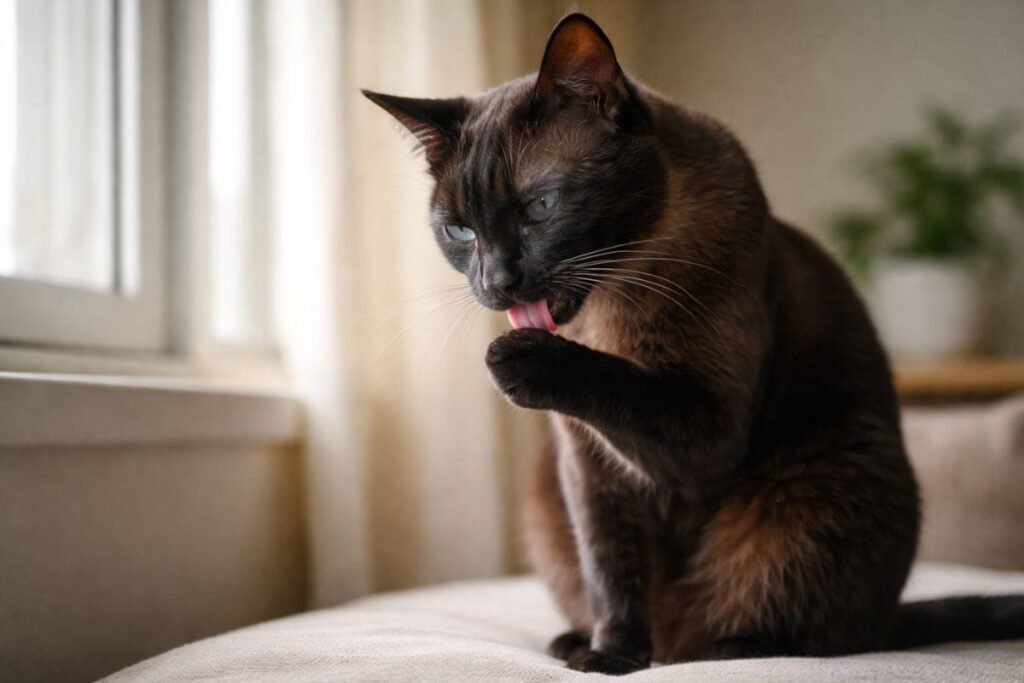
Occasional licking is normal. However, why is my cat licking me excessively may point to emotional distress. Cat anxiety licking, and stress-related grooming in cats often appear when routines change or environments feel unstable.
Persistent licking may signal compulsive licking in cats or displacement behavior in cats. In severe cases, it connects to compulsive behavior disorder in cats. Identifying feline stress triggers at home helps address the root cause and restore calm.
Is It Safe to Let Your Cat Lick You?
Many owners ask, is it safe to let cats lick you. In most cases, occasional licking is harmless. However, bacteria in cat mouth can pose risks if your cat licks cuts. This increases cat licking open wounds risk and potential infection.
Extra caution matters for immunocompromised and pets households. Rarely, zoonotic diseases from cats may spread. Also, avoid licking after applying creams because of toxic products for cats skin contact. Many wonder, should I let my cat lick my skin? The safest answer is moderation and hygiene.
When Should You Be Concerned? (Health Warning Signs)
Sudden changes in cat licking behavior may signal medical issues. Possible medical reasons for licking behavior include digestive discomfort, allergies, or neurological changes. Watch for nausea symptoms in cats, such as lip licking, drooling, or appetite loss.
Licking may also reflect pain-related behavior in cats or abnormal grooming in cats. Understanding behavioral vs medical causes of licking is important. If behavior appears new or intense, this is when to see a vet for cat behavior. If you’d like to learn more about normal grooming habits, feline behavior, and when excessive licking may indicate a health concern, the VCA Animal Hospitals pet library offers reliable, veterinarian-reviewed information for cat owners.
Common Warning Signs
| Symptom | Possible Cause |
| Sudden excessive licking | Anxiety or illness |
| Licking with drooling | Nausea or dental pain |
| Behavior change with weight loss | Medical condition |
| Nighttime restlessness | Stress or discomfort |
How to Stop Your Cat From Licking You (If It’s Too Much)
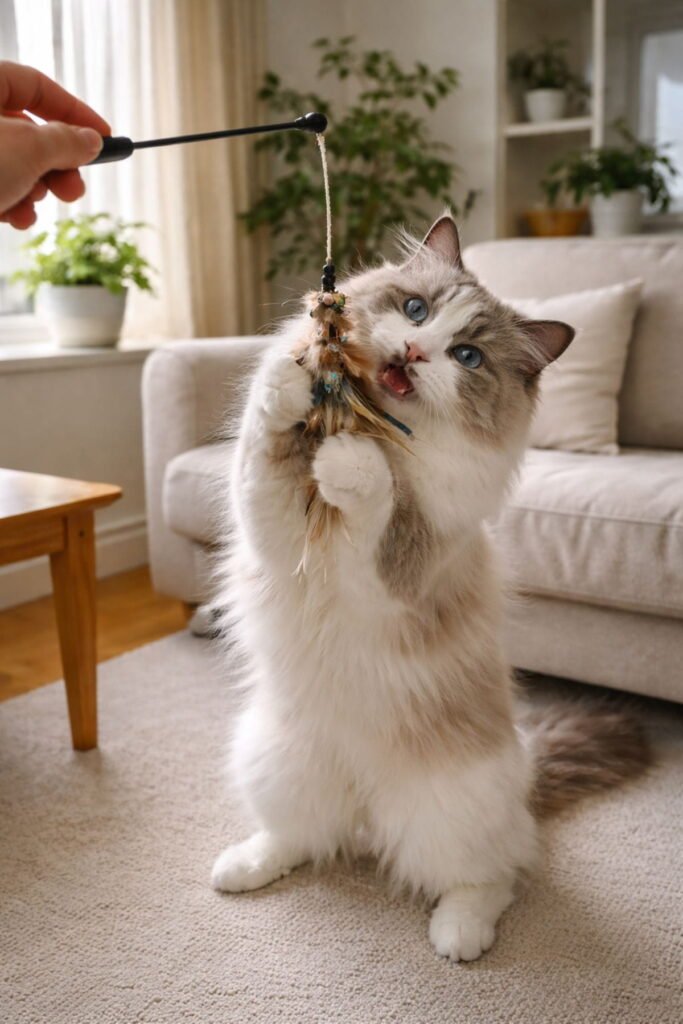
If licking becomes uncomfortable, focus on how to stop a cat from licking using gentle methods. The best approach involves training a cat not to lick through calm redirection instead of punishment.
Use toys or movement to redirect cat behavior and reward calm contact. Consistent positive reinforcement for cats supports lasting cat behavior modification and reduces attention-driven licking patterns.
My Experience Understanding Cat Licking
While researching feline behavior for FelineNest, I found that many owners worry when their cat starts licking them regularly. In most cases, the behavior reflected trust, affection, or a familiar daily routine rather than a problem. I also noticed that understanding the situation and the cat’s body language made it much easier to tell the difference between normal grooming behavior and signs of stress or discomfort.
Do Some Cat Breeds Lick More Than Others?
Yes, some cat breeds are naturally more affectionate and may lick their owners more often than others. Breeds such as Siamese, Burmese, Ragdolls, and Devon Rex are known for forming close bonds with their families and expressing affection through grooming-like behaviors. However, every cat has a unique personality, so frequent licking depends just as much on individual temperament, early socialization, and the relationship it shares with its owner.
How to Encourage Healthy Affection Without Over-Licking
Cats still need connection. The goal is balance. Regular daily interactive play builds trust while reducing stress. Activities that support play therapy for cats strengthen emotional stability.
A stimulating home matters too. Add cat trees and perches, and rotating toys for environmental enrichment for cats. Options like food puzzle toys provide mental stimulation for indoor cats and reduce comfort-driven licking.
Final Thoughts
If you’ve ever wondered why does my cat lick me, the answer is usually rooted in trust, affection, and natural feline instincts. Licking is one of the many ways cats communicate, strengthen social bonds, and seek comfort from the people they love. In most cases, it’s a positive behavior that reflects a healthy relationship between you and your cat.
However, it’s important to pay attention to changes in your cat’s licking habits. Sudden or excessive licking, especially when accompanied by other unusual behaviors, may indicate stress, anxiety, or an underlying medical issue. By understanding your cat’s body language and responding to its needs with patience and care, you can build an even stronger bond while ensuring your feline companion stays happy and healthy.
FAQ: Quick Answers About Cat Licking Behavior
Should you let your cat lick you?
Yes, occasional licking is usually safe, but avoid letting your cat lick your face, open wounds, or skin with lotions or medications.
What does it mean if a cat licks you?
It usually means your cat is showing affection, bonding with you, or seeking attention and comfort.
How to tell if a cat is bonded with you?
A bonded cat stays near you, follows you around, purrs, slow-blinks, kneads, and may groom or lick you.
Are cats happy when they lick you?
Most of the time, yes. Licking often shows trust, comfort, and contentment, though excessive licking may signal stress or anxiety.

Wahsay Ahmed is the founder of FelineNest and a cat care writer. His interest in feline health began in 2023 after adopting two cats, Whisker and Mochi. Since then, he has spent two years studying trusted veterinary resources, feline behavior, nutrition, and preventive care while applying that knowledge through daily care of his own cats.