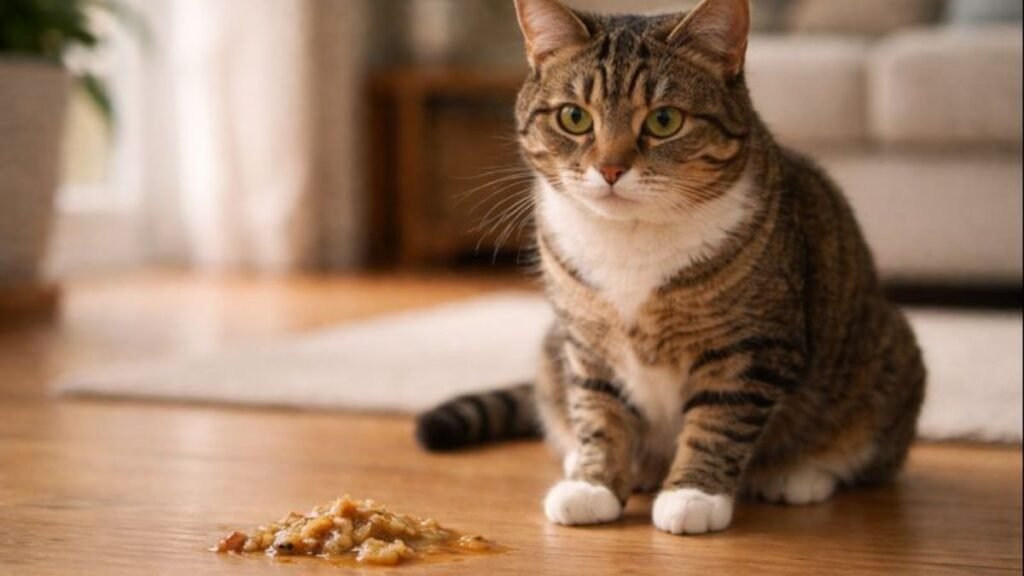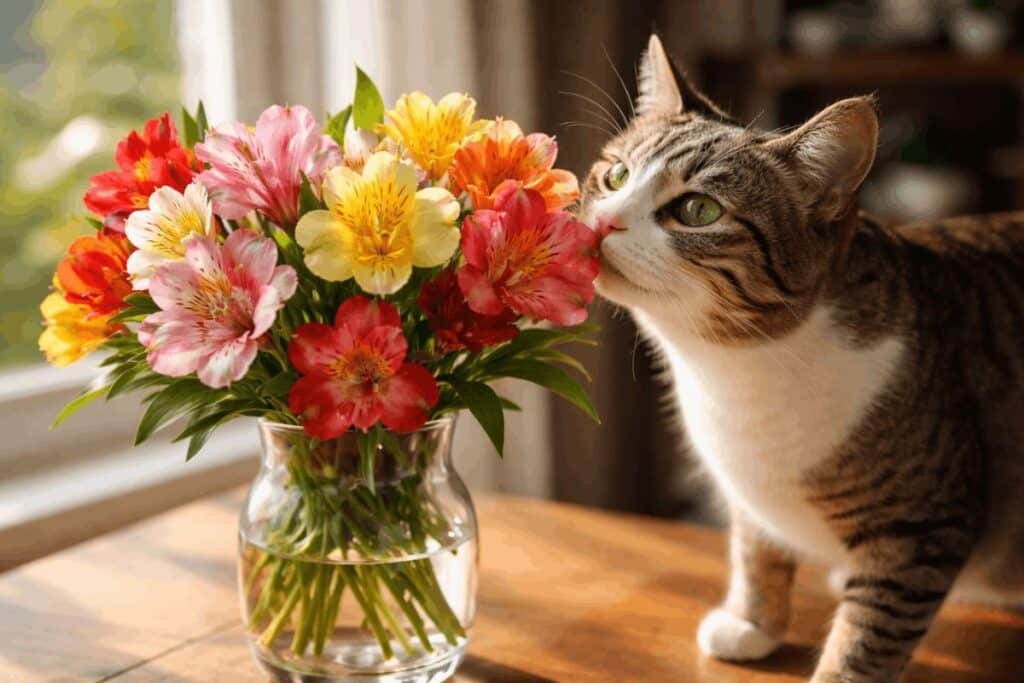
Alstroemeria is mildly toxic to cats — consuming it can cause vomiting, diarrhea, and lethargy within 2 to 6 hours. The ASPCA classifies alstroemeria as toxic to cats due to compounds including tulipalin A, which irritate the digestive system and skin. The good news is that alstroemeria does not cause kidney failure like true lilies — making it significantly less dangerous, but still a plant that requires prompt attention if ingested.
Here’s the truth. Not all lilies are deadly—but some absolutely are. Understanding peruvian lily toxicity cats can help you stay calm and act smart. While alstroemeria is poisonous to cats, the risk is far lower than that of true lilies. Still, even mild plant toxicity in cats deserves attention if you want a safe, stress-free home.
Is Alstroemeria Toxic to Cats? Quick Safety Answer
Let’s get straight to it. Are alstroemeria toxic to cats? Yes—but only mildly. Unlike true lilies, they don’t cause kidney failure, which makes them far less dangerous in most homes.
However, don’t get too comfortable. Even though many ask, are peruvian lilies safe for cats? These plants can still trigger gastrointestinal upset in cats or minor irritation. That’s why experts still classify them under the ” are lilies toxic to cats discussions, even if the risk level is low. One of my cats once chewed a few rose petals out of curiosity. She was fine, but it reminded me to keep bouquets out of reach and always choose untreated roses whenever possible.
Alstroemeria vs True Lilies: What Makes Them Different?
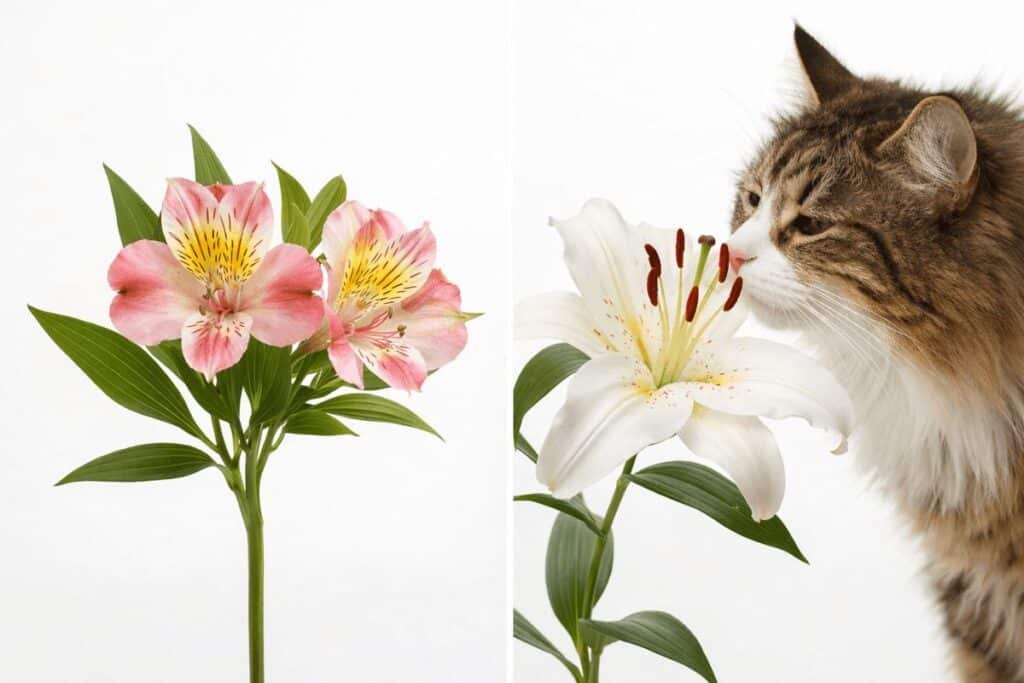
Here’s where most people get it wrong. At a glance, they look nearly identical. But in reality, the difference between them can mean life or death for your cat.
True lilies belong to the liliaceae plant family and are among the most dangerous plants for cats. Alstroemeria, on the other hand, falls into a safer category. This confusion between true lily vs false lily is the main reason pet owners panic unnecessarily.
Peruvian Lily vs True Lily
The difference between true lilies and peruvian lilies becomes obvious once you know what to look for. True lilies are larger, fragrant, and highly toxic. Peruvian lilies are smaller, scentless, and much safer. Learning this helps with quick identification of toxic plants at home.
What Part of Alstroemeria Is Toxic to Cats?
All parts of the alstroemeria plant contain tulipalin A — but the concentration varies significantly between parts. Understanding which part poses the most risk helps you assess the severity of any exposure.
| Plant Part | Toxicity Level | Tulipalin A Concentration | Risk if Ingested |
|---|---|---|---|
| Flowers / Petals | ⚠️ Mild | Moderate | GI upset — vomiting, diarrhea |
| Leaves | ⚠️ Mild-Moderate | Moderate-High | GI upset + possible skin irritation |
| Stems | ⚠️ Mild | Low-Moderate | Mild GI upset |
| Bulbs / Rhizomes | 🔴 Moderate-High | Highest concentration | More severe GI symptoms — vet recommended |
| Pollen | ⚠️ Mild | Low | Skin irritation if walked through then groomed |
| Vase water | ⚠️ Low | Very Low | Minimal risk — mild GI upset possible |
Most exposure cases involve petals or leaves — the parts cats most commonly chew when investigating flowers. Bulb ingestion is rare in domestic settings but represents the highest risk scenario.
Skin contact risk: Tulipalin A can also cause irritant dermatitis — skin redness, itching, or swelling — if a cat walks through alstroemeria pollen and then grooms itself. This is separate from ingestion and typically resolves without treatment.
What Happens If a Cat Eats Alstroemeria?
Most alstroemeria ingestion cases are mild and self-resolving. Here is the symptom timeline most vets observe, based on the amount consumed and the part of the plant ingested.
| Time After Ingestion | Typical Symptoms | Severity | Action |
|---|---|---|---|
| 0–30 minutes | Pawing at mouth, excessive drooling | Mild | Monitor closely |
| 30 min – 2 hours | Nausea, lip licking, loss of appetite | Mild | Monitor, offer water |
| 2–6 hours | Vomiting, diarrhea, lethargy | Mild-Moderate | Call vet if symptoms worsen |
| 6–12 hours | Symptoms usually resolving | Mild | Continue monitoring |
| 12–24 hours | Full recovery expected in most cases | Resolving | Normal if symptoms gone |
| Over 24 hours | Symptoms persist — unusual | Moderate | Vet visit required |
Key difference from true lilies: True lilies (Lilium and Hemerocallis species) cause acute kidney failure in cats within 24 to 72 hours — even from tiny exposures like licking pollen. Alstroemeria does NOT cause kidney failure. This is the most important distinction to understand when assessing severity.
However — if your cat ate alstroemeria bulbs, or ate a large quantity of any part, treat this as a more serious exposure and contact your vet same day regardless of visible symptoms.
What to Do If Your Cat Ate Alstroemeria
Stay calm — alstroemeria is not immediately life-threatening in the way true lilies are. But it still requires prompt, methodical action. Here is exactly what to do:
Step 1 — Remove access immediately. Take the plant away from your cat and place it completely out of reach. If your cat has plant material on her paws or fur, wipe gently with a damp cloth to prevent further ingestion through grooming.
Step 2 — Identify what was eaten and how much. Check which part of the plant was chewed — petals, leaves, or stem. Look for bite marks on the plant to estimate how much was consumed. This information is exactly what your vet will ask.
Step 3 — Do NOT induce vomiting. Unless specifically instructed by a veterinarian, never attempt to induce vomiting at home. Hydrogen peroxide — a common home method — is toxic to cats. Only a vet can safely manage vomiting induction when necessary.
Step 4 — Call your vet or poison control. Even for mild exposures, a brief call gives you professional guidance specific to your cat’s size and health status.
| Resource | Contact | When to Use |
|---|---|---|
| Your regular vet | Call directly | First contact — always |
| ASPCA Animal Poison Control | (888) 426-4435 | 24/7 — $95 consultation fee |
| Pet Poison Helpline | (855) 764-7661 | 24/7 — fee applies |
| Emergency vet clinic | Find nearest — save number now | If symptoms are severe |
Step 5 — Monitor for 24 hours. Watch for vomiting, diarrhea, lethargy, drooling, or loss of appetite. Most mild alstroemeria ingestion cases resolve within 12 to 24 hours with no treatment. If symptoms persist beyond 24 hours or worsen at any point, go to the vet.
When to go to the emergency vet immediately:
- Your cat ate bulbs or a very large quantity of any part
- Symptoms are severe — repeated vomiting, collapse, or tremors
- Your cat is a kitten, a senior, or has pre-existing kidney or liver disease
- Symptoms worsen rather than improve after 6 hours
Which Lilies Are Dangerous for Cats? Full Toxicity Comparison
Not all lilies play by the same rules. Some are mildly irritating. Others can destroy a cat’s kidneys within 72 hours. That’s why understanding that alstroemeria is toxic to cats alone isn’t enough.
| Lily Type | Toxic Level | Effect on Cats |
| Easter Lily | Very High | Kidney failure |
| Tiger Lily | Very High | Severe poisoning |
| Stargazer Lily | Very High | Fatal risk |
| Daylily | Very High | Organ failure |
| Alstroemeria | Low | Mild irritation |
This clearly shows toxic vs non toxic lilies. Cases involving highly toxic lilies cats often require immediate emergency vet care cats, while Alstroemeria rarely escalates to that level.
Safe Flower Alternatives to Alstroemeria for Cat Owners
If you love fresh flowers but want complete peace of mind about cat safety, these ASPCA-confirmed non-toxic alternatives provide a similar visual impact to alstroemeria with zero toxicity risk.
| Safe Flower | ASPCA Status | Similar To Alstroemeria | Notes |
|---|---|---|---|
| Roses (Rosa species) | ✅ Non-toxic | Color variety, bouquet staple | Watch for thorns — not toxic |
| Sunflowers | ✅ Non-toxic | Bold color, long-lasting | Seeds choking risk — keep out of reach |
| Orchids (Phalaenopsis) | ✅ Non-toxic | Elegant, long-lasting | Mild GI upset if chewed — still safe |
| Snapdragons | ✅ Non-toxic | Similar size and color range | Excellent alstroemeria substitute |
| Gerbera Daisies | ✅ Non-toxic | Bright colors, bouquet use | Popular safe option |
| Lisianthus | ✅ Non-toxic | Similar look to alstroemeria | Excellent direct substitute |
| Statice (Limonium) | ✅ Non-toxic | Filler flower — similar role | Dries beautifully |
| African Violet | ✅ Non-toxic | Indoor plant, similar look | Perfect houseplant substitute |
The best direct substitute for alstroemeria: Lisianthus (Eustoma grandiflorum) — available at most US florists, similar price, similar petal structure, similar color range, and completely non-toxic to cats. Ask your florist specifically for lisianthus as an alstroemeria replacement.
What to avoid in bouquets if you have cats:
- True lilies (Lilium species) — kidney failure risk
- Day lilies (Hemerocallis) — kidney failure risk
- Tulips — similar to tulipalin A compound as alstroemeria but with a higher concentration
- Hyacinths — moderate toxicity
- Daffodils/Narcissus — moderate-high toxicity
Symptoms of Lily Poisoning in Cats (Emergency Signs)
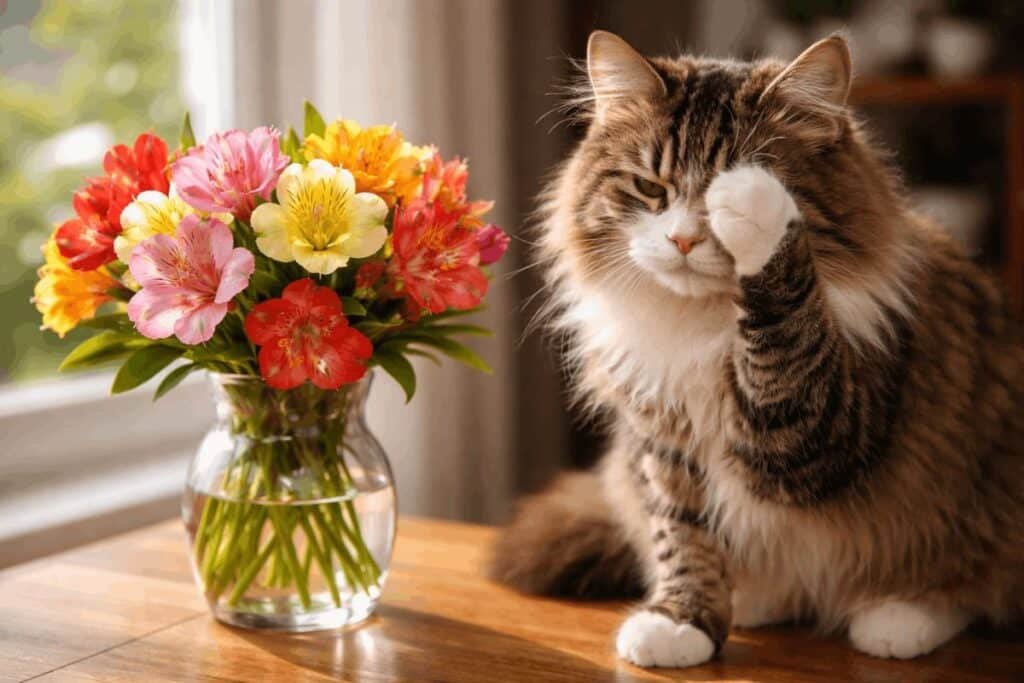
Now let’s talk about the real danger zone. While Alstroemeria is mild, true lilies can be deadly fast.
Watch closely for plant poisoning in cats symptoms like vomiting, drooling, or unusual tiredness. In severe cases, signs progress rapidly. According to veterinary reports, kidney damage can begin within 24 hours. Understanding the symptoms of lily poisoning in cats timeline can literally save your cat’s life.
What to Do If Your Cat Eats Alstroemeria or Lilies
First rule—don’t panic. Second rule—act fast. If you’re still wondering if alstroemeria is toxic to cats, treat every exposure seriously.
Remove any plant pieces immediately. Then contact your vet or use trusted resources like
Following pet poison helpline advice and proper vet advice for plant ingestion ensures a quick recovery. Knowing what to do if cat eats plant can prevent small issues from becoming emergencies. For more information about toxic and non-toxic plants for cats, visit the ASPCA’s Toxic and Non-Toxic Plants Database, a trusted resource used by veterinarians and pet owners across the United States.
Are There Any Benefits or Risks of Keeping Alstroemeria at Home?
Alstroemeria isn’t just popular—it’s practical. These long-lasting blooms brighten homes and are widely used in ornamental garden plants across the U.S.
Still, risk exists. Curious cats love to explore. Even mild exposure can raise concerns about indoor plant safety for cats. So while they’re safer than true lilies, they’re not completely risk-free.
Safe Alternatives: Cat-Friendly Flowers You Can Keep at Home
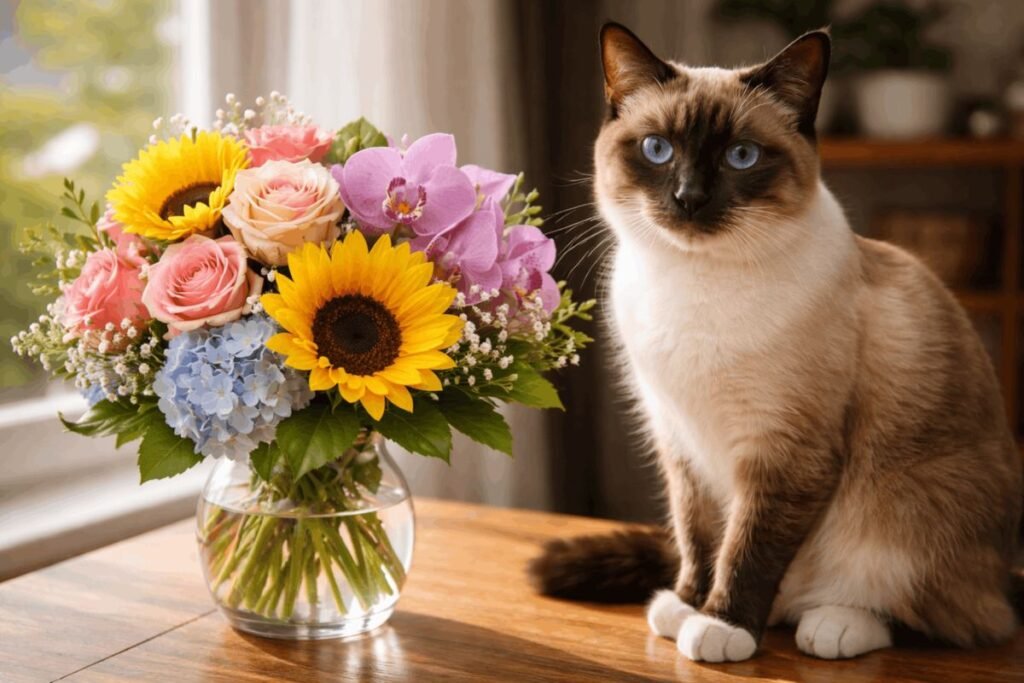
Love flowers but hate the risk? Good news—you have options.
Many beautiful blooms fall under non-toxic flowers for cats. Roses, orchids, and sunflowers are top picks. These belong in any cat friendly flowers list and are perfect flowers safe for cats indoors, giving you beauty without worry.
Other Common Household Plants That Are Toxic to Cats
Lilies aren’t the only problem. Many everyday plants fall into the category of plants to avoid with cats.
Aloe vera, pothos, and snake plants are common examples. These are part of the dangerous plants for cats group. Learning toxic plant identification helps you avoid hidden risks around your home.
How to Prevent Plant Poisoning in Cats (Practical Tips)
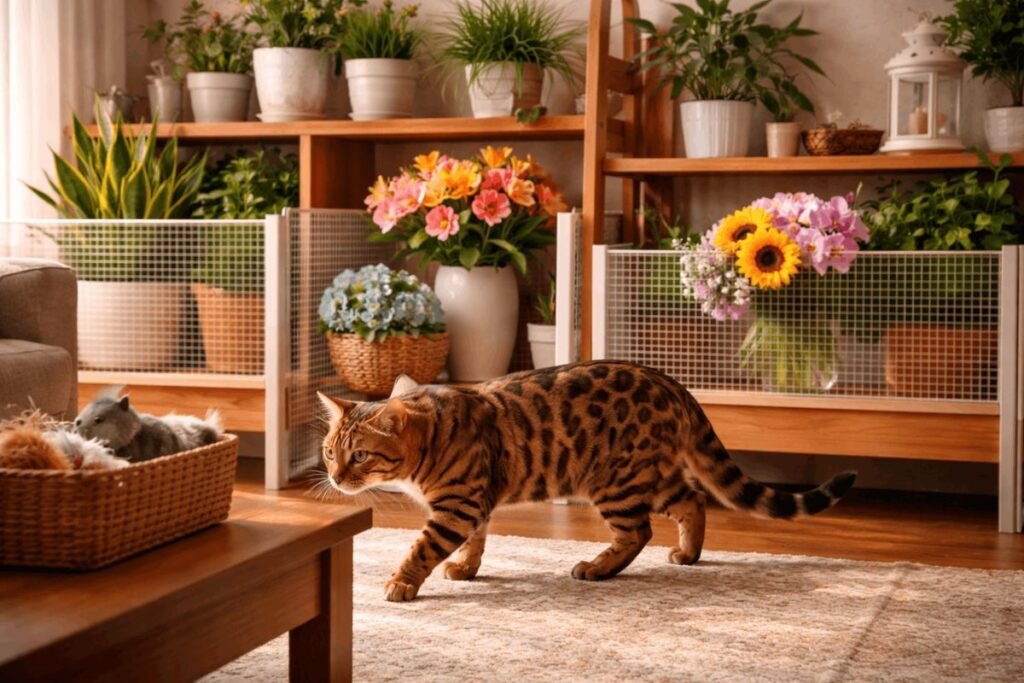
Smart prevention beats emergency stress every time. Instead of worrying constantly about are alstroemeria is toxic to cats, build a safer environment.
Focus on cat-proofing house plants and improving pet-safe home gardening. Use shelves, barriers, or deterrents. Learning how to keep cats away from plants protects your pet without sacrificing your home décor.
FAQs About Alstroemeria and Cat Safety
How can I keep my cat away from alstroemeria?
Use elevated placement, natural deterrents, and distraction techniques to improve cats eating flowers safety.
Are cats allergic to alstroemeria?
True allergies are rare, but mild reactions like irritant dermatitis cats can occur.
Are pets safe around alstroemeria?
Mostly yes. However, small exposure may still cause mild poisoning symptoms cats.
What flowers look like lilies but are safe for cats?
Orchids and snapdragons resemble lilies and are part of indoor plants safe for pets.
Final Thoughts
True roses are not toxic to cats, making them a safer choice than many common flowers. However, thorns, pesticides, fertilizers, and flower food can still pose real risks. By choosing untreated roses, removing thorns, and keeping bouquets out of reach, you can enjoy beautiful flowers without putting your cat in danger.
A little extra care goes a long way. When you’re unsure about any plant, it’s always safer to check with your veterinarian or a trusted pet safety resource before bringing it into your home. Protecting your cat today helps ensure many healthy, happy years together.

Wahsay Ahmed is the founder of FelineNest and a cat care writer. His interest in feline health began in 2023 after adopting two cats, Whisker and Mochi. Since then, he has spent two years studying trusted veterinary resources, feline behavior, nutrition, and preventive care while applying that knowledge through daily care of his own cats.