Dilute calico cats are extremely rare — only approximately 1 in 1,000 cats is a standard calico, and among those, only a fraction carry the additional dilution gene that creates the soft grey, cream, and white coat that defines a dilute calico. According to Dr. Rebecca MacMillan, veterinarian and expert contributor to PetsRadar, dilute calicos require such a specific genetic combination that “most people will never see one in person.”
Because of this rare genetic combination, dilute calicos are estimated to occur in only 1 in 4,000 to 10,000 cats. In this guide, you will discover what sets them apart, how their coloring forms, and why they hold such a special place among cat lovers across the United States.
What Is a Dilute Calico Cat? (Simple Explanation)
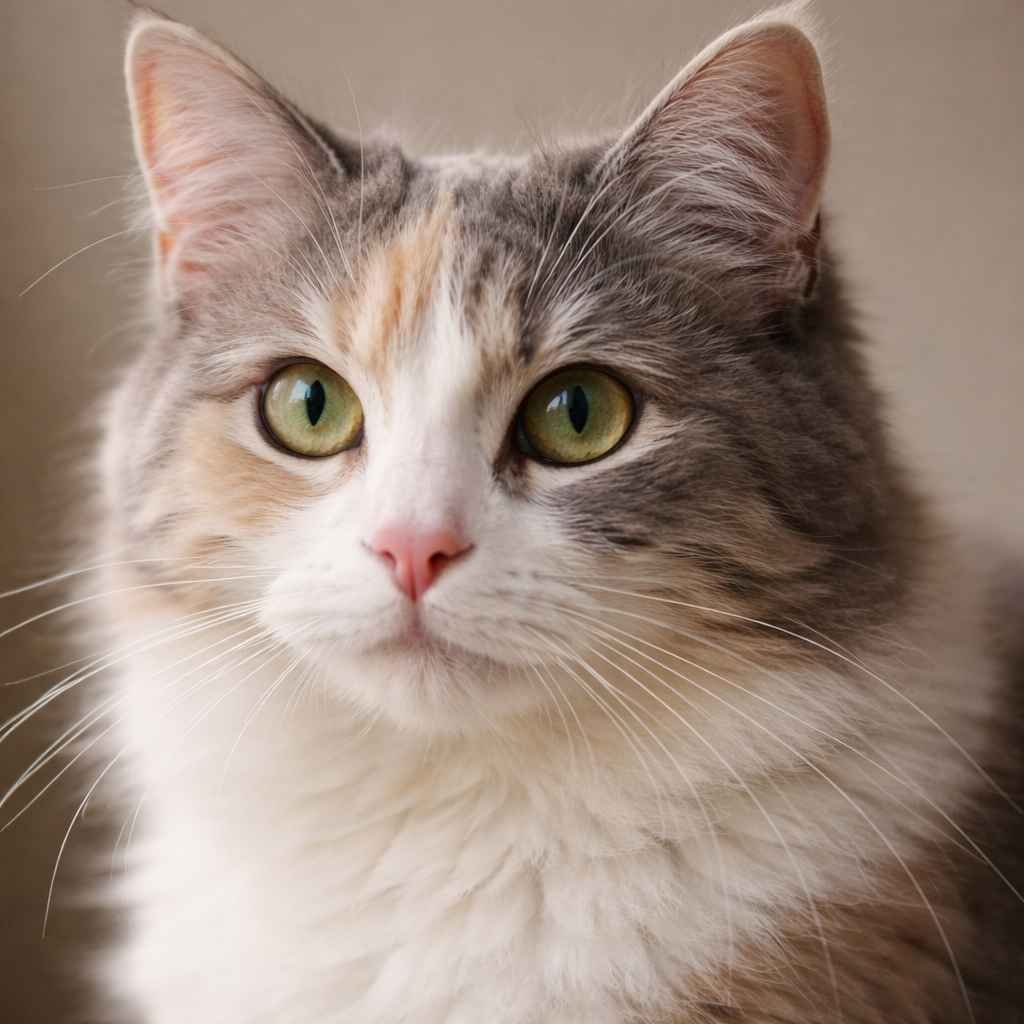
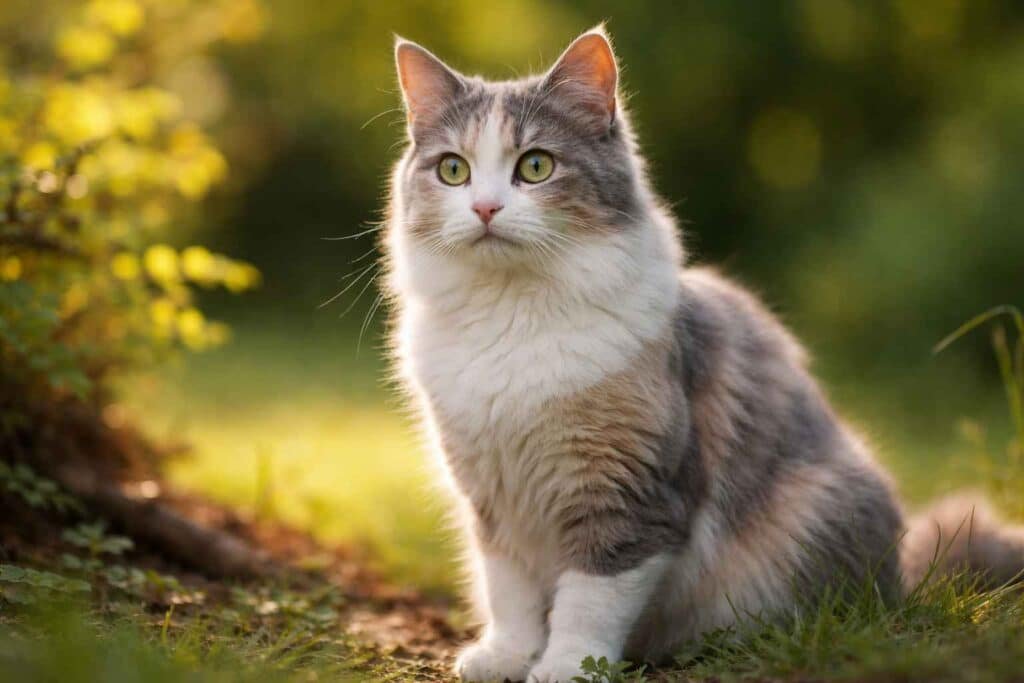
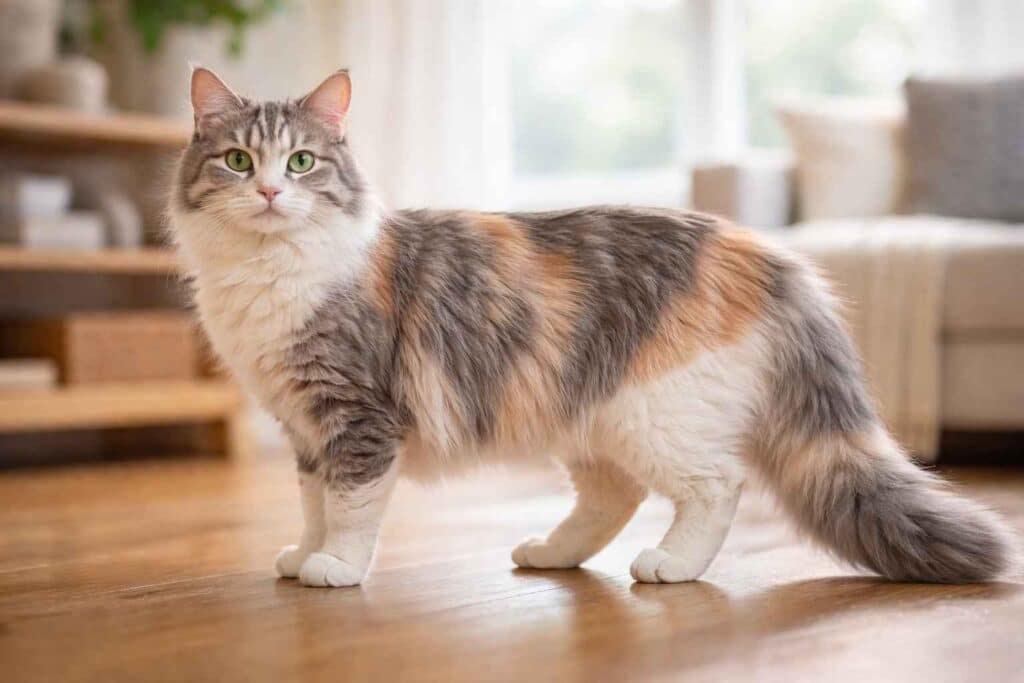
A dilute calico cat is a tri-colored cat with a softer and more delicate appearance than a traditional calico. Instead of strong black and bright orange, the coat displays gentle shades of gray, cream, and white that blend smoothly. This softened look gives the cat a calm and elegant presence that many owners instantly notice.
How Dilute Calico Coloring Happens (Genetics Explained)
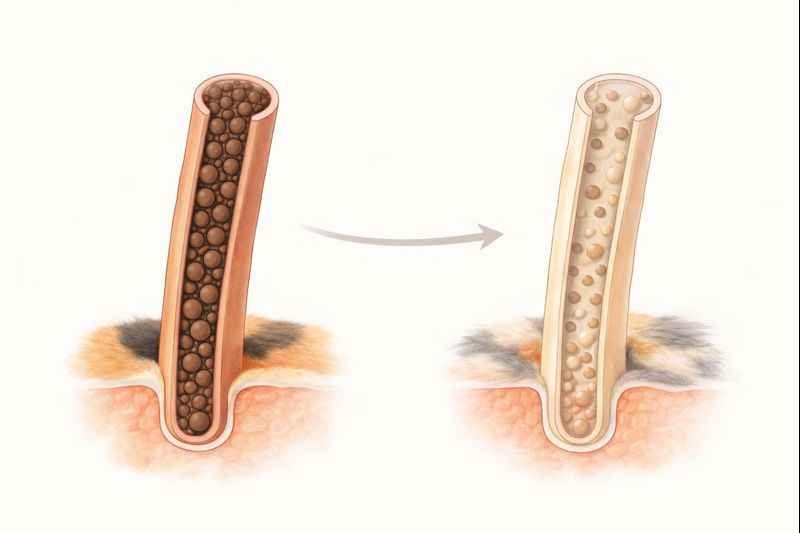
The unique appearance of dilute calicos is a result of the dilute gene in cats. This gene regulates the formation of pigment within each hair strand. When activated, the pigment spreads out rather than clumping together. As a result, dark colors appear washed-out, creating a faded cat coat with soft transitions.
Genetics also explains why these cats are usually female. Color genes sit on the X chromosome. Female cats have two X chromosomes, allowing multiple colors to appear together. This is why calico cats are almost always female. When the dilution gene is present, those same colors turn into cream and gray cat colors instead of deep black and orange.
Dilute Calico vs Regular Calico — Rarity Comparison
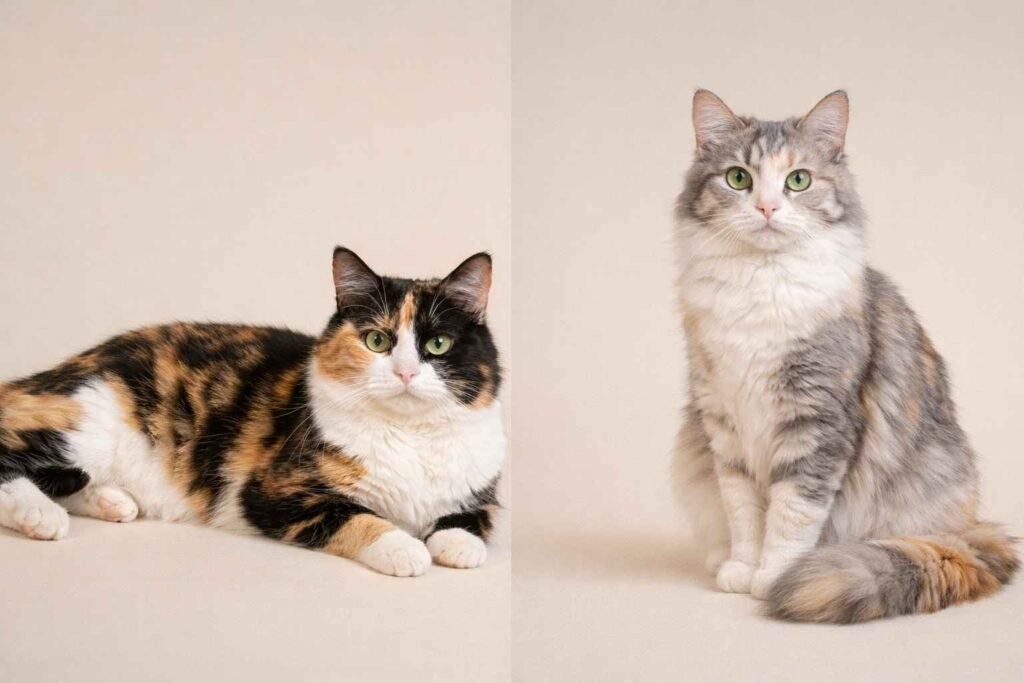
This is the comparison table most dilute calico articles never include — and it is exactly what the “dilute calico rarity” search query demands.
| Feature | Standard Calico | Dilute Calico |
|---|---|---|
| Colors | Bold black, bright orange, white | Soft grey/blue, cream, white |
| Genetic requirement | XX + two color genes | XX + two color genes + dd dilution |
| Estimated occurrence | ~1 in 1,000 cats | ~1 in 4,000–10,000 cats |
| Always female? | 99.9% yes | 99.9% yes |
| Male possibility | ~1 in 3,000 calicos | ~1 in 10,000–30,000 cats |
| Visual appearance | High contrast, dramatic | Low contrast, pastel, muted |
| Cultural significance | “Lucky cat” — Japanese maneki-neko | Same symbolism, enhanced by rarity |
| Shelter availability | Rare | Very rare |
| Price (if purebred) | Higher than standard | Highest — due to extreme rarity |
Cat Coat Pattern Rarity Scale — Where Dilute Calico Ranks
To understand how rare a dilute calico actually is, it helps to compare it to other coat patterns across the full spectrum of feline genetics.
| Coat Pattern | Rarity Level | Estimated Occurrence | Notes |
|---|---|---|---|
| Brown/orange tabby | Very Common | 1 in 3–5 cats | Most widespread pattern |
| Black solid | Common | 1 in 5–8 cats | Very common domestically |
| Grey/blue solid | Common | 1 in 8–10 cats | Dilution of black — relatively common |
| Bicolor (two colors) | Common | 1 in 5–7 cats | Extremely widespread |
| Tortoiseshell | Uncommon | ~1 in 100 cats | Two colors, almost always female |
| Standard Calico | Rare | ~1 in 1,000 cats | Three colors, almost always female |
| Dilute Tortoiseshell | Rare | ~1 in 500–1,000 cats | Softer tortoiseshell coloring |
| Dilute Calico | Very Rare | ~1 in 4,000–10,000 cats | Requires calico + dilution genes |
| Male Standard Calico | Extremely Rare | ~1 in 3,000 calicos | XXY chromosomal anomaly |
| Male Dilute Calico | Exceptionally Rare | ~1 in 10,000–30,000 cats | Rarest common coat pattern |
This table makes the dilute calico’s rarity concrete and comparable. Among all domestic cat coat patterns, dilute calico ranks among the rarest naturally occurring presentations — surpassed in rarity only by male calico and male dilute calico, which require chromosomal anomalies to exist.
Why Are Dilute Calico Cats So Rare? — The Genetics Explained Simply
The simplest explanation: a dilute calico requires four specific genetic conditions to be met simultaneously, all of which must be inherited from both parents.
Condition 1: Female sex (XX chromosomes) — eliminates 50% of cats Condition 2: Orange gene on one X chromosome — statistical probability depends on parents Condition 3: Black gene on the other X chromosome — requires different parental contribution Condition 4: Two copies of recessive dilution gene (dd) — requires BOTH parents to carry it
Even when both parents carry the dilution gene without displaying it (called being a “carrier”), only 25% of their offspring will inherit the homozygous (dd) combination needed for dilution. When you multiply all four probabilities together, the result is a genuinely rare cat.
Dr. Rebecca MacMillan confirmed in Pets Radar: “A standard female calico may carry the dilute calico gene without having turned out to be a dilute calico herself. If she partners with a rare male calico or any other male who carries the dilute calico gene, they can produce a dilute calico kitten.” This is exactly why dilute calicos are impossible to breed predictably and why their rarity is not contrived.
Dilute Calico vs Tortoiseshell Cat (Key Differences)
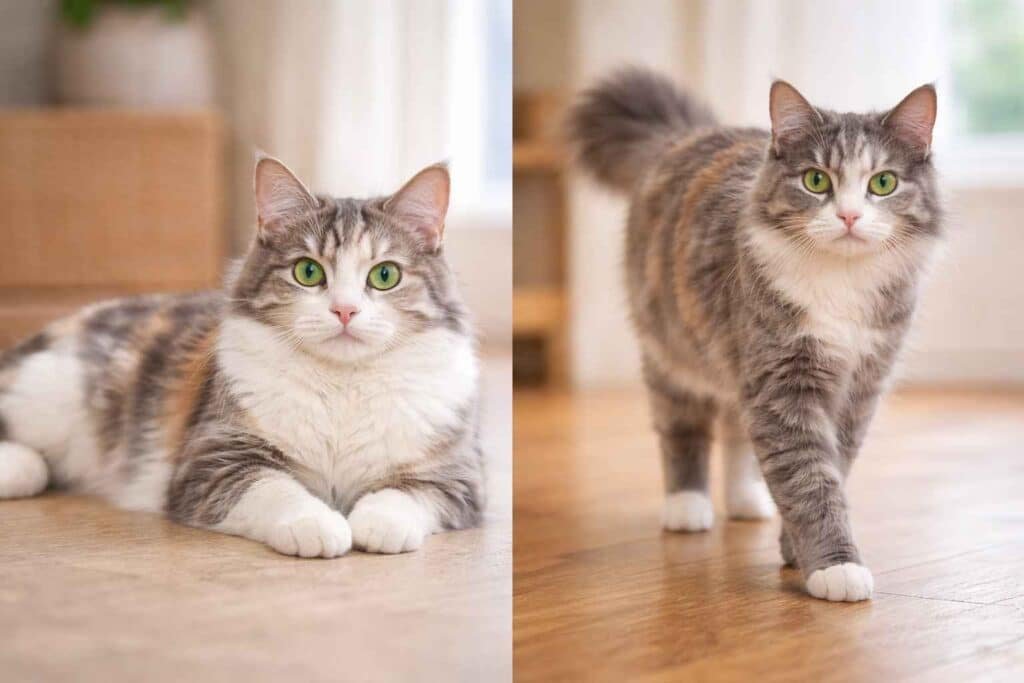
Dilute calicos and tortoiseshell cats are often confused because their colors can look similar at first glance. The key difference is white fur. A calico always has white patches, while a tortoiseshell does not.
A dilute tortoiseshell may show gray and cream tones, but those colors blend without clear separation. A dilute calico cat, on the other hand, shows distinct patches of color over white. This simple rule helps identify rare cat color patterns correctly.
Can Dilute Calico Cats Be Male? (Truth You Should Know)
Male dilute calicos do exist, but they are exceptionally rare. Most male calicos are born with an unusual XXY chromosome combination instead of the normal XY. This genetic condition explains why male calicos are usually sterile.
Health issues are more common in male dilute calicos. Veterinarians often monitor bone strength, weight, and hormone-related concerns. This extreme rarity adds scientific interest and further explains what makes dilute calicos special.
Which Cat Breeds Can Be Dilute Calico?
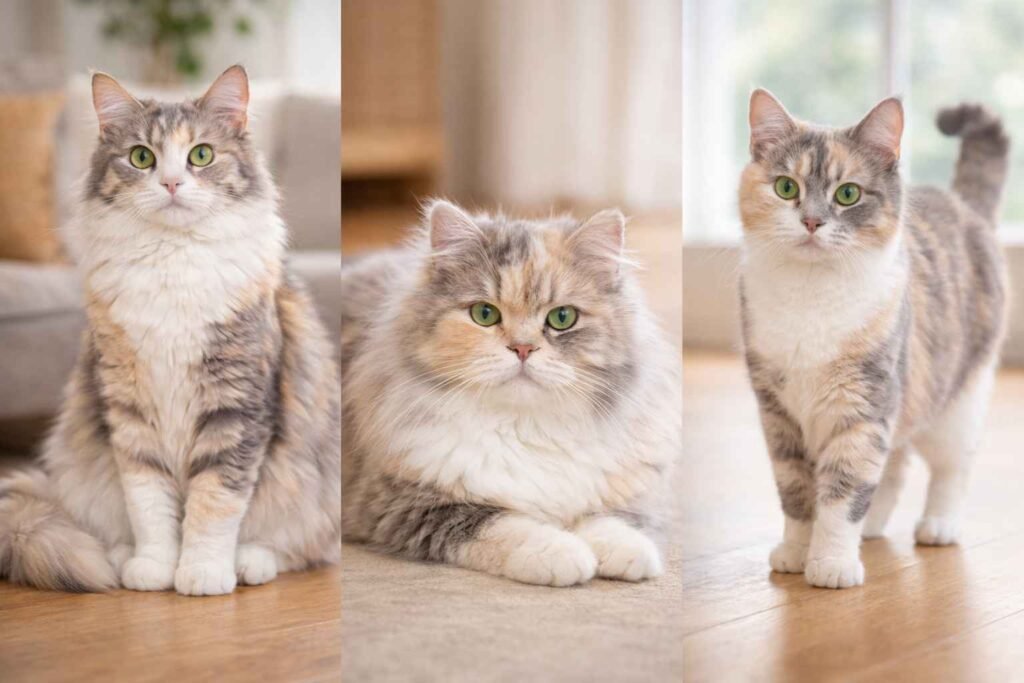
Because calico is a color pattern rather than a breed, many cats can display it. Domestic Shorthairs are the most common, especially in shelters. Several purebred cats can also carry the pattern, including Maine Coons, Persians, American Shorthairs, and British Shorthairs.
In folklore, dilute calicos are sometimes called a calamanco cat or a clouded tiger cat. These names come from tradition and storytelling rather than science, but they highlight how long people have admired this unique look.
Dilute Calico Cat Personality & Temperament
Many owners believe dilute calicos have bold and expressive personalities. While coat color does not determine behavior, shared experiences often describe these cats as affectionate, curious, and confident.
A cat’s environment plays a much larger role than color. A stable home with regular routines often brings out friendly and social traits. Like all calico cats, personality depends on upbringing, not appearance.
Health, Lifespan & Special Care Needs
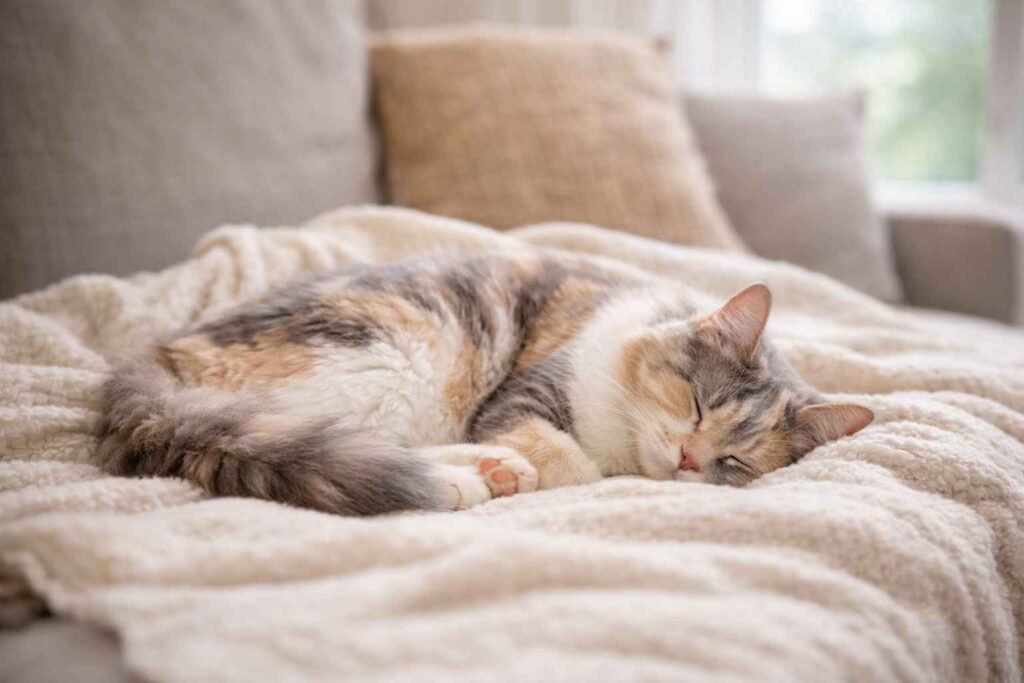
Female dilute calicos are generally healthy and long-lived. With proper care, most live between twelve and fifteen years. Their coat does not need special grooming beyond routine brushing to remove loose fur.
Male dilute calicos require closer veterinary attention. Vets often check for joint problems, weight gain, and bone density issues. Early care and regular checkups greatly improve the quality of life.
How Much Does a Dilute Calico Cat Cost?
In the United States, dilute calicos usually cost the same as other cats. Adoption fees at shelters are standard, even for rare colors. Breeder prices vary based on breed, lineage, and location rather than coat color alone.
Ongoing costs include food, veterinary care, grooming, and supplies. Despite their rarity, dilute calicos do not cost more to maintain than other healthy cats.
Are Dilute Calico Cats Good Pets?
Dilute calicos make excellent pets for many types of households. They adapt well to apartments and family homes and often enjoy calm indoor environments.
Their rarity does not make them fragile or difficult to care for. With normal attention and love, a dilute calico cat thrives just like any other well-cared-for companion.
Personal Experience With a Dilute Calico
Seeing a dilute calico in person can be surprisingly memorable. Their soft gray, cream, and white coat looks much gentler than a standard calico. What stands out most is how their unique coloring becomes even more noticeable in natural light.
If you are interested in the genetics behind this rare coat pattern, you can learn more from UC Davis Veterinary Genetics Laboratory.
Final Thoughts
Dilute calico cats are a beautiful reminder of how genetics can create rare and stunning variations in nature. Their soft colors, rarity, and gentle presence make them truly special companions. Whether adopted from a shelter or welcomed into a family home, these cats offer the same love, loyalty, and charm as any other feline—just in a softer shade.
FAQs About Dilute Calico Cats
Is a dilute calico cat rare?
Yes, a dilute calico cat is very rare. Calico cats are uncommon already, and the dilute gene makes this color pattern even harder to find.
How much is a dilute calico worth?
Most dilute calicos cost the same as other cats. Adoption fees are usually normal, while breeder prices depend on the breed, not the color.
What is the difference between a calico and a dilute calico?
A regular calico has black, orange, and white fur. A dilute calico has the same pattern, but the colors fade into soft gray, cream, and white.
What makes a calico cat diluted?
A special dilution gene changes how pigment spreads in the fur. This gene turns strong colors into lighter, muted shades.
What’s the lifespan of a dilute calico cat?
Most dilute calico cats live between 12 and 15 years. With good care, some can live even longer.

Wahsay Ahmed is the founder of FelineNest and a cat care writer. His interest in feline health began in 2023 after adopting two cats, Whisker and Mochi. Since then, he has spent two years studying trusted veterinary resources, feline behavior, nutrition, and preventive care while applying that knowledge through daily care of his own cats.