Is Incense Bad for Cats? (Quick Answer for Pet Owners)
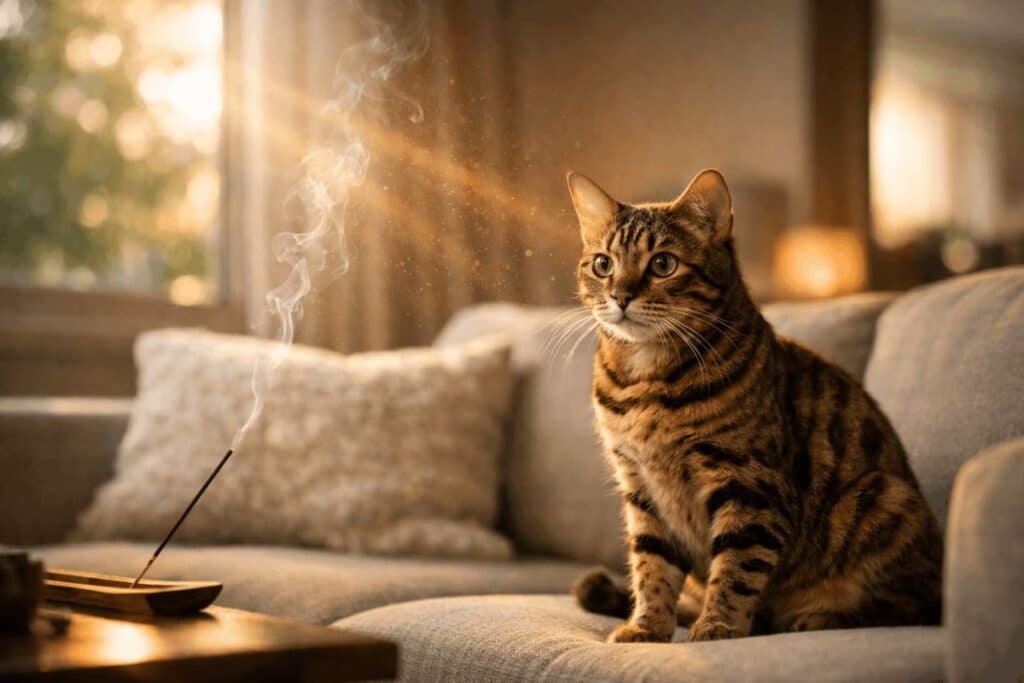
If you love a calm, fragrant home, you might wonder is incense bad for cats or safe to use around your furry friend. Many pet owners don’t realize that incense smoke effects on cats can quietly impact their health over time. Cats have delicate lungs, and even light exposure can worsen indoor air pollution and cats environments. So, can cats inhale incense smoke without harm? Not always.
In fact, repeated exposure may lead to incense toxicity in cats and breathing discomfort. Creating a safe space means understanding these hidden risks. Before you light that next stick, it’s worth asking how it affects your cat’s daily comfort and long-term health.
Why Cats Are Sensitive to Incense Smoke
Cats have delicate lungs. Their bodies react faster to smoke compared to humans. This explains why incense smoke effects on cats can appear quickly. Their small airways struggle with particulate matter (PM2.5) and other indoor pollutants and pets environments. Your cat trusts you to keep their world safe. Even small choices like incense can make a big difference.
Also, cats groom themselves often. This leads to cat grooming and toxin ingestion, which increases exposure. Even tiny particles from burning incense around pets settle on fur and enter the body. This makes incense toxicity in cats more dangerous than expected.
What’s Inside Incense? Ingredients That Can Harm Cats
Incense looks natural, but many sticks contain hidden chemicals. When burned, they release essential oils toxic to cats, synthetic scents, and wood dust. These create harmful smells for cats and worsen indoor air pollution and cats living spaces.
Some brands claim to be natural. However, even herbal incense produces toxic airborne particles and chemical sensitivity in cats can still be triggered. So if you wonder are natural incense sticks safe for cats, the answer is still no in most cases. I used to burn incense in the evenings without thinking much about it. After noticing one of my cats sneezing more often, I stopped using it indoors, and the sneezing gradually disappeared. Since then, I’ve switched to pet-safe ways to keep my home smelling fresh.
Can Incense Cause Long-Term Health Problems in Cats?
Even if your cat doesn’t show symptoms right away, repeated exposure to incense smoke can slowly affect their respiratory health. Fine particles and strong fragrances may irritate the lungs over time, especially in kittens, senior cats, and cats with asthma or other breathing conditions.
Reducing smoke inside your home is one of the easiest ways to protect your cat. Clean air, good ventilation, and smoke-free spaces help support healthier lungs and a more comfortable environment for your feline companion.
Health Risks of Incense Exposure in Cats
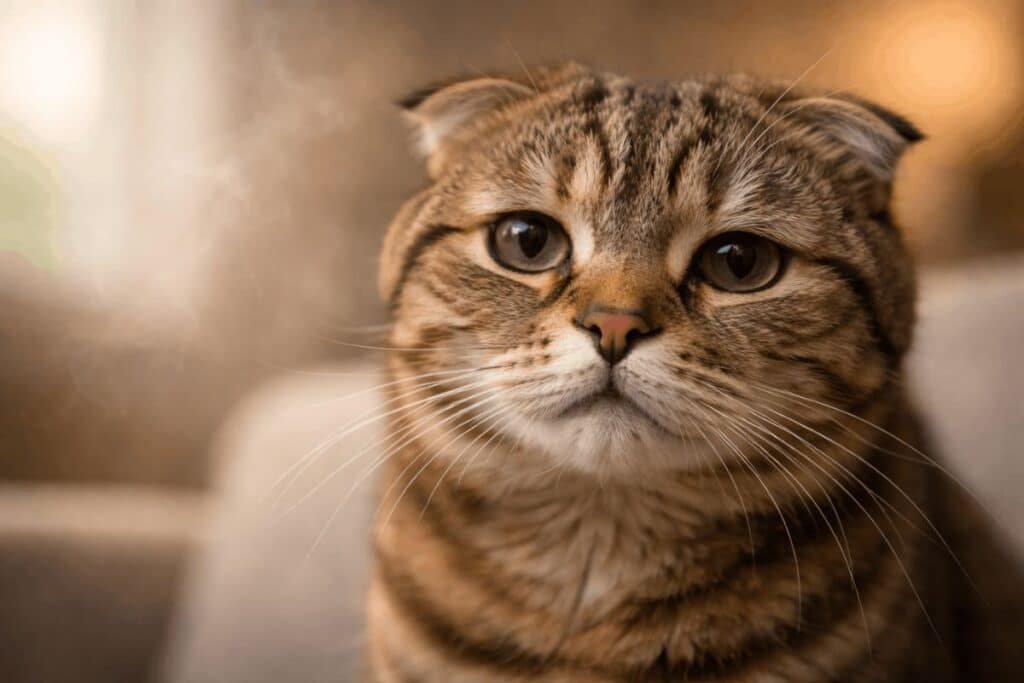
The health impact can be immediate or long-term. Short exposure leads to coughing or sneezing. Long exposure increases long-term exposure risks and serious respiratory issues in cats. Many vets link incense smoke to feline asthma triggers.
Here is a simple breakdown of risks:
| Exposure Type | Effects on Cats |
| Short-term | Sneezing, watery eyes, mild breathing issues |
| Medium-term | Frequent coughing, low energy |
| Long-term | Asthma, chronic lung disease |
This shows how smoke inhalation in cats builds slowly. Over time, incense risks for pets become harder to ignore.For more information about smoke exposure and protecting your cat’s respiratory health, visit the American Society for the Prevention of Cruelty to Animals (ASPCA), which provides trusted guidance on common household hazards and pet safety.
Signs Your Cat Is Affected by Incense Smoke
Early symptoms are often missed. You may notice hiding, low appetite, or quiet behavior. These are common signs your cat is affected by smoke. Many owners confuse them with mood changes.
Later, serious signs appear. These include rapid breathing or wheezing. These are linked to secondhand smoke effects on pets and poor air ventilation for pets. If ignored, these symptoms can worsen quickly.
Are Some Types of Incense Safer Than Others?
Many people search for incense that is safe for cats, hoping for a safer option. Low-smoke or charcoal-free incense may reduce visible smoke. However, they still release pet environmental hazards and harmful gases.
Even in ventilated rooms, risks remain. A larger space may reduce exposure slightly. Still, incense and pet safety cannot be guaranteed. So the idea of “safe incense” is mostly a myth.
Incense vs Candles vs Essential Oil Diffusers: Which Is Worse?
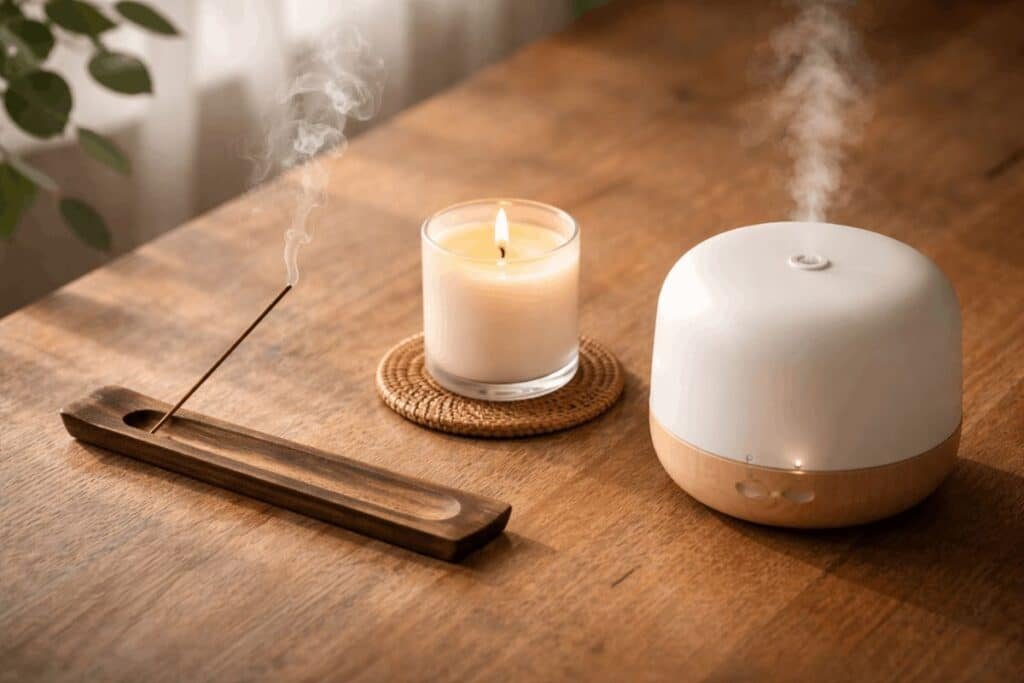
Home fragrance products vary in risk level. Incense produces constant smoke. Candles release soot. Diffusers spread oils into the air. Each option affects air quality and cat health differently.
Here is a simple comparison:
| Product Type | Risk Level for Cats |
| Incense | High risk |
| Candles | Medium risk |
| Diffusers | Medium to high (due to oils) |
If you ask about incense vs candles for pet safety, incense is usually worse. This is due to continuous toxic airborne particles.
How to Use Incense Safely Around Cats (If You Must)
If you still want to use incense, take precautions. Open windows and improve air ventilation for pets. Keep your cat in another room during use. These steps support better pet-safe home practices.
Also, clean the air after burning incense. Use fans or purifiers to reduce indoor air pollution and cats exposure. If you are asking how to safely use incense with cats, the safest option is minimal use or none at all.
Cat-Safe Alternatives to Incense for a Fresh-Smelling Home
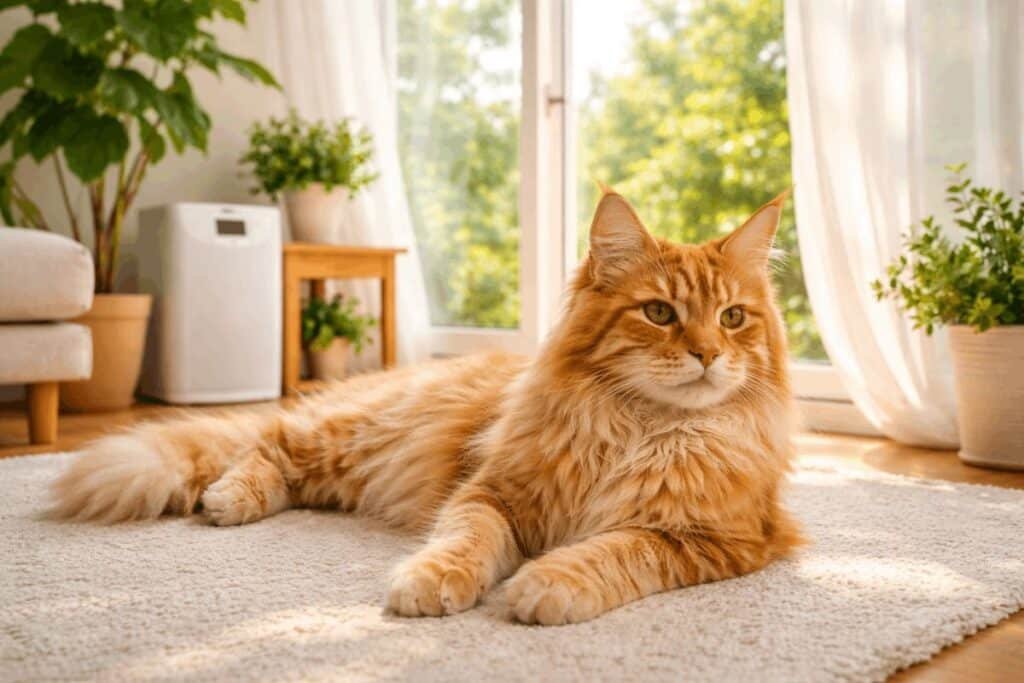
You don’t need incense to keep your home fresh. There are better pet-safe incense alternatives that protect your cat. These options improve air without adding toxins.
Here is a safer option table:
| Alternative | Benefit |
| Air purifiers | Remove particulate matter (PM2.5) |
| Baking soda | Absorbs odors naturally |
| Charcoal bags | Neutralizes smells safely |
These methods support a cat-friendly home environment and reduce indoor pollutants and pets risks.
When to See a Vet: Serious Reactions to Incense Smoke
Sometimes symptoms become severe. If your cat struggles to breathe or stops eating, act quickly. These are not minor issues. They may signal strong chemical sensitivity in cats.
Call a vet if symptoms last more than a day. Quick action prevents worsening respiratory issues in cats. This is especially important for kittens since is burning incense harmful to kittens is a bigger concern due to weaker lungs.
Final Thoughts
So, is incense bad for cats? In most cases, yes. While a small amount of exposure may not cause immediate harm, regular incense smoke can irritate your cat’s sensitive lungs and increase the risk of long-term respiratory problems. Because cats spend so much time indoors, the air they breathe has a direct impact on their overall health.
If you enjoy a fresh-smelling home, choosing pet-safe alternatives is the better option. Good ventilation, air purifiers, and natural odor absorbers can keep your home pleasant without exposing your cat to unnecessary risks. A few simple changes today can help your feline companion breathe easier and stay healthier for years to come.
FAQs
Should I ventilate when burning incense near cats?
Yes, always keep windows open and ensure strong airflow, because poor ventilation increases smoke buildup and can irritate your cat’s lungs.
Are there pet friendly incense?
No incense is completely pet-friendly, since all types release smoke and particles that may affect your cat’s breathing.
What scents are toxic for cats?
Scents like tea tree, eucalyptus, citrus, pine, and lavender can be harmful, especially when burned or diffused in enclosed spaces.
What scents are safe to burn around cats?
No scent is 100% safe when burned; instead, use non-burning options like fresh air or pet-safe odor neutralizers to keep your home safe.

Wahsay Ahmed is the founder of FelineNest and a cat care writer. His interest in feline health began in 2023 after adopting two cats, Whisker and Mochi. Since then, he has spent two years studying trusted veterinary resources, feline behavior, nutrition, and preventive care while applying that knowledge through daily care of his own cats.