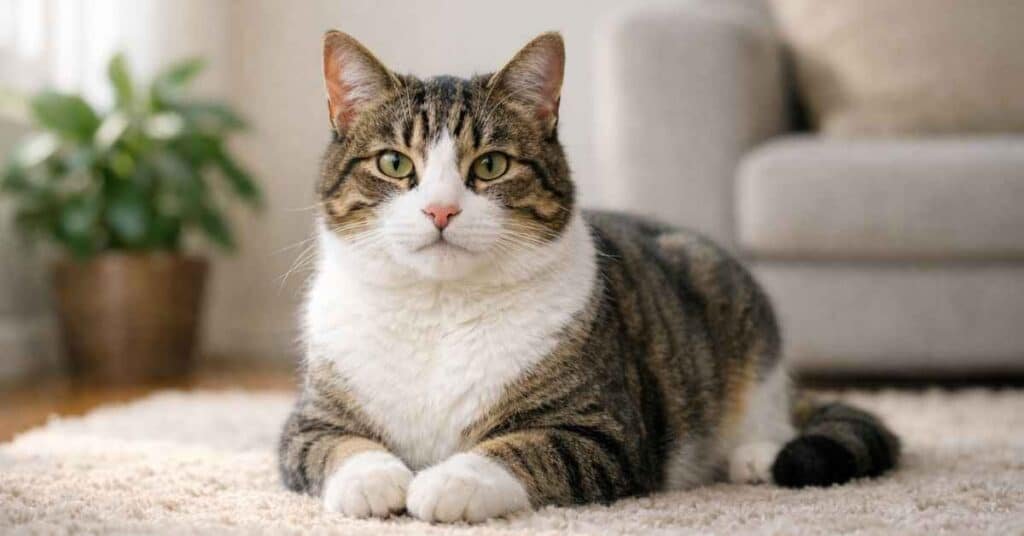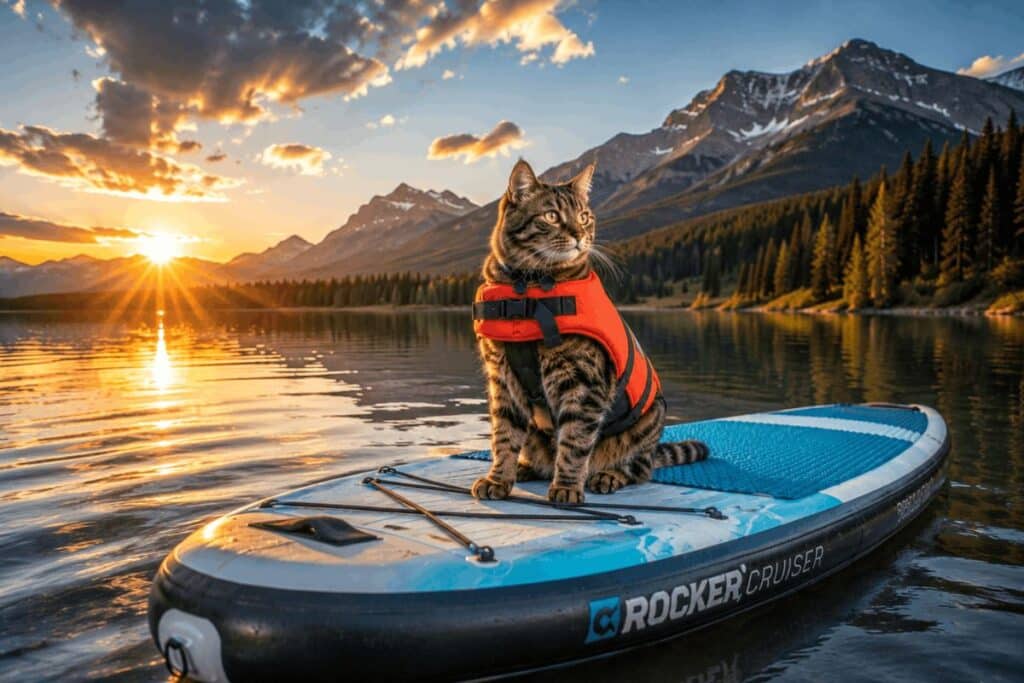
Cat stand up paddle board adventures might sound impossible at first. After all, most people assume cats hate water. Yet many adventurous felines are proving otherwise. Imagine gliding across a glassy lake with your cat perched calmly at the front of your board. Sounds wild, right?
You might assume cats hate water. But cat behaviorists and adventure cat owners consistently report that many felines thrive in outdoor water environments when introduced slowly and safely. The key is preparation, patience, and the right gear.
Take Enoki, a cat whose owner documented their SUP journey on Bermstyle — it took months of patient harness training before Enoki paddled calmly on a lake. Or Hokulea, the surfing cat with a dedicated Instagram following (@hokuleathesurfingcat), who now joins her owner on open water regularly. These aren’t exceptions — they’re proof of what’s possible with the right approach.
This guide covers everything you need — from reading your cat’s personality to choosing the right inflatable SUP and training plan.
Can Cats Really Enjoy a Stand Up Paddle Board?

The short answer: yes — but not every cat. The idea that all cats despise water is one of the most common myths in the cat world. Many cats are naturally curious, sensory-driven animals who adapt well to new environments when introduced gradually.
SUP paddling is calm, low-impact, and happens at a slow pace. That makes it one of the most cat-compatible water activities out there. Cat owners report that once their cats get comfortable, many will voluntarily jump onto the board and settle in for the ride.
Which Cats Are Best Suited for SUP Adventures?
Certain breeds and personality types take to paddle boarding more naturally. Curious, confident, and people-oriented cats tend to adapt fastest. High-anxiety or easily startled cats may find the experience stressful.
| Cat Type | SUP Readiness | Notes |
| Bengal | Excellent | Loves water naturally, very curious |
| Maine Coon | Very Good | Calm, confident, water-tolerant |
| Turkish Van | Excellent | Historically known as “swimming cats” |
| Siamese | Good | Highly social and people-focused |
| Ragdoll | Good | Relaxed temperament, adapts well |
| Skittish / anxious cat | Low | Not recommended without long desensitization |
| Senior cat | Moderate | Depends on individual comfort and health |
Even mixed-breed cats can become great SUP companions. Personality matters far more than breed.
Signs Your Cat Is Ready — and Signs to Wait
Before attempting a cat stand up paddle board session, assess your cat’s baseline comfort level. A cat who already walks on a leash, rides in a backpack, or explores outdoors is a much better candidate.
| Green Light ✅ | Pump the Brakes ❌ |
| Comfortable wearing a harness | Panics or freezes in a harness |
| Curious about new environments | Hides when taken outdoors |
| Tolerates water during baths | Extreme distress near water |
| Calm during travel or car rides | Yowls or hides during transport |
| Responds well to treats as rewards | Refuses treats when stressed |
Never force a cat onto the water. A stressed cat on a SUP is a safety risk for both of you.
The Right Gear for Cat Stand Up Paddle Boarding
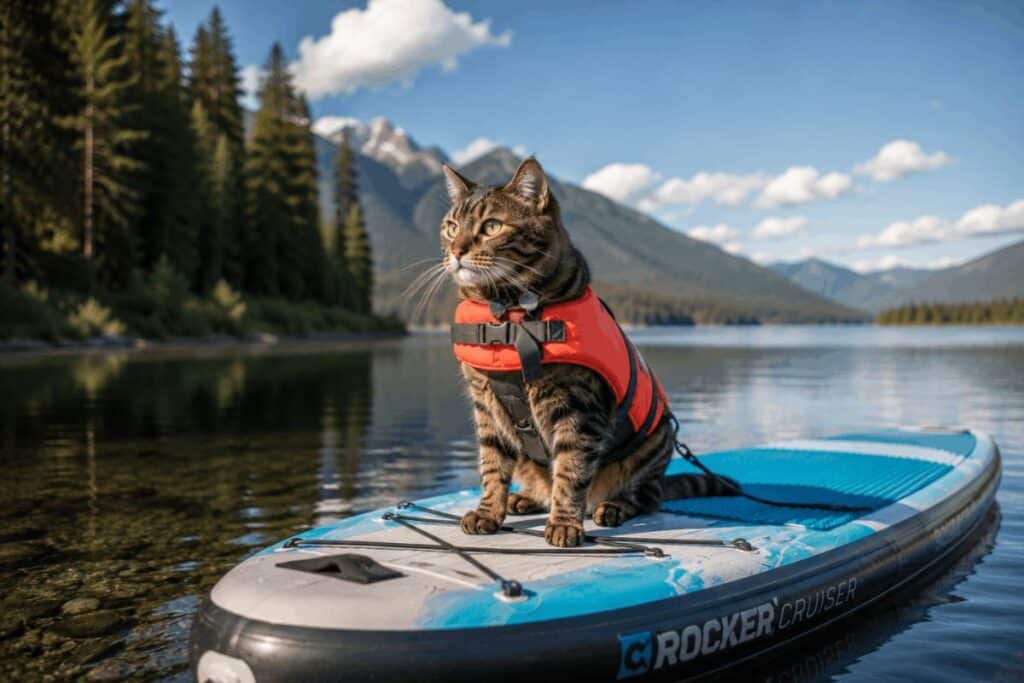
Good gear is the difference between a fun first trip and a frightening one. You don’t need much — but what you bring absolutely matters.
The right paddle board, life jacket, and accessories remove the most common risks before you even hit the water.
Choosing the Best SUP Board for You and Your Cat
Board stability is everything. A narrow, fast board designed for racing is not what you want. Cat SUP experts and experienced adventure cat owners consistently recommend wide, inflatable boards for feline passengers.
A practical sizing rule: A 10-pound cat needs at least 10 square feet of standing room. This ensures enough stability for your cat to move, reposition, and stay balanced without throwing off the board. For a full beginner’s guide to paddling with cats, Adventure Cats is one of the most trusted resources online.
| Board Feature | Recommended Spec | Why It Matters |
| Board length | 10–11 feet | More surface area, easier balance |
| Board width | 32–34 inches | Wider = more stable for cat movement |
| Board type | Inflatable (iSUP) | Softer surface, easier for cat paws to grip |
| Deck pad | Full-length EVA foam | Non-slip, comfortable for cat to sit or lie |
| Weight capacity | 300+ lbs | Handles combined human + cat weight safely |
| Board shape | All-around / recreational | Better stability than touring or race boards |
Inflatable SUP boards are widely preferred for paddling with cats. Their soft deck is easier on paws, and the broader platform gives cats room to reposition without destabilizing the ride.
Cat Life Jacket: Non-Negotiable Safety Gear
A properly fitted cat life jacket — also called a pet PFD (personal flotation device) — is the single most important piece of gear you’ll buy. Even calm, water-tolerant cats can fall in unexpectedly.
Look for a life jacket with a top grab handle. If your cat slips off the board, you can lift them out of the water in one smooth motion. Bright colors also improve visibility on open water.
The fit matters enormously. A jacket that’s too loose will slip off in the water. Too tight and it restricts movement, making your cat stressed before you even launch. Measure your cat’s girth and weight before purchasing.
How to Train Your Cat for Stand Up Paddle Boarding
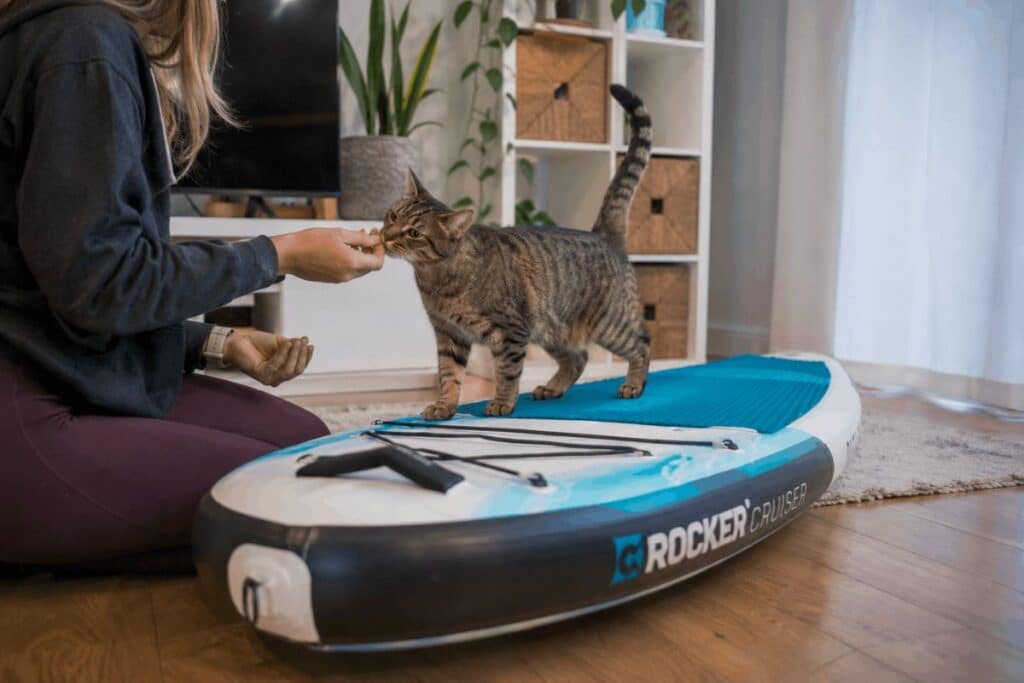
This is the section most cat owners skip — and then wonder why their first trip went sideways. Training is everything. A cat that has never seen your board before should never be placed on it in open water.
The good news: cats can be trained with positive reinforcement and patience. Most adventure cat owners report 4–8 weeks of gradual preparation before a comfortable first water session.
Step-by-Step Training Plan: Land to Water
Follow this progression. Never rush a stage. If your cat shows signs of stress at any step, go back to the previous stage and spend more time there.
| Stage | What to Do | Timeline |
| 1 — Harness comfort | Introduce harness at home, reward with treats | Week 1–2 |
| 2 — Board introduction | Place board on floor; let cat sniff and explore | Week 2–3 |
| 3 — Board confidence | Feed treats on the board; reward calm behavior | Week 3–4 |
| 4 — Near-water exposure | Bring board to water’s edge; let cat observe | Week 4–5 |
| 5 — Shallow water launch | Board in ankle-deep water; cat on board, you standing nearby | Week 5–6 |
| 6 — Short paddle session | Calm, quiet location; 10–15 minutes max | Week 6–8 |
Cat behaviorists emphasize that positive reinforcement — never punishment or force — is the only effective method. High-value treats work exceptionally well as motivation during each new stage.
One adventure cat owner shared on the Catexplorer community: “The first step was getting my cat comfortable with his backpack — once he understood the backpack meant something fun was coming, he’d get the zoomies and jump in on his own.” That same principle applies to the SUP board — make every interaction with it positive, and your cat will seek it out.
Safety Rules Every Cat SUP Owner Must Follow
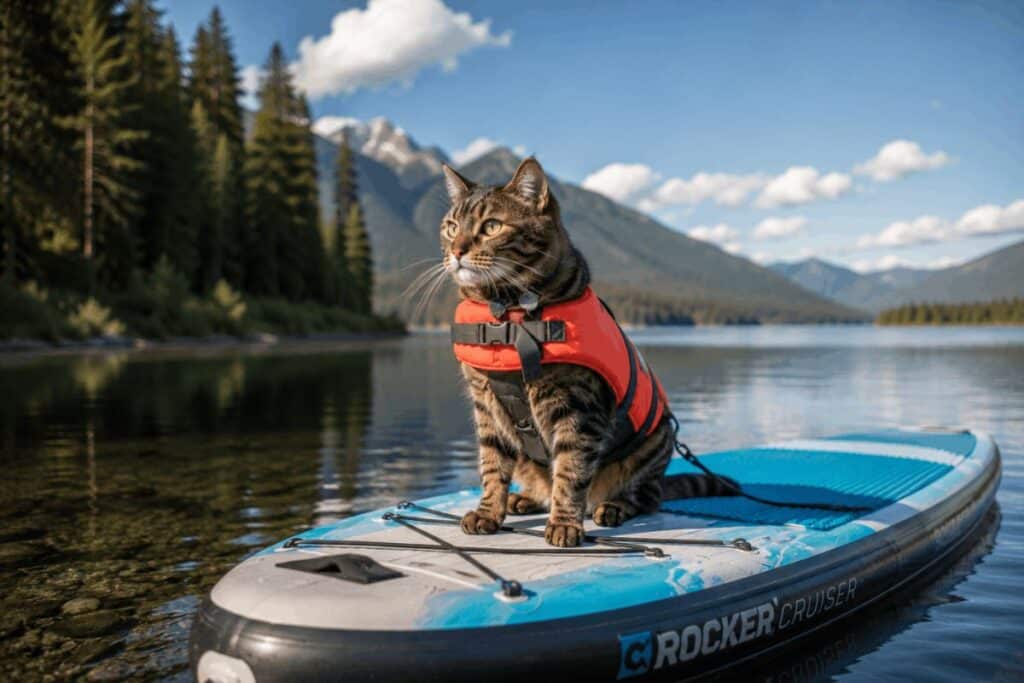
Even well-trained cats can surprise you on the water. These rules keep your session safe every single time.
Choose calm, quiet water. Avoid busy launch areas, choppy conditions, and windy days. Many experienced SUP cat owners recommend early morning sessions when water is glassiest and foot traffic is minimal.
Stay close to shore early on. Your first several sessions should be within easy paddling distance of the bank. This lets you return quickly if your cat becomes distressed.
Never skip the life jacket. Even Bengal cats who swim willingly should wear a fitted PFD every time. Exhaustion, disorientation, or sudden currents can endanger even strong feline swimmers.
Apply pet sunscreen on exposed skin. Cats with light-colored coats and pink ears are vulnerable to UV exposure during long water sessions. According to veterinary guidance from Hill’s Pet Nutrition, cats can develop sunburn and even skin cancer on ear tips and noses — especially on open water where UV reflection intensifies. Use a pet-safe, zinc-free sunscreen on exposed areas before every session.
Rinse your cat after every session. Whether lake, river, or ocean — rinse your cat with fresh water afterward. This prevents them from ingesting harmful bacteria, algae, or salt while grooming.
| Safety Rule | Why It Matters |
| Life jacket on at all times | Prevents drowning if cat falls in unexpectedly |
| Calm water only | Choppy water increases stress and fall risk |
| Stay near shore first sessions | Allows quick rescue if cat panics |
| Morning or low-traffic times | Less noise, fewer distractions, calmer water |
| No leash attached to board | Tethering to board is a drowning risk if cat falls |
| Rinse after session | Removes algae, bacteria, salt from fur and paws |
Keep sessions short in the beginning. Ten to fifteen minutes is ideal for the first few trips. Build duration gradually as your cat’s comfort grows.
Frequently Asked Questions
Q: Can cats go on a stand up paddle board?
Yes — many cats can enjoy SUP with proper training and the right gear. Confident, curious cats adapt best. Not every cat is suited for it, and signs of stress mean you should stop.
Q: What size paddle board is best for cats?
Aim for a board at least 10 feet long and 32–34 inches wide with a full EVA deck pad. Wider inflatable boards provide the most stability for feline passengers.
Q: Do cats need a life jacket on a stand up paddle board?
Absolutely. A properly fitted pet PFD with a top grab handle is essential every time your cat is on the water, regardless of their swimming ability.
Q: How long does it take to train a cat for SUP?
Most cats need 4–8 weeks of gradual, positive-reinforcement training before they’re comfortable on the water. Rushing the process is the most common mistake beginners make.
Q: Which cat breeds are best for paddle boarding?
Bengals, Turkish Vans, Maine Coons, and Ragdolls tend to adapt most readily. However, individual personality matters far more than breed. A calm, confident mixed-breed cat often outperforms a high-strung purebred.
Final Thoughts — The Cat Stand Up Paddle Board Adventure Awaits
The cat stand up paddle board lifestyle is genuinely achievable for any patient, dedicated cat owner. It’s not about forcing your cat into the water — it’s about building trust, reading their signals, and moving at their pace.
Invest in a wide inflatable SUP, a properly fitted cat life jacket, and a solid 6–8 week training plan. Start in calm, shallow water, keep sessions short, and reward every brave moment with high-value treats.
For more science-backed cat care tips, outdoor adventure guides, and breed insights, explore the rest of the Feline Nest blog!

Wahsay Ahmed is the founder of FelineNest and a cat care writer. His interest in feline health began in 2023 after adopting two cats, Whisker and Mochi. Since then, he has spent two years studying trusted veterinary resources, feline behavior, nutrition, and preventive care while applying that knowledge through daily care of his own cats.